Are Pothos Plants Toxic to Dogs? Here’s everything you need to know

Last Updated: March 5, 2023

Building a home safe for our pets is top of the priority list and ensuring our houseplants aren’t toxic or harmful to them is a key component of that. If you’ve landed on this page then you’re likely wondering whether Pothos Plants are toxic to dogs. The short answer is yes, they are toxic but that doesn’t mean you aren’t able to have a Pothos around your home.

In this article, we’ll explain how toxic these plants are for dogs, what to do if your dog ingests part of the plant and give you some alternatives if you’re looking for dog-safe houseplants.

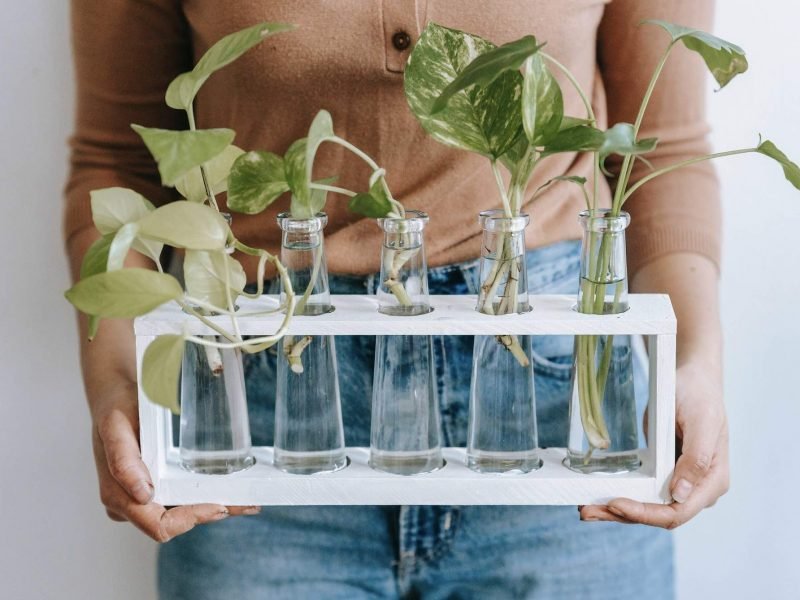
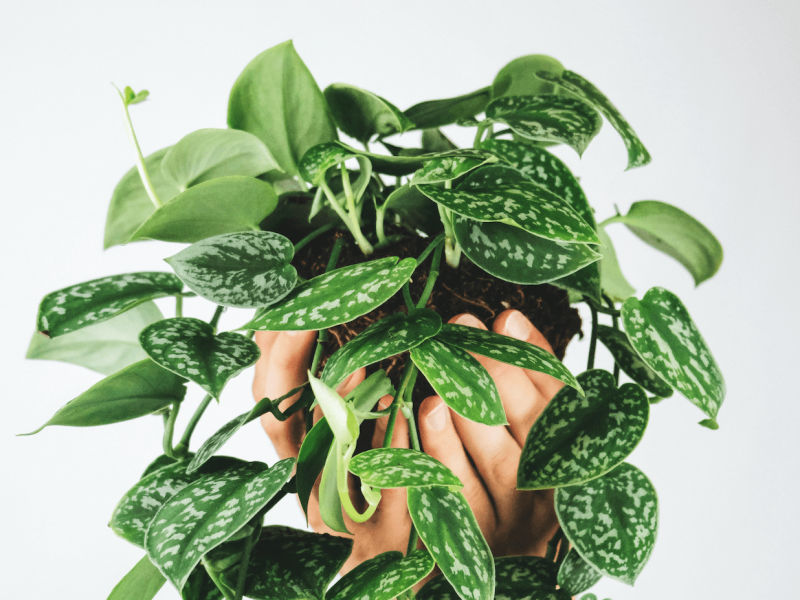
Pothos Plants are some of the most beautiful and popular houseplants around. Their long cascading vines and heart-shaped leaves make them pretty special. There is also such a wide variety of different Pothos Plants which means you can fill your home with these beauties, whilst still having a real variety of plants around. However, all varieties of Pothos Plants are toxic and can therefore be dangerous for dogs.

It’s not uncommon for houseplants to be toxic and unsafe for dogs. Most of the time, they are only dangerous when ingested and even then to real varying degrees. Some only cause mild stomach upset but others can have more serious consequences.

What makes Pothos Plants toxic to dogs?

Pothos Plants contain insoluble calcium oxalate crystals in both the leaves and the vines. Because they are insoluble, they do not dissolve when they come into contact with moisture in the mouth. Instead, these crystals can cut the inner mouth and throat tissue.

These crystals can also cause burning and irritation in the mouth, throat and stomach and can in more severe cases cause vomiting and temporary difficult swallowing.

In terms of severity, it is highly unlikely that digesting part of a Pothos Plant will kill your dog but it can cause a lot of discomfort. The severity also depends on how much of the plant is ingested and the size of your dog. If they only took a small nibble, then it’s likely they might not display any symptoms. However, if they have ingested a large part of the plant, then this can be more serious.

What are the symptoms if my dog eats a Pothos plant?

The first symptom after ingesting part of a Pothos plant is likely difficulty breathing and panting. Alongside this, there may be other signs of distress such as barking, whining and pawing at the face.

You may also find that there is swelling around the face, mouth and throat. After a couple of minutes, it can move on to vomiting. This may seem scary but vomiting at this stage is good as it hopefully removes some of the toxins.

Over the next week or two, you might find that your dog has a reduced appetite and may also show signs of dehydration which can be quite severe if not brought to a vet. You might need an IV to reverse the dehydration.

What should I do if my dog has ingested a Pothos Plant?

If your dog has only taken a very small nibble from your Pothos Plant then they will likely display no symptoms. However, you may choose to take them to the vet for a check-up just to be sure.

However, if they have ingested a large part of the plant, they will likely display symptoms pretty quickly. We recommend taking your dog to a veterinarian straight away.

It’s important to inform the vet of how much your dog has ingested, when this occurred and the symptoms your dog has already displayed. This will help them find the right course of treatment. Often they will give your dog an IV to help with the dehydration but they may also choose to evacuate your dog’s stomach to give them almost instant relief.

How to prevent your dog from eating your Pothos Plant

Put your Pothos Plant out of reach

The best way to prevent your dog from eating part of your Pothos Plant is to place it out of reach. Although this can be tricky as they cascade downwards, placing your Pothos high up means your dog won’t be able to reach it. You’ll also want to make sure you prune your plant regularly to ensure it doesn’t reach the ground.

If your dog isn’t allowed in certain rooms of your home, then it can be a good idea to place your Pothos plant in there!

By doing this, it also means that you’re able to have other slightly toxic houseplants in your home without needing to worry that your furry friend might want to see what they taste like…


Incorporate this into their training routine

It’s also super important that you incorporate houseplant training into your dog’s routine. Using positive or negative reinforcement can be a great way to teach your dog not to eat or nibble at your plants.

We recommend doing this with safe houseplants though to reduce the risk of your pooch eating anything toxic whilst they are learning.


Remove from home

The ultimate way to prevent your dog from consuming any part of your Pothos Plant is to not have any in your home at all. Although it can be sad to say goodbye to your plants, there are plenty of dog-safe houseplants out there to fill up your home.

Gifting your Pothos Plant to non-pet owners is a great way to find your plant a new home or if you’d like to make some money off it, you can easily sell your plants online.

Alternative, dog-friendly houseplants

If you want to replace your Pothos Plant and other toxic houseplants, then you’ll be very happy to know that there are some gorgeous plants that are totally safe for your pets. Whilst this doesn’t mean you should be actively encouraging them to eat your plants, it does remove some of the worries for the rare occasion it might happen.

  1. Spider Plants

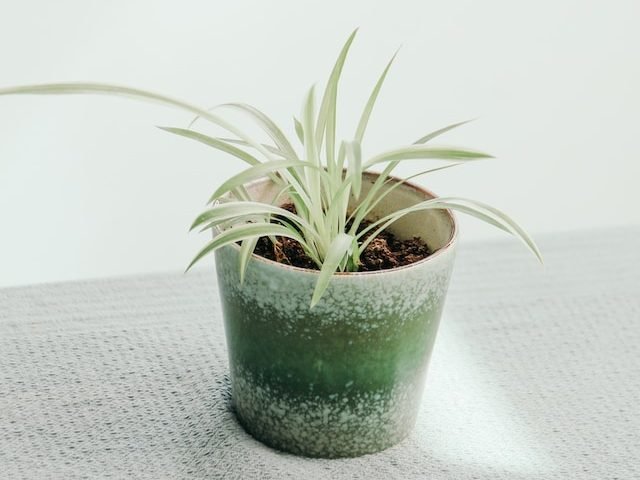
    Spider Plants are the perfect plant for a houseplant beginner as they are super easy to care for, grow pretty quickly, and produce an abundance of spider babies which can be propagated in seconds.

    The best thing about Spider Plants (apart from the fact they are dog safe) is that you would really have to try to kill them as they adapt to and survive in most environments and don’t mind being a little neglected.

    Find out more in our Spider Plant care guide.

  2. Prayer Plants

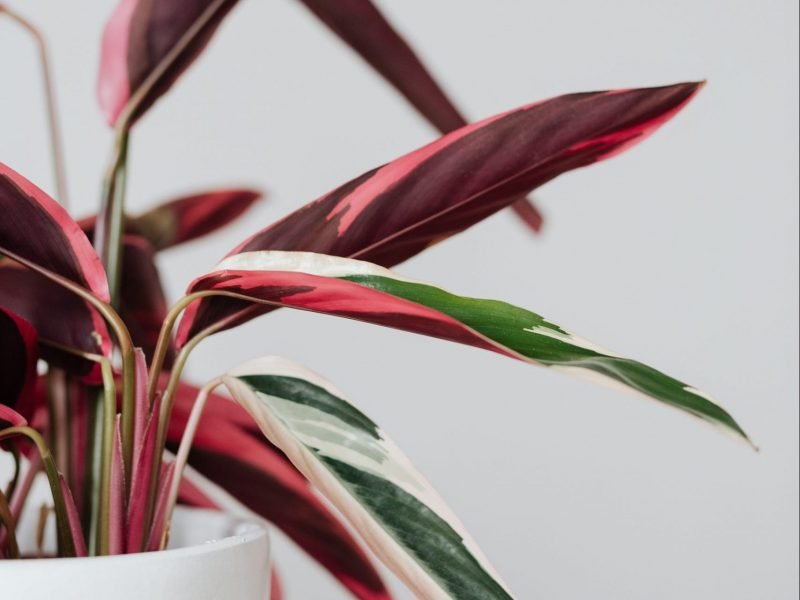
    Native to the tropical rainforests of Brazil, the Prayer Plant is loved for its variegated leaves with intricate vein patterns. You can easily spot a Prayer Plant by its leaf undersides as shades of deep red are revealed when the plant’s leaves curl up at night, bringing a splash of colour to your home.

    There are several varieties of Prayer Plants that all look ever so slightly different but they are all completely dog safe which is great. The most common variety is the tri-colour which has red-veined leaves but you’ll sometimes see varieties with silver patches or dark green splashes.

    Learn more about them in our Prayer Plant care guide.

  3. Kentia Palm

    Kentia Palms are pretty hardy plants that can stand environments that many other houseplants wouldn’t be able to, making them quite easy to care for. They can grow up to 40 feet outdoors but will rarely get over 13 feet when kept indoors.

    The good news is that they are completely safe and non-toxic, so they are perfect to create a dog-friendly environment that still feels like an urban jungle.

    Find out more about what these plants need in our Kentia Palm care guide.

  4. String of Hearts

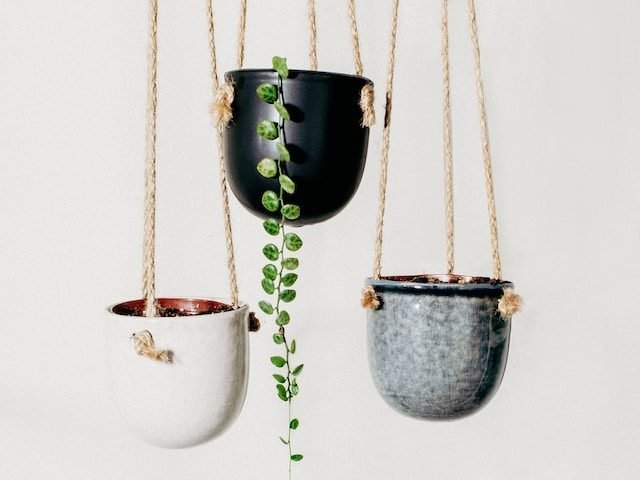
    Looking for a cascading plant to fill the Pothos-shaped hole in your home? Well, the String of Hearts is for you.

    You don’t get much more unique than their cute little speckled heart-shaped leaves. The other thing we love about the String of Hearts is that it’s such a fast grower over the spring and summer months, you’ll blink and there will be two new leaves popping out somewhere.

    The String of Hearts is a semi-succulent plant meaning they don’t need much water, otherwise, it’ll cause their delicate shallow leaves to rot pretty quickly. Oh, and because they have such shallow roots, you won’t need to repot for a very very long time.

    It makes the perfect plant for hanging down shelving, and because it’s dog friendly, you don’t need to worry about it ever becoming too long!

    Find out more in our String of Hearts care guide.

Looking for more non-toxic houseplants to replace your Pothos with? Check out our favourites in our list of dog-safe houseplants.

Frequently Asked Questions

We hope that this guide to Pothos Plants and their toxicity to dogs has been useful. We always encourage you to err on the side of caution when it comes to your pets ingesting parts of toxic plants (or even large quantities of non-toxic plants).

It’s always best to be on the safe side and have your pet looked over by a veterinarian if they have eaten part of the plant as some of the side effects can be pretty serious.

Moving forward, if your dog is often in the habit of nibbling on your plants, then you will want to move these out of reach or remove them from your home altogether.
Fiddle and Thorn is a participant in the Amazon Services LLC Associates Program, an affiliate advertising program designed to provide a means for sites to earn advertising fees by advertising and linking to Amazon.com

Take our houseplant survey!

Quickly respond to our 30 second houseplant survey and get 75% off our Complete Houseplant Care eBook!

Take the Survey

No thanks…

Are Monstera Plants Toxic to Dogs and Cats?

Last Updated: April 19, 2023

Keeping our pets safe is one of the most important things in life and making sure that there isn’t anything in our home that could harm them is a big part of that. When it comes to houseplants, there are many that are extremely dangerous for dogs and cats to ingest, some that are only mildly toxic and luckily a good amount that are completely safe for pets to be around and nibble at if they decide to.

Unfortunately, all types of Monstera plants are toxic to dogs and cats. However, they are not deadly unless they are ingested an extremely significant amount of the plant. In this article, we will cover why Monsteras are toxic to dogs and cats, what you should do if your pet does ingest some as well as give you a few friendlier, less toxic houseplant options if you decide to remove it from your home.


What makes Monsteras toxic to dogs and cats?

The reason that Monstera plants are toxic to dogs and cats is that the sap in the plant contains insoluble calcium oxalate crystals. They can be dangerous to pets when ingested as although they are tiny particles, they are sharp which can cause micro-cuts in the mouth, throat and stomach of your pet.

Whilst these crystals can help fend off pests, it makes your Monstera dangerous to both your pet but also to you if pruning your plant. This is why we always recommend that you wear gloves to avoid skin irritation.


What are the symptoms if my dog or cat eats a Monstera?

This can vary a lot but the first sign you will often see is your dog or cat pawing at their face and making distressed noises. This will be a result of the crystals causing mouth and throat irritation. At this stage, you may begin to see swelling around the face, mouth and throat which can then quickly move to vomiting and drooling. This may seem scary but vomiting at this stage is good as it hopefully removes some of the toxins.

Over the next week or two, you may find that your dog or cat has a reduced appetite so monitor this carefully.

One rare but long-term impact of digesting large parts of a Monstera is kidney damage. However, because of the immediate irritation caused by eating only a small part of your Monstera, this will discourage your pet from eating any more so this is a very rare issue.


What should I do if my dog or cat has ingested a Monstera?

If your pet has only eaten a very small part of your Monstera (eg. the edge of a leaf) then they will likely not really show any symptoms. It might still be a good idea to visit a vet just to be sure but if they aren’t showing any symptoms straight away then it’s likely not impacted them.

However, if they have ingested enough to be showing symptoms of distress, then you need to take your pet to the vet straight away. It can be a good idea to cut off the leaf that they have ingested and bring it with you so that you can show exactly what your dog or cat has eaten and how much of it. This will all help your vet find the right treatment.

Often they will give your dog an IV to help with the dehydration but they may also choose to evacuate your pet’s stomach to give them almost instant relief.


How to prevent your dog or cat from eating your Monstera


Put your Monstera out of reach

This only really works for dogs as cats will be able to climb their way onto anything, but if you do have a dog that is tempted by your toxic plants, then putting them out of reach is the only way. As they aren’t trailing plants you can simply pop your plant on a shelf to keep the leaves out of reach.


Incorporate this into their training routine

This also primarily works on dogs but it can be a very effective way to bring in a training element that teaches your dog to stay away from your houseplants. Not only will this keep them safe but it’ll also keep your plants from having bite marks and chunks taken out of them which is a bonus too!


Creating deterrents

There are a few easy ways to turn your cat or dog off your Monstera through smells without it actually smelling bad to you. A lot of pets really don’t like the smell of citrus fruit so it can work to put a few pieces of the peel on top of the soil. Otherwise lining the pot in citrus oil or juice has also worked for us in the past!


Remove from home

Although this isn’t ideal, prioritising your pet’s health is the number one priority and if they are continuing to nibble at toxic plants, then it’s best to remove them from your home. Gift your Monstera to a friend or even sell it to make a little bit extra cash! Luckily, just because you have a pet doesn’t mean you can’t have plants as there are so many dog and cat-friendly houseplants out there to fill the Monstera hole in your life…


Alternative, dog and cat-friendly houseplants


Spider Plants

Spider Plants are the perfect plant for a houseplant beginner as they are super easy to care for, grow pretty quickly, and produce an abundance of spider babies which can be propagated in seconds. In fact, Spider Plants is how we started our obsession with houseplants so we will always have a soft spot for them.

The best thing about Spider Plants (apart from the fact they are dog and cat safe) is that they are actually really hard to kill. So if you’re away a lot or just busy, then these can be a nice little way to bring some greenery into your home.

Find out more in our Spider Plant care guide.


Prayer Plants

Native to the tropical rainforests of Brazil, the Prayer Plant is loved for its variegated leaves with intricate vein patterns and are some of the most vibrant pet-friendly plants out there.

There are several varieties of Prayer Plants that all have slightly different leaf patterns but all are completely dog and cat safe which is great. The most common variety is the tri-colour which has red-veined leaves but you’ll sometimes see varieties with silver patches or dark green splashes.

Learn more about them in our Prayer Plant care guide.


Kentia Palm

If you’re looking for a large mature plant to take over the spot where your Monstera once was, then the Kentia Palm is a great option. They are hardy and can adapt really well to a wide range of environments.

The good news is that they are completely safe and non-toxic to dogs, cats, other pets and humans so they are perfect to create a safe home that still feels like an urban jungle.

Find out more about what these plants need in our Kentia Palm care guide.


Looking for more non-toxic houseplants to replace your Monstera with? Check out our favourites in our list of dog-safe houseplants.


Whilst Monstera plants might be incredible to look at and bring a bit of the jungle to our homes, it’s worth remembering that they can be toxic to our cats and dogs. If your pet has no interest in any of your houseplants then it’s likely safe for you to have a Monstera in your home but if they are prone to nibbling at the leaves then action needs to be taken.

Fiddle and Thorn is a participant in the Amazon Services LLC Associates Program, an affiliate advertising program designed to provide a means for sites to earn advertising fees by advertising and linking to Amazon.com

Take our houseplant survey!

Quickly respond to our 30 second houseplant survey and get 75% off our Complete Houseplant Care eBook!

Take the Survey

No thanks…

Are houseplants sensitive to fluoride in tap water?

Last Updated: August 2, 2022

Fluoride and houseplants is something that gets knocked around quite a lot when talking about issues and sensitivities. But you might be wondering what even is fluoride and how does it actually impact my plant’s health?

Well, wonder no more as we have written this brief guide on how fluoride sensitivity and toxicity can affect your beloved houseplants.

But what even is fluoride?

Before we get into it, let’s go over what fluoride actually is. Fluoride is a natural mineral that is added to tap water to prevent tooth decay in humans. It’s found in very small quantities so it largely goes unnoticed.

Is fluoride damaging to houseplants?

Yes and no. The impact of fluoride on the health of houseplants is a tricky one as many plant types are not impacted by it at all, whilst it can cause some issues for other plant types. Most commonly it can cause brown leaf tips on houseplants but this can also be caused by other factors such as intense heat or a lack of humidity, so it can be a difficult problem to properly diagnose.

If the problem of fluoride toxicity has had time to develop into a real problem, it can cause leaf necrosis. Whilst this starts off as brown leaf tips it can start to lead to yellow scorched patches across the leaf edges, spreading inwards. It can begin to prevent maximum photosynthesis and other important processes.

It’s also worth noting that once the leaf tips have turned brown or yellow, that this is unfortunately irreversible. You can choose to either trim away the dead leaf tips, remove the entire leaf or leave the plant as it is. If only a small part of the leaf tip is brown then we tend to recommend leaving the leaf as removal would just be for aesthetic reasons.

Plant varieties that have long narrow leaves, such as yuccas, palms or Spider plants are often sensitive to fluoride. But it can also impact plants that have very thin leaves such as Calatheas for example. Houseplants with sturdier leaves don’t tend to be affected by the fluoride in your tap water as the levels are just so low.

How can I spot fluoride toxicity on my houseplants?

There are two main visible symptoms of fluoride sensitivity; brown leaf tips / edges and a mineral build up on top of the soil. The latter shows up as white build up on top of the soil and around the root system.

How do I prevent fluoride sensitivity?

There are a whole range of methods that you can use to lower the level of fluoride in the water you give your plants. They range in terms of ease but also affordability. The easiest way to prevent fluoride in the water is to collect rainwater to give to your plants. Bottled or distilled water is also a great way to prevent brown leaf tips caused by a build-up of excess minerals.

We also recommend avoiding superphosphate fertilisers as these contain high levels of fluoride that can very quickly cause your foliage to burn.

Another top tip if you aren’t able to constantly use rainwater or distilled water is to flush the soil with it every few months. This should help to get rid of some of that excess build-up in the soil and prevent it from causing brown leaf tips.

We hope that this guide to fluoride and houseplants has been helpful and has allowed you to figure out how it can impact some of your plants’ health. Remember that fluoride sensitivity won’t usually kill your plants, but it can just cause some unattractive symptoms.

So whilst you want to avoid it as much as possible, the worry shouldn’t keep you up at night. With some houseplants, such as Spider Plants, some brown leaf tips are almost normal and even the most experienced plant parents can’t always keep them at bay!


Fiddle and Thorn is a participant in the Amazon Services LLC Associates Program, an affiliate advertising program designed to provide a means for sites to earn advertising fees by advertising and linking to Amazon.com

Take our houseplant survey!

Quickly respond to our 30 second houseplant survey and get 75% off our Complete Houseplant Care eBook!

Take the Survey

No thanks…

Are Fertilizer Spikes Good for Houseplants?

Last Updated: October 24, 2023

A range of houseplants

A range of houseplants

Fertilizing your houseplants regularly can often be a forgotten part of the care routine, deprioritized against watering habits and whether your plant is getting enough light. However, fertilizing correctly can make a huge difference to the health and growth patterns of your plant.

Fertilizer comes in various different forms, one of which is in spikes that you insert into the soil. They are easy to use and apply, but are they the best thing for your houseplant?

What are Fertilizer Spikes?

Fertilizer spikes are concentrated sources of plant nutrients that are pressed into solid, spike-like forms. Designed to reach deep into the soil, these products supply plants with essential nutrients right at their roots.

They are unique due to their slow-release formula. Instead of saturating the plant with nutrients all at once, they gradually release them over time, providing your plants with a steady diet of nourishment.

Components of Fertilizer Spikes

Spikes are filled with vital macronutrients like nitrogen, phosphorous, and potassium (commonly abbreviated as N-P-K), each playing a specific role in the plant’s growth.

Nitrogen boosts leaf production and overall growth, phosphorous promotes robust roots and beautiful blooms, while potassium enhances resistance to diseases and assists in water and nutrient absorption.

Additionally, some brands may also include micronutrients such as iron or calcium which are just as important for the plant’s health, albeit required in smaller amounts.

Types of Fertilizer Spikes

Not all fertilizer spikes are alike but in general, they can be divided into two major types: organic and inorganic (or synthetic).

Organic spikes, crafted from natural materials like bone meal and blood feast, are slower to release but provide long-term nourishment.

Synthetic spikes, on the other hand, quickly deliver nutrients but can potentially cause fertilizer burn if not used correctly. When choosing the right spikes for your houseplants, always consider your plants’ specific needs and growth stage.

How Do Fertilizer Spikes Work?

Fertilizer spikes work on a simple yet effective principle. Their compact design contains nutrients that are released directly into the soil.

The Process

A fertilizer spike is a nutrient-rich option, offering all the essentials your houseplant needs. These spikes are inserted into the soil around a plant.

From there, they slowly dissolve, breaking down the nutrients, which the plant roots absorb to promote growth.

The Distribution

One incredible aspect of fertilizer spikes is their distribution method. These spikes, once in the soil, allow the nutrients to move deeper into the plant’s root zone.

This method ensures no nutrients are lost to run-off or volatilization, a common issue with traditional, liquid fertilizers.

The Timing

Another significant point to note about fertilizer spikes is the timing. As the spikes break down, they release a steady supply of nutrients over time, rather than all at once.

This slow-release approach means your plant has access to vital nutrients just when they need them, leading to prolonged and sustained plant health.

The Impact

Ultimately, the impact of these spikes is seen in your plants’ health and vitality. You’ll notice greener leaves, stronger stems, and a robust root system.

Advantages of Using Fertilizer Spikes for Houseplants

They’re super convenient

First off, the ease of use is probably one of the largest benefits of fertilizer spikes.

Whether you’re a seasoned green thumb or a newbie nurturing your first plant, you can’t deny the convenience that fertilizer spikes offer.

It’s as simple as inserting the spike into the soil and letting it do the hard work. No complicated mixing ratios or removing potting mix to add nutrients into it.

Slow Release for Long-Term Feeding

These nifty inventions slowly release nutrients into the soil, ensuring your plants remain healthily fed for a longer time. This avoids fertilizer burn which can happen if you release all of the nutrients at once.

Accuracy and No Waste

Unlike liquid or granular fertilizers, which can be tricky to calculate and apply correctly, spikes provide an accurate nutrient dosage every single time.

And let’s not forget the mess and waste that can be avoided as apart from the packaging, there’s no waste.

Better Root Nutrition

Last, but definitely not least, is the targeted root nutrition that fertilizer spikes offer. By placing the nutrients directly into the soil, your plants are getting a direct feed to their root system.

Not only does this mean healthier and stronger plants, but it also leads to less nutrient loss through evaporation or surface runoff.

Disadvantages of Using Fertilizer Spikes for Houseplants

Incomplete Nutrient Profile

One could argue the most significant downside to using fertilizer spikes is their incomplete nutrient profile. While they typically pack plenty of nitrogen, phosphorous, and potassium, they often lack the breadth of micronutrients that your houseplants need.

Nutrient Concentration Risks

The very nature of fertilizer spikes means they release nutrients at their insertion point, leading to a highly concentrated supply.

By constantly providing nutrients to the same place, there is a risk of “burning” your plant’s root system with excessive nutrients, a phenomenon dubbed “fertilizer burn”.

One way to avoid this is to move around the spike every few weeks, or to use several weaker spikes.

Unpredictable Release Rates

Although the slow-release mechanism of fertilizer spikes is generally a plus, it can be a double-edged sword in certain situations. The release rate is greatly impacted by temperature and moisture levels.

In warmer, more humid environments, the nutrients may dissolve faster than your plants are able to absorb them.

Not Ideal for Larger Plants or Pots

Fertilizer spikes can provide uneven coverage for larger pots, as spikes’ nutrients might not reach the entire root system. This means portions of your plant might end up undernourished.

Larger plants or those in roomy pots might require regular liquid or granular fertilizer to ensure an evenly distributed spread of nutrients.

Choosing the Right Fertilizer Spikes for Your Houseplants

Understanding Your Plant’s Nutrient Needs

First things first, you need to understand your plant’s nutritional requirements. Plants typically need a good balance of macro and micronutrients, and different varieties may have specific nutritional needs.

Does your plant love nitrogen? Maybe it needs extra potassium? Understanding this will guide you in choosing a fertilizer spike that has the optimal nutrient balance for your plant.

Assessing Your Soil

Next, get to know your soil – a simple soil test kit from a local garden store will do the trick and will tell you the pH level of your soil and reveals any nutrient deficiencies.

Looking at Fertilizer Spike Labels

Numbers on fertilizer labels represent the proportion of Nitrogen (N), Phosphorus (P), and Potassium (K), referred to as the N-P-K ratio.

By matching the identified needs of your plants and the nutrient content of your soil, you can choose the spike with the right N-P-K ratio.

When and How to Use Fertilizer Spikes for Houseplants

Generally, you want to fertilize when your plants are in their active growing phase, which is typically spring and summer for most houseplants. Doing so provides them with the essential nutrients they need during this critical period.

However, it is also important to note that some plants may have different growing phases, so you’ll want to do a bit of research about your specific plants.

How to Apply Fertilizer Spikes

It’s relatively straightforward but still requires precision to avoid potential damage to your plants and ensure optimal nutrient absorption.

Here’s a straightforward guide on how to do it:

  1. Determine the Number of Spikes Needed: The number of fertilizer spikes you’ll need depends on the size of your pot. Generally, smaller pots require fewer spikes than larger ones.
  2. Placement is Key: Place the spikes evenly around the edge of the pot, pushing each one as far into the soil as possible. This ensures that the nutrients are directly reaching the roots.
  3. Water After Application: Don’t forget to water your plant after application. This initiates the slow-release process of the spike and makes the nutrients immediately available for the plant.

Paying Attention to Signs of Over or Under Fertilization

If your plant leaves begin to show signs of yellowing or burns, it might indicate too much fertilizer. On the other hand, slow growth or pale leaves may suggest a need for more nutrients.

Common Mistakes to Avoid When Using Fertilizer Spikes

Fertilizer spikes can prove to be quite beneficial if used correctly, but they can also result in unintended consequences if not used right.

Over Fertilizing

More isn’t always better when it comes to feeding your plants. Over-fertilizing is one of the most common mistake houseplant owners commit and it can be detrimental to your plant’s health.

Your plant can show symptoms like yellowing leaves and stunted growth due to too much nutrients concentration. It’s important to remember that fertilizer spikes deliver nutrients slowly over time, so it’s better to avoid adding too many at once.

Placing Spikes Too Close To The Roots

Another common mistake is placing the fertilizer spikes too near to your plant’s roots. This is an issue because the nutrients in the fertilizer may not be equitably distributed into the soil, leading to a high concentration near the place of insertion. This can result in root burn.

Aim to keep the spikes at a safe distance from the plant to ensure even dispersion of nutrients.

Not Following Instructions

The packet will provide information about the correct number of spikes needed per pot size, depth of insertion, and optimal positioning. Ignoring this guide might result in over-fertilization, nutrient burns, or inadequate feeding of your plant.

Failing to Monitor Your Plant’s Response

After fertilizing your plants, the key is to keep a close watch on them and look for any changes in growth, leaf color, and overall health. This will provide you crucial insights if the fertilizer spikes are helping or harming your plants.

Also, carefully observe whether your plant’s growth becomes stagnated or it flourishes in the weeks following the application.

Alternative Fertilizer Options for Houseplants

  • Liquid fertilizers: these are highly soluble and offer immediate nutritional benefits to your plants. Liquid fertilizers can be applied directly to the soil or sprayed on the leaves. They are often preferred for their fast-acting nature, but they also need to be applied more frequently due to their quick consumption by plants.
  • Granular fertilizers: this type of fertilizer is available in a solid form that needs to be mixed into the soil. They release nutrients slowly and consistently, helping to nourish the plants over a longer period of time. Although they’re slower to show results compared to liquid fertilizers, they provide sustained nutrition.
  • Compost: One of the best natural options out there, compost not only provides a wide range of nutrients but also improves soil structure and its ability to hold onto water and nutrients. It’s a great choice if you’re looking for an eco-friendly approach. However, the nutrient content can vary depending on the materials used in the compost.
  • Fish emulsion: a rather smelly yet highly nutritious option for houseplants. Fish emulsion provides a balanced supply of nitrogen, phosphorous, and potassium.

The Plus Side of Fertilizer Alternatives

Alternative fertilizers allow for the possibility of tailoring exactly what nutrients your plant is getting and when.

Drawbacks of Fertilizer Alternatives

On the downside, these alternatives can require more work and attention than fertilizer spikes, such as frequent application or careful mixtures.

Frequently Asked Questions

Can Fertilizer Spikes Damage My Houseplants?

While fertilizer spikes can be beneficial, they can also cause damage when not used correctly. Over-fertilization or placing the spikes too close to the plant roots can result in burned or damaged roots.

Always remember to follow the usage instructions, monitor your plant’s response, and adjust as needed.

Are fertilizer spikes suitable for all types of houseplants?

No, not all houseplants will react in the same way to fertilizer spikes. The application depends heavily on the specific requirements and sensitivities of your plant species.

Some houseplants may prefer a different type of fertilizer altogether so always check the care guide of your specific plant.

How Often Should IUse Fertilizer Spikes on My Houseplants?

Generally, applying fertilizer spikes once at the beginning of the growing season and again halfway through is a good rule of thumb. However, this can vary based on the plant species and its nutritional needs.

Always remember to follow the manufacturer’s specific instructions.

Do All Fertilizer Spikes Have the Same Nutrient Content?

Not all fertilizer spikes are created equal, and the nutrient content can vary widely. Some may be high in nitrogen for green growth, while others may contain more phosphorus for flower production.

Therefore, understanding your plants’ specific nutrient requirements and checking the nutrient ratio (N-P-K) on the fertilizer spike packaging is vital.

Can I Use Fertilizer Spikes on My Outdoor Plants as well?

Yes, you can use fertilizer spikes for outdoor plants as well. However, outdoor plants typically have different nutrient needs and growing conditions compared to indoor houseplants. Always read labels and seek advice if you’re unsure about application.

Fiddle and Thorn is a participant in the Amazon Services LLC Associates Program, an affiliate advertising program designed to provide a means for sites to earn advertising fees by advertising and linking to Amazon.com

Take our houseplant survey!

Quickly respond to our 30 second houseplant survey and get 75% off our Complete Houseplant Care eBook!

Take the Survey

No thanks…

The Ultimate Anthurium Clarinervium Care Guide: How to Keep Your Plant Healthy

Last Updated: October 16, 2023

Anthurium Clarinervium

Anthurium Clarinervium

Introduction to Anthurium Clarinervium Plants

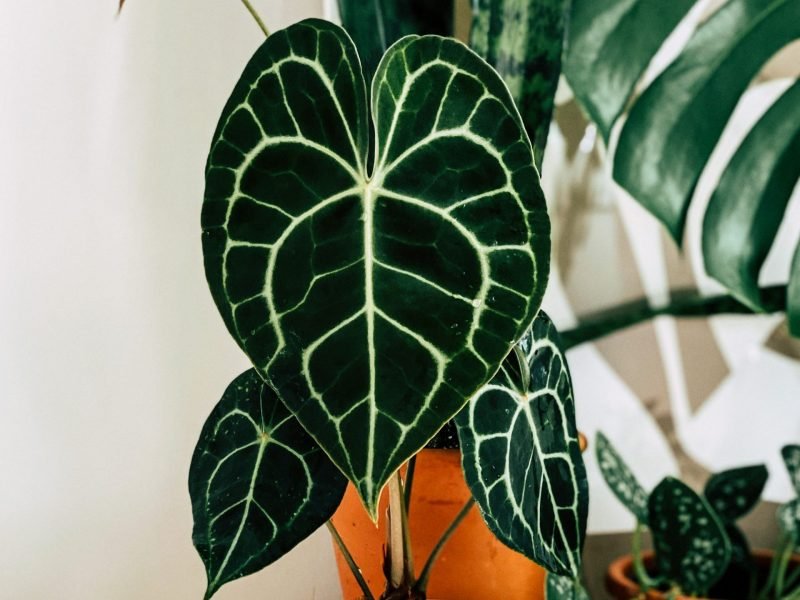
Anthurium Clarinervium, a captivating houseplant native to the Mexican rainforests, is renowned for its striking, heart-shaped foliage. The plant’s unique characteristic is its velvety, dark green leaves marked by a beautiful pattern of bright, prominent veins that appear almost painted on.

Nicknamed ‘Velvet Cardboard Anthurium’, this plant originates from the rainforests of southern Mexico. It belongs to the Araceae family and is part of the larger Anthurium genus, which is comprised of more than 800 species. Despite their exotic origins and seemingly intricate appearance, Anthurium Clarinervium plants are surprisingly easy to care for, making them a favorite among both novice and experienced plant enthusiasts.

Anthurium Clarinervium: Plant Characteristics

Appearance

The most captivating characteristic of the Anthurium Clarinervium is undoubtedly its large, heart-shaped leaves. These leaves, reaching up to 9 inches in length, are intricately patterned with veins that are a brilliant white, creating a striking contrast against the dark green of the leaf surface. The leaf texture is often compared to velvet or cardboard due to its thick and stiff nature

Flowering

While the Anthurium Clarinervium does flower, it’s the leaves that will always be the main focus of this plant. The flowers tend to be small and less visually impressive compared to the dramatic leaves. They are typically a pale green hue and emerge from a spathe, similar to other Anthurium species.

Size and Growth

This plant’s growth pattern is relatively slow, especially when grown indoors. It usually achieves a mature height of around 1 to 2 feet. However, with the right care, Anthurium Clarinervium can live for many many years.

Watering Your Anthurium Clarinervium: Best Practices

Proper watering can greatly impact the overall health and appearance of your Anthurium Clarinervium. Too little water can lead to wilting and browning leaves, whereas excessive watering can result in root rot, a common issue for houseplants so finding the right balance is important.

When to Water

Keeping a loose watering schedule will help ensure that your Anthurium Clarinervium plant gets the right amount of water. A good rule of thumb is to let the top inch of the soil dry out between watering.

Typically, this will mean watering your plant every 1-2 weeks, depending on the humidity and temperature of your home. Use this as a general base and adjust as needed depending on your individual home and plant.

How to Water

When watering, do so thoroughly, ensuring the water runs through the drainage hole at the bottom of the pot. This will encourage a deeper and more robust root system, contributing to the overall resilience of your plant. Avoid letting the plant sit in water as this can cause root rot so remove any excess water from the saucer or planter about 15 minutes after watering.

Using room temperature water is recommended as cold water could shock the plant roots, causing them stress. You also need to avoid getting water on the leaves as this can cause spots and damage to the leaf surface.

Water Quality

The plant prefers rainwater or distilled water to tap water if you live in a hard water area, as the latter often contains chlorine and other minerals that can harm the plant. If you must use tap water, let it sit out overnight to allow the chlorine to evaporate.

Anthurium Clarinervium Lighting Needs

The Anthurium Clarinervium is a tropical plant that thrives best under indirect, bright light. It’s a common misconception that because these plants come from tropical environments, they require direct sunlight. In fact, the canopy of the rainforest often diffuses the harsh sunlight, providing these plants with filtered, indirect light.

Artificial Light: If you do not have a suitable spot near a window, you can also grow your Anthurium Clarinervium under artificial light. Fluorescent lighting is a great option, as it can simulate the bright but diffused light that the plant requires. Ideally, the plant should be placed about 2 feet away from the light source.

Low light: If the Anthurium Clarinervium is not getting enough light, its leaves will become darker and it may stop producing new leaves.

Lighting Tips for Anthurium Clarinervium

  1. Rotate your plant every few weeks to ensure all sides get equal exposure to light.
  2. Use sheer curtains or blinds to filter the sunlight if your plant is near a window.
  3. Consider using a grow light during the darker winter months to supplement natural light.

Humidity and Temperature Requirements

Temperature:

The Anthurium Clarinervium prefers a temperature range between 65°F (18°C) and 75°F (24°C). While it can tolerate a bit cooler or warmer, it’s important to avoid sudden temperature changes, which can shock the plant and cause leaf drop.

Be careful not to place your plant near air vents, heaters, or draughty windows where temperature fluctuations and extremes are common.

Humidity:

This tropical plant loves high humidity levels. Ideally, the Anthurium Clarinervium should be kept in an environment where the humidity is between 60% and 80%. In low humidity environments, leaves may brown and wilt.

To increase humidity, you can mist your plant regularly, set up a pebble tray or invest in a humidifier to keep a nice stable humidity level.

Pruning Your Anthurium Clarinervium: A Step-by-Step Guide

Pruning your Anthurium Clarinervium not only maintains its aesthetic appeal but also helps the plant stay healthy. If you’re a beginner, the idea of pruning might seem daunting, but it’s actually really a simple process. Let’s break it down step-by-step.

Step 1: Gather Your Tools

First, ensure you have the right tools on hand. A clean, sharp pair of pruning shears or scissors should do the trick. Remember, cleanliness is crucial as dirty tools can spread disease to your plant.

Step 2: Identify the Parts to Prune

Start by examining your Anthurium Clarinervium carefully. Look for leaves that are yellow, brown, or wilted. These are the parts of the plant that need to be removed first. Then make note of any overgrown or leggy stems that may need to be trimmed back.

Step 3: Make the Cut

Once you’ve identified the parts to prune, it’s time to make the cut. Hold the leaf or stem near the base and make a clean, swift cut. Ensure you are cutting at an angle and as close to the main stem as possible. Avoid tearing or crushing the plant tissue as this can cause damage to the plant.

Step 4: Dispose of the Pruned Material

After pruning, promptly dispose of the removed plant material. Leaving it around can attract pests or lead to disease development.

Step 5: Clean Your Tools

Finally, clean your tools after each pruning session. This helps prevent the spread of diseases and keeps your tools in good shape.

Repotting Your Plant: When and How to Do It

Identifying the Need for Repotting

The first step in repotting an Anthurium Clarinervium involves determining whether your plant would actually benefit from a larger pot. There are a few clear signs that your plant may be outgrowing its current home. These include:

  • Roots appearing on the surface: If you see roots growing above the soil or coming out of the drainage holes, it’s a clear sign that your plant needs more room.
  • Faster water drainage: If water runs straight through the pot without being absorbed by the soil, it may be due to a lack of space for the roots to grow.
  • Slowed growth: If the plant’s growth seems to have slowed down or stopped entirely, it could be a sign that the plant is too cramped.

Choosing the Right Pot

Once you’ve determined that your Anthurium Clarinervium needs repotting, the next step is choosing the right pot. A ceramic or terracotta pot that’s only slightly larger than the current one is a good choice. This material absorbs excess moisture and allows the roots to breathe, thus promoting healthy growth.

Steps to Repot Anthurium Clarinervium

  1. Preparation: Fill the new pot one third full with an appropriate well-draining potting mix.
  2. Removal: Carefully remove the Anthurium Clarinervium from its current pot, shaking off excess soil from the roots.
  3. Placement: Position the plant in the new pot, spreading the roots out gently.
  4. Final touches: Fill the rest of the pot with the potting mix, lightly pressing down to ensure the plant is secure. Leave a small space at the top for watering.

Remember to water thoroughly after repotting and place the plant in a bright, indirect light area to help it settle into its new home and get over the initial shock of repotting (yes moving house is stressful for plants too!)

The Right Soil for your Anthurium Clarinervium

The Anthurium Clarinervium prefers soil that is rich in organic matter and has good aeration. This ensures that the roots get enough oxygen and minimizes the risk of root rot, a common problem when the soil is too heavy or waterlogged. Therefore, the soil should be light and fluffy, yet able to retain the right amount of moisture without becoming soggy.

A good starting point is a high-quality, well-draining potting mix. To this, you can add components to increase drainage and aeration. Here’s a simple recipe:

  • 50% high-quality potting soil
  • 25% perlite or pumice for increased drainage
  • 25% orchid bark or coco coir to improve aeration and mimic the plant’s natural environment

Fertilizing Your Anthurium Clarinervium: What You Need to Know

The Importance of Fertilizer

While Anthurium Clarinervium plants can survive without it, incorporating a good fertilizer into your plant care routine will help it thrive. An appropriate fertilizer ensures that your plant has access to all the essential elements it needs to generate new, healthy foliage, and maintain its unique glossy and veined look.

Choosing the Right Fertilizer

Look for a balanced, water-soluble or liquid fertilizer, typically labeled as 20-20-20 (indicating an equal ratio of Nitrogen, Phosphorus, and Potassium). This type of fertilizer ensures that your plant gets a balanced spectrum of macro-nutrients.

Fertilizing Schedule

Fertilizing your Anthurium Clarinervium should ideally be done on a monthly basis during the growing season (spring to early fall) and not at all during the colder winter months.

Important: Over-fertilization can lead to salt buildup in the soil which can harm your Anthurium Clarinervium so it’s better to be on the safe side and not over do it.

Fertilizing Process

To fertilize your Anthurium Clarinervium, mix the fertilizer with water according to the package instructions (or dilute it even further), then water your plant as usual. Be sure to thoroughly wet the soil, but avoid waterlogging it.

Anthurium Clarinervium Toxicity

The Anthurium Clarinervium is toxic to humans and pets due to the presence of calcium oxalate crystals, which are found throughout the plant.

When ingested by pets or humans, the Anthurium Clarinervium can cause a range of unpleasant symptoms. These can include:

  • Mouth and throat irritation – The calcium oxalate crystals can irritate the soft tissues of the mouth and throat, leading to pain, swelling, and difficulty swallowing.
  • Stomach upset – Ingestion of the plant can also cause nausea, vomiting, and diarrhea.
  • Eye irritation – Contact with the plant’s sap can lead to eye irritation and, in some severe cases, temporary blindness.

If your pet or a family member has ingested part of the plant or is experiencing these symptoms, it’s essential to seek immediate medical attention.

Safe Practices Around Anthurium Clarinervium

  1. Placement – Keep the plant in a location that is out of reach of children and pets.
  2. Handling – Always wear gloves when handling the plant to prevent skin irritation.
  3. Cleaning Up – Dispose of any fallen leaves or plant trimmings immediately to prevent accidental ingestion.

Flowers on an Anthurium Clarinervium

The flowers of the Anthurium Clarinervium are not the typical kind that you would imagine. They are technically spathes, not petals. The actual flowers are minuscule, packed along a fleshy spike called a spadix.

These spathes are a pale, greenish-white color and take a long, slender form that extends from the base of a leaf. The spadix is a darker shade of green, providing a subtle contrast. Together, the spathe and spadix create a flower that is unique and understated compared to the plant’s foliage.

  • Color: The spathe is typically a pale, greenish-white color.
  • Shape: The spathe takes a long, slender form, while the spadix is a tiny, tight cluster of flowers.
  • Size: The size of the flower can vary, but the spathe typically grows up to 6 inches long on a mature Anthurium Clarinervium.
  • Blooming Time: Anthurium Clarinervium typically flowers during the spring and summer months, but under ideal conditions, it can produce flowers sporadically throughout the year.
  • Frequency: Flowering frequency is directly influenced by the plant’s care. Proper light, humidity, and nutrition can encourage more frequent blooming.

The Risk of Pests

Common pests that may plague Anthurium Clarinervium include:

  • Aphids: These tiny insects can rapidly multiply and infest your plant, causing curling, yellowing, and wilting of leaves. Aphids feed on the plant’s sap and can cause significant damage if left unchecked.
  • Spider Mites: These pests are often difficult to spot due to their tiny size so using a magnifying glass is recommended when checking up on your plant. Spider mites feed on the underside of leaves, causing yellow spots or speckles. A fine webbing on the plant may also indicate a spider mite infestation.
  • Mealybugs: Mealybugs pests appear as small, white fuzzy spots on the plant. They feed on plant juices and can cause stunted growth and leaf drop.

Preventing and treating pest infestations involves several steps:

  1. Regular Inspection: Regularly inspect your Anthurium Clarinervium, particularly the underside of leaves and the stem. Early detection is key to controlling an infestation.
  2. Proper Watering: Overwatering can create an environment conducive to pest infestations. Ensure your plant has adequate drainage and avoid waterlogged soil.
  3. Use of Pesticides: If an infestation occurs, consider using a gentle pesticide. Be sure to follow the manufacturer’s instructions to ensure safe and effective use.
  4. Isolation: If a pest infestation is confirmed, isolate the affected plant to prevent the pests from spreading to your other plants.

Anthurium Clarinervium FAQs


Common Problems with your Anthurium Clarinervium

Fiddle and Thorn is a participant in the Amazon Services LLC Associates Program, an affiliate advertising program designed to provide a means for sites to earn advertising fees by advertising and linking to Amazon.com

Take our houseplant survey!

Quickly respond to our 30 second houseplant survey and get 75% off our Complete Houseplant Care eBook!

Take the Survey

No thanks…

Aluminium Plant Care Guide: How to Keep Your Pilea Cadierei Healthy

Last Updated: October 23, 2023

Introduction to Aluminium Plant Care

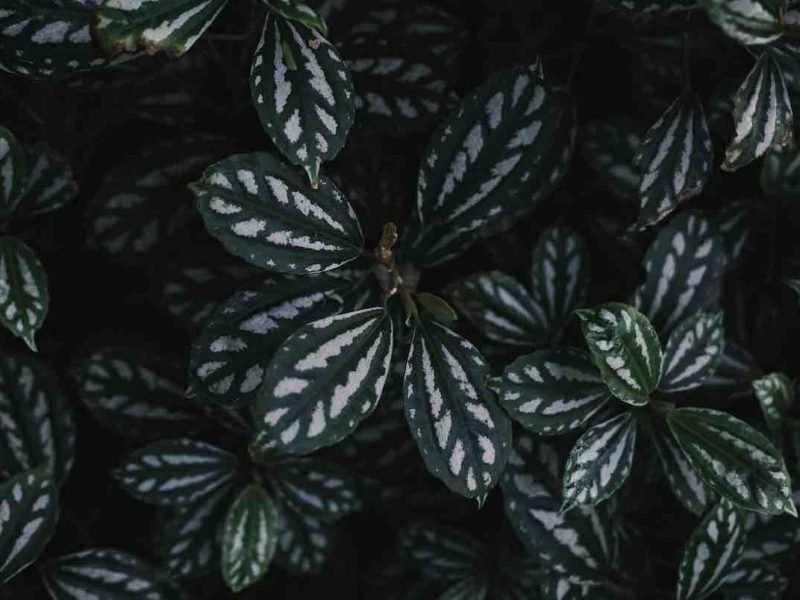
The Aluminium Plant, also known as Pilea cadierei, is a charming houseplant known for its stunning foliage. Each leaf carries a unique pattern of silvery markings, a characteristic that inspired its metallic moniker.

When properly cared for, the Aluminium Plant can reach a height of 12 inches, making it an excellent choice for a tabletop or a hanging basket.

Aluminium Plant Origin

The Aluminium Plant is a species native to Vietnam and China. Known for its stunning leaves that feature a silver, metallic sheen, this plant gets its common name – Aluminium Plant – from its unique leaf coloration. Each leaf is dark green and often appears glossed over with patches of silver to aluminium. These metallic patches reflect light, giving the plant its distinct aluminium sheen.

Care Difficulty

When it comes to the care difficulty of the Aluminium Plant, it’s relatively easy to manage, making it a popular choice among houseplant enthusiasts (both beginners and veterans alike). However, like every plant, it does require a specific set of conditions to thrive which we will cover in this article.

Aluminium Plant Characteristics

Primarily, the Aluminium plant is recognized for its stunning leaves. The foliage is a deep, rich green, variegated with silvery patches that resemble squares of aluminium, hence the name. These silver patterns contrast beautifully against the darker green of the leaves, creating a striking visual effect that stands out in any indoor garden setting.

  • Size: Aluminium plants typically reach a height of 12 inches (30 cm) with a similar spread, although they can grow larger with proper care. They present a compact, bushy shape, making them ideal for tabletop displays or as part of a container garden.
  • Leaves: The leaves grow oppositely on the stem, and are oval in shape, measuring approximately 2-4 inches (5-10 cm) in length. The top surface of the leaf is dark green with patches of metallic silver, while the underside is a lighter shade of green.
  • Flowers: While it’s not common for Aluminium plants to flower indoors, they can produce small, inconspicuous white or pink flowers under optimum conditions.
  • Growth rate: Interestingly, the Aluminium plant has a fast growth rate compared to other houseplants but will still be dormant during the colder darker months of the year.

Ideal Growing Conditions for an Aluminium Plant

The Aluminium Plant (Pilea cadierei), thrives under certain growing conditions. A thorough understanding of these conditions will ensure your plant’s healthy growth and longevity. Let’s delve into the various aspects you should take into consideration.

Light Conditions

Aluminium Plants prefer a well-lit environment and they thrive best in bright, indirect sunlight. Direct exposure to harsh sun rays can cause the leaves to scorch and lose their characteristic silver markings. However, a lack of sufficient light can lead to a reduction in the plant’s vibrant color and slowed growth. Thus, striking a balance is essential.

Temperature and Humidity

Aluminium Plants are tropical in nature, and hence, they favor warm temperatures. Ideal temperature conditions range between 60 and 75 degrees Fahrenheit. These plants don’t do well in cold drafts, so avoid placing them near open windows during winter.

Regarding humidity, they are quite adaptable. However, they prefer higher humidity levels, typical of a rainforest habitat. Regular misting or placing the plant on a tray with pebbles and water can help maintain the desired humidity.

Soil and Watering Conditions

The Aluminium Plant prefers well-draining soil. The use of additional perlite or sand is often recommended to enhance drainage. Overly wet soil can lead to root rot, a common issue with these plants so watch out for that.

As for watering, these plants have a moderate need. They prefer the soil to be kept consistently moist, but not waterlogged. Water the plant thoroughly and allow the top inch of the soil to dry out before the next watering. Overwatering can lead to leaf drop and root rot, while underwatering can cause wilting.

The Correct Way to Fertilize Your Aluminium Plant

When considering fertilization for your Aluminium Plant, bear in mind that this plant is not overly demanding. However, in order to ensure optimal growth and health, a balanced supply of nutrients is necessary. Fertilizing your Aluminium Plant not only promotes vibrant growth but also enhances the plant’s resistance to pests and diseases.

Here are some guidelines to properly fertilize your Aluminium Plant:

  1. Choose the Right Fertilizer: Use a balanced houseplant fertilizer which contains equal proportions of nitrogen, phosphorous, and potassium (N-P-K). These are the primary nutrients that every plant needs in ample quantities.
  2. Fertilizer Concentration: Too much fertilizer can be detrimental to your plant’s health. Always dilute the fertilizer to half of the recommended strength on the product’s instructions unless otherwise stated.
  3. Regular Feeding: Feed your Aluminium plant every two to three weeks during the growing season, which is usually from spring through late summer. During the dormant season (fall and winter) cut back all feeding.
  4. Monitor Plant’s Reaction: Always observe your plant’s reaction to the fertilizer. If the plant shows signs of distress, such as yellowing leaves or slowed growth, it could be a sign of over-fertilization.

What If I Over-Fertilize My Aluminium Plant?

Over-fertilization can lead to ‘fertilizer burn’, a common issue which can cause your Aluminium Plant’s leaf tips to turn brown. If you suspect that you’ve over-fertilized your plant, take immediate action to minimize damage.

  • Firstly, stop any further fertilization.
  • Secondly, flush the soil with plenty of water. This will help to wash out the excess fertilizer salts.
  • Finally, prune away any severely damaged foliage to promote new growth.

Pruning and Trimming Aluminium Plants: A Step-by-Step Guide

Pruning and trimming are essential tasks for maintaining the health and appearance of your Aluminium Plant. These activities promote bushier growth, prevent legginess, and allow the plant to conserve energy for developing healthy foliage and roots. Let’s look into the step-by-step guide on how to prune and trim your Aluminium Plant effectively.

When to Prune Your Aluminium Plant

Typically, the Aluminium Plant should be pruned in the early spring or summer, when the plant is in its active growing phase. During this period, the plant can quickly heal and produce new growth. However, if your plant has become too leggy or overgrown, a trim at any time of year can be beneficial.

Tools You’ll Need

  • Sharp, clean pruning shears or scissors: Using clean, sharp tools helps prevent the spread of disease and ensures a clean cut, reducing stress on the plant.
  • Gloves: While not necessary, gloves can protect your hands from the plant’s sap.

Steps to Prune Your Aluminium Plant

  1. Prepare your tools: Always start by cleaning your pruning shears or scissors. You could wipe them with rubbing alcohol to ensure they’re sterile.
  2. Identify the cutting points: Look for older leaves that are slightly discolored or leggy stems that are stretching out of the plant’s general shape.
  3. Make the cut: Cut just above a leaf node (the point where a leaf or branch connects with the stem). This promotes new growth at that point.
  4. Clean up: Remove the cuttings from the plant’s vicinity to keep it tidy and prevent the spread of any potential diseases.
  5. Monitor your plant: In the weeks following pruning, keep a close eye on your plant to ensure it’s responding well. If you notice any signs of stress or disease, take appropriate actions immediately.

Choosing the Right Pot for Your Aluminium Plant

Material

Aluminium plants are not particularly choosy when it comes to the material of the pot. However, it’s important to select a pot that is durable and allows for proper drainage. Materials such as ceramic and terracotta are popular choices as they let som excess water evaporate out of the sides which helps avoid issues such as root rot. On the other hand, plastic pots can also be used as they are less breakable, cheap and lightweight.

Size

As for the size, it’s essential to choose a pot that provides ample space for the plant’s roots to grow and spread. Aluminium Plants generally grow up to 12 inches tall with a similar width, so a pot that is around 6 to 8 inches in diameter would be a good fit. Remember, a pot that is too small can restrict growth, and a pot that is too large can lead to root rot and stability issues.

Drainage

Perhaps the most critical factor when choosing a pot for your Aluminium Plant is ensuring it has proper drainage. These plants prefer moist but well-drained soil, which means the pot must have at least one drainage hole at the bottom. Without sufficient drainage, your plant can suffer from waterlogged roots, potentially leading to its untimely demise.

Aesthetics

Last but not least, consider the aesthetic appeal of your pot. After all, the pot you choose will be the home to your Aluminium Plant and contribute to the overall look of your indoor or outdoor garden. Choose a design and color that complements the silver-patterned foliage of the Aluminium Plant, enhancing its unique charm and beauty.

Aluminium Plant Toxicity

The Aluminium Plant is generally considered non-toxic; however, it’s always important to exercise caution when introducing any plant into a home with pets or small children.

For those with sensitive skin, it’s worth noting that the plant’s sap can potentially cause irritation. Nonetheless, the Aluminium Plant’s toxicity is relatively low compared to other houseplants.

When it comes to pets, different animals may react differently:

  • Cats: While the Aluminium Plant is not listed as toxic to cats by the ASPCA, some cats may suffer from mild gastrointestinal upset if they consume a large amount of the plant.
  • Dogs: Dogs are not specifically listed as being sensitive to Aluminium Plants. However, any consumption of plant material could potentially cause mild upset stomach.

Children may also experience minor stomach discomfort if they ingest parts of the plant. It is always advisable to keep plants out of reach of small children, and to teach older children about the potential risks associated with eating plant materials.

While the Aluminium Plant does not appear on any major toxic plant lists, any plant can potentially cause a reaction in certain individuals or pets. Always monitor for any signs of a reaction, and contact a healthcare provider or veterinarian if you have any concerns.

Flowers on an Aluminium Plant

The plant’s small, inconspicuous flowers are often overlooked due to the stunning silvery patches on the green leaves, which earns the plant its name.

However, it’s worth noting that the Aluminium Plant does produce flowers under specific conditions. The flowers are typically white or pale green, and they’re quite small. They tend to appear in clusters, usually during the summer months when the plant is in its active growth phase.

Common Pests and Diseases: Prevention and Treatment for Aluminium Plants

One of the most important aspects of Aluminium Plant care is prevention and treatment of common pests and diseases. These plants are generally hardy but can occasionally fall victim to certain pests and diseases. Armed with the right knowledge, you can ensure your Aluminium Plant remains healthy and vibrant.

Common Pests

The most frequently encountered pests on Aluminium Plants include mealybugs, spider mites, and aphids. These tiny creatures can cause significant damage if left untreated.

  • Mealybugs: These are small, white insects that may look like small pieces of cotton. They suck the sap out of the plant, weakening it and causing yellowing leaves.
  • Spider Mites: Tiny and often hard to see, spider mites cause damage by sucking the plant’s juices. You might notice web-like substances on the plant or a speckling effect on the leaves.
  • Aphids: These small, soft-bodied insects are usually green or yellow and can cause leaf curling or distortion.

Common Diseases

Aside from pests, certain diseases can also affect Aluminium Plants. These primarily include root rot and leaf spot.

  • Root Rot: Overwatering is often the cause of root rot. Signs include yellowing leaves and a plant that appears generally unhealthy. Check the root system to confirm this issue as they will be black and soft if rotting.
  • Leaf Spot: This is usually caused by a fungus or bacteria and results in dark spots or patches on the leaves.

Prevention and Treatment

Preventing these issues is always better than having to treat them as treatment may not always be successful if the issue has become severe. Regular care and maintenance can help deter pests and disease.

  1. Regular Inspection: Regularly check your plant for signs of pests or disease. Early detection can make treatment easier and more successful.
  2. Proper Watering: Overwatering contributes to root rot. Give your plant the right amount of water, taking care not to leave it sitting in water.
  3. Pruning: Remove any diseased or dead leaves to prevent the spread of disease.
  4. Proper Spacing: Good air circulation can help prevent fungal diseases. Ensure your plants are not crowded together.

Aluminium Plant FAQs

Can an Aluminium Plant tolerate direct sunlight?

Bright but indirect sunlight is best for the Aluminium Plant as too much direct light can scorch and burn the leaves. In terms of lower light, whilst it can adapt to these environments, it will often lead to stunted and smaller growth.

How often do I need to water my Aluminium Plant?

Aluminium Plants thrive when their soil is evenly moist which means the little but often approach is best when watering them. They don’t like to go from soggy to dry extremes so it’s about finding the right balance.

Are Aluminium Plants toxic?

Unfortunately, Aluminium Plants are toxic which means you want to keep them away from any pets or children that might be tempted to nibble at the leaves.

Are Aluminium Plants low maintenance?

The most difficult thing about caring for Aluminium Plants is that they outgrow their pots at a rapid pace. Their strong root systems can even break through planters as they are quite invasive plants so regularly pruning or repotting is a must.

Why is my Aluminium Plant dying?

If you notice issues cropping up with your Aluminium Plant, then the first thing to look at is the soil. Watering issues are the biggest killer of Aluminium Plants so check if the soil is bone dry or waterlogged. Then monitor environmental factors such as sunlight, temperature and humidity levels to see what needs to be adjusted.


Common Problems with your Aluminium Plant

Why does my Aluminium Plant have brown leaves?

Brown leaves on Aluminium Plants are caused by quite a few different factors so we recommend going through them one by one to figure out which is the cause. The main factors are: not enough sunlight, watering issues or too much direct light.

Why is my Aluminium Plant wilting?

If you see that your Aluminium Plant is starting to wilt, then it suggests that your plant isn’t getting enough water. Check the soil to confirm that the potting mix is dry before slowly reintroducing watering.

Why are my Aluminium Plant’s leaves fading?

Too much intense direct sunlight can cause the leaves on your Aluminium Plant to fade. Move your plant to a slightly shadier spot in your home.

What is causing my Aluminium Plant to have yellow leaves?

If the leaves throughout your Aluminium Plant are turning yellow and looked quite scorched then it may be caused by too much sunlight.

However, if the occasional bottom leaf on your Aluminium Plant turns yellow then this is most probably caused by natural ageing.

Why is my Aluminium Plant drooping?

There are two more common causes of drooping Aluminium Plant leaves. Firstly, if your Aluminium Plant is receiving too much sunlight this can cause the leaves to become quite scorched and droop down. If this is happening to your plant then move it to a slightly shadier location during the sunniest months of the year and this should stop your Aluminium Plant from dropping down so much.

Drooping leaves on an Aluminium Plant can also be caused by a lack of moisture. We recommend checking the moisture levels in the soil immediately before adjusting your watering schedule. Watering either more frequently, or giving your Aluminium Plant a bit more water each time should help to prevent your plant from drooping.

Why is my Aluminium Plant curling?

There are a few different factors that might lead the leaves on your Aluminium Plant to curl. This can be caused by either underwatering, a lack of humidity or temperature stress.

The best thing to do to figure out why your Aluminium Plant has curling leaves is to inspect the soil to see if the potting mix is dry and if the roots are crispy. If so, then this suggests a lack of water is causing your Aluminium Plant to curl.

You can also use a humidity monitor or digital thermometer to see if there is an issue with any of these factors which is causing your Aluminium Plant to curl.

Fiddle and Thorn is a participant in the Amazon Services LLC Associates Program, an affiliate advertising program designed to provide a means for sites to earn advertising fees by advertising and linking to Amazon.com

Take our houseplant survey!

Quickly respond to our 30 second houseplant survey and get 75% off our Complete Houseplant Care eBook!

Take the Survey

No thanks…

Alocasia Dragon Scale Yellow Leaves | Causes and Solutions

Last Updated: April 1, 2022

These rare Alocasia plants have some of the most incredible foliage which almost makes it worse when one or more of their leaves start to turn yellow. As long as you have caught the issue early, you should be able to bring your Alocasia Dragon Scale back to full health. There are quite a few reasons why these plants develop yellow leaves, some are more worrying than others, some easier to fix than others but all need to be diagnosed before they damage your Alocasia Dragon Scale beyond repair.

Below you’ll find a detailed guide to all the different causes of yellow Alocasia Dragon Scale leaves, as well as how to fix the issue and prevent it from reoccurring in future.

Overwatering is the most common cause of yellow leaves

If the leaves on your Alocasia Dragon Scale have turned yellow there is a good chance you are overwatering your plant, and have been doing for some time. This is one of the most common problems plant parents face with all houseplants because it can often be difficult to know exactly how much water to give them as the problem is buried in the soil for a while before you start noticing things on the leaves. Alocasia Dragon Scale plants don’t really like to be sitting in soggy soil for too long as this can lead the root system to start to rot which makes the entire plant unstable and it’ll begin to die.

If you think that the yellow leaves on your Alocasia Dragon Scale are caused by too much moisture in the soil, take your plant out of its pot, replace the potting mix if waterlogged and adjust your watering schedule accordingly. At the same time as switching out the potting mix, trim away the rotten roots and any yellow leaves so that your Alocasia Dragon Scale can focus on producing new healthy growth.

Too much fertiliser

Although Alocasia Dragon Scale plants do really well when fertilised throughout the warmer months of summer and spring, too much fertiliser can very quickly cause scorched leaves and yellow patches.

To stop the issue from progressing any further, remove any fertiliser spikes or replace the entire potting mix if the pellets are mixed in. If you’ve been using a water-soluble fertiliser, either replace the potting mix as well or rinse it through properly in the shower. Hold off on fertiliser for a while. You can even stop fertilising altogether and with the right environment, you’ll still have super healthy growth.


Low humidity in the air

If the yellow leaves on your Alocasia Dragon Scale plant started out as dry brown edges, tips and spots on the leaf, then dry air may be the reason behind it. Alocasia Dragon Scales prefer a humid environment as they originate from tropical forests. They will struggle in homes with dry air. Particularly in winter when we tend to have the heating on for a lot of the day and open our windows less which causes dry stagnant air.

There are a few really simple techniques to keep the humidity higher than normal for your Alocasia Dragon Scale; firstly, you can spray down the leaves with a mist bottle every few days (this is also a great way to get rid of dust), sit your plant in a tray with water and some pebbles or put your Alocasia Dragon Scale in the bathroom and leave the shower on hot for 5 minutes. You can pick up a cheap humidity monitor to keep track of everything if you’re more concerned. Make sure to also move your Alocasia Dragon Scale away from any air conditioning units or radiators as these create very dry air!

Direct sunlight

If your Alocasia Dragon Scale is receiving too much bright direct sunlight each day you may start to notice yellow patches forming on the leaves. This is where the leaves are becoming sunburnt from the direct intense light. This is a lot more common during summer so watch out for how close your plant is to the window.

If your Alocasia Dragon Scale is receiving too much light then make sure to move it to a slightly shadier spot in your home immediately. You may be able to move it closer to the window in winter when the sun isn’t as strong so keep an eye on lighting changes throughout the year.

A pest infestation

A slightly rarer (but more worrying) issue that might be the reason behind the yellow leaves on your Alocasia Dragon Scale is a pest infestation. The uninvited bugs will suck on the leaves, exhausting them f nutrients which causes them to turn yellow, droop down and fall off your plant.

Most pests are visible to the human eye but using a magnifying glass can help spot them. It’s a good idea to regularly check in on your plant, regardless of whether or not there seem to be any issues as this gives you the best chance at catching the problem early. It’s vital that you look at the undersides of the leaves on your Alocasia Dragon Scale as this is where the pests like to live.

If there are pests making a home on your Alocasia Dragon Scale the first thing to do is isolate your plant to prevent the infestation from spreading throughout your other houseplants. The next step is to trim off the worst affected leaves and stems to reduce the overall number of insects. Then give your plant a wash down in the shower (make sure the water pressure is low so you don’t damage your plant further) and treat with an insecticide/neem oil.

It’s important when going through each of the issues above that you take a good in-depth look at your plant, its soil and the environment in which it’s growing. This will give you the best indication of what is causing the yellow leaves and help you fix the issue. It’s important that you act quickly once you’ve determined what the cause is as if the issue progresses any further than yellow leaves, you risk plant death.

To learn more about how to care for your plant, check out our Alocasia Dragon Scale care guide!

Fiddle and Thorn is a participant in the Amazon Services LLC Associates Program, an affiliate advertising program designed to provide a means for sites to earn advertising fees by advertising and linking to Amazon.com

Take our houseplant survey!

Quickly respond to our 30 second houseplant survey and get 75% off our Complete Houseplant Care eBook!

Take the Survey

No thanks…

How to Care for an Alocasia Dragon Scale

Last Updated: May 22, 2023

Alocasia dragon scale plant in a grey pot

Alocasia Dragon Scale are growing in popularity and although they used to be tricky to get your hands on, they are now a little bit more available in plant shops around the world. The great thing about these plants is that they are quite adaptable to a range of environments so you shouldn’t have too much trouble keeping them healthy.

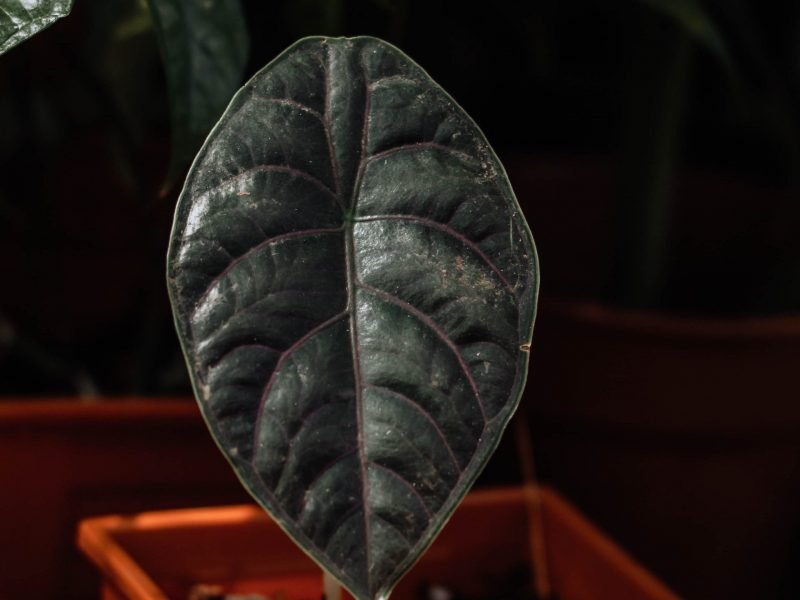
Native to the island of Borneo, this plant is part of the flowering Araceae plant family and can also be identified through the name Alocasia baginda. You can very easily identify the Alocasia Dragon Scale through its unique leaves. With deep veins that look like a reptile’s skin, these are very dramatic-looking houseplants which is why we’ve fallen in love with them!

How to care for an Alocasia Dragon Scale

Although they may look dramatic, the care requirements are actually quite simple. Avoid direct sunlight during summer as this can very quickly dry out and scorch the leaves. Bright but indirect light is ideal as you’ll see slower and smaller growth in lower light.

Then when it comes to watering, these plants are quite susceptible to overwatering and root rot so make sure the potting mix is never waterlogged.

Then when it comes to temperature and humidity, a boost to both will go a long way to encouraging new healthy growth and avoiding common problems.

Alocasia Dragon Scale Overview

Origin: Native to the island of Borneo

Plant Family: Araceae

Care Difficulty Level: Medium

Appearance: Dark strongly ridged leaves with a wrinkled texture

Height and Size: Indoors will reach a maximum height of 1 meter

Growth Rate: Medium

Flowering: Can produce spathe-like white flowers in summer

Pruning: Only when there is an issue

Cleaning: Regular dusting is crucial

Light Requirements: Bright but indirect light is ideal

Water Requirements: Avoid overwatering but keep an even moisture level

Best Soil: Well-draining soil including perlite

Ideal temperature: Average room temperature

Fertilizing Routine: Only in spring and summer

Ideal Humidity Level: 60-70% humidity is ideal

Propagation: Division of the mother plant

Repotting Frequency: Every 1-2 years

Toxicity: Highly toxic to pets and humans

Risk of Pests: Spider mites and mealybugs are the most common

Common Problems: Leaf burn, brown leaves and curling foliage

Origin of an Alocasia Dragon Scale

They are native to the tropical forests of Borneo which is why it thrives in moist, warm and humid environments.

Alocasia Dragon Scale Plant Family

They are part of the Araceae family, which is a group of plants that produce spadix flowers which are surrounded by a spathe.

Alocasia Dragon Scale Appearance

They are loved for their thick veined leaves which have a wrinkled texture. Their emerald-green leaves often shimmer slightly which can give off a silvery glow. There are other varieties that are very similar but are more silver or lighter in colour.

Alocasia Dragon Scale Height and Size

When grown indoors, they can reach up to 1 meter in height but in their natural environments, they can reach up to 3 meters.

Alocasia Dragon Scale Growth Rate

They have a moderate growth rate and will reward you with plenty of new leaves each season if the conditions and care are right. They will become dormant over autumn and winter but this is normal and nothing to worry about. They can often reach full maturity after 7-10 years.

Flowers on an Alocasia Dragon Scale

Occasionally you may see small purple and white spathe-like flowers growing on your Alocasia Dragon Scale but this is quite rare. If your Alocasia Dragon Scale isn’t flowering, don’t be concerned as this isn’t on its own a sign that anything is wrong.

Although you might be thrilled to see a flower on your Alocasia Dragon Scale, a lot of plant parents actually remove them and we also recommend this. The flowers aren’t anything spectacular and actually take a lot of energy to grow and maintain.

By removing the flowers, your plant is able to focus all of its energy on producing new leaves, which is the main attraction of the Dragon Scale plant!

Small Alocasia Dragon Scale plant being held in hand

Pruning your Alocasia Dragon Scale

You don’t need to regularly prune your plant to maintain its healthy and new foliage but we do recommend pruning any damaged or dying leaves. Leaves that are no longer green will not be able to aid the photosynthesizing process in the way that your plant needs them to so it’s best to remove them. Otherwise, your plant will be wasting valuable energy trying to keep them alive.

Cleaning your Alocasia Dragon Scale

As they have quite large flat leaves, it’s important to regularly clean the leaves of your Alocasia Dragon Scale. The best way to do this is by using a damp cloth but make sure not to apply too much pressure as you don’t want to break the leaves.

If the dust and dirt isn’t coming off with just a damp cloth, then we recommend adding a drop or two of dish soap. You don’t want to use any other chemicals or cleaning products as this can damage the leaves.

The reason that you want to clean the leaves of your Alocasia Dragon Scale is so that you can maximise the amount of sunlight that it is getting, aiding photosynthesis and therefore the growth of new, healthy foliage. Cleaning the leaves will also help them look fresher and less dull.

Alocasia Dragon Scale Light Requirements

Alocasia Dragon Scale plants need bright but indirect light to thrive so it’s important to find a nice spot where they aren’t getting any direct light but it’s not the darkest spot in the room.

You want to be very careful about direct sunlight during summer as it can be intense enough to scorch, burn and dry out the leaves, turning them yellow or brown.

In terms of lower light, Alocasia Dragon Scale plants can tolerate some low light areas but it’s worth noting that growth will be slower and new leaves will often be smaller.

Water Requirements for an Alocasia Dragon Scale

Alocasia Dragon Scale like to have some moisture in the soil but are sensitive to overwatering. This is why we recommend a little but often approach to watering to avoid waterlogged soil and root rot.

This is why it’s important to monitor the moisture levels in the soil throughout the seasons and adjust your watering accordingly. Using a moisture meter will really help you here as you’ll be able to see how quickly the soil is drying out and therefore, when it’s time to water.

Watering your Alocasia Dragon Scale is probably the hardest part of the overall care routine as you need to get a good balance between avoiding root rot but also avoiding the soil being dry for too long that the roots crisp up. It may take a little trial and error but you’ll get the hang of it!

Best Soil for an Alocasia Dragon Scale

To avoid waterlogged soil, make sure you pot your Alocasia Dragon Scale in a well-draining mix. Perlite and peat moss based mixes are ideal as they aid aeration and drainage but also have some moisture-retaining qualities so that the potting mix doesn’t fully dry out too quickly.

The Ideal Temperature for your Alocasia Dragon Scale

An average room temperature of between 55-80°F (13-27°C) is ideal for your Alocasia Dragon Scale. You want to avoid any hotspots and cold drafts that may impact your plant’s health.

Look out for cold drafts coming through windows and external doors in winter and make sure that your plant is placed away from air conditioners during summer. Although you may enjoy the cool break from the warm weather, the constant stream of cold air can be really damaging for your plant.

When it comes to spotting hotspots, you’ll commonly find these around windows during summer but as you will be avoiding direct sunlight, this won’t be such an issue. Other things to avoid are placing your plant too close to cookers, radiators and heating vents as this will dry out the soil, stems and leaves of your plant.

Apply a half-strength, well-balanced fertilizer once a month from spring to late summer to aid healthy new growth. You want to fertilize at half-strength to avoid fertilizer burn that can occur with over-fertilization of your Alocasia Dragon Scale

Hold off during the colder darker months because growth will be slow or stagnant and feeding during this time can be really harmful.

Ideal Humidity Level for your Alocasia Dragon Scale

It’s important that you keep a moderate to high level of humidity around your Alocasia Dragon. Between 60% and 70% humidity is ideal and they will struggle in rooms with dry air.

Misting or pebble trays are a great way to increase the humidity and avoid issues such as brown leaf tips and edges that are common when the humidity level is lower.

If your bathroom or kitchen gets a good amount of natural sunlight, then it can work well to move your plant in there as these rooms are naturally more humid thanks to showering and cooking!

leafenvy.co.uk

Alocasia Dragon Scale in a white pot

Propagating your Alocasia Dragon Scale

The most successful way to propagate an Alocasia Dragon Scale plant is by diving the plant into several smaller plants. Make sure that each plant has an equal segment of the root system to ensure survival. You can use a root powder or gel to encourage new roots!

Repotting your Alocasia Dragon Scale

On average you want to repot your plant every 1-2 years when you see signs that it is becoming rootbound. You want to look out for a large amount of roots growing out from the drainage holes or popping out at the top of the soil. Another way to know your plant is rootbound is if you remove it from its pot and the roots are very tightly coiled without much soil in between.

Stagnant growth during summer is also a potential indicator that your Alocasia Dragon Scale has become rootbound and needs repotting.

When repotting, make sure to only go one or two sizes up with the new pot. If you choose a pot that is a lot larger than the old one it can make your plant quite unstable. It will also mean that the soil takes longer to dry out as there’s a lot more of it which increases the risk of root rot.

Alocasia Dragon Scale Toxicity to Humans and Pets

Unfortunately, Alocasia Dragon Scale plants are highly toxic to both pets and humans. They can cause mouth ulcers and stomach issues if ingested so it’s important to keep them out of reach of pets and children.

Treating and Preventing Common Pests

Although a pest infestation is rare if your plant grows indoors for the whole year, it can happen that your plant becomes infested with spider mites or mealybugs. The first thing you want to do is isolate your plant away from others and check them over for signs of pests too.

Then you want to remove the worst affected leaves. This will simply help to reduce the size of the infestation and make it slightly easier to treat. The next steps are to wash your plant down in the shower and start treatment with neem oil and an insecticide.

Alocasia Dragon Scale Common Problems

Fiddle and Thorn is a participant in the Amazon Services LLC Associates Program, an affiliate advertising program designed to provide a means for sites to earn advertising fees by advertising and linking to Amazon.com

Take our houseplant survey!

Quickly respond to our 30 second houseplant survey and get 75% off our Complete Houseplant Care eBook!

Take the Survey

No thanks…

Air Plant Yellowing | Causes and How to Fix it!

Last Updated: December 31, 2021

Although Air Plants are unique in the fact they don’t need soil to grow, it doesn’t mean that they don’t get the same issues as most other houseplants. It can happen if either their environment or care routine isn’t right that they develop yellow leaves. It’s not uncommon and is something that a lot of plant parents face regularly which is why we have put together the complete guide on why Air Plants might get yellow leaves, as well as how to fix and prevent the problem.

Below you’ll find a detailed look at each of the different causes of yellow leaves on Air Plants, from watering issues to temperature problems and even chemical sensitivity.

Too much intense sunlight

If the yellowing on your Air Plant’s leaves is quite patchy and the delicate leaves on your Air Plant almost look scorched and burnt, then it might be caused by direct sunlight hitting your plant. Air Plants can deal with some bright light during the day but several hours of intense light, especially over summer, will cause the leaves to turn yellow. You can get away with more direct light during the winter as the sun is weaker but during the hottest months of the year, move your Air Plant a metre or so further away from the window in warmer months to avoid any leaf burn.

Too much water (misting or bathing)

Too much water is a very common reason behind yellow leaves on Air Plants. As you don’t water your Air Plant as you would your other plants, it doesn’t mean that too much misting or bathing can’t cause similar problems to waterlogged soil. Over time, if the leaves are moist for long periods of time, they will start to rot and turn yellow.

Usually, we would recommend checking the potting mix to figure out if you are overwatering your plant, but with Air Plants, there isn’t any soil to check which makes diagnosing the problem a little trickier.

If you worry that you have been misting or bathing your plant too much then cut back a little to see if things improve. Leaf rot is a lot more common in winter as moist leaves and cold temperatures don’t go hand in hand.

Too much fertiliser

Air Plants don’t need to be fertilised that often, or even at all! You can get plenty of new healthy growth and even Air Plant babies without fertilising once. Make sure you cut back all fertiliser during autumn and winter as your plant is dormant and it can cause real damage, including yellow leaves. The yellowing will usually begin from the tips inwards so that’s a good way to spot if fertiliser is the issue.

Low Temperatures

Another reason why your Air Plant has developed yellow leaves is cold temperatures. Native to the warmer parts of the world, Air Plants can struggle if exposed to cold drafts so make sure to keep them away from drafty doors or windows, especially during winter. This will display itself as yellow leaves that will fall off your plant.

You might not notice it but even a little stream of cold air coming in from outside can really damage your plant. But it’s not just during winter that you need to worry about cold temperatures causing yellow leaves, if your Air Plant is near any AC vents during summer this can be equally damaging.

Chemical Sensitivity

Most of the time, our houseplants are totally OK with us using tap water. However, Air Plants are a little bit more sensitive and if you are living in a hard water area then over time a fluoride build-up may occur when misting and bathing your plant. If chemicals do build up on the leaves, it can mean the plant can suffocate. Chemical sensitivity can be hard to diagnose as it can show up quite subtly at first. Most of the time the yellowing will start at the tips inwards.

There are a few ways to make sure that the water you mist and bathe your Air Plant with is fluoride-free. Firstly you can leave a jug of tap water for around 24 hours to allow for a lot of the chemicals to evaporate. You can also use rainwater as the chemical levels are much lower than the treated water out of your tap.

Should I remove the yellow leaves on my Air Plant?

If only the tips have turned yellow on your Air Plant then we don’t recommend removing the leaf but if the entire leaf is yellow, then we would recommend removing it using clean shears. You don’t want your plant wasting energy trying to revive dying leaves so it’s best to remove them.

Check out our Air Plant care guide for more information on how to best care for your plant and prevent any more common problems.

Fiddle and Thorn is a participant in the Amazon Services LLC Associates Program, an affiliate advertising program designed to provide a means for sites to earn advertising fees by advertising and linking to Amazon.com

Take our houseplant survey!

Quickly respond to our 30 second houseplant survey and get 75% off our Complete Houseplant Care eBook!

Take the Survey

No thanks…

Air Plant Care

Last Updated: August 14, 2022

Basic Air Plant Care

Air Plants are some of the only plants that don’t need any soil to grow and only need the occasional misting and water bath to keep them alive. This makes their care routine so much easier than a lot of other houseplants where issues with overwatering and root rot are more difficult to diagnose when buried in the soil.

Below you will find our complete Air Plant Care Guide with all the information you need to help it thrive.

Detailed Air Plant Care

Air Plants need bright light

The best spot for your Air Plant is somewhere that receives a lot of bright sunshine, but preferably indirect. Too much direct sunlight can harm the leaves quite quickly so it is important you keep them a little further away from the window.

They require misting and bathing

Instead of watering the soil like you do with all of your other houseplants, Air Plants only need misting and the occasional bath to keep them alive. Submerge the plant in water for an hour or two every couple of weeks and that should be plenty.

Just be careful not to give your Air Plant too much moisture as this can lead to the leaves rotting and your plant losing leaves.

Never grow them in soil

This may seem obvious, but Air Plants won’t grow in soil, however much you try and make them. They just need good air and misting/bathing as we mentioned above.

Air Plants prefer warmer temperatures

Try and prevent your home from getting too cold in winter as your Air Plant prefers a slightly warmer temperature. They will die in frost so be careful if you live in a cold climate.

You can use fertiliser on an Air Plant

If you do choose to fertilize your Air Plant, use an orchid water-soluble fertiliser and mix it into the water that you use to mist your plant.

Air Plant are not toxic to humans or pets

Thankfully Air Plants are completely safe for humans and pets so don’t worry too much about keeping it out of reach.

Propagate your Air Plant by removing its pups

Over time, as your Air Plant matures, it will produce little offshoots, (otherwise known as pups), which can be carefully separated from the main plant and turned into its own little Air Plant. Unfortunately, you cannot propagate from a single leaf.

Air Plant Care FAQs

Common Issues for Air Plants

Because Air Plants are so unique in how you care for them compared to regular houseplants, they are bound to have some issues. It is important to spot any warning signs to know when your Air Plant might be unhappy.

Fiddle and Thorn is a participant in the Amazon Services LLC Associates Program, an affiliate advertising program designed to provide a means for sites to earn advertising fees by advertising and linking to Amazon.com

Take our houseplant survey!

Quickly respond to our 30 second houseplant survey and get 75% off our Complete Houseplant Care eBook!

Take the Survey

No thanks…