Dumb Cane Plant Care Guide: How to keep your Dieffenbachia thriving

Last Updated: October 16, 2023

Large Dumb Cane Plant
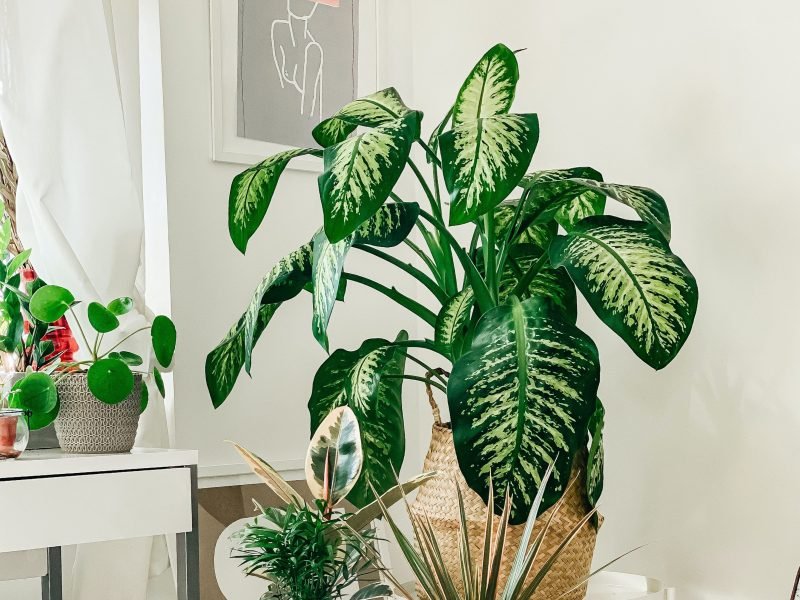
Large dumb cane plant lifestyle photo

Introduction to Dumb Cane Plants

The Dumb Cane plant, scientifically known as Dieffenbachia, is a strikingly beautiful houseplant appreciated for its lush, vibrant foliage. Native to the tropical regions of Central and South America, this plant has been a favorite among indoor gardeners for its ability to thrive in less-than-ideal conditions.

However, as beautiful as they may be, the reason that it has the name Dumb Cane is actually because the sap can cause intense swelling of the throat if ingested, which can leave humans and pets temporarily unable to speak.

Understanding the Anatomy of Dumb Cane Plants

To effectively care for your Dumb Cane plant, also known as Dieffenbachia, it’s crucial to understand its anatomy. This knowledge will help you identify signs of health or distress in your plant.

Stem

The stem of the Dieffenbachia is thick and sturdy. It grows upright and is often banded with marks leftover from old leaf bases. When assessing the health of your plant, make sure the stem is firm. A soft or mushy stem can indicate overwatering or a root disease so check in regularly with your plant while wearing gloves to protect yourself as the Dumb Cane is toxic.

Leaves

One of the most distinctive features of the Dumb Cane plant is its vibrant, patterned leaves. These large leaves are oval or elongated in shape, with variegated green and white, or yellow patterns. The edges of the leaves should be smooth and intact but if you notice the edges turning yellow or getting brown, it could be a sign of inadequate watering or poor lighting conditions so definitely look into any potential issues immediately.

Roots

The roots of a healthy Dieffenbachia should be firm and white or light brown. If the roots are dark brown, slimy, or have a foul smell, the plant may be suffering from root rot caused by overwatering. Always remember to check the roots when you repot or notice signs of distress in your plant and don’t let the soil become waterlogged.

Flowers

While not as common as in other houseplants, your Dumb Cane plant can produce flowers which are usually small, white spathes. Although pretty, these flowers divert energy from the plant. If your plant is not in optimal health, it might be beneficial to remove any flowers to allow the plant to focus on growth and recovery.

Light Requirements for Dumb Cane Plants

These tropical plants are accustomed to the dappled light of the forest floor, so direct sunlight could be too harsh for them. However, they also need enough light to thrive and showcase their beautiful variegated leaves.

Indirect Light is Best

Indirect light is your Dumb Cane’s best friend. Place your plant near a window that receives plenty of light, but out of the direct sun’s reach. East or North-facing windows are often ideal (for those in the northern hemisphere). This lighting condition will help your Dumb Cane grow without risking sunburn to the leaves.

What if I Don’t Have Enough Natural Light?

If you’re dealing with a low-light situation, don’t worry, your Dumb Cane can adapt quite well to some lower-light environments. Although it’s important to know that growth may be slower and the vibrant leaf colors might fade. Alternatively, you can supplement natural light with a grow light. Just remember to place it at a distance so it doesn’t burn the plant.

Signs Your Dumb Cane Needs More Light

Do you suspect your plant might not be getting enough light? Be on the lookout for these signs:

  1. Leggy growth: This is when your plant appears to be “reaching out” for light.
  2. Loss of variegation: If the leaves lose their attractive pattern and become a solid green, it’s a sign that your plant needs more light.

What Happens If Your Plant Gets Too Much Light?

Too much direct light can scorch your Dumb Cane Plant’s leaves, leaving brown or yellow spots or large patches if the issue is severe. If you notice this, move your plant to a location with more shade or filtered light.

Watering Techniques for Dumb Cane Plants

Check the Moisture Level

It’s crucial to always check the moisture level of the soil before watering. Dumb Cane plants prefer their soil to be slightly dry rather than excessively wet and soggy. If the top inch of the soil has dried out (and you are top watering your plant), it’s an indication that it’s time to water your plant.

Saturate The Soil

When you water your Dumb Cane plant, ensure to saturate the soil thoroughly. Pour water slowly onto the soil until it starts to drain from the bottom of the pot. This method ensures that the water reaches the roots, which will promote healthier growth and more stability.

Drain Excess Water

Be sure to drain any excess water that collects in the saucer as standing water can lead to root rot, a condition that can severely harm or even kill your plant. Always aim for moist, not waterlogged, soil.

Avoid Overwatering

Despite your best intentions, overwatering is a common mistake that can hinder the growth of your Dumb Cane plant. Too much water can lead to yellowing leaves and root rot. If you do overwater your plant, the best thing to do is replace the soil and remove as much of the soggy soil from around the root system. Don’t wait for it to dry out unless you are in a particularly hot climate as this risks irreversible issues.

Top tip: Always use room-temperature water for your Dumb Cane plant. Cold water can shock the plant, resulting in droopy leaves.

Humidity and Temperature for Dumb Cane Plants

For your Dumb Cane plant to flourish, maintaining a suitable environment is crucial. This primarily involves careful monitoring of your plant’s temperature and humidity levels which is often forgotten by plant parents.

Temperature

The ideal temperature range for Dumb Cane plants is between 60 and 75 degrees Fahrenheit. It’s crucial to note that this tropical plant does not tolerate cold drafts or temperatures below 50 degrees Fahrenheit well. A sudden drop in temperature can lead to leaf drop and potentially damage the plant as the cells in the leaves can begin to freeze and die.

Humidity

As tropical plants, Dumb Canes thrive in high humidity levels. A relative humidity level of about 60% is ideal for these plants. However, they can tolerate lower humidity levels, but you may notice the odd brown leaf tip or edge as a result.

Young Dieffenbachia Plant
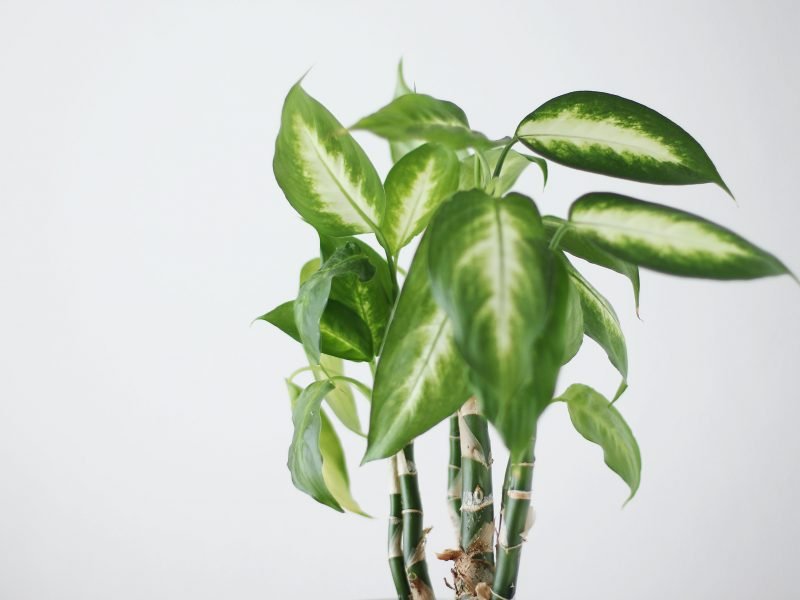
Young Dieffenbachia Plant on white background

Fertilization of Dumb Cane Plants

Feeding your Dumb Cane Plant (Dieffenbachia) is a crucial aspect of its overall care. These tropical beauties thrive when given the right nutrition, which comes in the form of a well-balanced fertilizer.

What type of fertilizer should I use?

Opt for a balanced, water-soluble fertilizer with equal parts Nitrogen (N), Phosphorous (P), and Potassium (K), such as a 20-20-20 formula. This will provide the optimum nutrients for foliage growth and overall plant health.

When should I fertilize my Dumb Cane Plant?

Schedule fertilization during the growing season, which typically spans from spring to early fall. During this period, apply fertilizer to your Dieffenbachia every four to six weeks. In the dormant winter months, stop fertilizing completely as your plant will be in a dormant phase and won’t be producing any new growth. Fertilizing during this time can actually do more damage than good.

How to apply fertilizer?

  1. Water your plant thoroughly before fertilizing. This helps to prevent fertilizer burn.
  2. Prepare your fertilizer solution as per the package instructions.
  3. Slowly pour the fertilizer over the soil, making sure it’s distributed evenly.

Note: Always avoid getting fertilizer on the plant’s leaves as it can cause damage.

Pruning Your Dumb Cane Plant

Pruning is an essential aspect of caring for your Dumb Cane plant. It not only keeps your plant looking healthy and attractive but also promotes better growth so we highly recommend that you find a place for it in your regular plant care routine.

When to Prune

Typically, you should prune your Dumb Cane plant when you notice leggy growth, yellowing leaves, or when the plant becomes too tall for your space. Remember, pruning isn’t just a cosmetic process – it’s part of the plant’s health regimen.

If you are pruning for aesthetic reasons then the best time to do this is in early spring, right before your plant begins to grow new leaves.

Tools Needed

Before you begin, make sure you have a pair of clean, sharp pruning shears. Dull or dirty tools can damage your plant and introduce diseases. Also, always wear gloves when handling your Dumb Cane plant, as its sap can be very irritating to the skin.

Pruning Steps

  1. Identify the parts to prune: Look for dead, yellowing, or leggy stems and decide how you want to shape your plant.
  2. Make your cuts: Cut at an angle, just above a leaf node.
  3. Dispose of the cuttings: Don’t leave them on top of the soil as they can attract pests.

Top tip: After pruning, give your plant a good watering and place it in a spot with bright, indirect light to aid recovery.

Repotting your Dieffenbachia

Why should you repot your Dieffenbachia?

Your Dumb Cane, or Dieffenbachia, might need a new pot for several reasons. The most common is that the plant simply outgrows its current pot. You’ll know this is the case when you see roots growing out of the drainage holes or out of the top of the pot. A plant that’s too large for its pot can become root-bound, which can hinder its ability to grow new leaves and stems and can also impact its general overall health.

When should you repot your Dieffenbachia?

The best time to repot your Dumb Cane is in the spring, when the plant is starting a new growth period. However, if your plant is seriously root-bound, don’t hesitate to repot it regardless of the season.

Steps to repot your Dieffenbachia

  1. Choose the right pot: Select a pot that’s 1-2 inches larger in diameter than the current one. Ensure it has good drainage in the form of drainage holes.
  2. Prepare the new pot: Place a layer of fresh potting mix at the bottom of the new pot.
  3. Remove the plant: Carefully remove the Dieffenbachia from its current pot. Be gentle to avoid damaging the roots.
  4. Place the plant in the new pot: Position the plant in the center of the new pot. The top of the root ball should be about 1 inch below the rim of the pot.
  5. Fill the pot with potting mix: Fill in around the plant with fresh potting mix, pressing it down lightly. Remember, good potting mix promotes root health.
  6. Water the plant: After repotting, water the plant thoroughly. This helps to settle the plant and the potting mix.
  7. Place the plant in appropriate light: Put the newly repotted plant in indirect light. Avoid direct sunlight as it can cause the leaves to burn.

Is the Dumb Cane Plant toxic?

Yes, it’s important to note that the Dumb Cane Plant is toxic. This is due to the presence of calcium oxalate crystals located within the plant’s tissues.

Effects of toxicity:

  • Humans: In humans, ingestion or even touching can lead to symptoms such as a burning sensation in the mouth and throat, excessive drooling, difficulty in swallowing, and nausea. In severe cases, it may even, in severe cases, cause temporary speech loss – hence the name ‘Dumb Cane’.
  • Pets: Pets, particularly cats and dogs, may also experience similar symptoms. Should they come into contact with the plant, immediate veterinary care is strongly advised.

Keep your Dumb Cane Plant out of reach of children and pets at all times to ensure their safety.

Cleaning your Dieffenbachia

Keeping your Dieffenbachia clean is an integral part of its care. Not only does this boost the aesthetic appeal of the plant, but it also contributes to its overall health. Let’s delve into some easy steps that you can follow to keep your Dumb Cane plant clean and thriving.

The Importance of Cleaning

The primary reason for cleaning your Dieffenbachia is to ensure proper photosynthesis. Dust and grime on the leaves can obstruct light absorption, hindering this vital process. Regular cleaning also allows you to closely monitor the plant for pests or disease signs.

There are also, of course, aesthetic reasons why regular cleaning is a good idea as it makes the leaves look a lot brighter and fresher!

Materials Needed

  • Soft cloth: A soft cloth is ideal for wiping the leaves without causing any damage.
  • Mild soap: A mild soap solution can effectively remove dirt and grime, ensuring your plant remains healthy. Avoid all other chemicals as these can damage the leaves.
  • Water: You’ll need water to moisten your cloth and rinse off the soap solution.

Cleaning Steps

  1. Moisten the soft cloth with clean water.
  2. Add a few drops of mild soap to the cloth.
  3. Gently wipe each leaf’s surface, taking care not to apply too much pressure that might damage them.
  4. Rinse the cloth with clean water and wipe the soap off the leaves.
  5. Gently dry the leaves with a clean cloth or allow them to air dry in a shaded area if they aren’t dripping wet.

Dumb Cane Plant
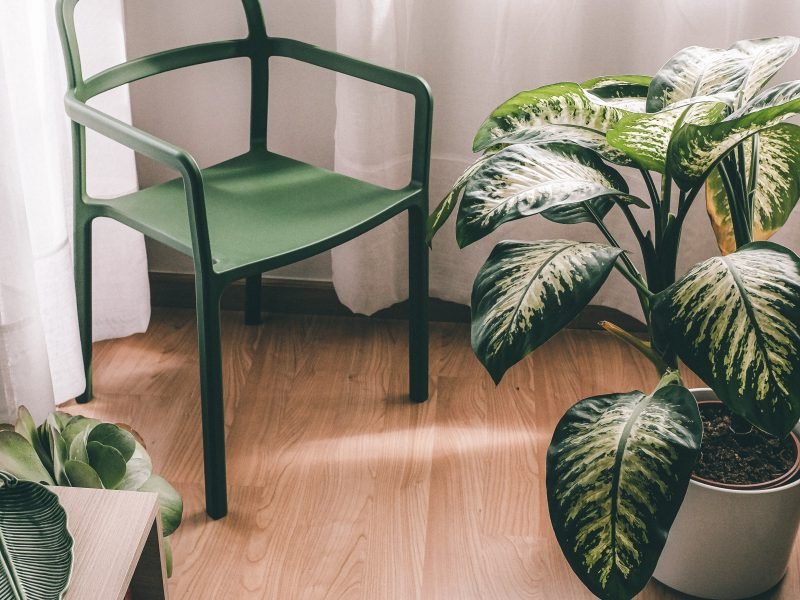
Dumb Cane lifestyle photo

Common Pests and Diseases of Dumb Cane Plants

Even with the best care, your Dumb Cane Plant may sometimes encounter issues with pests and diseases, it can happen to the most experienced horticulturists so don’t worry! Below, we’ll cover the most common problems and some solutions to keep your plant healthy and thriving.

Common Pests

Dumb Cane Plants can attract a variety of pests, including:

  • Spider Mites: These tiny creatures can cause your plant’s leaves to turn yellow and fall off. To get rid of them, wash your plant with a mild dish soap and water solution or neem oil to treat a large infestation.
  • Mealybugs: These white, cottony pests suck the sap from your plants, causing them to wilt. They can be removed using a cotton swab dipped in rubbing alcohol.
  • Scale: Scale insects can cause leaf yellowing and leaf drop. They can be managed by wiping the leaves with a solution of water and mild dish soap.

Common Diseases

Dumb Cane Plants are prone to a few diseases, such as:

  • Root Rot: If your plant’s leaves are turning yellow and the plant is wilting, it may be suffering from root rot. This is usually caused by overwatering or getting the leaves wet when you water. To treat it, let the soil dry out completely before watering again and use a watering can with a narrow spout to avoid splashing the leaves.
  • Leaf Spot: This is caused by a fungal infection. If you notice brown spots on your plant’s leaves, it might have this disease. Remove the affected leaves and avoid overwatering to prevent further spread.

Remember, prevention is always better than cure when it comes to plant care. Regularly check your Dumb Cane Plant for signs of pests or diseases, and take action immediately if you notice something wrong.

Common Problems with your Dumb Cane

Fiddle and Thorn is a participant in the Amazon Services LLC Associates Program, an affiliate advertising program designed to provide a means for sites to earn advertising fees by advertising and linking to Amazon.com

Take our houseplant survey!

Quickly respond to our 30 second houseplant survey and get 75% off our Complete Houseplant Care eBook!

Take the Survey

No thanks…

Dragon Tree Care

Last Updated: September 6, 2022

Basic Dragon Tree Care

Loved for being pretty low maintenance, Dragon Trees can adapt to a wider range of light levels. You just need to be a bit careful of intense and hot direct sunlight as it can dry out and burn the leaves. The only thing to note around lower light is that growth tends to be a bit slower but they can still adapt nicely to a shady corner.

Dragon Trees also don’t need much watering and like their potting mix to dry out fully between waterings so that’s one less thing for your regular to-do list.

Below you’ll find out comprehensive Dragon Tree care guide, where you will find all the tips and info you need to help your plant thrive.

Detailed Dragon Tree Care

Dragon Plants like bright indirect light

Make sure you don’t place your Dragon Tree in direct light as this will burn and damage the leaves, which is irreversible. Don’t worry if your Dragon Tree is in a slightly shadier spot, it just means it might grow a bit slower.

Be careful not to overwater your Dragon Tree

Dragon Trees won’t die on you if you give them too much water every so often, but constant overwatering will lead to root rot and other issues. Make sure to check the soil’s moisture before watering.

Dragon Trees aren’t temperature sensitive

Don’t worry too much about getting the right temperature for your Dragon Tree. If it is comfortable for you to live in, it will be fine for your Dragon Tree. Just make sure to keep it away from air vents and radiators.

Use regular potting soil

Unlike some other houseplants, Dragon Trees aren’t fussy about their potting soil. Just use a nice high-quality soil and your plant will be fine.

Mist your Dragon Tree’s leaves

Although you don’t need to worry too much about humidity levels for your Dragon Tree, we recommend misting the leaves every couple of weeks to increase plant health.

Dragon Trees like fresh air

Over winter, your Dragon Tree can suffer with all the warm stuffy heating air. Try to open the windows and air out your home to increase the circulation of fresh air.

Repot your Dragon Tree every few years

The best way to tell whether or not your Dragon Tree needs repotting is to see if there are any roots popping out at the bottom of the pot. We recommend repotting your Dragon Tree every two years into a pot a few cm bigger in diameter than the previous one.

Propagating your Dragon Tree is easy

You can propagate your Dragon Tree using a stem cutting. Be sure to cut a few inches off the top and place in water for a few weeks until roots start to form.

Prune the old leaves off your Dragon Tree

Naturally, over time, your Dragon Tree will start to shed some of its lower leaves. Once you see the leaves yellowing you can remove them carefully. You can also prune your Dragon Tree into your desired shape and size.

Unfortunately, Dragon Trees are toxic to pets

You might want to keep your Dragon Tree plant away from your dogs and cats as they can be toxic if ingested and can cause long-term issues if eaten in large quantities over time.

Dragon Tree Care FAQs

Common Issues for Dragon Trees

Although Dragon Plants are fairly easy to care for, they may start to show signs of suffering if their care or environment is not ideal. The most common issues for Dragon Trees are brown leaves and leaf tips.

Fiddle and Thorn is a participant in the Amazon Services LLC Associates Program, an affiliate advertising program designed to provide a means for sites to earn advertising fees by advertising and linking to Amazon.com

Take our houseplant survey!

Quickly respond to our 30 second houseplant survey and get 75% off our Complete Houseplant Care eBook!

Take the Survey

No thanks…

Creating a DIY Pebble Tray for Your Houseplants: The Ultimate Guide

Last Updated: September 10, 2023

What is a Pebble Tray and Why Use It?

A pebble tray, in its most basic description, is a shallow tray or dish filled with small pebbles, stones or gravel. Water is added to the tray, but importantly, only to a level just below the top of the pebbles.

A potted plant is then placed on top, making sure the base of the pot does not sit in water, to prevent waterlogging the soil. This setup, while appearing quite elementary, is a deceptively useful tool.

The magic of the pebble tray lies in the evaporation process. As the water in the tray evaporates, it increases the local humidity of the surrounding air. This is particularly beneficial for houseplants from tropical environments, where high humidity is the norm rather than the exception. When these plants find themselves in a typical centrally-heated home, they can often struggle with the drier air.

Why should you try out a pebble tray?:

  • It’s an economically savvy solution, requiring just a tray, some pebbles, and water.
  • It works continuously, providing a constant source of humidity as long as there’s water in the tray.
  • The pebble tray method can be used for virtually any plant that appreciates a humid environment.

Choosing the Right Pebbles for Your Tray

One might think picking pebbles for a tray is a trivial task, but there a couple of considerations. The kind of pebbles you select can have a significant impact on the level of humidity provided to your plants and their overall wellbeing.

Size of the Pebbles

Small pebbles leave smaller gaps inbetween each other, meaning they may not hold enough water to provide the needed humidity over a longer time period. While excessively large pebbles are awkward for pots to sit flat on.

A good rule of thumb is to opt for medium-sized pebbles, about 1-2 cm in diameter. This size is generally ideal for most houseplant trays.

Type of Pebbles

When it comes to the type of pebbles, it’s not just about aesthetics. While it’s true that different types can add a decorative element to your tray, some are more suited for this purpose than others.

River pebbles or natural stones are commonly used because of their smooth surface and ability to retain moisture efficiently. Avoid using shiny or polished pebbles, as these may contain chemicals that could potentially harm your plants.

Colour of the Pebbles

Believe it or not, the colour of the pebbles can also influence the effectiveness of your tray. Dark-coloured pebbles, such as black or deep blue, can absorb and retain heat, which in turn promotes evaporation and increases humidity.

On the other hand, light-coloured pebbles can help reflect light onto your plants, which can be beneficial for light-loving species.

Selecting the Best Location for Your Pebble Tray

The first consideration is light. Since most indoor plants thrive in bright, indirect sunlight, it’s wise to place your pebble tray in a location that benefits from this.

However, strong sunlight can cause rapid evaporation, leaving your tray dry and your plant bereft of the much-needed humidity. Hence, a spot with moderate, indirect sunlight would be ideal.

Temperature is another crucial factor. Your selected location should not be overly hot or cold. Rapid temperature fluctuations can cause the water in the tray to evaporate too quickly or not at all, both of which are not ideal for maintaining the necessary humidity levels. A moderate room temperature of around 18-24°C (64-75°F) is generally recommended.

Finally, consider air circulation. While it’s true that a good circulation of air can prevent diseases in houseplants, it can also lead to quick evaporation of the water in the pebble tray. Therefore, avoid placing your tray in drafty areas or directly under air vents or fans.

Step-by-Step Guide on Making a Pebble Tray

Materials Needed

  • Tray: This could be a shallow dish or any waterproof container. It should be wide enough to hold the plant pot and deep enough to hold pebbles and water.
  • Pebbles: You can use any small stones or gravel. The pebbles serve as a stand for the plant pot, raising it above the water level. You can often get these from garden centers or aquarium supply stores.
  • Water: This will evaporate to create a humid microclimate around your plant.

Procedure

Once you’ve gathered your materials, it’s time to craft your pebble tray. The process is simple and straightforward.

  1. Fill the Tray: Cover the bottom of your chosen tray or container with a single layer of pebbles.
  2. Add Water: Pour water into the tray, ensuring it reaches about halfway up the pebbles. Your aim is to keep the water level below the top of the pebbles, preventing the plant pot from sitting directly in the water.
  3. Place the Plant: Carefully set your plant pot on top of the pebbles. The bottom of the pot should not be in contact with the water.
  4. Monitor and Refill: Over time, the water in the tray will evaporate, creating a humid environment for your plant. Monitor the water level regularly and refill as needed to maintain the humidity.

In just these four steps, you’ve created a lovely, humid environment for your houseplant. The pebble tray is a fantastic solution for those looking after plants that thrive in high humidity, but it’s also a great addition to any indoor plant care regimen.

Tips for Maintaining Your Pebble Tray

Maintaining your pebble tray is just as important as setting it up. Here are a few tips to ensure its effectiveness:

  1. Clean Regularly: To prevent the growth of algae or bacteria, clean your pebble tray at least once a month. Remove the pebbles and scrub the tray before replacing the pebbles and adding fresh water.
  2. Adjust Water Level: Remember, the goal is to create humidity, not to water your plant through the tray. If you notice that the pot is absorbing water from the tray, you may have too much water. Drain some off to ensure the pot is not sitting in water.

By incorporating these maintenance steps into your plant care routine, you can ensure your pebble tray remains an effective tool for creating the perfect environment for your indoor plants.

How Often to Refill Your Pebble Tray

The frequency of refilling your pebble tray largely depends on various factors like the size of your tray, the type of plant you are nurturing, and your home’s ambient conditions.

The Size of the Tray: It’s a simple rule, the larger the tray, the more often it would need to be refilled. A smaller tray has less surface area for water evaporation and therefore, may not necessitate frequent refilling.

The Type of Plant: Some houseplants require higher humidity levels compared to others. For instance, ferns and orchids typically thrive in more humid environments and may need the pebble tray to be refilled more often. On the other hand, cacti and succulents prefer a dry environment, meaning the pebble tray may not need to be refilled as frequently.

Ambient Conditions: The rate at which water in your pebble tray evaporates depends on your home’s ambient conditions. If your home is dry and hot, the water in the tray will evaporate quickly, and hence, it will require more frequent refilling. Conversely, if the conditions are cool and damp, the water will evaporate more slowly, reducing the need for frequent refills.

As a general rule of thumb, you should check the pebble tray at least once a week. However, during hot, dry periods, or when the heating is on during the winter, you may need to check more often.

It’s vital to keep the tray filled with water at all times, but ensure that the plant’s roots are not sitting in water, as this can lead to root rot. As always, observing your plant’s health and adjusting accordingly will ensure it continues to flourish.

FAQs

What is a pebble tray?

A pebble tray is an incredibly simple, and effective tool to increase the humidity for houseplants. It’s nothing more than a shallow tray or dish filled with pebbles and water. The idea is that as the water in the tray evaporates, it creates a microclimate of increased humidity around the plants, which many houseplants find beneficial.

How does a pebble tray work?

A pebble tray is not a complex contraption. In essence, it’s a shallow dish or tray filled with pebbles and water. Over time the water in the tray evaporates and increases the local humidity for the plants above it. The pebbles serve a double purpose in giving the pots something to sit on that is out of the water and in increasing the surface area for evaporation.

Fiddle and Thorn is a participant in the Amazon Services LLC Associates Program, an affiliate advertising program designed to provide a means for sites to earn advertising fees by advertising and linking to Amazon.com

Take our houseplant survey!

Quickly respond to our 30 second houseplant survey and get 75% off our Complete Houseplant Care eBook!

Take the Survey

No thanks…

Devil’s Ivy Care Guide: How to Grow a Pothos

Last Updated: October 16, 2023

Variegated Pothos Plant

Variegated Pothos Plant

The Devil’s Ivy is one of our all-time favourite houseplants as they are easy to care for and look incredible cascading out of their pot.

Native to Indonesia, South East Asia and the Solomon Islands, the Devil’s Ivy (Pothos plant) is a trailing vine with beautiful thick heart-shaped leaves. The leaves are commonly variegated with splashes of light green, yellow and cream throughout the leaves.

The Devil’s Ivy is commonly known simply as a Pothos plant but also goes by the names of Golden Pothos and Devil’s Vine. It gets the name Devil’s Ivy because it’s so hard to kill and will thrive even in low-light areas. This makes it a great beginner houseplant or a good choice for offices, restaurants and retail spaces.

How to Care for a Devil’s Ivy

The great thing about the Pothos plant is that it is a very low-maintenance plant and can adapt to and thrive in a range of environments. From bright light to low light, your plant will stay live! The only thing to note is that you will often lose the variegation in the new leaves if your plant isn’t getting enough sunlight.

They also really aren’t fussy when it comes to their watering routine as they can survive with quite dry potting mix but also won’t succumb to root rot very quickly if accidentally overwatered once in a while. This is because they have a very solid and thick root system.

You’ll find detailed care tips and information below on how to care for your Pothos as well as treat and diagnose any issues.

Devil’s Ivy Overview

Origin: Indonesia, South East Asia and the Solomon Islands

Latin Name: Epipremnum aureum

Common Name(s): Pothos, Golden Pothos, Devil’s Ivy, Devil’s Vine

Plant Family: Araceae

Difficulty Level: Easy

Appearance: Variegated heart-shaped leaves along a thick vine

Length and Size: Indoors will reach up to 8 feet (2.5 meters) in length but in its native environment can grow to 66 feet (20 meters)

Growth Rate: Fast

Flowering: Rare to bloom when grown indoors

Pruning: Regular pruning will encourage new growth. Also, be sure to prune dying or dead leaves.

Cleaning: Regular dusting to prevent a build-up on the leaves.

Light Requirements: Bright, indirect light

Water Requirements: Weekly watering during summer but cut back in winter.

Best Soil: Well-draining qualities

Ideal temperature: 65-80°F (18-26°C)

Fertilizing Routine: Apply a well-balanced 10-10-10 fertilizer every 1-2 months during the growth period.

Ideal Humidity Level: 45-60% humidity

Propagation: Very easily propagated through vine cuttings

Repotting Frequency: Every 2-3 years

Toxicity: Contains insoluble calcium oxalate crystals which are toxic for pets and humans when ingested

Risk of Pests: Rare but watch out for mealybugs, scale insects, spider mites and thrips.

Common Problems: Leggy growth, brown or yellow leaves

Devil’s Ivy Appearance

They are known and loved for their heart-shaped leaves along a thick tropical vine. They are naturally climbing plants but will trail without anything to climb onto.

Each type of Pothos plant will have a slightly different variegation but with the right care and environment, you’ll see streaks of different shades of green, yellow, white and silver.

Difficult Level

Pothos plants are very low maintenance plants because they are pretty adaptable to a wide range of environments. Not only can they thrive in a range of sunlight levels, but they are often forgiving to a bit of over or underwatering.

They can also adapt well to temperature and humidity changes so you don’t need to worry too much about these factors. This is what makes the Devil’s Ivy perfect for beginner plant parents.

Devil’s Ivy Height and Size

When grown indoors as a potted plant, Devil’s Ivy vines will commonly reach a mature size of 8 feet (2.5 meters) in length. However, in their native environment, the vines can grow up to 66 feet (20 meters) in length.

Growth Rate of a Devil’s Ivy

The Devil’s Ivy is one of the fastest-growing houseplants which makes caring for them super rewarding. They will always have a new leaf growing at the end of each vine during the warmer months of the year and you’ll often see new growth during autumn and winter too which is rare for houseplants. It also makes the Devil’s Ivy a great plant to propagate as they grow roots and new leaves pretty quickly.

Flowers on a Pothos Plant

When grown indoors, it’s extremely rare for a Devil’s Ivy to produce flowers. However, in their natural environment, mature Pothos plants can occasionally produce cream and purple-coloured flowers. These flowers will only last a few days before wilting and are rarely spotted.

Pruning your Devil’s Ivy

Throughout the year, your Devil’s Ivy may produce offshoots with very few leaves which tend to look a little bare and leggy. This commonly happens in winter when temperatures are lower and your plant isn’t receiving as much light. However, it can also happen at other points in the year if things aren’t right.

We recommend pruning these leggy vines back to give your plant a fuller look and help it concentrate on producing new healthy growth.

You should also be pruning any dying, wilting or dead leaves from your plant. Once the leaf has discoloured, there is no going back to the beautiful green variegated colour. Dead leaves will eventually fall off your plant so pruning can help to divert that wasted energy to growing new leaves.

Cleaning your Devil’s Ivy

As they have flat leaves, regular dusting is important to do when caring for a Pothos. There are 3 main reasons why you want to avoid a dusty plant. Firstly, even a very thin layer of dust prevents some sunlight from getting to your plant which reduces the level of photosynthesis it is able to complete.

Secondly, dust particles can clog up the tiny little pores on the leaves which your plant uses to ‘breathe’ and lastly cleaning the leaves can make them look fresher, brighter and shinier.

The best way to clean your Devil’s Ivy is to use a damp cloth and wipe across the leaves and down the vines. Make sure to use your hand to support the leaf from the back to prevent damage.

If there is sticky residue or a lot of dirt on the leaves, then use a drop of dish soap to help you. This is the only cleaning product that you should be using for your Devil’s Ivy as any harsh chemicals can damage and scorch the leaves.

Hanging Devil’s Ivy Plant

Devil's Ivy Plant hanging from a shelf

Light Requirements for a Devil’s Ivy

Devil’s Ivy will thrive in all kinds of light conditions, from shady corners to bright windowsills. Be a little careful when it comes to direct light as this can burn the leaves, especially in the hot summer months where the sun is at its most intense.

When growing in lower light conditions, you may find that the new leaves appear less variegated. This can happen as there is less chlorophyll in the new leaves. Low light won’t impact its overall health but will simply make the leaves less variegated.

Pothos Plant Watering Requirements

On average you should be watering your Pothos plant once a week during summer and slightly less in winter. This is because the potting mix will take longer to dry out in colder temperatures so you won’t need to water as frequently or as deeply as in the hotter months of the year.

The best thing about the Devil’s Ivy is that it is very adaptable when it comes to watering which is why they are really easy to care for. The occasional over or underwatering won’t kill it so just make sure that you check the moisture of the soil before watering and give it some time to dry out in between.

Luckily Devil’s Ivy plants are quite tolerant of soggy or dry soil so you don’t need to constantly worry about if you are watering your plant enough. Use a moisture meter to monitor how quickly the soil dries out and find a routine that works for your plant.

Best Soil for a Pothos Plant

A regular high-quality houseplant potting mix should suffice for your Devil’s Ivy plant but try to get a mix that contains perlite. This is a great ingredient for adding well-draining qualities to the potting soil and is also helpful in aiding aeration too.

If you can’t find a potting mix that already contains perlite, you can also buy it separately and add it to your soil.

Devil’s Ivy Temperature Requirements

The ideal temperature range for a Pothos plant is between 65-80°F (18-26°C). Although they do prefer warmer environments, they can adapt to slightly cooler temperatures if required. Growth may just be a little slower and your plant may become more susceptible to issues such as brown leaves and leaf drop.

The main takeaway when it comes to temperature requirements for your Devil’s Ivy is to avoid extremes. Make sure not to place your plant somewhere that is exposed to cold drafts. This could be next to drafty windows and doors but also near air conditioning units in summer. Although the refreshing blast of cool air might be welcomed by you, it can cause damage to your plant as the potting soil will stay soggy for longer and the leaves may freeze.

But it’s not just cold extremes that need to be avoided as hotspots can also be damaging to your plant. Avoid placing your Pothos within one meter of a heating vent, radiator or cooker as the heat can dry out the leaves, causing brown spots, patches and even entire leaves.

Monitoring temperature is really easy to do with a digital thermometer so we highly recommend you pick one up if you don’t already have one. They will allow you to spot any extremes before they start causing issues for your plant.

Devil’s Ivy Fertilizer Requirements

Despite being fast-growers, the Devil’s Ivy plant doesn’t need regular fertilization. Apply a well-balanced 10-10-10 fertilizer once every 1-2 months during spring and summer.

We prefer to use a water-soluble liquid fertilizer as this gives a little bit more control over the frequency and strength. For larger plants, you can often use the recommended fertilizer amount given on the bottle but for younger plants, you should halve that amount. This helps to avoid over-fertilization which can lead to yellow leaves and ironically a lack of new healthy growth.

It’s important to note that fertilizing your Devil’s Ivy is completely optional and you will still see plenty of new growth without it as long as the other care and environmental factors are right.

Ideal Humidity Level for your Devil’s Ivy

Your Devil’s Ivy will be able to adapt to the natural humidity level of your home but they will thrive if this is boosted a little. The ideal humidity range for a Pothos is between 45-60% humidity.

If the air is too dry for extended periods of time, it can cause brown leaf tips, spots or edges to develop. Boosting the humidity, however, is easy as there are several cheap and simple ways to do it.

Misting your plant a couple of times a week is a great way to boost the humidity. Just make sure that you mist in the first half of the day to leave enough time for the water droplets to evaporate off your plant. If the leaves are still damp when the temperature drops at night, the risk of leaf rot increases.

Another great way to increase the humidity is by moving it to either the bathroom or kitchen (given there is some natural sunlight). These two rooms tend to be slightly more humid than the rest of your home due to the steam released when showering and cooking.

Our last recommendation is to invest in a humidifier. They are small affordable devices that will keep a nice stable humidity level around your humidity-loving plants. Have any other humidity-related questions? Find out more in our humidity guide.

Propagating Pothos Plant

Propagating Devil's Ivy Plant

Propagating your Devil’s Ivy

Propagate a Devil’s Ivy using vine cuttings and make sure that each section contains at least one or two nodes (the part of the stem where the leaf shoots out from). You then need to put the cuttings in fresh water and place them somewhere where they will receive bright but indirect light. Direct light can be too harsh for the young cuttings and low light will halt the speed of root growth.

Make sure to refresh the water every few days and then after a few weeks, you should start to see new roots forming. Pothos plants are quite quick compared to a lot of other plant types at growing new roots so this should be fairly straightforward.

Once the roots are a few inches long, they are ready to be planted into soil and you can resume your normal Pothos care routine. They can either be added into the mother plant to create a bushier plant or potted separately to create a new plant.

Repotting your Devil’s Ivy

Pothos plants can survive for quite a long time in the same pot, so don’t worry too much about repotting. On average, you may want to do this every 2-3 years.

Give your plant a regular check over to spot any signs of a rootbound root system. These signs include roots growing out of the bottom of the drainage holes or growing out of the top of the pot. If you remove the plant from its pot, a rootbound root system will be very tightly coiled and there won’t actually be much soil left in the pot.

When you do upgrade the size of the pot, make sure not to go much bigger as this can cause two issues. Firstly, it can make your plant unstable as the roots are looser and secondly, as there will be a lot more soil in the pot, it will take longer to dry out. This increases the risk of root rot and consequent issues.

Devil’s Ivy Toxicity to Humans and Pets

Devil’s Ivy plant is mildly toxic to pets and humans as it contains insoluble calcium oxalate crystals. When ingested, it can cause mouth, tongue, throat and stomach irritation. It can also cause vomiting and diarrhoea and excessive drooling in dogs and cats.

The sap can also cause irritation if it comes into contact with your eyes so make sure to wear gloves when propagating and pruning your Pothos.

Treating and Preventing Pests

Although a pest infestation is rare watch out for mealybugs, scale insects, spider mites and thrips that may infest your Pothos. They can start to cause issues such as small brown or yellow spots, holes in the leaves and leaf drop. If you spot any issues with your plant, always rule out pests as the first thing as the damage is quick and can be deadly.

If you do spot any signs of pests (or pests themselves – use a magnifying glass to spot them), isolate your plant from all other plants immediately. You should then check over all of your houseplants to see if the issue is only isolated to your Pothos.
There are several steps needed to successfully treat a pest infestation. First of all, remove the worst affected leaves. This will primarily reduce the size of the infestation which will make it slightly easier to treat.

The next step is to wash down your plant fully and flush out the soil to remove as many pests as possible. Replacing the soil can also help reduce the numbers but make sure to dispose of it safely. You should then start a treatment of neem oil and an insecticide to fight the pests.

The number 1 thing to know with pests (and most other issues too) is that catching and treating the issue early will make successfully treating it a lot easier. Because of this, make sure to give your Pothos a thorough check-up once a month.

Devil’s Ivy Common Problems

Fiddle and Thorn is a participant in the Amazon Services LLC Associates Program, an affiliate advertising program designed to provide a means for sites to earn advertising fees by advertising and linking to Amazon.com

Take our houseplant survey!

Quickly respond to our 30 second houseplant survey and get 75% off our Complete Houseplant Care eBook!

Take the Survey

No thanks…

Curling Money Tree Leaves | Causes and Solutions

Last Updated: August 24, 2022

Money Trees are a great low-maintenance tropical houseplant but that doesn’t mean there won’t be any problems that crop up from time to time. If your Money Tree’s leaves are curling then is a sign that something is wrong with your plant. If you can identify the problem and react quickly, then your Money Tree’s leaves should uncurl without any permanent damage.

The main reason Money Tree leaves start curling is due to dehydration and it’s a mechanism the plant uses to reduce water loss. Leaf curling is most commonly due to underwatering, low humidity, or excess heat. Ironically, curling leaves can also be caused by overwatering because once the root system is damaged, it cuts off the plant from needed moisture and it becomes dehydrated.

In this article, we will cover the main reasons why Money Trees start curling their leaves as well as how to diagnose the issue and treat it properly.

Direct sunlight can cause curling Money Tree leaves

Money Trees prefer medium to indirect bright light and don’t deal so well with intense direct sunlight. This can very quickly cause their leaves to begin curling inwards which happens for two reasons.

Firstly, curling leaves is a mechanism that a lot of plats use to avoid moisture loss which can happen quickly when the leaves are dried out by intense hot sunlight. The second reason plants can start curling their leaves is to protect themselves from direct sunlight by minimising their light exposure.

If you have caught the issue fairly early and the only sign of unhappiness is curling leaves, then the issue should resolve itself by moving your Money Tree to a shadier spot in your home.

Temperature extremes can also cause curling Money Tree leaves

Money Tree plants like to grow in temperatures that mimic their native environment. If your plant is exposed to cold temperatures, it can start curling to avoid too much heat loss. If it gets too hot, the leaves will start to dry up and shrivel.

The best temperature for your Money Tree plant is between 60-85°F (16-29°C). Using a digital thermometer can help keep track of any large fluctuations that might be causing the curling leaves.

When it comes to plant placement, there are quite a lot of things that can cause temperature extremes. For example, heating vents, radiators, air conditioning units and cookers. If your Money Tree is exposed to extremely hot or cold air it can shock your plant and damage the leaves.

The average room temperature on your thermostat doesn’t always reflect the actual temperature of where your Money Tree is sitting. This is why it’s important to get a portable thermometer that you can place next to your plant to check for any fluctuations. They are very affordable little devices and have saved us a lot of heartache when it comes to preventing plant issues. A must-have for plant parents!

Dry air can also cause the leaves on your Money Tree to start curling

As they are native to tropical areas, a good humidity level is key to a healthy and happy Money Tree. These plants absorb moisture through their large leaves and if the air is too dry, it can cause your plant to curl up in response.

Raising the humidity level is easy and there are many free or cheap methods to do this. It’s a good idea to get into the routine of misting your Money Tree as this is a great way to instantly boost the humidity. It’s best to do this mid-morning if possible so that the water droplets have time to evaporate off the plant before the temperature drops at night. This helps prevent leaf rot.

Another method you can use is to build a pebble tray. This allows the water to evaporate around your plant throughout the day and is a slightly more long-term solution to misting.

However, if you are really struggling to increase the humidity for your houseplant then a humidifier is the way to go. These keep a nice stable humidity level without you having to lift a finger.

Incorrect watering often causes curling leaves on a Money Tree

As we mentioned above, watering and dehydration is the number 1 reason why Money Trees start to develop curling leaves. Consistent underwatering will cause the root system to crisp up and the leaves will curl to prevent as much moisture loss as possible.

On the other hand, overwatering can also cause similar issues such as curling leaves. This is because waterlogged soil can rot the roots of your Money Tree so that it is unable to pull in moisture from the soil. This actually then dehydrates the plant even though the soil is soggy.

The best thing to do to diagnose the issue is to check the moisture levels regularly using a chopstick or your finger. This will help you keep track of how much water your Money Tree needs and you can adjust your watering habits accordingly.

If you do find that the potting mix is waterlogged, then replace it immediately so that it doesn’t cause any more damage to your Money Tree.

To prevent root rot, you also want to make sure that your Money Tree’s pot drains properly. Ensure the drainage holes aren’t blocked and adding in some perlite can really help.

Water sensitivity can also cause curling leaves

Money Tree leaves curl up as a sign of distress and one of these problems could be with a high level of fluoride or other minerals in the water.

If your Money Tree is suffering from sensitivity to hard water, you’ll notice that the leaves have yellow edges, and you might even see a buildup of salt on the surface of the soil.

Try switching your plant to distilled or bottled water. You can also collect rainwater to use on your Money Tree to prevent the leaves from curling further.

Those are the most common reasons why Money Trees develop curling leaves. As soon as you spot the issue, try to diagnose it and make changes as soon as possible. Catching and treating the issue early will give your plant the best shot at survival.

Check out our Money Tree care guide for more information on how to keep your plant thriving.

Fiddle and Thorn is a participant in the Amazon Services LLC Associates Program, an affiliate advertising program designed to provide a means for sites to earn advertising fees by advertising and linking to Amazon.com

Take our houseplant survey!

Quickly respond to our 30 second houseplant survey and get 75% off our Complete Houseplant Care eBook!

Take the Survey

No thanks…

Why are the leaves on my Never Never Plant curling? Causes and How to Fix It!

Last Updated: May 29, 2022

Often quite an underrated member of the Prayer Plant family, the Never Never Plant (Ctenanthe burle-marxii amagris) is an incredible addition to any urban jungle. However, if you have started to notice the leaves curling then it may be a sign that something isn’t quite right. Luckily for us, curling leaves often signifies the beginning of an issue which means you have probably caught the problem quite early which increases your chances of bringing your Never Never Plant back to full health.

Below we will be going through the different factors that may be causing your Never Never Plant to curl its leaves.

Underwatering can cause curling leaves

One of the more common factors when it comes to curling leaves on a Never Never Plant is consistent underwatering. Never Never Plants will forgive you if you occasionally forget to water it. However, your Ctenanthe cannot go for weeks on end without a drop and signs of unhappiness will start to show, often starting with curling leaves which will often be turning light brown as well.

Before you go and drown your Never Never Plant with water to hopefully fix the issue, you need to be sure that this is the cause. Watering a plant when it really doesn’t need it will cause a whole range of other issues. To confirm the diagnosis, take your Never Never Plant out of the pot to inspect how the potting mix feels. If underwatered, the potting mix will fall apart and feel very sandy. You will also see that some of the roots on your Never Never Plant have started to crisp up if you have been underwatering for a while.

Once you have determined that your Never Never Plant is suffering from a lack of water, slowly reintroduce water to your plant rather than drowning it. Any dramatic and sudden changes in their environment can cause them to go into shock so water your Never Never Plant a little bit once a day for about a week.

In future, to avoid overwatering your Ctenanthe again, use a moisture meter to check how moist the soil is. This prevents you from having to take your plant out of its pot every time you might want to water. Moisture meters are super affordable and will help with your other houseplants too so are a great investment.

Lack of humidity can cause leaves to curl

If your Never Never Plant has brown dry leaf tips as well as curling leaves, then a lack of humidity may be the cause. Never Never Plants will struggle in homes with quite dry air, especially in winter where heating and a lack of ventilation can often makes this problem worse.

But don’t worry, if the curling leaves are caused by a lack of humidity then there are some really easy and cheap solutions that will instantly get your Never Never Plant looking fresher.

Mist the leaves on your Ctenanthe every few days

This is one of the easiest ways to increase the humidity for your Never Never Plant and solve the issue of curling leaves. Mist the leaves several times per week with a spray bottle. We recommend that you mist the leaves in the morning so that there’s enough time for the water to evaporate off the leaves before the temperature drop. If the leaves are still wet when in cold temperatures, it can cause the leaves to rot which can kill your plant.

Give your Never Never Plant a shower

One simple thing you can do to instantly boost the humidity for your Never Never Plant and stop the leaves curling is showering your plant. Regularly washing your plant down with water also gets rid of dust and potential pests that might be on your plant so we recommend doing it every few months regardless of any curling leaves or other issues. Make sure to shower your Never Never Plant with temperate water so you don’t shock or burn your plant. Oh and also, keep the water pressure relatively low to avoid breaking any of the leaves or stems as they can be quite delicate.

Placement

If you have good light levels (and enough space) in your kitchen or your bathroom then we recommend moving your Never Never Plant in there. The humidity level in both of those rooms is often higher than in other areas of your home because of the steam released when showering and cooking. Just don’t put your plant too close to the cooker or the intense heat will burn the leaves.

Buy a humidifier

If you want to take all the worries away from keeping a steady humidity level for your Never Never Plant and prevent more curling leaves, then buying a humidifier is definitely the best option for you. They can be really affordable and will raise the humidity without you needing to lift a finger!

If you want to know more about how to raise the humidity for your Never Never Plant then check out our humidity guide.

Cold temperatures

Extreme temperatures and drafts can also be very harmful to your Never Never Plant as the Ctenanthe family thrive in warm environments and this can definitely be causing curling leaves. Make sure your plant is not placed near doors or windows that may be drafty. Even though the temperature of your home may be perfect for your Never Never Plant and it is receiving a lot of sunlight, the drafts coming in from the outside may be colder and harm your plant’s health.

We recommend picking up a digital thermometer to check the temperature across the day and night in various spots in your home. This will make sure that you don’t place your Never Never Plant too close to windows or in places where the temperature really drops at night. They are super affordable and the benefits are definitely worthwhile! They’ll help prevent any more curling leaves on your Never Never Plant as well as other issues such as stunted growth and environment shock.

Direct sunlight

Intense, direct sunlight can also cause curling leaves on Never Never Plants. Though a lack of light can also cause several issues for them, they don’t do well in harsh direct sunlight at all and will shrivel up.

Direct sunlight will very quickly scorch and burn the leaves of your Never Never Plant which is, unfortunately, irreversible. It will dry out and burn the leaves so look out for any scorched patches on the curling leaves that are most exposed to the sunlight.

If you think that direct sunlight is the cause of the curling leaves on your Never Never Plant, move your plant to a slightly shadier spot in your home. If you are unsure how much light your plant is getting throughout the day/year, it can be useful to use a light meter to keep track of how the light level fluctuates throughout the day and across the seasons. Only remove the leaves if they are badly scorched as if the only is curling, this will fix itself once your plant is in a better environment.

Natural movement can result in curling leaves

One of the other reasons why Never Never Plants are so unique is that their leaves curl up overnight and unfold during the day. It almost looks as though the plants are praying.

Sometimes the rhythm of praying can get a little mixed up and they may still be curled during the day. This is nothing to worry about and is just a natural part of your Never Never Plant’s daily routine. It can be easy to mistake the natural praying for a problem with your plant so just monitor the changes in the leaves to see whether or not they naturally uncurl over the next few days.

Those are the most common reasons why your Never Never Plant has developed curling leaves. It’s important to distinguish between the natural praying cycle and a genuine issue. Assess your plant’s care and environment to see which of the above reasons fit and adjust accordingly. Over the next few weeks, it’s important to keep an eye on your Never Never Plant to see if the curling leaves fix themselves or if there are any other issues popping up.

To learn more about caring for your plant, as well as other common issues, propagation and general care tips, check out our Never Never Plant care guide.

Fiddle and Thorn is a participant in the Amazon Services LLC Associates Program, an affiliate advertising program designed to provide a means for sites to earn advertising fees by advertising and linking to Amazon.com

Take our houseplant survey!

Quickly respond to our 30 second houseplant survey and get 75% off our Complete Houseplant Care eBook!

Take the Survey

No thanks…

Curling Leaves on a Chinese Evergreen? Causes and Solutions

Last Updated: August 24, 2022

Chinese Evergreens are fairly hardy plants that can be really easy to care for. However, if you do start to notice that your Chinese Evergreen’s leaves are curling, this may be a symptom of incorrect care or environment. The main reasons why your Chinese Evergreen’s leaves are curling are over-or underwatering, dry air, pest infection or a sudden change of environment.

In this article, we will go through each of those causes as well as how to diagnose the issue, treat it and prevent it from causing more curling leaves on your Chinese Evergreen.

Overwatering may be causing the curling leaves

Improper watering is one of the biggest issues for most houseplants and Chinese Evergreen plants are no different. They might be easier to caare for than some other plant types, but incorrect watering patterns can cause some big problems over time. One of the most common issues caused by overwatering your Chinese Evergreen is curling leaves, so we recommend this as the first issue to look into when trying to diagnose the problem.

Chinese Evergreen plants hate it when their soil is too damp for extended periods of time and overwatering will cause their leaves to start curling upwards. This is one of the earlier signs of trouble so if this is the only symptom, it suggests you may have caught the issue early on which makes treating it a lot easier.

When it comes to the right amount of water, you want to be watering your Chinese Evergreen no more than once a week during the growth months. During the colder months, once a month is definitely enough.

There are a few different techniques you can use to understand when your plant needs water. As well as checking the moisture at the top of the soil before watering, we also recommend picking up your Chinese Evergreen before and after watering so you get an idea of much your plant will weigh when it needs water.

You can also remove your Chinese Evergreen from its pot to inspect the soil and figure out if overwatering is causing the curling leaves. If your Chinese Evergreen’s soil is waterlogged, we recommend replacing it and adjusting your watering pattern. This should hopefully stop your Chinese Evergreen’s leaves from curling drastically.

Using a moisture meter is also a great way to take the guessing out of watering your Chinese Evergreen. You just pop them in the soil and it’ll tell you how dry or damp the soil is. These will really help prevent the problem from reoccurring.

Underwatering can also cause leaf curl in Chinese Evergreens

Too little water can also cause your Chinese Evergreen’s leaves to start curling. Although Chinese Evergreens hate their soil being soggy, they also cannot deal with dry soil for too long. A lack of moisture can cause your Chinese Evergreen to go into shock and its leaves will start curling up as a result.

If you find that your Chinese Evergreen’s soil is bone dry, then underwatering is probably what is causing the curling leaves. The best thing to do is soak your plant for about 20-30 minutes. This allows the potting mix to take up as much water as it needs, without risking overwatering or having the water just run straight out of the drainage holes.

If the air is too dry, your Chinese Evergreen’s leaves will curl

Chinese Evergreens like quite humid environments and can struggle in homes with dry air. This can be especially damaging in the winter months as central heating really dries out the air.

A lack of humidity in the air can cause your Chinese Evergreen’s leaves to curl, and eventually maybe even fall off. This happens because curling the leaves is a mechanism plants use to retain as much water as possible.

Use a humidity monitor to confirm that dry air is causing the curling leaves. To treat the issue, start by misting your Chinese Evergreen every few days with a spray bottle. If you want an even easier solution to humidity issues, consider investing in a humidifier. These affordable little devices make it super easy to keep a more consistent increased humidity level.

Check out our houseplant humidity guide for more information on humidity levels and how you can really easily raise or lower the humidity depending on your plant’s needs.

A pest infestation may also be causing your Chinese Evergreen’s curling leaves

Whilst it is pretty rare for your Chinese Evergreen to be suffering from a pest infestation, it is vital that you check the leaves every so often, even if your plant looks super healthy as pests can be a cause of curling leaves in Chinese Evergreens!

Note that if you have been growing your Chinese Evergreen outdoors for some of the year, the likelihood of pests is a lot higher.

If you find bugs, wipe each leaf with warm soapy water to try and remove as many as possible. We recommend giving your plants a shower but make sure the water pressure isn’t on full or this could damage the leaves. If this doesn’t get rid of the pests, you can treat your Chinese Evergreen with neem oil to fight the infestation.

Make sure to check over your other plants in the room to see if any other plants have pests. It is vital that you keep your infected Chinese Evergreen (and other infected plants) a good distance away from any of your other houseplants as you don’t want the pests to spread.

Heat stress can also cause curling leaves

If your Chinese Evergreen is growing close to the window during summer, or is near to any radiators, heaters or heating vents then it might be heat stress that is causing the leaves to curl. This is because the intense heat will dry out the leaves, causing them to curl to try to retain moisture.

More often than not, the leaves will also begin turning crispy and brown so look out for this alongside the leaf curl. Using a thermometer is the best way to establish whether temperature fluctuations are to blame. They’ll also help you spot any changes in temperature before they start impacting your plants so are a great investment for any plant parent.

A sudden change in environment can often cause curling leaves

Much like humans, houseplants can get pretty stressed out by change! Things like repotting, propagating or moving to a new spot can cause your Chinese Evergreen to get a little shocked and the leaves may start curling.

This is nothing to worry about and it will just take some time for it to return to normal and for the leaves to naturally uncurl.

One thing to make sure of if you have moved your Chinese Evergreen to a new spot is that the conditions are the same, if not better than the one it was previously in. Your Chinese Evergreen will probably survive if the conditions are less suited to its requirements but it may just grow a little slower than before. The best way to determine if the environment is right is by using a light meter, as well as a thermometer and humidity gauge.

Luckily curling leaves is often one of the earlier signs of stress among houseplants so it should mean that you have caught the issue early! This will really help when it comes to fixing the issue and the road to recovery will be a lot quicker and simpler.

Chinese Evergreens won’t die on you suddenly if something isn’t right so just make sure to keep an eye on its environment and your care for a few weeks to spot any glaring problems.

Check out our Chinese Evergreen care guide for more information on other common problems as well as general care tips to help keep your plant healthy and happy!

Fiddle and Thorn is a participant in the Amazon Services LLC Associates Program, an affiliate advertising program designed to provide a means for sites to earn advertising fees by advertising and linking to Amazon.com

Take our houseplant survey!

Quickly respond to our 30 second houseplant survey and get 75% off our Complete Houseplant Care eBook!

Take the Survey

No thanks…

Curling Leaves on a Bird of Paradise? Causes and Solutions

Last Updated: August 24, 2022

Bird of Paradise plants are pretty hardy plants that can be really easy to care for once you’ve got the environment right. However, if you do start to notice that your Bird of Paradise’s leaves are curling, this may be a symptom of incorrect care or an issue with one (or more) of the environmental factors.

We have put together this guide to go through all of the different reasons why Bird of Paradise plants develop curling leaves as well as how to spot, treat and prevent the problem so you can get your plant back on track in no time.

Overwatering may be causing the curling leaves on your Bird of Paradise

Improper watering is one of the biggest issues for most houseplants and Bird of Paradise plants are no different. Whilst they are definitely a lot less sensitive than other plants, overwatering them can cause some real issues over time. One of the most common issues caused by overwatering your Bird of Paradise is curling leaves, so we recommend this as the first issue to check out when trying to diagnose the problem.

Bird of Paradise plants hate it when their soil is too damp and overwatering will cause their leaves to start curling upwards in response. As a guide you don’t want to be watering your Bird of Paradise more than once a week during summer and much less during winter. There are of course lots of other factors that determine how much you should be watering your plant (such as age, size, maturity, temperature, light level) so it’s all about finding the right balance for your plant.

Using a moisture meter is also a great way to take the guessing out of watering your Bird of Paradise. You just pop them in the soil and it’ll tell you how dry or damp the soil is. This means you don’t have to start lifting your plant to gauge how moist the soil is because this can be quite dangerous with large plants such as Bird of Paradise.

If your Bird of Paradise’s soil is waterlogged (which confirms overwatering as the cause of the curling leaves), we recommend replacing it immediately and adjusting your watering pattern. This should hopefully stop your Bird of Paradise’s leaves from curling drastically.

To prevent the issue again in future, it could be worth investing in a good quality self-watering plant pot. These take all of the trouble out of the process and will make sure that your plant isn’t resting in stagnant water – eliminating the risk of root rot or other issues that can develop as a result of overwatering.

Underwatering can also cause leaf curl in Bird of Paradise plants

Too little water can also cause your Bird of Paradise’s leaves to start curling. Although Bird of Paradises hate their soil being soggy, they also cannot deal with dry soil for too long.

If you find that your Bird of Paradise’s soil is bone dry and the roots have started to crisp up, then underwatering is probably what is causing the curling leaves.

To fix the issue, you want to avoid drowning your plant in water as this can either cause shock or the water will just run out of the drainage holes without actually getting to the root system. Instead, you want to soak your Bird of Paradise for about 15 to 20 minutes so that the plant can take in as much water as it wants without the risk of waterlogged soil.

If the air is too dry, your Bird of Paradise’s leaves can start curling

Bird of Paradise plants like quite humid environments and can struggle in homes with really dry air. This can be especially damaging in the winter months when we often have the heating on for several hours a day. Curling leaves is one of the ways that many houseplants try to reduce moisture loss.

A lack of humidity in the air can cause your Bird of Paradise’s leaves to curl, and eventually maybe even fall off if the problem persists for a long time.

Humidity can be a difficult thing to properly diagnose because it’s less obvious than water and light levels so the best way to do this is to use a humidity monitor. You can often get humidity and temperature meters in the same device and that is every plant parents best friend! They can really help you spot any fluctuations before it’s impacting your plant’s health. So definitely a worthwhile investment.

To solve the issue, make sure to mist your Bird of Paradise every few days with a spray bottle, this should help prevent the plant from drying out. If you want an even easier solution to humidity issues, consider investing in a humidifier. These affordable little devices make it super easy to keep a more consistent increased humidity level.

Check out our houseplant humidity guide for more information on humidity levels and what your plant needs.

Pests can also cause curling leaves on a Bird of Paradise

Whilst pests are a rarer issue compared to some of the problems listed above, it can be a very worrying problem so it’s important you rule it out straight away.

The first thing to do is inspect your Bird of Paradise plant fully by looking at the undersides of the leaves, the stems and also in the potting mix. You want to look out for any of the following signs: holes in the leaves, brown or yellow spots, white webbing, white powder and of course visible pests on the plant or in the potting mix.

If you do find pests (or signs of them) isolate your Bird of Paradise immediately to stop the spread across your other plants and make sure to inspect your entire urban jungle.

We recommend giving your infected plants a shower but make sure the water pressure isn’t on full or this could damage the leaves. If this doesn’t get rid of the pests, you can treat your Bird of Paradise with neem oil to fight the infestation.

Heat stress can also cause curling leaves

Another factor that can cause curling leaves on a Bird of Paradise is high temperatures. This links in with some of the other issues above as if your plant is exposed to a lot of warm air, it will dry up quickly and your plant will curl its leaves to save moisture.

Using a thermometer is the best way to spot any changes in temperature as it might be that your plant is too close to a window that gets the afternoon sun and is therefore sitting in a hotspot for half of the day.

The solution for this is simple and that’s to find a slightly cooler spot for your Bird of Paradise, making sure it is far away from radiators, heating vents, south-facing windows and cookers.

Check the environment for drafts and cold air

On the other end of the temperature spectrum, cold air can also cause curling leaves (which is why a digital thermometer will be your best friend). Make sure that you draft-proof any windows/ doors that are close to your Bird of Paradise (and other tropical or heat-loving houseplants).

But it’s not just winter that causes havoc with your plants as air conditioning units can be quite damaging as well. The constant flow of cold air might be refreshing to you but it can actually freeze the leaf tissue if your plant gets too cold.

If your Bird of Paradise is in quite a cool room, this can also increase the risk of overwatering and root rot (which brings us back to the overwatering problem – see it’s all interlinked!) Your Bird of Paradise won’t need as much water as the soil will take a lot longer to dry out in cooler temperatures.

This can be the perfect place for root rot and leaf rot to occur so be extra cautious when it comes to caring for your Bird of Paradise in winter or in colder rooms in your home.

You’ll be pleased to know that curling leaves are often an early warning sign and if you can’t spot any other issues, it means solving the problem shouldn’t be too tricky and there shouldn’t be any permanent damage to your Bird of Paradise.

Check out our Bird of Paradise care guide for more information on other common problems and general care tips to help your plant thrive!

Fiddle and Thorn is a participant in the Amazon Services LLC Associates Program, an affiliate advertising program designed to provide a means for sites to earn advertising fees by advertising and linking to Amazon.com

Take our houseplant survey!

Quickly respond to our 30 second houseplant survey and get 75% off our Complete Houseplant Care eBook!

Take the Survey

No thanks…

Curling Fiddle Leaf Fig Tree Leaves | Causes and Solutions

Last Updated: August 24, 2022

These incredible houseplants are somewhat low maintenance once in the right environment, but it’s not uncommon for their leaves to begin curling if something isn’t right. This is often one of the earlier signs of trouble so hopefully, if there are no other signs of unhappiness, you should have caught the problem fairly early.

In this article, we will go through each of the main causes of curling leaves on a Fiddle Leaf Fig Tree as well as going through how to treat the issue and prevent it from cropping up again. Diagnosing the cause of curling leaves on Fiddle Leaf Fig Trees can be a little frustrating, however, as there are quite a few different causes that can have the same impact. The best thing to do is to go through the list and eliminate the causes one by one until you find which best fits your plant and what’s going on.

Overwatering is a common cause of curling leaves on a Fiddle Leaf

Whilst overwatering can have some severe effects on Fiddle Leaf Fig Trees and other houseplants, curling leaves are often an early warning sign that things aren’t going well. This can appear alongside leaf loss and yellow leaves as the issue progresses.

Fiddle Leaf Fig Trees like their soil to dry out and don’t deal so well with waterlogged potting mix. They need a well-draining mix and you should only water then the top few inches of the soil are dry to touch.

It’s important that you diagnose the issue of overwatering quickly as if it progresses too far, can cause plant death. So to confirm that is what is causing the curling leaves on your Fiddle Leaf Fig Tree, you need to check the soil moisture.

Unpot your plant and check for rot and waterlogged soil. If the roots have started to rot they will be mushy and dark in colour. Healthy roots however are pale and firm to touch. If you find the root system has started to rot, trim away the infected parts and add fresh (dry) soil.

Moving forward, to prevent the issue from happening again, adjust your watering schedule so that you are either watering less frequently or deeply. Either will help give your Fiddle Leaf Fig Tree enough time to dry out. You also want to be making sure that you check the soil has dried out before rewatering.

Underwatering can also cause curling Fiddle Leaf Fig Tree leaves

If your Fiddle Leaf Fig Tree’s potting mix gets too dry, the foliage will curl and start to wilt. This is because houseplants start curling their leaves as a way to slow down moisture loss. Often curling leaves is a reversible problem but as soon as they have started to crisp up and turn brown, there is no going back.

Check the potting mix to confirm that underwatering is the cause of the curling leaves on your Fiddle Leaf Fig Tree and start to water a little bit each day for a week. This will stop your plant from going into shock by a sudden change in the environment. The leaves should soon start to perk up and stop curling after being watered.

Curling leaves can indicate humidity issues

Though Fiddle Leaf Fig Trees are tolerant of average humidity, persistently dry air can result in your plant’s leaves curling up. Luckily, this is a pretty simple issue to fix as there are so many different ways you can increase the humidity for your plant.

We often recommend using a humidifier as this takes all of the worries of dry air away and means your plant can thrive in its ideal environment. They are pretty affordable too so a great investment for plant parents and a lot cheaper than forking out to buy new replacement plants!

Other ways you can increase the humidity is by using a spray bottle to mist your Fiddle Leaf Fig Tree, showering it every now and again or using a pebble tray.

Extreme temperatures can cause curling leaves on your Fiddle Leaf Fig Tree

Native to tropical regions, Fiddle Leaf Fig Trees love warmth but are quite sensitive to extreme temperatures and both hot and cold air can cause curling leaves.

In summer you want to watch out for hotspots that form around sunny windows as the hot air can dry out the leaves and cause them to start curling. You also need to watch out for AC units as the cold air can be quite damaging to your plant, even if it is a nice rest bite from the heat for you.

During winter, make sure that your Fiddle Leaf Fig Tree isn’t near any drafty windows or external doors as the cold air flow from outside can slowly cause real issues for your plant without you realising.

Using a digital thermometer will be your best friend here and help you spot any changes in temperature before they’ve caused curling leaves or other issues.

Watch out for direct sunlight

Fiddle Leaf Fig Trees really don’t like much direct sunlight in summer as it can scorch their incredible leaves. But even before it’s caused irreversible damage such as brown or yellow patches, too much light can cause curling leaves.

This is because the leaves dry out in the hot direct sunlight but also because the leaves curl up to protect themselves against the sun.

More often than not this is totally reversible and placing your Fiddle Leaf Fig Tree in a slightly shadier spot will see the leaves start to stop curling in a few days.

Curling leaves can also indicate overfertilization

Fiddle Leaf Fig Trees aren’t heavy feeders and you can still see plenty of new healthy growth without any fertiliser at all. But one of the causes of too much fertiliser is curling leaves as the residual nutrient salts can toxify the soil and damage the roots. This can result in Fiddle Leaf Fig Tree leaves curling and browning as the roots become unable to deliver what the plant needs.

Remove any fertiliser spikes or replace the soil if you are using pellets or water-soluble fertiliser and hold off feeding for at least a year to let your Fiddle Leaf Fig Tree recover.

Those are the most common reasons Fiddle Leaf Fig Trees start to develop curling leaves. It’s important you work to diagnose and treat the issue as early as possible to give you the best chance at reviving your plant and preventing permanent damage.

The most important thing to remember is often Fiddle Leaf Fig Tree leaves curl due to excess water loss or insufficient water delivery to the leaves. This will help you narrow down the causes and use the root system to give you clues. Curled leaves may straighten back once the issue has been solved, but even if this doesn’t happen, any new foliage will return to its normal appearance.

To learn more about how to best care for your plant, check out our Fiddle Leaf Fig Tree care guide.

Fiddle and Thorn is a participant in the Amazon Services LLC Associates Program, an affiliate advertising program designed to provide a means for sites to earn advertising fees by advertising and linking to Amazon.com

Take our houseplant survey!

Quickly respond to our 30 second houseplant survey and get 75% off our Complete Houseplant Care eBook!

Take the Survey

No thanks…

How to Care for Your Croton Plant: The Ultimate Guide

Last Updated: October 16, 2023

Croton Plant Leaves

Croton Plant Leaves

Introduction to Croton Plants: Origin and Characteristics

If you’re searching for a houseplant that brings a pop of color to your indoor space, you really don’t need to look any further than the Croton Plant. Native to the tropical regions of Southeast Asia and the Pacific Islands, these plants are known for their vibrant, multi-colored foliage that comes in a variety of unique patterns.

Croton Plants, scientifically known as Codiaeum variegatum, have gained immense popularity in the world of indoor gardening due to their striking appearance and relatively easy care and hardiness. The leaves of these plants are not just green, but a mix of yellow, red, orange, and even purple. No two croton plants are alike, each one is a unique combination of all of these incredible colours.

There are several different varieties of Croton plants, each with its own unique leaf shape. Some varieties have broad, flat leaves, while others are narrow and twisted.

Characteristics of Croton Plants

  • Vibrant Foliage: The most distinctive feature of Croton plants is their brightly colored leaves. Each leaf is a combination of green, yellow, red, orange, and sometimes even purple.
  • Sunlight Lovers: Crotons love sunlight. The more sunlight they receive, the brighter their leaves become.
  • Varieties: There are countless varieties of Croton plants, each with its unique leaf shape and coloration pattern.
  • Size: Croton plants can grow up to 10 feet tall when grown outdoors in ideal conditions. However, indoor plants usually stay between 2 and 3 feet tall.

Croton Plant Varieties

The Croton plant, or Codiaeum variegatum, is renowned for its vibrant foliage and striking leaf patterns and boasts over 100 different varieties. Each one presents a unique blend of colors, leaf shapes, and sizes!

The Petra

The Petra variety of Croton plant is perhaps the most well-known. It is easily recognizable by its large, oval leaves that showcase a vibrant mix of green, yellow, orange, and red hues. The contrast of these colors is particularly noticeable, making the Petra a truly eye-catching variety.

The Mammy

Another popular variety is the Mammy Croton. This plant is smaller than the Petra, but its twisted, curly leaves offer a unique visual appeal. Its leaves are predominantly red and yellow, intermingled with shades of green.

The Zanzibar

The Zanzibar variety features thin, long leaves that arch elegantly. Its leaves are a vibrant mix of green, yellow, and reddish hues. This variety’s unique leaf shape and vivid colors make it a stunning addition to any indoor garden.

The Gold Dust

Last but not least, the Gold Dust Croton is notable for its dark green leaves speckled with bright yellow spots, resembling sprinkles of gold dust. This variety brings a unique, starry-night aesthetic to your indoor plant collection.

Lighting Requirements for Your Croton Plant

They thrive in bright, indirect sunlight and need a good amount of it to maintain their vibrant foliage. That being said, they’re not fans of direct, harsh sunlight as it can cause their leaves to become sunburnt.

Indoor Lighting:

  • Place your Croton plant near a window that gets plenty of sunlight. East or west-facing windows are typically ideal.
  • If direct sunlight through the window is too intense, consider using a sheer curtain to filter the light.

Outdoor Lighting:

  • If you’re growing your Croton plant outdoors, a location that receives morning sun and afternoon shade works best as afternoon sun can be a bit too intense for these plants in the peak of summer. .

Low light: Croton plants can adapt to lower light conditions, but this often results in duller leaf colors. To keep your plant’s leaves vibrant, make sure it gets plenty of bright, filtered sunlight.

What if My Home Doesn’t Have Enough Natural Light?

If your home doesn’t provide enough natural light, you can supplement it with artificial light. LED grow light tubes work well for this purpose as they don’t heat up and dry out your plant. Position your Croton plant about a foot away from the light source and leave it on for about 14 hours a day. This should provide your plant with the light it needs to thrive.

Watering Your Croton Plant: Frequency and Technique

Frequency

Generally, a Croton plant needs to be watered once the top inch of the soil begins to dry out. In most indoor settings, this typically happens once a week. However, during hot and dry periods, your Croton may require watering more frequently, possibly two or three times a week.

This is why it’s important to avoid using rigid watering schedules and adapt your routine depending on how quickly or slowly the soil dries out.

Technique

When you water your Croton, aim to moisten the soil evenly all around the plant. Pour water slowly onto the soil and continue until it starts to drain from the holes at the bottom of the pot. It’s good practice to then wait a few minutes and repeat the process, ensuring the soil is thoroughly soaked.

After about 15 minutes, make sure to empty any excess water from the saucer after watering to prevent the roots from sitting in water.

Always use water at room temperature to avoid shocking the plant and using a narrow spouted watering can will help you avoid splashing the leaves with water, potentially causing them to rot.

Choosing the Right Soil for Your Croton Plant

Well-Draining Soil:

Croton plants prefer well-draining soil. This means that the soil should allow water to pass through it easily, preventing the roots from sitting in water and developing root rot. A good potting soil mix for Crotons typically includes peat moss, perlite, or coarse sand.

Soil pH:

Croton plants prefer slightly acidic to neutral pH levels. The ideal pH range for these plants is between 6.0 and 7.0. If your soil is too alkaline, you can adjust it by incorporating sphagnum peat into the mix, which naturally lowers the soil’s pH.

Humidity and Temperature Needs

As a tropical plant, your Croton thrives in warm and humid conditions. Understanding these needs are essential to its overall well-being and avoiding issues such as brown spots, leaf tips and leaf drop.

The ideal temperature for your Croton is between 60 and 85 degrees Fahrenheit. Avoid drastic temperature changes as they can cause leaf drop and generally an unhappy plant. Exposing your Croton to temperatures below 50 degrees Fahrenheit might be detrimental to the plant as it can cause the cells in the leaves to freeze and die.

Humidity is another significant factor for your Croton. These plants prefer a high-humidity environment. If you live in a dry climate, there are several methods you can employ to increase the humidity around your plant:

  • Misting: Lightly mist your Croton with water to increase the humidity. However, be careful not to overdo it as excessive moisture can lead to fungal diseases.
  • Humidity Tray: You can place your pot on a tray filled with pebbles and water. The water in the tray will evaporate, providing your plant with the humidity it craves.
  • Room Humidifier: Using a room humidifier can be an effective way to increase the humidity. This is particularly useful in winter when indoor air tends to be dry.

Fertilizing Your Croton Plant for Optimal Growth

When it comes to fertilizing your Croton Plant, a balanced approach is key to promoting optimal growth. While Crotons aren’t particularly fussy, providing the right nutrients can make a significant difference.

Use a balanced, water-soluble fertilizer to feed your plant. A good ratio to look for is 10-10-10 or 20-20-20 (that’s nitrogen, phosphorous, and potassium). This will provide the necessary nutrients for your Croton plant to flourish.

Here’s a simple fertilizing routine for your Croton plant:

  1. Apply fertilizer once a month during the growing season (spring and summer).
  2. Don’t fertilize at all during fall and winter, as the plant’s growth will slow down during these seasons.
  3. Always water your plant before fertilizing to avoid burning the roots.
  4. Follow the instructions on the fertilizer package for the right amount to use. Remember, less is more when it comes to fertilizing houseplants.

Signs Your Croton Plant is Over-Fertilized

While fertilizing is important, overdoing it can harm your plant. Here are a few signs that your Croton may be getting too much fertilizer:

  • The leaves are starting to yellow or brown, either as small spots throughout the leaves or as edges or tips
  • There’s a white, crusty buildup on the surface of the soil
  • The new leaves are smaller, even in summer

If you notice any of these symptoms, flush the soil with water to remove excess fertilizer and hold off on feeding for a few weeks.

Repotting your Croton Plant

Though it may seem daunting, the process can be simplified into manageable steps, making it easy and safe for your plant.

When to Repot

Generally, Crotons should be repotted once every 1-2 years. However, it’s essential to watch for certain signs that your plant is ready for a new home. These include:

  • The plant’s roots are coming out of the drainage holes or out of the top of the pot
  • You notice a decrease in the plant’s growth, even during its growing season
  • The soil dries out more quickly than usual

Steps to Repot

When it’s time to repot, follow these simple steps to ensure a successful transition:

  1. Prepare the New Pot: Choose a new pot that is 1-2 inches larger in diameter than the current pot. Ensure it has good drainage and fill it about one-third of the way with a high-quality potting mix.
  2. Remove the Plant: Water your Croton plant thoroughly the day before repotting to loosen the soil. On the day of repotting, tilt the pot and gently pull out the plant, being careful not to damage the roots.
  3. Place the Plant: Place the plant in the new pot, ensuring it sits at the same height as it did in the previous pot. Fill the remaining space with potting mix, pressing down gently to remove any air pockets.
  4. Water and Position: Water the plant thoroughly and place it in its usual spot. Some leaves might droop after repotting, but don’t worry, this is normal and they will perk up in a few days.

Pruning and Trimming Your Croton Plant

Pruning and trimming your Croton plant is a crucial part of maintaining its health and vibrant appearance. There’s no need to feel intimidated by this task; it’s much simpler than it sounds.

Before you begin, make sure you have a sharp pair of pruning shears, or a knife, and wear gloves to protect your hands. Crotons produce a milky sap that can irritate the skin and cause some itchiness.

Identification of the Right Time

Identifying the right time for pruning is key. The best time to prune your Croton plant is during the spring or summer when the plant is in active growth. However, if you notice any dead or dying leaves, prune these regardless of the time of year.

Procedure

  1. Step One: Start by examining your plant thoroughly. Look for any dead or diseased leaves. These should be your first targets when pruning.
  2. Step Two: Cut back the longest branches to encourage bushier growth. Be careful not to cut more than 1/3 of the plant at once.
  3. Step Three: Prune any branches that are growing out of shape or spoiling the symmetry of the plant.
  4. Step Four: Lastly, remove any leaves that have fallen to the bottom of the pot. These leaves can rot and attract pests.

Cleaning your Croton Plant

Dust and grime can block light from reaching the leaves, inhibiting photosynthesis and subsequently, the growth of your plant. This is why cleaning needs to be something you build into your plant care routine.

Here’s how you can keep your Croton plant clean:

  1. First, remove any dead or yellowing leaves from the plant. Regular pruning helps the plant to focus its energy on new growth and helps to prevent disease.
  2. Next, lightly dust off the surface of the leaves using a soft, damp cloth. Be gentle to avoid damaging the leaves. This step should be done at least once a month to ensure your plant’s leaves can fully absorb light.
  3. Finally, giving your plant a gentle shower every once in a while can help to deep clean your plant. This can be done by placing the plant in the shower and lightly spraying it with lukewarm water. This not only cleans the leaves but also mimics its natural tropical rainforest habitat.

Croton Plant Flowers

The flowers of a Croton Plant are small, creamy-white in color, and typically grow in clusters. These clusters of flowers grow out from the base of the leaves and can add a subtle dimension to your plant’s overall appearance.

Now, if you’re wondering about how to encourage your Croton plant to flower, here are a few tips:

  1. Ensure your plant gets plenty of light. Croton plants need a lot of light to produce flowers. So, find a spot in your home that gets bright but indirect sunlight.
  2. Keep the temperature constant. Croton plants prefer a warm and stable temperature, ideally between 60-85°F (15-29°C). Rapid temperature fluctuations can stress the plant and hinder blooming.
  3. Feed your plant regularly. Providing your Croton with a balanced, slow-release fertilizer during its growing season (spring and summer) can help promote flowering.

Dealing with Common Pests and Diseases in Croton Plants

Croton Plants can be susceptible to a variety of pests and diseases. However, with the proper care and attention, these issues can be prevented or treated effectively. Here’s what you need to know:

Pests

Common pests that affect Croton plants include spider mites, mealybugs, and scale insects. Look for signs like discolored or curled leaves, a sticky residue on the plant or nearby surfaces, or visible insects.

  • Spider Mites: These tiny pests can be difficult to see, but you may notice tiny webs on your plant. Washing your plant with a mild soap solution can help control the infestation.
  • Mealybugs: If you notice small, white, fuzzy spots on your plant, you may have mealybugs. These pests can be removed with a cotton swab dipped in alcohol.
  • Scale Insects: These pests appear as small, brown, shell-like bumps on the plant. Like mealybugs, they can be removed with a cotton swab dipped in alcohol.

Diseases

Croton plants are generally hardy, but they can be susceptible to certain diseases, particularly if they are overwatered or have poor air circulation. The most common diseases include leaf spot and root rot.

  1. Leaf Spot: If you notice brown or black spots on your plant’s leaves, it may have leaf spot. Avoid overwatering and ensure your plant has good air circulation to prevent this disease.
  2. Root Rot: This is typically caused by overwatering. If your plant’s leaves are yellowing and wilting, you may have root rot. Allow the soil to dry out completely between waterings to prevent this issue.

In general, the key to preventing pests and diseases in your Croton plant is to provide the right conditions and care. Regularly check your plant for signs of trouble, and take action at the first sign of problems as this will help you to treat the issue quicker and more successfully.

Croton Plant FAQs


Common Problems with your Croton Plant

Fiddle and Thorn is a participant in the Amazon Services LLC Associates Program, an affiliate advertising program designed to provide a means for sites to earn advertising fees by advertising and linking to Amazon.com

Take our houseplant survey!

Quickly respond to our 30 second houseplant survey and get 75% off our Complete Houseplant Care eBook!

Take the Survey

No thanks…