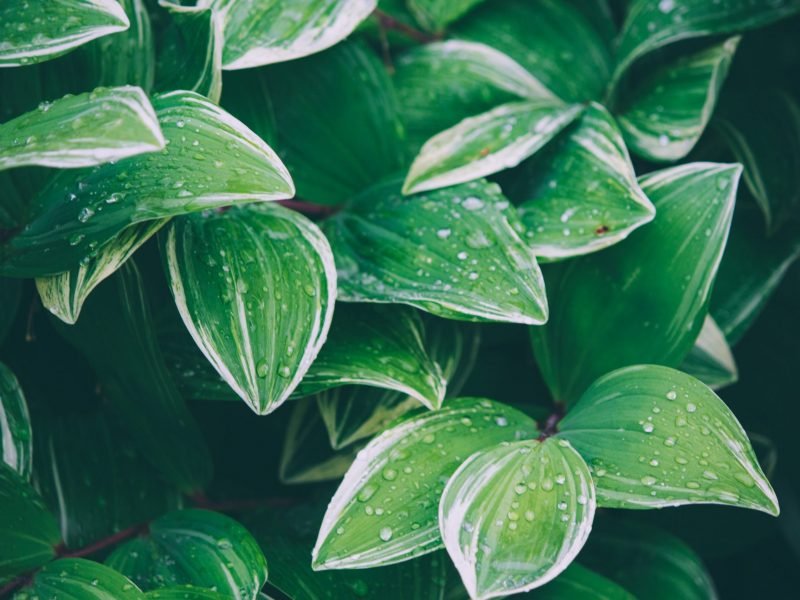
Hosta Care

Last Updated: August 12, 2022

How to grow a Hosta indoors

Don’t be put off growing a Hosta plant indoors just because they are typically outdoor plants because they actually make great houseplants! There are a few things you need to look out for when caring for your Hosta indoors but it’s definitely a lot easier than some of the fussier houseplant types. Firstly, make sure your Hosta is well away from direct sunlight. Outdoors they grow well in slightly shadier areas as they are low plants so you don’t want to expose your plant to too much light.

The second thing to note is that they need a lot of water to properly thrive. This is where things might get difficult for busy or travel-loving plant parents because they really don’t like it when their soil dries out.

These are two of the initial basics to get right when caring for a Hosta plant indoors, but below you will find more detailed care instructions to keep your Hosta thriving!

Detailed Hosta Care

They don’t need bright light to thrive

The majority of Hosta types prefer to grow in shady areas of your home and really don’t need much sunlight. However, do check the variety of your Hosta as some do require some bright indrect light at times.

Hostas are thirsty plants

Hostas like to drink and need watering often. Make sure you keep the soil moist and the potting mix doesn’t dry out completely for long periods of time.

Use fertiliser only if you want to

Feeding your Hosta plant is totally optional and up to you. If you do want to feed your plant then use a water-soluble fertiliser monthly during spring and summer. Cut back completely during winter though.

Normal room temperature and humidity is fine

Hosta plants are quite easy to care for because they aren’t super fussy about temperature or humidity levels. They will be just fine with the natural environment in your home which is two less things to worry about!

Propagate your Hosta using stem cuttings

The easiest way of propagating your Hosta (if you don’t want to grow from seeds) is by using a stem cutting. Place the cutting in water and you should see roots starting to grow after a few weeks. You’ll have the best chance at a successful propagation if you do it in spring as this is the start of the growing period.

Unfortunately, Hosta plants are toxic to pets

You will want to keep your Hosta plant away from any pets as they are toxic if ingested.

Hosta Care FAQs

Common Issues with Hostas

Regardless of your experience as a plant parent, it’s always important to know what warning signs to look out for that might suggest something is wrong with either the environment or care routine you are giving your Hosta. It’s also worth remembering that the sooner you act to solve the issue and the earlier you’ve caught it, the easier it will be to fix and bring your Hosta back to full health.

Fiddle and Thorn is a participant in the Amazon Services LLC Associates Program, an affiliate advertising program designed to provide a means for sites to earn advertising fees by advertising and linking to Amazon.com

Take our houseplant survey!

Quickly respond to our 30 second houseplant survey and get 75% off our Complete Houseplant Care eBook!

Take the Survey

No thanks…

Guzmania Hope Care Guide: Tips and Tricks for a Healthy Plant

Last Updated: October 16, 2023

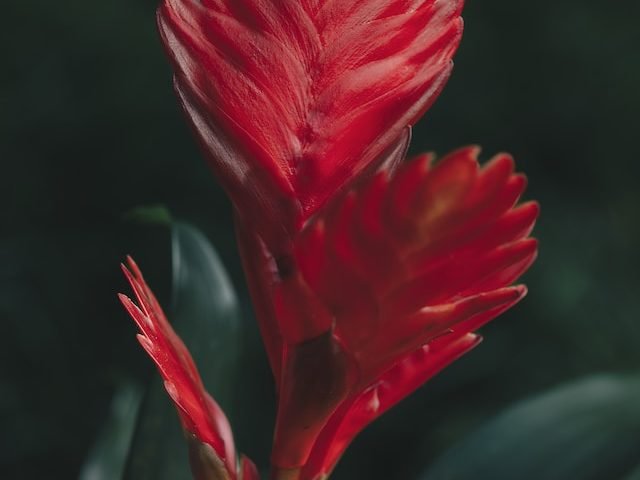
Flowering Guzmania Hope

Flowering Guzmania Hope

Guzmania Hope Characteristics

The Guzmania Hope is a species of bromeliad, which stands out for its rosette formation and vibrant colour. Native to tropical America, this houseplant is famous for its attractive, sword-like leaves and striking inflorescence.

Growth: Typically, the Guzmania Hope grows to a height and width of about 30-40 cm. Its growth rate is moderately fast, especially in optimal conditions.

Leaves: The leaf colour ranges from deep green to reddish, depending on the variety. The leaves are glossy, strap-shaped and form a tight rosette around the central flower spike.

Flowering: The Guzmania Hope produces a tall spike of colourful bracts, usually in shades of red, orange, or yellow. These bracts surround small, insignificant flowers that are usually white or yellow. The flower spike can last for several months.

Life Span: Like other bromeliads, the Guzmania Hope is a monocarpic plant, which means it flowers once and then dies. However, it produces offsets or ‘pups’ before it dies, which can be potted up to create new plants.

Note: Always remember that the colour and growth of your Guzmania Hope can significantly depend on its care conditions. Optimal care can result in a healthier and more vibrant plant.

Watering Your Guzmania Hope Plant: Everything You Need to Know

The Ideal Watering Frequency

Your Guzmania Hope enjoys consistent moisture but really dislikes being waterlogged and sitting in soggy potting mix. Generally, watering once a week is advisable. However, this will vary for each individual plant depending on factors such as climate, season, light level and pot size.

Watering Method

Watering your Guzmania Hope isn’t as simple as pouring water onto its soil. This plant prefers a more nuanced approach. Let’s take a look at the ideal watering method.

  1. Use lukewarm water to avoid shocking the plant.
  2. Avoid watering the center of the plant. This may cause rot.
  3. Instead, water around the plant, ensuring the soil is thoroughly moistened.

Signs of Overwatering and Underwatering

Keeper’s intuition aside, your Guzmania Hope will also give you signs when it is either overwatered or under-watered.

  • Overwatering: Browning and wilting leaves are indicative of too much water. Additionally, if the plant’s base becomes soft, it’s an urgent sign of overwatering.
  • Underwatering: The leaves will appear dry and shrivelled, and the vibrant colour of the plant might begin to fade.

Light Requirements for Guzmania Hope: Finding the Best Spot

For your Guzmania Hope to thrive, it’s crucial to find the right spot in your home that satisfies its light requirements. These tropical beauties prefer bright, indirect light, avoiding direct sunlight that can easily scorch their delicate leaves.

Top tip: Rotate your Guzmania Hope every few weeks. This will ensure all sides get an equal share of light, promoting even growth.

It’s not just harsh sunlight that can cause issues as too little light can cause your Guzmania Hope to lose its vibrant colours, while too much direct sunlight can leave scorch marks. So, adjust the plant’s position as necessary to keep it in the best of health.

For those living in less sunny regions or having less natural light at home, artificial lighting can be a lifesaver. Fluorescent lights, in particular, are a good choice. Just make sure to place your plant about a foot away from the light source.

The Ideal Temperature

The Guzmania Hope thrives best in temperatures that replicate its native tropical habitat. Ideal temperatures range from 64-75°F (18°C to 24°C), making it a perfect houseplant for most climates.

The Guzmania Hope plant is not a fan of drastic fluctuations. Sudden temperature changes can stress your plant, leading to brown leaves or, in extreme cases, plant death. Always ensure a consistent environment, free from drafts or direct heating sources.

Winter Care:

During colder months, ensure your Guzmania Hope doesn’t face temperatures below 55°F (13°C). While it might tolerate a short spell of chill, prolonged exposure can be disastrous.

Summer Care:

In summer, try to avoid letting the temperature rise above 84°F (29°C). Too much heat can cause your plant to wilt and its vibrant colours to fade.

Humidity Requirements

Consistent humidity is vital for a lush, healthy Guzmania Hope. This tropical plant thrives in humidity levels of around 60-70%, mimicking its natural rainforest habitat. Regular misting is required to maintain this humidity level.

Humidity Care Tips:

  • Mist your Guzmania Hope regularly with lukewarm water. Be sure to mist early in the day to allow the plant to dry out before the cooler night temperatures set in as damp leaves are very susceptible to rot in cooler conditions.
  • Consider using a pebble tray filled with water under your plant pot. The water’s evaporation creates a microclimate of increased humidity.
  • An indoor humidifier is also an effective method to maintain constant humidity. It not only benefits your Guzmania Hope but improves the environment for other humidity-loving houseplants.

Fertilizing a Guzmania Hope: Tips and Tricks

One of the essential aspects of Guzmania Hope care is its fertilization. It’s necessary to feed your Guzmania Hope to ensure its vibrant colours and magnificent blooms. Fertilizing is something that a lot of plant parents either neglect or don’t do properly and both can cause issues for your plant. Below, we’ll discuss the best ways to fertilize your Guzmania Hope and other useful tips to ensure you are feeding your plant correctly.

Choosing the Right Fertiliser

Opt for a balanced 20-20-20 fertiliser that contains equal parts of nitrogen, phosphorus, and potassium. This mix ensures that your Guzmania Hope gets all the nutrients it needs to thrive. Avoid fertilisers high in boron, copper, or zinc, as these can harm your Guzmania Hope.

Fertilisation Frequency

Aim to fertilise your Guzmania Hope once every month during its growing season (spring and summer). However, reduce the frequency to once every 2-3 months during the cooler months.

Application Method

Make sure to dissolve the fertiliser in water before applying it. This will prevent potential damage to the roots. It’s best to apply the fertiliser solution directly to the soil, avoiding the plant’s leaves.

Remember to Flush the Soil

It’s crucial to flush the soil with water once every few months. This is to prevent the build-up of salts from the fertiliser, which could lead to root burn and other problems.

Choosing the Perfect Soil

The right type of soil can greatly influence the growth and overall health of your plant. Therefore, you should choose soil that is rich, well-draining, and slightly acidic.

Peat-based soil mix is the top choice for Guzmania Hope. It’s rich in organic matter, which helps to provide essential nutrients and maintain a slightly acidic pH, which is ideal for this tropical species.

  • Peat moss: It retains water and yet allows for good drainage, preventing waterlogged conditions which can harm the roots.
  • Perlite: A volcanic glass that improves aeration and prevents soil compaction.

Another alternative is orchid bark, a special blend of bark, charcoal, and perlite. Its coarse texture promotes air circulation and allows excess water to drain away, preventing root rot.

If you’re creating your own soil mix, a good balance would be 2 parts peat moss to 1 part perlite. We also recommend adding a small amount of sand or fine gravel to improve drainage.

A Guide to Repotting your Guzmania Hope

Repotting your precious Guzmania Hope can seem daunting, but it doesn’t have to be a scary process at all! As long as you know the main steps, you can’t go too wrong.

When to Repot

Understanding when to repot is crucial. Generally, repot your Guzmania Hope every two to three years or when the plant starts outgrowing its pot. Signs of this can include roots growing out of the drainage holes or the plant looking visibly cramped in its pot.

The Repotting Process

  1. First off, choose a new pot. It should be approximately 2-3 cm larger in diameter than the current one. If you choose a pot that is much too big for your plant, not only are you making the plant more unstable but you’re increasing the amount of water it can hold which means it will dry out a lot slower and the risk of root rot it increased.
  2. Prepare a well-draining soil mix. (See more in our soil section above).
  3. Gently remove the plant from its current pot. Be careful not to harm the roots but if one or two are damaged, it’s not such a big deal and your plant will recover quickly.
  4. Place the plant in the new pot and fill it with your soil mix. Ensure the plant sits at the same level as it did in the old pot.
  5. Lastly, water the plant thoroughly. This allows the soil to settle in and ensures your Guzmania Hope is hydrated and can recover from the shock of repotting.

Post-Repotting Care

After repotting, place your Guzmania Hope in a bright, indirect light area. Avoid fertilizing for about a month to let the plant adjust to its new environment. Keep an eye out for signs of stress in your plant, such as yellowing leaves or drooping. If such signs appear, consider adjusting light, temperature, or watering routines.

How to Prune Your Guzmania Hope Plant for Optimal Growth

Often people believe that pruning is only for aesthetic reasons and to shape your plant but it’s actually really beneficial for the overall health of your plant. Although it can be daunting at first to cut leaves off your plant, with our top tips below you’ll be well equipped to prune your plant without any worries!

Identify the Dead or Dying Leaves

Isolate the leaves that are starting to yellow, wilt or brown. These are signs of a dying leaf and it’s time for them to be pruned. Be sure to check the entire plant, not just the outer fronds.

Use Sharp, Clean Scissors

Using a sharp, clean pair of scissors or pruning shears can make all the difference. This helps ensure a clean cut and reduces the risk of passing on any plant diseases.

Make the Cut

When cutting, aim to cut the leaf as close to the base as you can. This helps the plant redirect its energy towards new growth. Just be careful not to damage other leaves in the process.

Monitor the Plant’s Health

Post-pruning, be sure to keep an eye on your Guzmania Hope’s health. Signs of stress or disease should be addressed immediately to prevent further damage.

Pruning Blooms

When the gorgeous bloom of your Guzmania Hope dies off, it’s time to prune it. Cut it off at the base, as close to the main stem as possible.

Propagating Guzmania Hope: Step-by-Step Guide

Given its exotic origin, propagating a Guzmania Hope can appear daunting. However, it’s actually quite simple to do with our simple guide below!

Step 1: Select a Mature Plant

As a first step, ensure that you choose a mature Guzmania Hope. The parent plant should be healthy, free from any disease, and have a well-formed bloom.

Step 2: Locate the Pups

Once the parent plant has bloomed and started to die, it will produce offshoots, also known as ‘pups’. You will find these growing around the base of the mother plant.

Step 3: Remove the Pups

When the pups reach about one-third the size of the parent, they are ready to be removed. Carefully separate them using a sharp and sterilised knife, making sure to retain as many roots as possible.

Step 4: Plant the Pups

Plant these pups in a pot with well-draining soil. Ensure they are planted at the same depth as they were attached to the parent plant. Water lightly and keep the soil slightly moist, but not soaked.

Step 5: Provide Appropriate Aftercare

After potting, place the pups in a warm, humid environment, ideally in bright, indirect sunlight. Remember to mist them regularly, but avoid overwatering which can lead to root rot.

Guzmania Hope Toxicity to Pets and Humans

The good news for Guzmania Hope owners is that this plant is generally considered safe for both humans and pets. However, it’s always a good idea to prevent unnecessary nibbling.

Guzmania Hope and Pets

While not toxic, if your furry friends are prone to gnawing on your indoor plants, it may cause them mild gastrointestinal upset. In most cases, this will manifest as vomiting or diarrhoea in pets. It’s best to keep your Guzmania Hope out of their reach.

Guzmania Hope and Humans

The same principle applies to humans, especially curious toddlers. Although the Guzmania Hope won’t harm them, it can result in an upset stomach. So it’s recommended to keep the plant out of the grasp of young children.

Guzmania Hope Flowers

The Guzmania Hope is loved for its vibrant, extraordinary flowers. These unique blooms are not typical flowers, but modified leaves called bracts, which surround the actual tiny, insignificant flowers tucked away in the centre.

These bracts are the true show-stoppers, boasting a bright red to orange color. They can retain their vibrancy for up to 5 months, making them a long-lasting, attractive feature of the plant.

Flowering Cycle:

  1. The Guzmania Hope typically blooms once in its life cycle. The blooming cycle can last from 3 to 6 months, depending on care and environmental conditions.
  2. The bloom time is typically in the late winter or early spring, but indoor conditions can cause it to bloom at almost any time.
  3. Post blooming, the mother plant will start to decline. However, don’t worry as it tends to produce pups or offsets that you can propagate, ensuring your collection continues to thrive.
  4. It is crucial to remember not to force the plant to flower by feeding it excessively. Over-fertilisation can lead to root burn or cause the leaves to become leggy and less attractive.

Guzmania Hope FAQs

Common Pests and Diseases for Guzmania Hope Plants

Keeping your Guzmania Hope plant healthy involves more than just providing the right amount of light, water, and humidity. It also requires vigilance against the common pests and diseases that can attack your plant. Below we will go through the main pests and diseases that may impact your plant.

Mealybugs

Mealybugs are small, cotton-like insects that feed on the sap of plants, causing the leaves to turn yellow and drop. If you notice a fuzzy, white mass on your Guzmania Hope, chances are, you’re dealing with a mealybug infestation. A mealybug infestation needs to be spotted early as it can spread quickly, making it very tricky to treat.

Scale Insects

Another common pest is Scale Insects. They appear as small, brown or black bumps on the leaves and stems of the plant. Over time, infestations can cause leaf drop and reduced plant vitality.

Fungus Gnats

Fungus Gnats are tiny, mosquito-like insects that thrive in damp conditions. While the adults do not harm the plant, their larvae can damage the roots, hampering the plant’s ability to take up nutrients and water.

Root Rot

One of the most common diseases in Guzmania Hope is root rot. It’s typically caused by over-watering or poor drainage, leading to discolouration, wilting, and in severe cases, plant death.

Leaf Spot Disease

Leaf Spot Disease is another threat to watch out for. It manifests as brown or black spots on the leaves, and if left untreated, can lead to extensive leaf drop.

Common Problems

Fiddle and Thorn is a participant in the Amazon Services LLC Associates Program, an affiliate advertising program designed to provide a means for sites to earn advertising fees by advertising and linking to Amazon.com

Take our houseplant survey!

Quickly respond to our 30 second houseplant survey and get 75% off our Complete Houseplant Care eBook!

Take the Survey

No thanks…

How to Care for a Green Velvet Alocasia ‘Frydek’

Last Updated: October 16, 2023

Green Velvet Alocasia
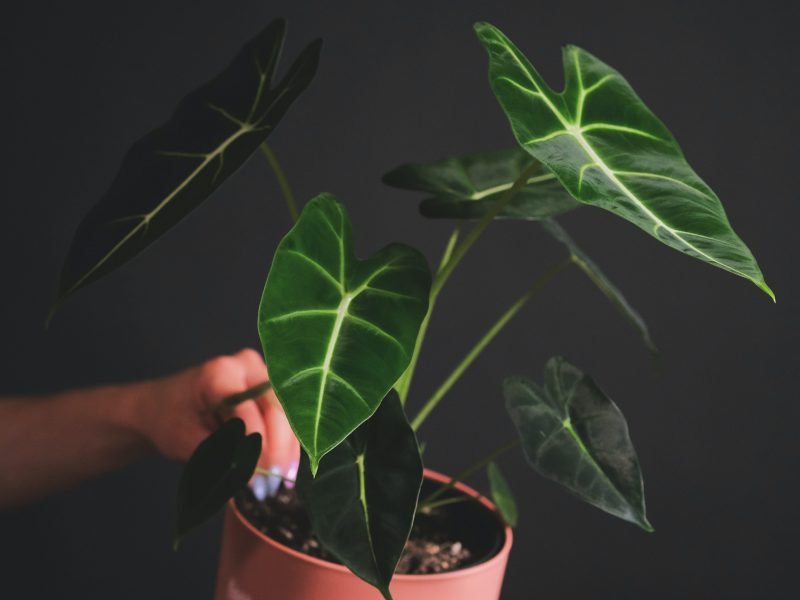
Green Velvet Alocasia on a dark background in a red pot

Native to the tropical rainforests of South East Asia, the Green Velvet Alocasia (also known as the Alocasia Frydek) is one of the most beautiful Alocasia varieties. With dark green soft velvety leaves and creamy white veins that almost look as though they are glowing.

How to Care for a Green Velvet Alocasia

Although we wouldn’t recommend them to a beginner plant parent, they aren’t the most difficult plant to care for. There are a few things to watch out for to prevent some issues from cropping up, mainly light level, temperature and humidity.

You want to ensure that your Alocasia has enough bright but indirect sunlight while keeping them away from intense direct light during summer. This can not only dry out your plant and cause brown leaves, but it can scorch and burn the leaves, leaving irreversible yellow patches across the leaves.

Temperature and humidity levels both need to be slightly elevated to ensure your plant thrives. So you should get into a misting routine and pick up a digital thermometer to check for any cold drafts around your plant. But more on that later as below we will give you a complete overview as well as a detailed breakdown of everything you need to know to care for a Green Velvet Alocasia.

Green Velvet Alocasia Overview

Origin: South East Asia

Latin Name: Alocasia micholitziana ‘Frydek’

Common Name(s): Alocasia Frydek, Green Velvet Alocasia

Plant Family: Araceae

Difficulty Level: Medium

Appearance: Tropical plant with soft dark green velvety leaves that feature creamy white veins

Height and Size: 3 feet in height at maturity

Growth Rate: Moderate

Flowering: Occasionally may grow a white spadix flower covered by a pale green spathe

Pruning: Prune old foliage, but otherwise no pruning is necessary

Cleaning: Regular dusting

Light Requirements: Bright, indirect light

Water Requirements: Moderate watering but cut back over winter

Best Soil: Balance well-draining with water-retention qualities

Ideal temperature: 65-85°F (18-29°C)

Fertilizing Routine: Apply a well-balanced fertilizer every 4-6 weeks during spring and summer

Ideal Humidity Level: 50-60% humidity

Propagation: By division of the mother plant.

Repotting Frequency: Repot every 1-2 years

Toxicity: Toxic to pets and humans if ingested

Risk of Pests: Rare but some risk of fungus gnats, spider mites, scale insects, mealybugs and thrips.

Common Problems: yellow leaves, brown leaves and drooping stems.

Origin of a Green Velvet Alocasia

Native to the tropical rainforests of South East Asia, the Green Velvet Alocasia used to be quite tricky and expensive to get hold of. However, over the past few years, their increase in popularity has meant cultivation of these plants has increased and they are slightly more available in plant shops and nurseries around the world.

The origin and native environment are very important when considering the best environment and care routine for your plant as you want to mimic some of the factors that are found there. As the Alocasia Frydek is native to tropical areas, higher humidity and warmer temperatures will help them thrive.

Green Velvet Alocasia Appearance

Alocasia varieties in general are known and loved for their heart/arrow-shaped leaves with distinctive and contrasting veins. The Green Velvet Alocasia is extra special as its leaves are soft and velvety (hence the name).

Care Difficulty Level

Green Velvet Alocasia plants definitely aren’t the easiest to care for and may have some trouble adapting if the environment or care routine isn’t right. Make sure you find a warm spot with indirect light and get into the habit of misting your plant to prevent it from drying out.

Alocasia Frydek Height and Size

They will grow to a height of around 3 feet but it can take many years to get to that stage as they aren’t particularly fast growing.

Alocasia Frydek Growth Rate

You will see several new leaves each year but overall the Green Velvet Alocasia isn’t very fast-growing. Don’t expect to see an abundance of new foliage every few weeks.

Green Velvet Alocasia Flowers

Occasionally, mature Alocasia Frydek plants will grow a few flowers during summer. The flowers are thin white spadix, surrounded by a very pale green flat spathe. They are often quite insignificant flowers and will wilt after a couple of weeks.

Pruning your Green Velvet Alocasia

Regular pruning is not required when caring for and maintaining a Green Velvet Alocasia. There are a few instances though in which you may want to get your pruning scissors out. If there are any leaves that are dead or dying (brown or yellow leaves), then it’s best to remove these from your plant as they are only wasting energy that could be used to promote new healthy growth.

You may also want to prune your plant if it has outgrown the space in your home. Although they aren’t fast-growing houseplants, pruning them can help to reshape or control the size of your plant.

Cleaning your Green Velvet Alocasia

The large flat leaves of an Alocasia Frydek are dust magnets and it’s very important that you dust them regularly. Dusting not only helps more light actually get to the leaf but it can unclog the leaves’ pores, helping your Alocasia to ‘breathe’ better. Dusting can also keep the leaves looking fresher and less dull.

Use a damp cloth to wipe the leaves gently, making sure to use your other hand to support the leaf from behind. This will help to prevent any leaf or stem damage.

If you are unable to remove the dust or dirt with just water, use a drop or two of dish soap but avoid the use of any harsh chemicals. These can strip the leaves of their velvety look and feel.

Green Velvet Alocasia Leaf
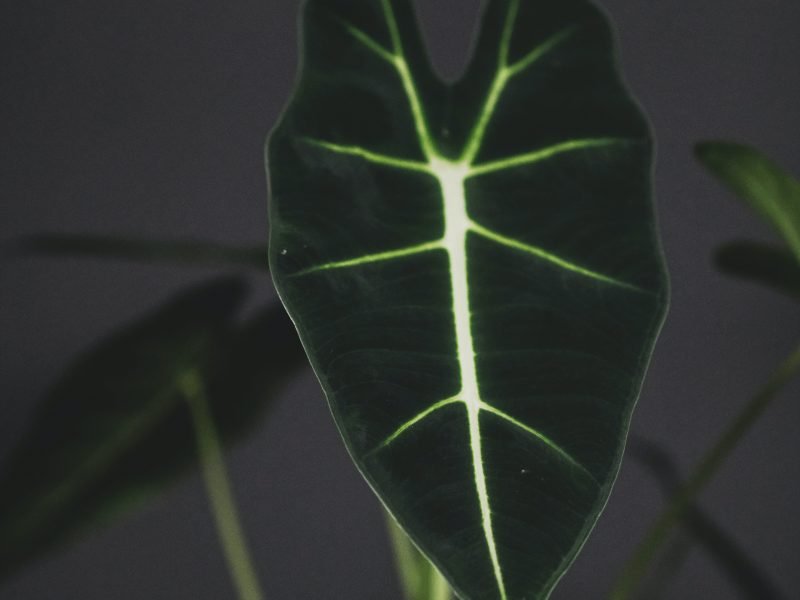
Green Velvet Alocasia on a black background

Green Velvet Alocasia Light Requirements

Bright, indirect light is best for your Green Velvet Alocasia. While they can tolerate some direct sunlight in winter (as the sun is a lot weaker and out for less of the day), direct sunlight can scorch their incredible leaves. The heat caused by direct sunlight can also generally dry out your plant and cause serious issues.

Like all Alocasias, the Frydek doesn’t tolerate low light very well. Not only can it kill your plant eventually, but it will begin by causing issues such as leggy, small growth, a lack of new leaves or brown foliage.

Water Requirements for a Green Velvet Alocasia

How much you water your Green Velvet Alocasia really depends on the season and the temperature. You want to hold off watering a lot during winter but increase the regularity during summer.

They don’t like their soil to dry out completely but also are sensitive to root rot so it might take a little while to figure out what works best for your plant.

Using a moisture meter will really help you to figure out when it’s time to water, and when to leave it a few more days. As there are so many external factors that can change how frequently they need to be watered, watering schedules don’t really work. Instead, be flexible with how much and how often you water your Alocasia Frydek and respond to environmental changes accordingly.

Top tip: to prevent waterlogged soil and root rot, it’s a good idea to remove any excess water that is still sitting in the saucer or at the bottom of the planter 20 minutes after watering. This allows enough time for your plant’s soil to absorb what it can but prevents the roots from sitting in a puddle of water.

Best Soil for a Green Velvet Alocasia

Green Velvet Alocasias need a well-draining potting mix that also has water-retention qualities. Although these things are technically the opposite of each other, they each play a role in making sure the water can easily flow through the potting mix, but doesn’t just run through straight away without allowing the roots to absorb it.

Most of the time, a standard high-quality houseplant potting mix will suffice but if it doesn’t already have it, add some extra perlite in to aid drainage and aeration of the soil.

Alocasia Frydek Temperature Requirements

Cold temperatures will be damaging to your Green Velvet Alocasia and they prefer to be in temperatures around 65-85°F (18-29°C).

You want to make sure to keep your plant away from drafty windows or external doors as the cold air from outside can over time shock and damage your plant. You also need to be careful around air conditioning units as a steady flow of cold air can also cause issues, particularly when it comes to the soil not drying out.

But it’s not just cold extremes that you have to be careful of for your Alocasia, but you should avoid hotspots too. Placing your plant too close to radiators, heating vents or cookers can be harmful, drying out and scorching your plant’s leaves.

Green Velvet Alocasia Fertilizer Requirements

Apply a well-balanced 10-10-10 fertilizer at half-strength every 4-6 weeks during spring and summer. We recommend using a water-soluble fertilizer as it gives you better control over the strength and frequency of fertilization.

The reason that you want to dilute the fertilizer to half the recommended strength is that there can be no one-fits-all amount to fertilize your plant, so it’s best to be cautious with the amount. Plant size, type, season, warmth and so many other factors play into how much you can fertilize so going off the one amount on the bottle won’t ever work.

The other thing to note when fertilizing your Green Velvet Alocasia is to cut back entirely during autumn and winter. This is the dormant phase for your plant, so fertilizing during this time can do more damage than good.

Note: fertilizing is optional and you can still see an abundance of new, healthy leaves without it. Sometimes fertilizing can just give that extra boost to promote healthy growth.

Ideal Humidity Level for your Green Velvet Alocasia

When caring for your Alocasia Frydek, it’s important to increase the humidity as they thrive in environments with a humidity level of 50-60%. If the air is too dry for your plant, then it can begin to develop brown leaf tips, edges and brown spots over time.

Boosting the humidity for your Alocasia Frydek is super simple and cheap too! The first habit to get into is to begin misting the leaves with a spray bottle a couple of times per week. You want to ideally do this in the mid-morning so that there is enough time for the water droplets to evaporate before the temperature drops overnight. Cold, damp leaves are a combination that can often lead to leaf rot.

Other methods of boosting the humidity are: showering your plant, using a pebble tray and investing in a humidifier. Another tip which involves you actually doing nothing is to move your plant into either the bathroom or your kitchen (provided the other environmental factors are right). The steam released when cooking and showering means these rooms often have a naturally higher humidity level than the rest of your home.

It’s a great idea to invest in a humidity monitor if you haven’t already as otherwise it can be pretty difficult to know if the air is too dry for your Alocasia Green Velvet. A lot of the time you can get a combo humidity monitor and thermometer which is great for plant care.

Alocasia Frydek plant

Alocasia Frydek plant

Propagating your Green Velvet Alocasia

The best way to propagate a Green Velvet Alocasia is through the division of the mother plant into several smaller plants. Make sure that each offcut has a good section of the root system to give it a good chance of survival.

If you’re looking to propagate your Alocasia Frydek then the best method to choose would be by division of a larger, more matured plant. By choosing to divide/ propagate when the plant is more mature you’re significantly more likely to have success and will also run less of a risk of damaging the existing parent plant.

The process for propagating your Green Velvet Alocasia is really quite straightforward. Start by removing any pots and excess soil, a chopstick will often make this much easier and also allow you to be more careful with the root system.

You should be able to see separate rhizomes of the plant at this point. Gently separate these as best as possible, if you need to cut them make sure to use a sharp clean blade or pair of shears.

From that point, the cuttings will simply need potting into some good quality potting mix, care for the cuttings just as you would for the more mature plants!

Repotting your Green Velvet Alocasia

On average, you should be repotting your Alocasia Frydek every 1-2 years. However, it’s important to look out for signs that your plant is severely rootbound.

Signs that you need to repot your Alocasia include the roots growing out of the top of the pot or out of the drainage holes, the roots being tightly coiled when removed from the pot and there not being much soil left.

Stagnant growth during spring and summer can also sometimes indicate that your plant is rootbound and needs repotting. However, there are other potential causes of this including low temperatures or light level so be sure to check over all environmental factors and inspect the root system before diagnosing the issue.
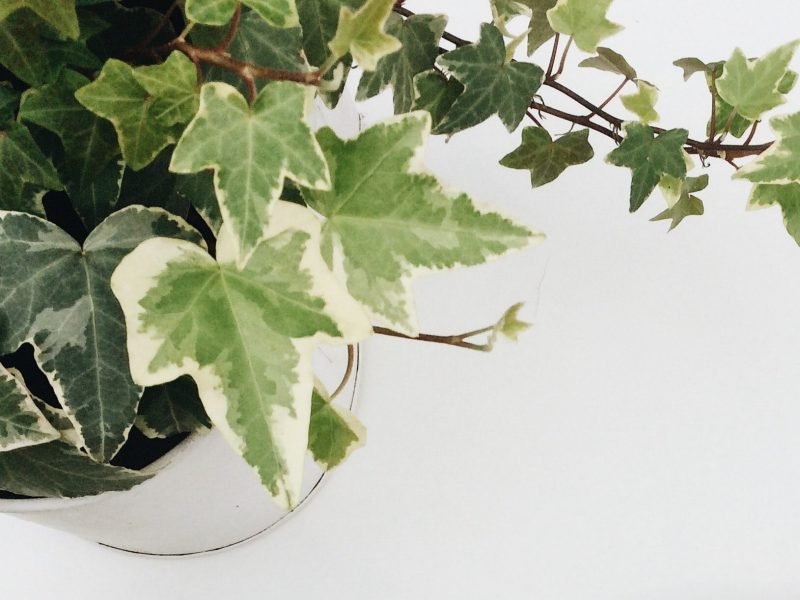
When repotting your Alocasia Green Velvet, choose a pot that is only one or two sizes up from its current pot. It can be tempting to choose a much larger pot to give it ample space to grow but this can lead to two issues.

Firstly, if the pot is much too big, the root system can become unstable and your plant can begin to droop and secondly, as there is a lot more soil, it can absorb a lot more water, which increases the risk of root rot. This is because the soil will take a lot longer to dry out.

Green Velvet Alocasia Toxicity to Humans and Pets

Alocasia Frydek are toxic to pets and humans when ingested. This is because they contain insoluble calcium oxalate crystals.

If ingested, it can cause mouth, throat and stomach irritation, vomiting and diarrhoea. Seek medical attention immediately if part of the plant has been ingested.

Treating and Preventing Pests

Although rare, it can sometimes happen that you find some unwanted visitors on your plant. This is more common if your plant has spent any time outdoors but can still occur on houseplants.

Pests such as spider mites, scale insects, thrips, fungus gnats and mealybugs can cause brown leaves, brown spots, holes in the leaves and plant death if not treated.

Make sure to give your Green Velvet Alocasia a regular check-up as treating a pest infestation early is the key to getting rid of it. Checking over the leaves will also help you spot other common problems early.

If you do spot pests on your Alocasia Frydek, isolate it from all other plants before starting treatment. Then remove the worst affected leaves, wash the whole plant down in the shower and treat it with neem oil and an insecticide for several weeks.

Green Velvet Alocasia Common Problems

Fiddle and Thorn is a participant in the Amazon Services LLC Associates Program, an affiliate advertising program designed to provide a means for sites to earn advertising fees by advertising and linking to Amazon.com

Take our houseplant survey!

Quickly respond to our 30 second houseplant survey and get 75% off our Complete Houseplant Care eBook!

Take the Survey

No thanks…

Fishbone Cactus: A Complete Care Guide

Last Updated: October 16, 2023

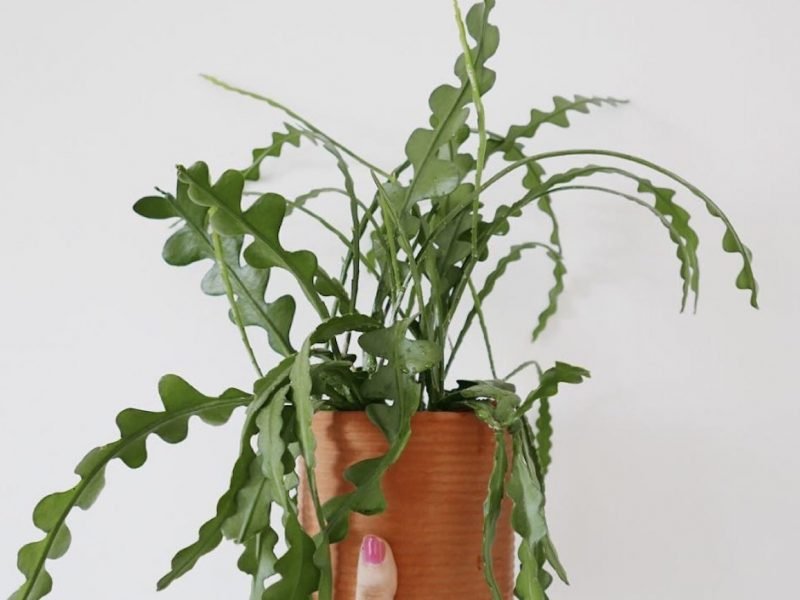
Fishbone Cactus

Fishbone Cactus Plant

Introduction to the Fishbone Cactus

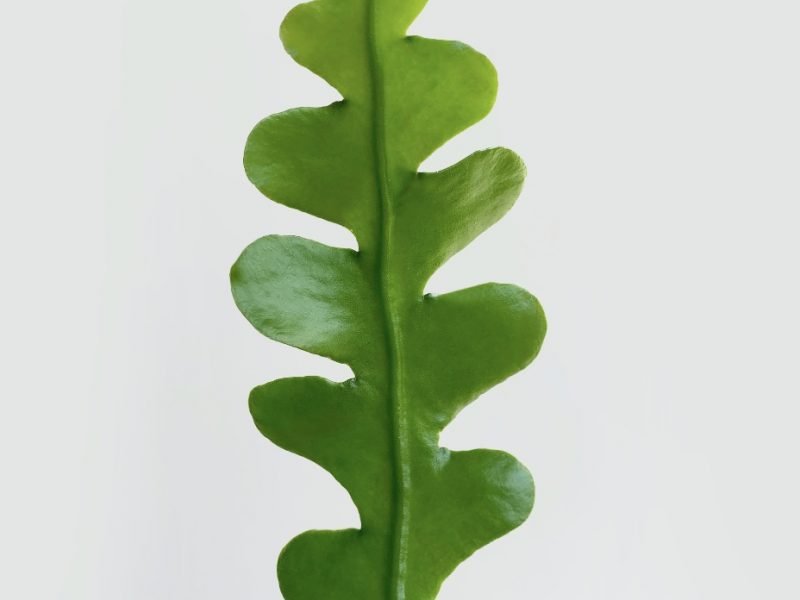
The Fishbone Cactus, scientifically known as Epiphyllum anguliger, is characterised by its zig-zag patterned leaves, which bear a striking resemblance to a fish skeleton (hence the name). Originating from the tropical rainforests of Mexico, this unique species brings a touch of the exotic to any indoor space.

Unlike the stereotypical desert-dwelling cacti, the Fishbone Cactus prefers a more humid environment. It’s an epiphytic species, meaning it naturally grows on other trees (host plants) rather than in the soil. This characteristic contributes to its hardy nature and relative ease of care, making it a great choice for novice and experienced plant enthusiasts alike.

The Ideal Light Level for your Fishbone Cactus

Ensuring that your Fishbone Cactus is exposed to the correct light level is an important aspect of its care. This tropical cactus typically thrives under indirect but bright light.

Indirect Light: Unlike many desert-dwelling cacti, the Fishbone Cactus isn’t a sun worshipper. Rather than basking in the full sun, it prefers filtered or indirect light. Placing it near a north or east-facing window often works well.

Bright but not direct: Even though the Fishbone Cactus enjoys brightness, direct sunlight can scorch its leaves, especially during summer when the sun is hot and intense. If you notice any browning or yellowing, it might be a sign that your cactus is getting too much direct sunlight.

Watering Techniques for a Fishbone Cactus

This intriguing cactus, with its wavy, fishbone-like appearance, thrives best with the correct moisture levels and the ideal amount might not quite be what you think…

When to Water your Fishbone Cactus

The Fishbone Cactus enjoys a good drink, however, its watering schedule is a balancing act. During the growing season (spring and summer), your Fishbone Cactus needs regular watering. Once the top 1-2 inches of soil is dry, it’s time to water again. In the rest periods (autumn and winter), reduce the watering frequency significantly.
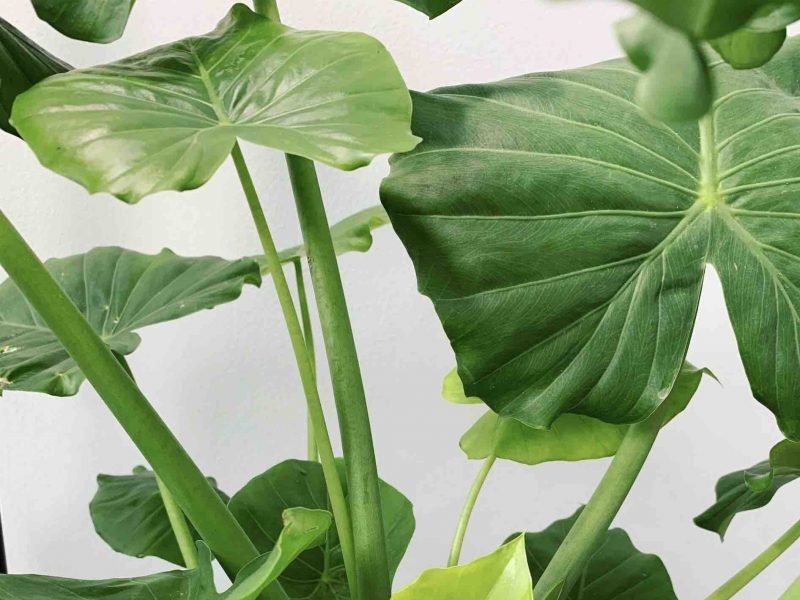
How to Water your Fishbone Cactus

Watering your Fishbone Cactus isn’t about simply adding water to the pot. The technique can make a significant difference to your cactus’s health. Here’s the optimal method:

  1. Fill a container with water.
  2. Place the cactus pot in the water, letting it absorb from the bottom up.
  3. Wait until the top of the soil is wet, then remove the pot from the water.
  4. Let it drain thoroughly before placing it back in its usual spot.

Remember, overwatering is a common pitfall with all types of cacti. If the Fishbone Cactus is left standing in water, its roots may rot as they are extremely thin and delicate. This is why it’s so important to always ensure proper drainage to prevent this as much as possible.

Water Quality and Your Fishbone Cactus

The quality and hardness of water can impact the health of your Fishbone Cactus. Tap water often contains chemicals that can harm your plant, particularly the roots. If possible, consider using rainwater, distilled water, or filtered water for your Fishbone Cactus to avoid chemical buildup in the soil.

Fishbone Cactus Leaves

A Fishbone Cactus plant

Fertilizing Your Fishbone Cactus: Tips and Tricks

Caring for a Fishbone Cactus isn’t just about watering and light management. Fertilization plays a pivotal role in its growth and overall health and is something that is very commonly forgotten. Often plant parents can be a little afraid of fertilizing but as long as you are careful and follow the right methods, it really shouldn’t be something to be scared of.

The Right Fertilizer for Your Fishbone Cactus

First things first, you need to get the right fertilizer. The ideal type is a balanced, water-soluble houseplant fertilizer. However, cacti-specific fertilizers with low nitrogen content can also work wonders so look out for these in your local garden center.

When to Fertilize

Unlike other houseplants, the Fishbone Cactus doesn’t require frequent fertilizing. You only need to feed it during the active growing season, which is typically between spring and summer. Fertilize once a month during this period, and you’ll be rewarded with healthy luscious growth.

How to Fertilize

Fertilizing your Fishbone Cactus is a breeze. Simply dilute your chosen liquid fertilizer to half the strength recommended on the packaging. Apply the diluted mix to the soil, ensuring it’s evenly distributed.

While there are other types of fertilizer such as pellets and sticks, water fertilizer helps you regulate the amount a little better. It also allows you to cut out fertilizing completely whereas you would have to replace the entire potting mix if you chose to fertilize using pellets but had accidentally done it too much.

Avoiding Fertilizer Burn

Over-fertilization can lead to a condition called ‘fertilizer burn’. Watch out for signs like discoloration and wilting (particularly yellow spots and patches). To prevent this, always ensure your plant has been thoroughly watered before you apply any fertilizer. This will help the soil absorb the nutrients without causing harm to the plant.

Extra Tips

  • Refrain from fertilizing in winter. This is a dormant period for the Fishbone Cactus, and fertilization can be quite damaging so hold off entirely during the colder, darker months of the year.
  • Use room temperature water for dilution. Cold water can shock the plant and hinder nutrient absorption and hot water can burn the roots.
  • Alternate between fertilizing and watering sessions. This ensures the plant won’t get overwhelmed with nutrients and water at the same time.

Temperature and Humidity Requirements for a Fishbone Cactus

Luckily for everyone, the Fishbone Cactus is a highly adaptable plant that thrives in a variety of temperature and humidity conditions. However, it does have certain preferences that can help it really flourish. Below we have included a brief outline of the ideal levels:

Temperature Requirements

Originating from the tropical forests of Mexico, the Fishbone Cactus prefers warmer temperatures. It can tolerate a temperature range between 15°C to 32°C. However, the optimum temperature for this exotic beauty is between 21°C and 27°C.

It’s really important to avoid extreme temperatures for this plant (and any others) as it can cause a whole host of issues from brown leaves to leaf drop. Things to look out for are cracks in windows and external doors, air conditioning or heating units, radiators and cookers.

Winter Care

During the winter months, the Fishbone Cactus can endure cooler conditions, as long as it doesn’t drop below 10°C. It’s crucial to protect this hardy plant from frost, as prolonged exposure can cause severe damage.

Humidity Requirements

In its natural habitat, the Fishbone Cactus thrives in high humidity. However, it can adapt to average home humidity levels. If you notice the edges of the leaves turning brown, this could be a sign that the humidity is too low. To increase humidity, you could place the pot on a tray filled with pebbles and water, ensuring the pot does not sit directly in the water.

The Ideal Soil Mix for Your Fishbone Cactus

Choosing the perfect soil mix for your Fishbone Cactus (Epiphyllum anguliger) can be a bit confusing. The plant is native to the rainforests of Mexico, and it’s used to growing in the nooks and crannies of tree barks or rocks. This means it prefers well-draining soil that can replicate its natural habitat.

Components of an Ideal Fishbone Cactus Soil Mix

  • Orchid bark: Fishbone cacti are epiphytic plants, which means they enjoy the same type of bark-based soil that orchids do. A good portion of orchid bark in your soil mix can be very beneficial.
  • Coarse sand: Adding some coarse sand can improve the drainage of the soil mix. This ensures that water doesn’t stay too long around the roots, preventing root rot.
  • Peat moss or coconut coir: Both of these materials help to retain a small amount of moisture while also improving the soil’s aeration.
  • Perlite: This is used to further enhance the soil’s drainage capacity. A handful of perlite goes a long way in promoting root health.

A Quick DIY Recipe for Fishbone Cactus Soil Mix

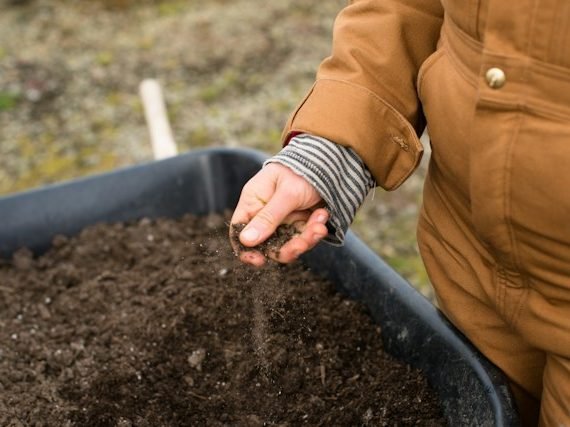
  1. Combine 1 part orchid bark, 1 part coarse sand, 1 part peat moss or coconut coir, and 1 part perlite in a large bucket.
  2. Mix the components thoroughly until they are well incorporated.
  3. Before potting your Fishbone Cactus, ensure the pot has adequate drainage holes at the bottom. This is crucial for preventing water from sitting at the bottom of the pot, which can lead to root rot.
  4. Fill the pot with the soil mixture, then plant your cactus. Make sure the roots are entirely covered with soil.

If you would rather by a pre-mixed bag of soil for your Fishbone Cactus that will absolutely suffice as long as you choose a well-draining mix. Look out for ones that already include perlite as that will help a lot with drainage.

Pruning the Fishbone Cactus: A Step-by-Step Guide

Pruning your Fishbone Cactus is an essential part of its care and maintenance. Regular trimming not only helps to maintain the plant’s unique shape but also encourages healthier growth moving forward.

Identifying the Need to Prune

Typically, a plant with yellowing or wilting leaves will benefit from a trim to remove the dying or dead sections. But it’s not just a suffering Fishbone Cactus that needs pruning as pruning can also help to shape your plant to fit more into the required space.

Tools Needed

The right tools can make the pruning process easier and more effective. A sharp, clean pair of pruning shears or scissors is the primary necessity. A pair of gloves can also be handy to protect your hands from the thin spikes.

Pruning Process

Pruning can be quite intimidating for many as the idea of chopping parts off your plant is scary. However, if done right, pruning isn’t anything to be nervous about! Here are the steps to follow:

  1. Sanitise your tools: Begin by cleaning your pruning shears with rubbing alcohol to prevent the spread of disease or pests.
  2. Identify the sections to prune: Look for any discoloured, diseased, or overgrown sections of the cactus.
  3. Make the cut: Make a clean cut at the base of the stem. Be sure to not leave any stubs behind as they can cause disease. This is because these small stubs will get quite soggy if you are top watering and this exposes them to a lot more risk of leaf rot.

Top tip: Always prune your Fishbone Cactus sparingly. Too much pruning can stress the plant and inhibit growth. After pruning, give the plant time to heal before you water it again.

Post Pruning Care

After pruning, your Fishbone Cactus will need extra care. Ensure it receives adequate sunlight and water. However, avoid overwatering as it can lead to root rot if your plant is already a little bit stressed out. A balance needs to be maintained for the plant to thrive.

Leaf cuttings on a Fishbone Cactus

Leaf of a Fishbone Cactus plant

Propagating Your Fishbone Cactus: Everything You Need to Know

The Basics of Fishbone Cactus Propagation

Propagation involves producing new plants from the parent plant. With Fishbone Cacti, this typically involves using stem cuttings. This method is generally successful as the leaves grow roots fairly quickly when removed from the mother plant.

Step-by-Step Propagation Guide

  1. Choose a healthy Fishbone Cactus stem for cutting. It should be robust, free from disease or damage, and ideally, between 10cm and 15cm in length.
  2. Use a clean, sharp knife to make your cut. Aim to cut at a 45-degree angle for optimal success.
  3. Allow the cutting to callous over. This means leaving it in a dry, shaded area for a few days until a hardened layer forms over the cut area.
  4. Prepare your potting mix. A well-draining cactus or succulent mix is essential to prevent root rot.
  5. Plant your cutting. Place the calloused end of your cutting into the mix, ensuring it stands upright. Water lightly and place in a warm, well-lit area.
  6. Now you wait! Growth can be slow, and it may take several weeks before new roots and shoots start to appear.

Flowers on a Fishbone Cactus

Among the plant’s most striking traits is its blooming phase. The Fishbone Cactus produces large, fragrant, night-blooming flowers. These luminescent blooms are typically white or yellow and can reach an impressive 15cm in diameter on mature plants.

Flower Development

Interestingly, the Fishbone Cactus blooms only at night, its flowers closing with the rise of the sun. The flowers are ephemeral, lasting only a single night. They begin to open as the sun sets and are fully bloomed by midnight.

The Role of Pollinators

The nocturnal blooming of the Fishbone Cactus is a strategic adaptation to attract its primary pollinators: nocturnal creatures like moths and bats. The cactus’s flowers emit a strong, sweet scent to lure these creatures. The bright white colour of the flowers also aids in attracting these night-time pollinators.

Encouraging Flowering

Want to see your Fishbone Cactus in full bloom? There are a few key steps to encourage flowering. First, make sure your cactus is getting plenty of indirect light. Next, maintain a good watering schedule – not too dry and not too wet. Lastly, provide a balanced, diluted fertiliser during the growing season.

It’s important to note however that Fishbone Cacti don’t bloom super often and it can take many years for it to start producing any flowers!

Cleaning your Fishbone Cactus

There are two main reasons why you need to add cleaning into your care routine. Firstly, if there is a thin layer of dust across the leaves, it will actually limit the amount of sunlight that your plant is able to absorb. The second reason is slightly more aesthetic as dusty leaves can look dull and bland.

Method 1: Dusting the leaves

The first step in the cleaning process is dusting off your Fishbone Cactus. Over time, your plant might accumulate dust, which can hinder its ability to photosynthesise at the same levels. Therefore, it’s vital to regularly give it a mild dusting with a soft-bristled brush. Cloths don’t work so well for Fishbone Cacti as they have thin little spikes which will attach themselves to the cloth. Instead, a small brush will work best (we have had a lot of success with a soft paintbrush).

Method 2: Washing your plant

Everyone once in a while you may want to bathe your Fishbone Cactus to remove any long-standing dust in areas difficult to reach with your brush when dusting. Ideally, this should be done 2-3 times a year. Place your Fishbone Cactus in a bowl of water for about 10 minutes and allow it to drip dry before placing it back in its usual spot.

We recommend only bathing your plant in the morning so that there is enough time for the leaves to dry off before nightfall.

Top tip: Never use any leaf shine products on your Fishbone Cactus as they can actually damage the leaves. They are sold on the premise that they will make your leaves sparkle but they actually contain very strong chemicals that can strip off the thin coating across the leaves on your Fishbone Cactus and leave them dull and patchy.

Repotting your Fishbone Cactus

When to repot?

Generally, it’s best to repot your Fishbone Cactus in the early spring. This time is perfect because it aligns with the start of your plant’s natural growth period. But, how do you know when repotting is necessary? If you notice the roots are peeking out of the drainage holes, it’s time for a new home for your plant.

The Repotting Process

    1. Choose the Right Pot: Opt for a pot that’s about two inches larger than the existing one. If you choose a pot that is a lot larger it can lead to issues such as root rot and plant instability. Ensure it has good drainage (drainage holes or made from permeable material).
    2. Prepare the New Soil: A well-draining cactus mix, combined with perlite or coarse sand, works best.
    3. Remove the plant: Gently remove the Fishbone Cactus from its current pot. Be careful not to damage the roots but don’t worry if one or two break off, that’s normal and shouldn’t impact your plant’s health.
    4. Root Inspection: Check the roots for any signs of rot or disease. If you find any, trim them using a sanitized knife.
    5. Planting: Place your Fishbone Cactus in the new pot and backfill with soil. Make sure the plant is firm in its place but not too compact.
  • Water deeply: Make sure to water your plant deeply straight after repotting as this will help the soil to level out and help your plant start recovering from the stress of repotting.

Toxicity of the Fishbone Cactus

You’ll be pleased to know that the Fishbone Cactus is non-toxic to pets and humans.

However, it’s still essential to practice caution. Although the plant itself is non-toxic, it’s always best to prevent animals from nibbling on it or children from swallowing parts of it. Not because it’s poisonous, but because it can still cause minor digestive discomfort as they have very thin spikes across the leaves.

Here are some tips to keep your Fishbone Cactus and your loved ones safe:

  • Keep the plant at a height: Position your Fishbone Cactus on a high shelf or in a hanging basket, out of reach from curious hands or paws.
  • Create a plant-safe zone: Dedicate specific areas in your home for your plants, away from areas frequented by pets or children.

Common Problems and How to Solve Them: A Troubleshooting Guide

Even the most diligent cactus caretaker can encounter a few hiccups along the way. The Fishbone cactus, while largely fuss-free, does have its share of common problems. But as long as you know what to look for and you act as soon as you see any sign of trouble, you should be able to bring your plant back to full health.

Fiddle and Thorn is a participant in the Amazon Services LLC Associates Program, an affiliate advertising program designed to provide a means for sites to earn advertising fees by advertising and linking to Amazon.com

Take our houseplant survey!

Quickly respond to our 30 second houseplant survey and get 75% off our Complete Houseplant Care eBook!

Take the Survey

No thanks…

Fiddle Leaf Fig Tree: A Complete Guide to Care and Maintenance

Last Updated: October 16, 2023

Fiddle Leaf Fig Tree

Fiddle Leaf Fig Tree

Introduction to the Fiddle Leaf Fig Tree

The Fiddle Leaf Fig Tree, known scientifically as Ficus Lyrata, is best known for its striking, broad leaves and tall stature making it a favorite among plant enthusiasts and interior designers alike. While it’s not the fussiest plant out there, it still has its specific environmental and care requirements which we will go through in this guide.

Originally from the tropical rainforests of Western Africa, the Fiddle Leaf Fig Tree is accustomed to a warm, humid environment. The “fiddle” in its name comes from the shape of its leaves, which resemble a fiddle or violin.

Characteristics of the Fiddle Leaf Fig Tree

Physical Features

The Fiddle Leaf Fig tree is a tall, columnar plant that can grow up to 2.5 meters (8 feet) in height indoors. In its natural habitat, it can reach up to 15 meters (50 feet). The plant’s signature characteristic is its large, glossy, fiddle-shaped leaves with prominent veins that grow on woody stems. The leaves can be as long as 45 cm (18 inches) and are a rich, deep green color.

Growth Pattern

Fiddle Leaf Fig trees grow in a pattern that’s unique to each individual plant, depending on the light and space available. In general, they grow slowly, adding 1-2 leaves per month during the growing season. They can grow quite tall indoors if not pruned regularly.

Life Span

With proper care, a Fiddle Leaf Fig Tree can live for several decades. It’s not uncommon for these plants to be passed down from generation to generation.

Indoor Adaptability

Despite its preference for a tropical environment, the Fiddle Leaf Fig Tree adapts well to indoor conditions. They can withstand some lower light levels and dry air, common in most indoor settings. However, they do have their limits and won’t thrive in extremely low light or cold, drafty areas.

Large Fiddle Leaf Fig

Large Fiddle Leaf Fig in living room

Fiddle Leaf Fig Tree Lighting Needs

Your Fiddle Leaf Fig Tree thrives best in bright, indirect sunlight. This tropical plant, native to the rainforests of West Africa, is accustomed to receiving a lot of light filtered through the forest canopy. However, it’s important to remember that while they enjoy a good amount of light, they shouldn’t be exposed to direct sunlight as it can burn their leaves.

Consider the following tips to ensure your Fiddle Leaf Fig Tree gets the appropriate amount of light:

  • Indirect Light: Position your plant near a window that receives plenty of natural light. An east-facing window is ideal. However, be sure to diffuse the light if it gets too intense, especially during the peak hours of the day.
  • Rotation: Rotate your tree every few weeks to ensure all sides receive equal exposure to light. This helps to promote even growth and prevents the tree from leaning towards one side.
  • Artificial Light: During darker winter months, or if you live in a low-light environment, you might need to supplement with a grow light. This provides the light spectrum necessary for the plant to photosynthesize.

A lack of adequate light can lead to a number of problems such as drooping leaves, leaf loss or stunted growth so it’s not just too much sunlight that can be the issue.

Monitoring your Fiddle Leaf Fig’s reaction to the light it receives is crucial. If you notice the leaves turning brown or the plant becoming leggy, it might be due to inadequate light. Try moving your plant to a brighter location or adjusting the light conditions as necessary.

Watering your Fiddle Leaf Fig Tree

When it comes to the frequency of watering, a rule of thumb is to keep a consistent schedule. This can vary based on the size of the tree, the pot size, and the environment. However, on average, watering once a week should be sufficient.

Here are some general guidelines to follow while watering your Fiddle Leaf Fig Tree:

  1. Ensure the soil dries out between waterings: Before watering, make sure the top inch of the soil is dry. Fiddle Leaf Fig Trees prefer their soil to dry out a bit between waterings as overwatering can lead to root rot and other problems.
  2. Use room-temperature water: Cold or hot water can shock or burn the plant’s root system. It’s best to use water that is at room temperature to avoid any potential stress to the plant.
  3. Water deeply: When you water, do so deeply, ensuring that the water reaches the root ball. This encourages the roots to grow deeper, promoting a healthier plant.

The goal is to mimic the plant’s natural tropical environment. In its natural habitat, a Fiddle Leaf Fig Tree would experience heavy rainfall followed by periods of dryness. Therefore, the watering cycle should reflect this.

Temperature and Humidity Requirements

Your Ficus lyrata is a tropical plant by nature which means it thrives in warmer temperatures and higher humidity conditions that mimic its native environment.

Temperature: Fiddle Leaf Fig Trees prefer a warmer climate. The ideal temperature range is between 65 and 75 degrees Fahrenheit during the day. At night, temperatures can drop slightly but should remain above 50 degrees Fahrenheit. Extreme fluctuations in temperature can cause stress to your Fiddle Leaf Fig, so try to maintain a consistent environment and monitor the temp for any changes.

Humidity: High humidity levels are beneficial for your Fiddle Leaf Fig and it’s accustomed to humidity levels around 50% to 65%. If you live in a dry environment, you might need to create additional humidity for your plant (see our tips below to achieve this).

Creating the Ideal Environment

Creating the right temperature and humidity levels for your Fiddle Leaf Fig Tree is just as important as how much water you give it as the wrong levels of either can cause serious irreversible issues. Here are some tips:

  • Position – Keep your plant away from drafts, heat vents, and air-conditioning units. These can cause sudden temperature fluctuations.
  • Pebble trays – If you’re in a dry environment, consider using a humidity tray. Fill a shallow tray with small stones or pebbles, add water, and place your plant pot on top. As the water evaporates, it increases the humidity around the plant.
  • Misting – Another option for increasing humidity is to mist your Fiddle Leaf Fig Tree. Spray a fine mist of water onto the leaves every few days. However, be careful not to overdo it, as too much moisture can lead to mold growth.

Fertilizating your Fiddle Leaf Fig Tree

What kind of Fertilizer do you need?

Use a balanced, water-soluble fertilizer. Look for something that has equal parts Nitrogen (N), Phosphorus (P), and Potassium (K). This would typically be marked as 10-10-10 or 20-20-20 on the fertilizer bottle.

How often should you fertilize?

Fertilizing frequency depends on the time of year. In spring and summer fertilize your Fiddle Leaf Fig Tree once a month but cut back completely during fall and winter as your plant will largely be in a dormant phase.

Fertilizing Steps

  1. Water your Fiddle Leaf Fig Tree thoroughly. This helps to prevent the roots from burning due to the concentrated nutrients in the fertilizer.
  2. Prepare the fertilizer according to the package instructions. We do tend to recommend diluting it slightly more than recommended to avoid any potential overfertilization.
  3. Apply the fertilizer to the soil, avoiding direct contact with the leaves.
  4. Wait for the plant to absorb the fertilizer before watering again.

Remember, over-fertilizing can cause more harm than good. If the leaves of your Fiddle Leaf Fig Tree start to yellow or fall off, you might be using too much fertilizer. When in doubt, it’s better to under-fertilize than overdo it.

Fiddle Leaf Fig ready for repotting!

Repotting a fiddle leaf fig tree

Repotting a Fiddle Leaf Fig Tree

Repotting your Fiddle Leaf Fig Tree is an essential part of its care routine but it often intimidates many plant owners. Although it can be a little tricker than repotting some other plants because of the size that these trees can grow to, the main elements are exactly the same.

When to Repot

The best time to repot your Fiddle Leaf Fig is during the spring or early summer when the tree is in its growth phase as this will help your plant get over the shock of repotting. Look for signs that your tree needs repotting, such as roots growing out of the drainage holes or the plant becoming top-heavy.

Choosing the Right Pot

When repotting, you should always choose a pot that’s only slightly larger than the current one. Going up by 2 to 4 inches in diameter is usually a good rule of thumb. This will give the plant enough space to grow, but not so much that the roots will be unstable. If the pot is too big it also means there is a lot more soil in there which can retain a lot more moisture than before, contributing to a higher risk of root rot.

Steps to Repot a Fiddle Leaf Fig Tree

  1. Prepare the new pot: Before you begin, make sure your new pot has adequate drainage. Add a layer of well-draining soil to the bottom of the pot.
  2. Remove the tree from the current pot: Carefully remove the tree from its current pot. If the tree is stuck, you can gently tilt the pot and tap it to loosen the root ball. The best way of doing this is to carefully lay the tree down, so you aren’t lifting it up as this can hurt your back.
  3. Prune the roots: Look for any dead or damaged roots and prune them. Don’t be afraid to prune a good portion of the roots. This will make room for new growth.
  4. Place the tree in the new pot: Position your tree in the center of the new pot and add soil around it. Be sure to firm the soil around the base of the tree to ensure it’s stable.
  5. Water thoroughly: After repotting, water your tree thoroughly. This will help settle the soil and remove any air pockets.

Pruning your Fiddle Leaf Fig Tree

Why Prune Your Fiddle Leaf Fig Tree?

  1. Health: Regularly removing dead or dying leaves helps prevent the spread of disease and pests.
  2. Appearance: Pruning helps maintain the tree’s shape and size, enhancing its overall look.
  3. Growth: Pruning encourages the tree to grow more branches and leaves, resulting in a fuller appearance.

When to Prune Your Fiddle Leaf Fig Tree

The ideal time to prune your Fiddle Leaf Fig Tree is during the growing season, typically in the warmer months. However, if you notice diseased or dead leaves, it’s best to remove them immediately, regardless of the season.

How to Prune Your Fiddle Leaf Fig Tree

Follow these simple steps for effective pruning:

  1. Prepare Your Tools: Ensure your pruning shears are sharp and disinfected to prevent damage and disease.
  2. Identify What to Prune: Look for yellow, brown, or wilted leaves. Also, consider removing any overcrowded branches to allow better light penetration.
  3. Make the Cut: Cut at an angle, leaving about a quarter-inch of the stem attached to the tree. Be careful not to damage the main stem or branch.

Cleaning the Leaves

Why is Cleaning Necessary?

Over time, dust and grime can accumulate on the leaves, limiting their ability to photosynthesize effectively. This is because dust particles obstruct sunlight, which is crucial for photosynthesis. In addition, removing dust and grime also helps in preventing pests and diseases.

Leaf Cleaning Process

Here is a simple guide on how to clean the leaves of your Fiddle Leaf Fig Tree:

  1. Prepare a Cleaning Solution: You can make a gentle cleaning solution by mixing a few drops of mild liquid soap in a bowl of lukewarm water. However, do not use any harsh chemicals as it can damage the top layer of the leaves.
  2. Use a Soft Cloth: Dip a soft cloth or sponge into the cleaning solution. Wring it out to remove excess water.
  3. Clean the Leaves: Gently wipe each leaf starting from the base and moving towards the tip. Be careful not to apply too much pressure as this can damage the leaves. It’s a good idea to use your other hand to support the leaf from behind.
  4. Let Them Dry: After cleaning, let the leaves air dry. Avoid direct sunlight during this process to prevent leaf burn.

Fiddle Leaf Fig Tree Toxicity

Humans:

For humans, the Fiddle Leaf Fig Tree’s sap can result in a rash if it comes into contact with the skin. Further exposure can lead to more severe reactions, like eye irritation or even temporary blindness. If consumed, it can cause a burning sensation in the mouth, throat, and digestive tract. Therefore, it’s advised to handle this plant with care and keep it out of reach from children.

Pets:

The Fiddle Leaf Fig Tree is toxic to pets as the sap can irritate the skin, eyes and mouth of your pets. If ingested, the plant can cause vomiting, diarrhea, and even more serious health issues.

If you or your pet come into contact with the sap, immediately wash the affected area with soap and water. If symptoms persist, seek medical or veterinary assistance promptly.

Note: This information is intended for general guidance and does not replace professional medical or veterinary advice.

Fiddle in the Living Room

Fiddle leaf fig tree lifestyle image

Pest and Disease Management

Common Pests

The most common pests that you might encounter with your Fiddle Leaf Fig are mealybugs, spider mites, and aphids. These pests can cause yellowing of the leaves, leaf drop, and overall decline in the health of your plant.

  • Mealybugs: These appear as small, white cottony masses on the leaves and stems. They suck plant sap, leading to yellowing and wilting.
  • Spider Mites: These are tiny, spider-like creatures that are typically red or black. They also suck sap, causing yellow or brown spots on the leaves.
  • Aphids: Small, green or black insects that can cause curling and yellowing of the leaves.

Common Diseases

Fiddle Leaf Figs can also be affected by a few diseases, most commonly root rot and leaf spot.

  • Root rot: This is usually caused by overwatering. Look for brown, mushy roots and a foul smell. If left untreated, the plant will wilt and eventually die.
  • Leaf spot: This appears as brown or black spots on the leaves. It can be caused by a fungal or bacterial infection, often due to high humidity and poor air circulation.

Managing Pests and Diseases

Effective pest management involves regular checking and trying to spot the issue as early as possible. This will give you the best chance at successfully treating the issue.

  1. Inspect regularly: Check your plant’s leaves, stems, and soil regularly for any signs of pests or diseases.
  2. Use appropriate treatment: For pests, use a mild insecticide or a homemade solution of soapy water. For diseases, you might need to use a commercial treatment or remove affected parts of the plant.
  3. Maintain a healthy environment: Keep your plant in good health through proper watering, lighting, and temperature. A healthy plant is less susceptible to pests and diseases so preventing the issue is of course the best way to avoid having to treat it in the first place.

Fiddle Leaf Fig FAQs


Common Problems with your Fiddle Leaf Fig

Fiddle and Thorn is a participant in the Amazon Services LLC Associates Program, an affiliate advertising program designed to provide a means for sites to earn advertising fees by advertising and linking to Amazon.com

Take our houseplant survey!

Quickly respond to our 30 second houseplant survey and get 75% off our Complete Houseplant Care eBook!

Take the Survey

No thanks…

Fertilizing your Monstera | The Ultimate Guide

Last Updated: April 5, 2023

Reigning high on the list of most popular houseplants, Monstera plants are known for their luscious green leaves. But to achieve a good level of strong, large and healthy growth, most of the time you need to supplement the nutrients found in the potting mix with fertilizer (otherwise known as feeding your plant).

Fertilizing the right amount in the right way can lead to much healthier, stronger and faster new growth so is definitely something you want to be incorporating into your Monstera care.

A lot of plant parents find fertilizing any houseplant a little bit terrifying and even more so with Monsteras. This is often because of them being large and expensive so people are more hesitant to play around with their care routine to minimize any damage to their plant.

But fret no longer, because in this article we will cover the do’s and don’ts when it comes to fertilizing your plant to ensure you’re confident in how, why and when to do it.

Why Fertilize your Monstera Plant?

  1. Boost nutrients in the soil

    Fertilizing your Monstera is a really easy way to increase the soil quality and boost the number of nutrients in the soil. If you aren’t replacing some of the soil regularly or have used a lower-quality potting mix to start with, then fertilizing can help ensure that your plant is getting what it needs to thrive.

    Most of the time you’ll see nitrogen fertilizers as this is one of the key things that your Monstera (and other houseplants) need to thrive and over time the amount of it in the soil can become depleted.

  2. Promote overall plant health and size

    By boosting the nutrients in the soil, you’re helping your Monstera to grow stronger and quicker. This can often lead to larger leaves, stronger stems and more vibrant leaves.

  3. Promote flowering

    Although it’s rare for Monstera plants, they can occasionally produce white flowers. You’ll see this a lot more in their natural environments but one thing that fertilizer can do is promote the growth of flowers and fruit. This is more the case in other houseplant types that flower more frequently but it can boost growth for Monstera flowers too.

  4. Increasing stress tolerance

    Whilst it may seem obvious that a happy and healthy plant is less susceptible to issues, it’s less common knowledge that a healthy strong plant is less susceptible to a pest infestation. Fertilizing can help promote growth but also general health which aids your plant’s defence against pests and disease.

    Fertilizer can also help your Monstera adapt a little bit more to different environments (eg. a drop in light level, temperature or humidity). Whilst it won’t keep them from developing issues in very extreme environments, it just helps them be a little bit more adaptable.

When to Fertilize your Monstera Plant

Signs that your Monstera needs fertilizing

Slow or stunted growth is a common sign that your Monstera needs feeding. This is only the case though in the growth period of spring and summer. If your plant isn’t developing any new leaves in winter, then don’t be alarmed as this is common. It’s simply because this is a dormant period for your plant.

Yellow leaves are another potential sign that your plant needs fertilizing. Be careful with this one though because not only can yellow leaves be caused by a whole range of factors (too much light, overwatering) but over-fertilization can also cause them to turn yellow. Make sure to eliminate other potential factors before jumping to the conclusion that you should be fertilizing more

If your Monstera has all of a sudden started to develop small leaves during summer and nothing else in the environment or your care routine has changed, then this indicates a lack of fertilizer. Because your plant has become nutrient deficient, it can’t sustain the same level and size of growth as previously.

Wilting is another one to look out for as a potential indicator. Similarly to yellow leaves, there are also a number of other factors that can cause this but under-fertilization is one of them.


Time of year considerations

This one’s very important, so listen up! If there’s one thing to take away from this article then it needs to be that you should only be fertilizing your Monstera during spring and summer.

Monsteras (and all other houseplants) go into a dormant phase in autumn and winter where they don’t produce much or any growth. In fact, our Monstera never ever produces a leaf for about 6 months of the year.

Because of this, they don’t need to be fertilized as you don’t want to be promoting growth during the dormant phase. If you do fertilize in this period then it can actually be quite damaging to your plant’s health.


Environmental factors to consider

The frustrating thing about fertilizing is that there isn’t really a one fits all routine. On average you should be fertilizing your Monstera once a month. However, light level, temperature, size of your plant and soil moisture retention can all play a part in increasing or decreasing this amount.

If unsure, start by fertilizing the recommended amount of once a month and adjust from there.


When to avoid fertilizing

It’s not just during autumn and winter that you want to avoid fertilizing as there are a few other instances where you should hold off. Firstly, if your Monstera is less than one year old then you shouldn’t be feeding it quite yet. And stay away from fertilizer with any cuttings that you might take as this will often burn the cuttings and make the propagation attempt a failure.

You also want to hold off for a few months if you have recently propagated, pruned or repot your Monstera. These can be quite stressful events for your plant so they need some time to recover before producing an abundance of new growth.

Types of Fertilizer for a Monstera

  1. All-purpose liquid fertilizer

    This type of fertilizer is a nice all-rounder suitable for all types and sizes of Monstera plants and is a safe option if you’ve never fed any of your houseplants before. They will mostly contain a well-balance mix of the main nutrients.

  2. Slow-release fertilizer

    This type will gradually release nutrients over a period of a few weeks which can help to avoid issues caused by overfertilizing. These often come as pellets that you mix into the soil or as sticks that you push into the top of the pot.

  3. Organic fertilizer

    These are made from natural materials and can help improve soil quality and support healthy microbial activity in the soil. For example, compost or worm castings can work really well for Monsteras.

  4. Foliar spray fertilizer

    These are a little bit different to traditional fertilizers in that you actually spray them directly onto the leaves. They are often lower in concentration so that it doesn’t burn the leaves.

    This means that they can be used more consistently compared to other stronger fertilizers where you don’t want to be feeding more than once a month.

The Best NPK Ratio for Monsteras

You may be wondering what we even mean when it comes to the term NPK ratio. It’s actually quite simple in that it stands for the ratio of nitrogen, phosphorus and potassium in the fertilizer.

The ideal NPK ratio for a Monstera is 5-3-2. This will give a good balance of the key nutrients to promote healthy, strong growth without over-fertilizing.

How to Fertilize your Monstera


Choosing the right fertilizer

If you’ve never fertilized any of your houseplants before, then we recommend choosing a water-soluble liquid fertilizer. The way in which you give it to your Monstera is by mixing it into the water and that’s it – easy!

If you choose to experiment a little with slow-release fertilizers then these are often mixed in with the whole potting mix. To do this you will need to remove your plant from its pot to mix it with the soil. Other slow-release fertilizers come in sticks that you just pop into the soil, it takes seconds!


Dilute your fertilizer properly

When it comes to liquid fertilizer, finding the right level of dilution is key. Unfortunately, it can be different for each brand and type so we recommend reading the instructions and diluting it a little more than what’s on the bottle, to begin with. This will avoid any potential over-fertilizing and you can adjust upwards over the next few months if you want to.


Water your plant before fertilizing

This is a step often forgotten by plant parents but we recommend watering your plant a little bit before and after adding the fertilizer (unless you’re feeding using a liquid fertilizer). Watering before helps prevent the roots from becoming burnt from contact with the fertilizer and watering afterwards helps to distribute it around the soil.


Monitoring your plant

Keeping a close eye on your Monstera in the upcoming weeks will be crucial as you want to spot any signs of distress as quickly as possible. The most common sign that you have over-fertilized are yellow leaves that look quite burnt.

Now you’re pretty much an expert on fertilizing Monstera plants and we hope that you can now confidently feed your plant in the right way, at the right time. The key thing with feeding your plants is doing it in moderation as over-fertilization can be more harmful than not doing it at all sometimes. You can always increase how much you are fertilizing, but it’s hard to take it back without replacing all of the soil.

The other thing that you need to take into consideration when feeding your Monstera is that it won’t have a miracle effect. You won’t all of a sudden see new leaves popping out from the stems, all much larger and more vibrant than the ones before. Monsteras are relatively slow growers and the impact will be gradual but steady. Some of the positive effects you might not be even able to tell (eg. stronger stems and roots). Over time though, with a good feeding routine, you will be rewarded for your efforts.

To learn more about how to care for your plant and keep it happy and healthy, check out our Monstera care guide.

Fiddle and Thorn is a participant in the Amazon Services LLC Associates Program, an affiliate advertising program designed to provide a means for sites to earn advertising fees by advertising and linking to Amazon.com

Take our houseplant survey!

Quickly respond to our 30 second houseplant survey and get 75% off our Complete Houseplant Care eBook!

Take the Survey

No thanks…

Fan Palm Care

Last Updated: August 12, 2022

Basic Fan Palm Care

If you’re looking for an easy to care for tropical plant, then you’ve come to the right place. Fan Palms are one of the hardiest houseplants out there and are great for novice or busy plant parents. The great thing about them is that they love bright sunlight so thrive well in areas that might otherwise be too sunny for a lot of your other plants.

Below you will find our complete Fan Palm care guide with all the information and tips you need to help your Palm thrive.

Detailed Fan Palm Care

Fan Palms love direct sunlight

Although they can also grow in shadier areas of your home, Fan Palms prefer bright light. They can tolerate direct light too unlike many houseplants so you really don’t need to worry about too much sunlight

They need regular(ish) watering

You need to let the soil dry out between waterings, but Fan Palms usually need to be watered once a week in summer and less frequently in colder months.

Don’t worry about temperature or humidity

The reason Fan Palms are so easy to care for is that they will be okay with the natural temperature and humidity levels in your home.

Regular fertilisation will encourage growth

You can fertilise your Fan Palm throughout the year, using a palm-specific fertiliser. Keep the fertiliser weaker than the recommended amount to prevent damaging the root system.

Repot every few years

Don’t worry too much about repotting your Fan Palm as they are relatively slow growers. Every 2 or 3 years should be enough to prevent them from becoming too root-bound.

Propagate a Fan Palm by division

You can propagate your Fan Palm by splitting up the mother plant into several palms. Make sure that each individual plant has a strong part of the root system attached and repot them into separate containers.

Fan Palms are completely safe for pets and children

One great thing about Fan Palms is that they are non-toxic so you don’t need to worry about your cats, dogs or children going near it.

Fan Palm Care FAQs

Common Issues for Fan Palms

Although these are hardy plants that are perfect for first-time houseplant parents, this doesn’t mean you won’t encounter some problems along the way.

Fiddle and Thorn is a participant in the Amazon Services LLC Associates Program, an affiliate advertising program designed to provide a means for sites to earn advertising fees by advertising and linking to Amazon.com

Take our houseplant survey!

Quickly respond to our 30 second houseplant survey and get 75% off our Complete Houseplant Care eBook!

Take the Survey

No thanks…

English Ivy Leaves Turning Brown – Causes and How to Fix it!

Last Updated: May 28, 2022

English Ivy plants tend to have a bit of a reputation of being really hardy and not sensitive to their care or environment. However, plant parents will often find their leaves go brown and crispy if something isn’t right. But here’s the tricky part, there are quite a few causes of brown leaves on English Ivy plants so it’s important you take a good look through each of the reasons so you can figure out which is affecting your plant.

Overwatering can cause brown leaves

One common reason why your English Ivy may have developed brown leaves is too much water. It can be quite easy to accidentally give your plant too much water as it’s difficult to see what’s happening in the soil but being careful of this can help to avoid brown leaves.

The reason that consistent overwatering can be so harmful to your English Ivy is that it causes waterlogged soil which cuts off air circulation in the potting mix and means the root system will start to rot which causes brown leaves.

Before you change anything, you must be 100% sure that overwatering is the cause of the brown leaves on your English Ivy or you risk causing more issues by fixing the wrong problem. Take your English Ivy out of its pot and closely inspect the potting mix and root system. If the potting mix feels soggy and clumpy, then this means your English Ivy has been overwatered. If the roots are soft and mushy it suggests that the issue has been going on for a while.

How to revive an overwatered English Ivy:

  1. Replace the soil immediately with fresh, high-quality soil.
  2. Trim off any soft, mushy or brown roots and leaves.
  3. Adjust your watering schedule.

How to prevent overwatering causing any more brown leaves on your English Ivy:

It’s important that you take preventative measures to stop any more brown leaves from developing on your plant in future.

  1. Only water when the potting mix feels dry. Using a moisture meter will REALLY help with this!
  2. Ensure good drainage through drainage holes and, perlite and terracotta pots
  3. Downsize your pot if necessary to reduce how long it takes for the soil to dry.
  4. Adjust your watering schedule depending on the size/maturity of your plant as well as seasonal factors.


Underwatering

If the leaves are very dry and crispy as well as brown, then you may have been underwatering your plant for some time. Make sure to regularly water your English Ivy using the little and often method to make sure that the soil is always slightly damp. English Ivy plants don’t like to be swimming in water, but they don’t like to have dry soil for too long either.

Luckily underwatering won’t instantly kill your English Ivy so you have quite a while to spot this issue and revive your plant. Start by giving your plant a little bit of water once a day for a week. Drowning your plant will only cause it to go into shock and this can cause more brown leaves! Trim away the brown leaves and any new growth should hopefully be healthy and luscious green!

Temperature Extremes

Your English Ivy could be in an area where it is suffering from temperature shock and this might be the cause of the brown leaves. This usually happens if your English Ivy is too close to a heating/AC vent or a radiator. Whilst the overall temperature in your home might be ideal for growth, be wary of drafty windows, doors and vents that might be affecting your English Ivy.

Also, make sure to open your windows every day to ensure the air in your home is circulating properly. This reduces the risk of hotspots forming which can very quickly cause brown leaves on your houseplants. We also recommend picking up a digital thermometer to check the spot your English Ivy is sitting for peace of mind.

Extremely Dry Air

Although English Ivy plants are quite tolerant of some dry air, a lack of humidity may also be the cause of the brown leaves. This usually starts at the tips and edges of the leaves Although the current brown tips are irreversible, there are quite a few simple ways to up the humidity to stop any more from occurring.

Misting the leaves

This is our top method to increase the humidity for your English Ivy. Mist the leaves using a spray bottle 3-4 times a week. Not only will this increase the humidity but it will also get rid of any dust that has formed on the leaves.

Put your English Ivy in the shower

Rinsing down your plant will instantly increase the humidity and prevent any more brown leaf tips on your English Ivy. Use lukewarm water at low pressure so you don’t damage, shock or burn the leaves and vines.

Invest in a humidifier

These portable and affordable gadgets are a real game-changer when it comes to increasing the humidity for your plants and your English Ivy will love you for it. Say goodbye to brown leaf tips!

We recommend this humidifier from Amazon. We’ve been using it for years and our plants really love it!

Chemical Sensitivity

If you notice that the tips of your English Ivy are starting to turn brown and dry it may be due to sensitivity to chemicals in the water. This is a slightly rarer cause but if you are struggling to see that any of the other reasons fit with your plant, then this might be the one.

Salts, chlorine and fluoride found in tap water can build up in the soil and over the months and years can cause harm to the root system. This will then show up as brown leaves on your English Ivy. This is a lot more common if you live in a hard water area so that’s worth checking out if you don’t already know what the water is like in your local area. Use distilled water or rainwater to reduce the levels of chemicals and this should be the end of the brown leaves.

These are the most common reasons why English Ivy plants develop brown leaves. As we mentioned earlier, there are quite a few reasons which can make diagnosing the problem a little tricky. However, inspect the potting mix and environmental factors around your plant and you should be able to see what is causing the brown leaves.

A lot of people ask us whether they should trim away the brown leaves or let them naturally fall off the plant. We tend to recommend removing them if you have clean, sharp scissors as this just prevents your plant from wasting energy trying to revive those dying leaves. Don’t tug or pull at the leaves though as you risk damaging the vines.

To find out more about how to care for your plant, as well as propagation methods, repotting advice and how to solve other issues you might face, check out our English Ivy care guide.

Fiddle and Thorn is a participant in the Amazon Services LLC Associates Program, an affiliate advertising program designed to provide a means for sites to earn advertising fees by advertising and linking to Amazon.com

Take our houseplant survey!

Quickly respond to our 30 second houseplant survey and get 75% off our Complete Houseplant Care eBook!

Take the Survey

No thanks…

English Ivy Care

Last Updated: August 12, 2022

Basic English Ivy Care

Perfect for growing both outdoors and indoors, the English Ivy makes a great addition to any urban jungle! There are two main basics to consider when caring for an English Ivy and that is that they hate direct sunlight and need regular watering.

English Ivy plants work well in shady areas of your home and will turn brown and crispy if the light level of temperature gets too high. This is why the English Ivy is a great way to bring some life and greenery into those darker corners.

But it’s not just light and water requirements that will keep your plant thriving, below you will find our complete English Ivy care guide with all the details on how to care for your Ivy.

Detailed English Ivy Care

Avoid direct sunlight in summer

English Ivy like sunshine but also do well in medium to low light levels. In summer avoid putting your Ivy too close to the window as the intense direct light will harm the leaves. In winter it can deal with a little more direct light.

English Ivy like their soil to be moist

One of the most important things to be aware of when taking care of an English Ivy is watering. We recommend watering your English Ivy a little more regularly than some of your other houseplants as they don’t like their soil to dry out. However, hold back on the volume of water as their roots will rot if the soil is waterlogged.

Occasionally mist your English Ivy if its really hot

Humidity levels are not a major thing to look out for when growing an English Ivy indoors. If you live in a hot climate, it might be good to mist your plant every other week or so during summer to add a little humidity.

Don’t worry about fertilising an English Ivy

English Ivy don’t require feeding and will thrive on their own. However, if you do want to feed it we recommend only doing it in spring with a soluble fertiliser at half the recommended strength.

Repot with new soil regularly

English Ivy really benefit from having their soil replaced every year or so. You don’t necessarily need to repot into a bigger pot each time (only when you feel it is very root bound) but they can be spruced up by just refreshing their soil.

Pruning keeps an English Ivy bushy and healthy

Knowing when and how to prune an English Ivy is really important. We recommend trimming it back quite a lot every 3 years to stimulate new growth. In between, prune off the leggy vines quite far up and it will make your plant bushier and more compact.

Propagate your English Ivy using stem cuttings

You can very easily propagate your English Ivy by cutting off some of the vines and placing them in water. You want to make sure the vines are about 10cm+ so they have the best chance at growing roots. Switch out the water every few days to keep it fresh and repot into soil once roots have started to grow on the vine.

Unfortunately, English Ivy is toxic to pets

You will want to keep your pets away from any English Ivy as ingestion can cause stomach issues. Other symptoms may start to arise if your pet digests a large amount of English Ivy so it is best to keep any dogs and cats away from it.


English Ivy Care FAQs

Common Issues for English Ivy

English Ivy is quite an easy houseplant to take care of but that doesn’t mean it won’t come with a range of issues. The most common problems are caused by overwatering so it is important to check the moisture of the soil before watering.

Fiddle and Thorn is a participant in the Amazon Services LLC Associates Program, an affiliate advertising program designed to provide a means for sites to earn advertising fees by advertising and linking to Amazon.com

Take our houseplant survey!

Quickly respond to our 30 second houseplant survey and get 75% off our Complete Houseplant Care eBook!

Take the Survey

No thanks…

Elephant Ear Plant Care Guide | Tips and Tricks for a Healthy Colocasia Plant

Last Updated: October 16, 2023

Elephant Ear Plant

Elephant Ear Plant

Introduction to the Elephant Ear Plant

The Elephant Ear Plant, known scientifically as Colocasia, is loved for its dramatic, large, heart-shaped leaves. It’s almost like having a piece of the rainforest in your living room.

Native to Asia and the Eastern Pacific, Elephant Ear Plants are accustomed to warm, humid environments. This means that creating the right conditions for these plants may require some extra effort, especially in cooler climates.

Another important detail to note about these plants is that they are also very versatile. They can be grown both indoors and outdoors, making them a great choice for a variety of gardening scenarios and homes.

The Elephant Ear Plant Characteristics

Elephant Ear Plants stand out with their large, robust foliage that resembles the ears of an elephant (hence the name…). Their leaves are not only impressive in size but also come in a variety of shades from green to black, adding an exotic touch to your space.

When it comes to size, this plant can grow up to 8 feet in height, so isn’t the best choice for smaller spaces or homes as they will mature to that height in the right environment.

Elephant Ear Plants bloom occasionally, producing small, yellowish-white spathes. But it’s their giant leaves that are the real show-stoppers so don’t get too hung up on trying to make your plant bloom (or get disappointed if it doesn’t). Each leaf can grow up to 60 cm in length and 40 cm in width!

It’s important to note, however, that the Elephant Ear Plant contains calcium oxalate crystals which can be toxic if ingested. While it makes a beautiful addition to your home or garden, make sure to keep it out of reach of children and pets.

What Makes Elephant Ear Plants Unique?

Elephant Ear Plants are unique not just for their size but also for their resilience. Although they prefer warm, humid conditions, they can also tolerate a bit of neglect. This makes them a practical choice for gardeners who may not have a lot of time to devote to plant care or don’t have the best track record of keeping their plants thriving.

Physical Appearance of Elephant Ear Plant

Its name derives from the large, heart-shaped leaves bearing a resemblance to an elephant’s ears.

  • Leaves: The Elephant Ear plant boasts large, heart-shaped leaves, often with beautifully veined patterns. This foliage can reach a size up to 1 metre in length, giving the plant its majestic appeal.
  • Stems: The plant’s robust and rigid stems support the large foliage, often extending to a height of 2-3 metres.
  • Colour: The colour palette of Elephant Ear plants ranges from vibrant greens to dark purples, depending on the variety.

Elephant Ear Plant Genera

Colocasia, Alocasia, Caladium and Xanthosoma are the most common genera of Elephant Ear plants, each with distinct leaf shapes and sizes.

  • Colocasia: Heart-shaped leaves with pointed tips that grow up to 1 meter each
  • Alocasia: Arrow or shield-shaped leaves which grow between 20cm – 1 meter
  • Caladium: Heart-shaped leaves ranging from 20cm – 1 meter which come in a vast variety of colours
  • Xanthosoma: Sagittate (arrowhead-shaped) leaves which also grow between 20cm – 1 meter in size
  • Colocasia esculenta: Also known as the Taro plant, this variety stands out with its large luscious green, heart-shaped leaves. It’s most commonly used in landscaping due to its robust nature and ability to grow in water.
  • Colocasia gigantea: True to its name, this Elephant Ear variety features giant, light green leaves and can reach up to 5 metres in height. It’s perfect if you’re looking to make a bold statement in your garden or home.
  • Colocasia ‘Black Magic’: This variety is a true spectacle with its dark, almost black foliage. It’s sure to add a dramatic touch to any room!

When choosing the right variety of Elephant Ear plant for you, consider your available space, lighting conditions, and personal aesthetic preference. Each variety brings its unique characteristics and requirements so it’s important to look at the conditions in the space before selecting the right plant.

Natural Habitat of Elephant Ear Plant

The Elephant Ear Plant originates from the tropical rainforests of South and Central America, Asia, and Australia. Here, they thrive in warm, humid conditions, surrounded by diverse vegetation. Mimicking these conditions to some extent will help your plant thrive in your home (reaching the humidity of a rainforest is not only difficult to do at home but it won’t be very pleasant for you to live in!)

Elephant Ear Plant Sunlight Requirements

Elephant Ear plants are sun-loving houseplants. Their sunlight requirements are moderately high, and they thrive best in a bright, indirect light environment.

Although accustomed to the bright light, a sudden increase in exposure can cause ‘sunburn’ to the leaves so be careful with intense sunlight during the height of summer. Slowly acclimatising your plant to a brighter spot is the most effective way to prevent this, as well as keeping your plant away from direct rays in summer. You can get away with your plant receiving some direct sunlight during winter as the sun is a lot weaker and the risk of sunburn is low.

Another tip when it comes to light level and your Elephant Ear plant is to rotate it regularly. This not only ensures even sunlight across your plant but it will help prevent it from reaching the light which can make it grow lopsided and become unstable. With such large plants, this is especially important to prevent them from falling over.

Watering your Elephant Ear Plant: When and How Often

Elephant Ear Plants, like most tropical plants, thrive in moist but not waterlogged conditions. It’s vital to strike a delicate balance to ensure your plant’s health and growth.

How often should you water your Elephant Ear? The answer truly depends on the specific circumstances surrounding your plant. Key factors include the time of year, the humidity level in your space, and your plant’s particular needs. This is why a strict watering routine can’t ever be accurate as there are so many fluctuating factors that impact how quickly the soil dries out.

During the summer growing season, you may need to water your plant as often as once or twice a week. However, during the cooler months, your Elephant Ear plant will require less frequent watering, perhaps once every two weeks. Always ensure the top inch of soil is dry before re-watering to avoid overwatering and potential root rot.

Watering Tips for Your Elephant Ear Plant

  • Always water your plant in the morning: This gives a full day for the water to evaporate before the cooler evening temperatures set in. If the leaves become very cold while they are damp, this can lead to them rotting.
  • Use lukewarm water: Elephant Ear plants are not fond of cold water. Using lukewarm water is less of a shock to the plant’s system but avoid hot water as this can burn the root system.
  • Water deeply: When you water your Elephant Ear plant, make sure to do it thoroughly. The water should reach the bottom of the root zone to ensure all the roots can access the water.

Temperature and Humidity Requirements

The Elephant Ear Plant thrives in warm temperatures and high humidity. Ideally, these plants prefer temperatures between 15-30°C and humidity levels above 60%. Let’s examine these two parameters of Elephant Ear care in more detail.

Ideal Temperature Range

Elephant Ear Plants enjoy warm, consistent temperatures, ideally between 15-30°C (59-86°F). Any temperature below 10°C (50°F) can cause harm to the plant, resulting in yellowing leaves, your plant losing leaves or, in severe persistent cases, plant death.

During the winter months, when temperatures can drop, it’s essential to bring your Elephant Ear plant indoors if you are growing it in your garden.

Humidity Requirements

High humidity is a must for your Elephant Ear Plant and is a key factor in preventing issues from forming on the leaves. These plants thrive in environments where the humidity is above 60%.

If you live in a dry region, achieving this level of humidity might be a challenge. But don’t worry! There are several ways to increase humidity levels for your plant. These include misting the leaves regularly, placing the plant on a tray of watered pebbles, or investing in a home humidifier.

Remember: Elephant Ears are sensitive to their environment. Consistency in temperature and humidity is key for their survival and growth.

Fertilizing your Elephant Ear Plant

Feeding your Elephant Ear Plant appropriately is often a forgotten element of plant care routines but is quite an important one to achieve consistent lush growth. Fertilisers not only provide essential nutrients but also help in maintaining the vibrant green hue of its magnificent foliage.

When should I fertilize my Elephant Ear Plant? Only ever fertilize during the growing season (spring and summer) as this is when your plant has the highest nutrient demand. This period should see regular applications of fertiliser once a month. Hold off feeding during autumn and winter as this can cause damage to your plant during its dormant phase.

What Type? A balanced, water-soluble fertiliser (rated 20-20-20) is recommended. This signifies equal parts of nitrogen, phosphorus, and potassium, all vital for your plant’s growth.

How Much? Aim for a half-strength solution to avoid nutrient burn. Always remember, ‘less is more’ with these plants as you can’t reverse the impact of over-fertilization.

Choosing the Best Soil for your Elephant Ear Plant

Choosing the perfect soil for your Elephant Ear Plant is very important as not only does the soil support your plant physically but also provides nutrition, water, and air to the root system.

Drainage is Key: Elephant Ear Plants prefer well-draining soil as overly saturated soil can lead to rotting roots, a nightmare for any plant parent. A mix of loam, sand, and peat moss often works well for these plants.

Nutrient-Rich Soil: These plants are heavy feeders and thrive in nutrient-dense soil. An organic compost or slow-release fertiliser can be added to the base soil to ensure your plant gets all the nutrition it needs.

Here’s a simple, effective recipe for an Elephant Ear Plant soil mix:

  • 1 part loam
  • 1 part sand or perlite (for better drainage)
  • 2 parts peat moss or coco coir
  • Some organic compost or slow-release fertiliser

If you don’t want to make your own soil mix, then a well-draining pre-made mix will suffice! Make sure to choose a high-quality one to ensure good nutrition.

Pruning and Maintenance Tips for an Elephant Ear Plant

To keep your Elephant Ear Plant looking its best, regular pruning and maintenance are essential. Not only does this promote healthier growth, but it also helps to keep your plant in the right shape for your space and helps to prevent disease. Many plant parents find pruning daunting but as long as you know what you’re doing, it doesn’t have to be a scary experience at all! Here are our top pruning tips:

  • Pruning Frequency: Elephant Ear plants typically need pruning every 2-3 months during the growing season. Keep a close eye on your plant to assess its needs and prune more regularly if you notice issues.
  • Removing Damaged Leaves: Any yellowing or browning leaves should be removed immediately. This not only improves the plant’s appearance but also prevents the spread of disease.
  • Pruning Tool: Always use a clean, sharp blade or pair of pruning shears. This reduces the risk of transmitting diseases.

Elephant Ear Plant Propagation

The most effective and successful way of propagating an Elephant Ear Plant is through division of the mother plant. This is only possible in more mature plants so if your plant is relatively young and small, you may need to wait a few years until this is possible.

Division Method

This involves separating the plant’s corms or tubers. Below is a step-by-step guide for the division method.

  1. First, gently remove the parent plant from its pot.
  2. Find the corms or tubers, which are the bulbous growths on the roots of the plant.
  3. Using a sharp, sterilised knife, carefully separate the corms or tubers. Ensure each piece has at least one growth point.
  4. Allow the cut areas to dry for a day or two to prevent fungal infections.
  5. Finally, plant each section in fresh potting soil, water thoroughly, and place in a warm, well-lit location.

Aftercare for Propagated Elephant Ears

Proper aftercare is crucial to ensure the success of your propagated Elephant Ears. Regular watering, well-draining soil, and adequate light are all essential. Keep an eye out for pests and diseases, and address any issues promptly to maintain your plant’s health.

Flowers on an Elephant Ear

The Elephant Ear plant is not primarily known for its flowers, however, under the right circumstances, these plants can produce blooms.

Flowers on an Elephant Ear plant are not as beautiful as its leaves, but they have a unique charm of their own. They are typically small, white to yellow in colour, and grow on a spadix enveloped by a spathe, much like their cousins – the Peace Lily.

It’s essential to note that flowering in these plants is not common and is very unpredictable. We wouldn’t focus too much on getting your plant to bloom but there are a few tips below on how to ensure you’re giving your plant the best chance at producing flowers.

Keep in mind that these plants have a high energy demand when they flower. Ensure your Elephant Ear is receiving optimal nutritional support during this time.

  1. Light: Elephant Ear plants need plenty of indirect light. A bright, but not directly sunny spot is ideal.
  2. Water: Keep the soil consistently moist. Over or under watering can stress the plant and inhibit flowering.
  3. Temperature: These plants prefer warm conditions. An ambient temperature between 60F (15C) and 85F (29C) is optimal.
  4. Nutrients: Regular feeding with a balanced fertilizer. This should be high in phosphorus to encourage blooms.

Cleaning your Elephant Ear Plant

Cleaning your Elephant Ear plant isn’t just about aesthetics; it influences the overall health and vitality of your plant. Dust, pests and diseases can often hide beneath its large foliage, causing harm if not checked regularly.

Regular Dusting

Due to the plant’s large leaves, dust can really easily accumulate (much more frequently than on a lot of other houseplants). Use a damp cloth to gently wipe both sides of each leaf once a week. This prevents a build-up of dust that can inhibit photosynthesis, essential for your plant’s growth.

Pest Inspection

Regularly inspect your plant for pests like spider mites, aphids, and mealybugs. If you notice any, a solution of mild dish soap and water can often help control these pests. Spray it on the affected areas and wipe clean after a few minutes. If the infestation has spread, then other treatment issues will need to be used (more on that later).

Showering your Elephant Ear Plant

Another way to clean your plant is through showering to remove dust and pests. However, showering this plant isn’t as easy as some other houseplants as they are just so big! Elephant Ear Plants can get heavy very quickly so this is only suitable for young plants as you don’t want to hurt your back by lugging it into the shower.

Leaf Shine Products

While leaf shine products can make your Elephant Ear plant look attractive, they often contain oil that can clog the plant’s pores. So, it’s best to avoid them for all of your houseplants. Stick to natural cleaning methods for the best health of your plant.

Elephant Ear Plant Toxicity to Pets and Humans

Are Elephant Ear Plants Toxic to Humans?

The short answer is, yes. Elephant Ear plants contain calcium oxalate, a substance that can cause skin irritation and more serious symptoms if ingested. If you or someone else accidentally consumes a part of the plant, it is recommended to seek immediate medical attention.

How to Handle an Elephant Ear Plant Safely

Handling Elephant Ear plants requires a bit of caution. Always wear gloves when touching the plant to avoid skin irritation. If you need to prune or repot the plant, ensure you wash your hands thoroughly afterwards.

Are Elephant Ear Plants Toxic to Pets?

As Elephant Ear Plants contain insoluble calcium oxalate, they are toxic and unsafe for pets. It’s important to keep this plant away from any pets that might be tempted to nibble at the leaves and seek medical attention if ingested.

Common Pests and Diseases of Elephant Ear Plants

Elephant Ear Plants, while hardy and generally easy to care for, are not immune to pest infestations and diseases. These common issues can compromise the health and beauty of your plant if not properly managed and treated.

Pest Infestations

Elephant Ear plants can play host to a variety of pests. These unwelcome guests may suck on your plant’s lush foliage, leading to visible damage and potentially severe health issues if left unchecked.

  1. Spider Mites: These tiny arachnids can cause yellowing or speckling on the leaves. A fine, silky webbing is often the tell-tale sign of a spider mite infestation.
  2. Mealybugs: Characterised by their white, cottony appearance, mealybugs can cause leaf curling and stunted growth.
  3. Aphids: These pests can cause deformation of new growth or yellowed, curling leaves. They are often accompanied by a sticky residue.

Common Diseases

Various diseases can also pose a threat to the health of your Elephant Ear plant. These illnesses are often the result of improper care or environmental conditions and can lead to troubling symptoms.

  1. Leaf Spot: This disease causes brown spots on the leaves. It is often the result of overwatering or poor air circulation.
  2. Root Rot: Overwatering can also lead to root rot, which is characterised by a mushy root system and wilting leaves.
  3. Fungal Infections: Fungal diseases can cause a variety of symptoms, including spots on leaves, rot, and stunted growth. These infections are often the result of high humidity.

Prevention is always the best cure. Cultivate a healthy environment for your Elephant Ear plant, ensuring it receives the correct amount of water and light, and maintains good air circulation. Regularly inspect your plant for signs of pests or disease, and treat any issues promptly to maintain its health and vitality. Treating the issue as early as possible will give you the best chance at stopping it.

Troubleshooting: FAQs about Elephant Ear Plant Care

Fiddle and Thorn is a participant in the Amazon Services LLC Associates Program, an affiliate advertising program designed to provide a means for sites to earn advertising fees by advertising and linking to Amazon.com

Take our houseplant survey!

Quickly respond to our 30 second houseplant survey and get 75% off our Complete Houseplant Care eBook!

Take the Survey

No thanks…