How much and how often to water your Rubber Plant

Last Updated: March 12, 2023

Watering houseplants in the right way at the right time is often the biggest challenge for plant owners. It can be pretty scary because the wrong watering techniques can very quickly lead to some pretty serious issues, and can even kill your plant.

When it comes to watering your Rubber Plant, however, you should no longer be at all stressed about watering it because you’ve come to the right place!

Famous for being low maintenance and stylish, the Rubber Plant sits comfortably on the list of the most popular houseplants. It brings a certain elegance to the room whilst also being super for plant parents of all experience levels and can adapt to a real range of environments.

That being said, Rubber Plants can be a little fussy about their watering so it’s important you’re giving your plant the right amount at the right intervals.

In this article we will be covering how to know when your Rubber Plant needs water, the different methods you can use to water it, tips and tricks to prevent over and underwatering plus all of the nuggets of knowledge we have gathered over the years. By the end, you’ll be confident in watering your Rubber Plant properly to keep it happy and healthy for many years to come.

Signs that your Rubber Plant needs water

The potting mix is dry

It may seem obvious that dry soil means it’s time to water but it’s not actually just as simple as this. Rubber Plants absolutely hate soggy soil and much prefer dry potting mix. This is why it’s crucial that you only water once the soil has fully dried out. And we mean fully dried out!

But how do I know if the soil is dry we hear you ask? Well, there are several methods you can choose from to determine whether the soil is dry and they depend on how you water your plant. If you use bottom-up watering then we recommend using a moisture meter to determine soil moisture. Otherwise, the lifting method can also help you if you water from the bottom up (but only if your plant is light enough to lift).

If you water your Rubber Plant from the top down then you can use the finger/ chopstick method to check if the top few inches are dry. If your finger or chopstick comes out without much soil on it, then the potting mix has dried out.

Another thing to look out for if you water from the top down is if the potting mix has turned quite a light brown. This also suggests it has dried out. When you water, pay attention to the differences in colour between wet and dry soil. This will help you determine soil moisture in future too but shouldn’t be the only method you use.

Your Rubber Plant is displaying issues

If your Rubber Plant has been thirsty for a while, you might start to notice a few issues across your plant. These can include but are not limited to: drooping stems, brown leaves or leaf edges and curling leaves.

Be careful diagnosing watering issues purely based on the problem you see. This is because some of the same problems can also be caused by overwatering. This is because once the roots have started to rot, they aren’t able to take up any water. Ironically, this leaves your plant thirsty and it will start to display signs of underwatering, such as dry brown leaves and drooping stems.

How to water a Rubber Plant properly

Watering schedules: we just don’t believe in them

Whilst it’s a good idea to roughly have an idea of how frequently you should be watering your Rubber Plant, we don’t ever recommend a strict watering schedule. There are so many factors that play into how quickly the soil dries out (and therefore how often you need to water your Rubber Plant). These factors are also always changing (for example temperature) so strict watering routines will often mean you are watering too frequently or not enough.

Seasonality is one of the main factors that will impact how often you need to water your Rubber Plant. During winter you’ll need to cut back on how much you are watering your plant to prevent overwatering and root rot.

This is because the cold temperatures and lack of sunlight mean that not only does the soil take longer to dry out. Your Rubber Plant is also dormant during winter and you won’t see any new growth which means it just doesn’t need as much moisture.

Our advice on using tap water

Rubber Plants are pretty hardy and adaptable compared to so many other houseplants and they don’t tend to be as sensitive when it comes to using tap water. However, if you live in an area with particularly hard water then over time this might start to cause some issues.

This is because the excess fluoride and other chemicals in the water can slowly build up around the roots, decreasing their ability to take up moisture and nutrients. This isn’t an issue that will happen overnight but something to be wary of.

Using rainwater or distilled water can help prevent issues caused by fluoride sensitivity but can sometimes be a little bit of a hassle.

One method that is a lot easier is to let the water stand overnight in your watering can before giving it to your Rubber Plant (and other houseplants). Over the course of the night, the fluoride sinks to the bottom of the can which means you can water your plants as normal, but just get rid of the last few inches of water.

How to choose the right watering method for a Rubber Plant

There are several different ways you can water your Rubber Plant and each comes with its own set of benefits and disadvantages. We tend to recommend mixing methods up a bit so that you get the benefits of all of them and mitigate the impact of the disadvantages.

Below you’ll find a rundown of the three main ways you can water your Rubber Plant.

Bottom-up watering

This method of watering is where you add water to a saucer or tray that your Rubber Plant is standing in and let it soak up the water from the bottom up.

This method is beneficial to Rubber Plants as it encourages the roots to grow downwards to reach the moisture. This helps with the overall stability of your plant which is important for tall plants such as the Rubber Plant.

It’s a lot harder to overwater your plant using this method (as long as you remove any water still left in the saucer about 15 minutes after watering). It allows your Rubber Plant to take up as much as it needs but no more.

Top-down watering

This method of watering is when you add water from the top of the pot and let any excess run out of the bottom into a saucer. It’s really important with this method that you do have drainage holes in your pot so that any excess water can escape rather than your roots swimming in waterlogged soil.

The main benefit of the top watering method is that you are able to have even moisture throughout the pot rather than just at the bottom of the soil.

Another benefit of watering your Rubber Plant using the top-down method is that it flushes out any excess minerals or fluoride that might be hanging around in the soil. This is why we recommend always top-down watering your plants occasionally even if you prefer the bottom-up method.

Soaking your Rubber Plant

The final method of watering your Rubber Plant is by soaking it in a bowl of water or a bath.

This method isn’t super convenient for regular water as it requires moving your plant around a lot but it’s a great method for when you might have been underwatering your plant, have just gotten back from holiday or if there’s been a bout of really warm weather.

The soaking method is also good to avoid overwatering and when you soak for about 10-15 minutes, you make sure that your Rubber Plant only takes up the water it needs! It’s also important that you let it drip dry before putting your plant back to avoid the soil being too soggy.

How to prevent overwatering and underwatering

Only water when the soil has dried out

Rubber Plants really don’t like to have soggy soil for extended periods of time and prefer their potting mix to be dry. This is why it’s really important that the soil has fully dried out before you even start to think about watering again.

Monitoring the soil moisture on a regular basis will help you figure out when is best to water your plant and if the soil is taking a long time to dry out, then you might want to cut back on how deeply you water next time.

Equip yourself with several methods including the chopstick method and the lifting method alongside owning a moisture meter (these things really are a lifesaver). A combination of these will help you know when the soil has dried out enough to be watered again.

Adjust the frequency of watering

Pay attention to any fluctuations in temperature and sunlight as these will have an impact on how quickly (or slowly) the soil dries out and therefore impact when your plant needs more water.

Over the colder, darker months of the year, you want to cut back on how deeply and frequently you water your Rubber Plant quite a bit as not only does your plant need less water, but the potting mix will take longer to dry out in cooler weather.

Alongside this, cold wet soil is a breeding ground for fungal growth so just another reason to ensure it dries out properly. If you do spot fungal growth, remove it as soon as possible and replace any potting mix if still soggy.

There are also other factors alongside environmental changes that will impact how quickly the soil dries out, notably the soil-to-root ratio. If your Rubber Plant’s root system is taking up a lot of the pot, then the soil is able to retain less moisture and will dry out quicker.

However, if your pot is largely made up of potting mix, then it will absorb a lot more water and take a long time to dry out. This increases the risk of root rot and is why we always recommend only repotting into a pot a few inches bigger.

You might be tempted to repot into a much larger pot to save yourself having to do it for a few years but this can be damaging to your plant. Alongside root rot risks, it can cause stability issues for your Rubber Plant.

Adjust how deeply you are watering

Beyond just how often you water your plant, it’s also important to pay attention to how much water you are giving your Rubber Plant each time you water it. It’s best to water deeply but less frequently as it allows the potting mix to dry out. Watering a little bit and often is more suited to plants that like evenly moist soil that never dries out.

Just like frequency, you’ll need to see how best to adjust how much water you give your plant depending on temperature, light level, plant maturity, size and location in the room.

Our top tips for correctly watering your Rubber Plant

  • Use room temperature water

    It’s really important that when you water your Rubber Plant you use room temperature water. If you are using really cold water then it could shock your plant and if you’re using hot water it can actually burn the roots slightly. Make sure to test it against your hand before giving it to your plants.

  • Water when it’s light outside

    Another tip that we live by is only watering when it’s light outside. Watering in the evening or at night just means that the temperature tends to be a lot lower which doesn’t pair too well with super soggy soil.

    Watering during the day also means that if any part of the plant (stems or leaves) is splashed during watering, there is enough time for the water droplets to evaporate before nightfall. If the leaves get really cold at night and have damp spots then this can cause them to rot.

  • Cut back watering in winter

    During the colder and darker months of the year, you want to make sure that you are significantly cutting back on how much you water your Rubber Plant for two main reasons.

    Firstly, as we’ve mentioned earlier in the article, the colder weather means the soil will take a lot longer to dry out which can not only cause root rot but also fungal growth. This can appear as white fluffy patches across the top of the soil. These must be removed as soon as you spot them.

    The second reason why you need to cut back on how much you water your Rubber Plant in winter is simply that your plant enters a dormant state during winter. Rubber Plants aren’t quick growers even during summer but in winter they will pretty much just stop entirely. This means they just require less moisture compared to the growth period.

  • Use terracotta pots instead of plastic ones

    If you find yourself often overwatering your Rubber Plant (or at least worrying about it a lot), one thing we recommend is switching to a terracotta pot instead of a plastic one.

    The reason terracotta pots are so good is that they are permeable which means some excess water can evaporate out of the sides. So if you accidentally overwater, that moisture isn’t just trapped in the soil, rotting the roots but some of it will escape out through the pot.

    This reduces the risk of overwatering compared to plastic pots which retain every drop of moisture. Terracotta pots also look great so that’s another bonus!

  • Always have drainage holes

    Never try to grow a plant without drainage holes, ever, ever, ever! They are a really important feature that allows excess water to either drain out of the pot (or in the case of bottom-up watering, allows your plant to take up water in the first place).

    Watering the exact right amount is impossible and means you would have to be topping it up precisely pretty much every day without drainage holes.

    It’s also really important to make sure that the drainage holes aren’t blocked by anything. If you find yourself watering your Rubber Plant but nothing is coming out into the saucer, or it’s hardly taking up water even though the soil is dry, it may be that the drainage hotels are blocked.

  • If the soil is very dry, water from the bottom up

    If your Rubber Plant is suffering from severe underwatering and the soil is completely bone dry, then we recommend watering from the bottom up for a while. This is because when you water really dry soil it will simply flow over the edges of the soil, straight down to the bottom of the pot and out of the drainage holes.

    Soaking as a first instance is also a really good idea as it allows your plant to slowly take up water.

Frequently Asked Questions

We hope that our guide to watering a Rubber Plant has been useful to you. Alongside light level, ensuring you are watering correctly is one of the main pillars of plant care so it’s crucial that you pay attention to when your Rubber Plant needs water and if you are watering it correctly. They might be known as fairly low-maintenance and adaptable plants, but overwatering is one of their biggest killers and they can be pretty sensitive to it.

Make sure that you keep a very close eye on your plant to spot any early warning signs that your plant is unhappy with how much water it’s receiving. Things like drooping stems, curling leaves and brown or yellow patches across the leaves can all be signs that you are overwatering or underwatering so watch out for those.

If you want to learn more about how to care for your plant and keep it happy and healthy, check out our Rubber Plant care guide.
Fiddle and Thorn is a participant in the Amazon Services LLC Associates Program, an affiliate advertising program designed to provide a means for sites to earn advertising fees by advertising and linking to Amazon.com

Take our houseplant survey!

Quickly respond to our 30 second houseplant survey and get 75% off our Complete Houseplant Care eBook!

Take the Survey

No thanks…

How much and how often to water your Monstera

Last Updated: March 5, 2023

Watering houseplants the right amount, at the right time and in the right way can be a daunting challenge for all plant parents as the wrong methods can have pretty negative consequences. However, watering your Monstera no longer has to be stressful as below we cover everything you need to know to keep your plant thriving.

Beloved and iconic, the Monstera plant has earned its place in the limelight with its split heart-shaped leaves and jungle-like aerial roots. It helps bring a little bit of the outside right into your home and although Monstera plants are quite adaptable compared to so many other plant types, watering correctly is vital to their long term health.

In this article we will be covering how to know when your Monstera needs water, the different methods to water it, how to prevent over and underwatering plus all of the tips we have gathered over the years. By the end, you’ll be confident in watering your Monstera properly to keep it happy and healthy for years to come.

Signs your Monstera needs water

The soil is dry

This may seem obvious that dry soil means it’s time to water but it’s not actually just as simple as this. Monstera plants do need their potting mix to dry out between waterings, but don’t like bone-dry soil for extended periods of time as this can quickly dry out their roots.

There are several methods you can choose from to determine whether the soil is dry and they depend on how you water your plant. If you use bottom up watering then we recommend using a moisture meter to determine soil moisture.

Alternatively, if your plant isn’t super mature and you can still pick it up easily, then lift up your Monstera before and after watering to get a sense of how heavy it is when it needs water.

If you water your Monstera from the top down then you can use the finger/ chopstick method to check if the top few inches are dry. If your finger or chopstick comes out without much soil on it, then the potting mix has dried out. Alongside this, if the potting mix has turned quite light brown, this also suggests it is dry. When you water, pay attention to the differences in colour between wet and dry soil.

The reason we don’t recommend looking at the soil colour or using the finger method when you bottom water is that the top of the soil will actually rarely get that moist so it’s not a good indicator of whether the rest of the soil has dried out or not.

Your Monstera is displaying issues

There are a few visible issues that can occur when your plant hasn’t been watered for a while including drooping stems, brown leaves or leaf edges and curling leaves.

We do recommend always testing the soil moisture if you notice any of these issues as they can also by overwatering or other issues entirely.

The reason that these issues can also come about with overwatering is that once the roots have started to rot, they aren’t able to take up any water. Ironically, this leaves your plant thirsty and it will start to display signs of underwatering, such as dry brown leaves and drooping stems.

How to water a Monstera

Watering schedules: yes or no?

Whilst it’s good to keep track of roughly when to water your Monstera, we are against rigid watering schedules and timetables. There are so many factors that play into how quickly the soil dries out (and therefore how often you need to water your Monstera), that it’s impossible for it to fall at the same intervals all the time.

One of the main factors that will impact how often you need to water your Monstera is seasonality. During winter you’ll need to heavily cut back the amount of water you give your plant. This is because the cold temperatures and lack of sunlight mean that not only does the soil take longer to dry out but your plant will also be quite dormant in terms of new growth so won’t need to take in as much moisture.

Because temperatures and light levels fluctuate from day to day, it’s important you are flexible with when you water your plant, rather than doing it at the same time each week of the year.

Our advice on using tap water

Monstera plants are pretty hardy and adaptable compared to so many other houseplants and they aren’t often sensitive to tap water. However, if you do live in a particularly hard water area, you might want to look at using rainwater or distilled water instead.

Another great tip which we use is to let the water stand overnight in your watering can before giving it to your plants. The fluoride then sinks to the bottom which means you can water your plants as normal, but just get rid of the last few inches of water. This is a great way to prevent fluoride sensitivity without much hassle.

Choosing the right watering method

There are several different ways you can water your Monstera, each with their own benefits and drawbacks. Ideally, our recommendation is to mix and match the methods rather than always doing the same one.

Top watering

This method of watering is when you add water from the top of the pot and let any excess run out of the bottom into a saucer. It’s really important with this method that you do have drainage holes in your pot so that any excess water can escape rather than your roots swimming in waterlogged soil.

The benefit of top watering is that you are able to have even moisture throughout the pot rather than just at the bottom of the soil. Another benefit is that is flushes out any excess minerals or fluoride that might be hanging around in the soil. However, the other side of this is that it can sometimes flush out nutrients from the potting mix which can be damaging.

Bottom watering

This method of watering is where you add water to the saucer or tray that your Monstera is standing in and let it soak up the water from the bottom up. This method has more benefits as firstly, it’s a lot harder to overwater your plant as long as you remove any water still left in the saucer about 15 minutes after watering. It allows your Monstera to take up as much as it needs but no more.

The second benefit of watering your Monstera through bottom-up watering is that it encourages the roots to grow downwards, towards the moisture. This helps the overall stability of the plant which is crucial for a tall plant like a Monstera Deliciosa.

Soaking your plant

The final method of watering your Monstera is by soaking it in a bowl of water or a bath. We don’t recommend this for regular watering as it can be a bit messier and requires moving your plant around a lot, but can be a nice way to water your Monstera if it’s been underwatered for a while or in really hot weather.

By soaking your plant, you’re also only allowing it to take up as much water as it needs in about 10-15 minutes. It’s also important that you let it drip dry before putting your plant back to avoid the soil being too soggy.

How to prevent overwatering and underwatering

Only water when the soil has dried out

It’s a fine balance between leaving it long enough for the potting mix to dry out but not leaving it too long that the roots start to dry out. This is why regularly monitoring the soil moisture is crucial and will allow you to understand exactly when the right time to water is.

Equip yourself with methods including the chopstick method and the lifting method alongside owning a moisture meter (these things are a lifesaver). A combination of these will help you know when the soil has dried out enough to be watered again.

Adjust how frequently you are watering

Pay attention to fluctuations in temperature and sunlight to figure out when your Monstera needs more water. Over the winter months you want to cut back quite a bit as not only does your plant need less water, but the potting mix will take longer to dry out in cooler weather.

Alongside this, cold wet soil is a breeding ground for fungal growth so just another reason to ensure it dries out properly.

There are also other factors alongside environmental changes that will impact how quickly the soil dries out. If your plant’s root system takes up a lot of the pot, then there is less soil to absorb moisture and overall the potting mix will dry out quicker. However, if the root system is quite small for the pot and there is a lot of soil, then this will take longer to dry out. So don’t just think that pot size indicates how much to water, as root ratio will have an impact too.

Adjust how deeply you are watering

Outside of frequency, it’s also important to pay attention to how much water you are giving your Monstera each time to water it. It’s best to water deeply but less frequently as it allows the potting mix to dry out. Watering a little bit and often is more suited to plants that like evenly moist soil that never dries out.

Just like frequency, you’ll need to see how best to adjust how much water you give your plant depending on temperature, light level, plant maturity, size and location in the room.

It can be a bit of a dance getting the right balance of how much and how frequently to water your Monstera plant. This is why regularly monitoring the soil moisture will help you figure out patterns throughout the year.

Our top tips for watering your Monstera

  1. Use room temperature water

    It’s really important that when you water your Monstera that you use room temperature water. If you are using super cold water then it could shock your plant and if you’re using hot water it can actually burn the roots slightly. Make sure to test it against your hand before giving it to your plants.

  2. Water when it’s light outside

    Another tip that we live by is only watering when the sun is out. Watering in the evening or at night just means that the temperature tends to be a lot lower which doesn’t pair too well with super soggy soil.

    Watering during the day also means that if any part of the plat (stems or leaves) are splashed during watering, that there is enough time for the water droplets to evaporate before nightfall. Although Monsteras aren’t super sensitive to this as they have thicker leaves and stems, cold temperatures do increase the risk of leaf rot which is best avoided.

  3. Cut back watering in winter

    During the colder and darker months of the year, you want to make sure that you are significantly cutting back how much you water your Monstera for two reasons.

    Firstly, the colder weather means the soil will take a lot longer to dry out which can not only cause root rot but also fungal growth. This can appear as white fluffy patches across the top of the soil. Whilst it’s not immediately harmful to your plant, it’s important it is removed quickly.

    The second reason why you need to cut back how muhc you water your Monstera in winter is simply because your plant is more dormant. You’ll see a lot less growth, often even completely stagnant growth, all winter so your plant will be taking up less moisture.

  4. Use a terracotta pot rather than a plastic one

    If you find yourself often overwatering your Monstera (or at least worrying about it a lot), one thing we recommend is switching to a terracotta pot instead of a plastic one. The reason terracotta pots are so good is that they are permeable which means some excess water can evaporate out of the sides.

    This reduces the risk of overwatering compared to plastic pots which retain every drop of moisture. Terracotta pots also look great so that’s another bonus!

  5. Always have drainage holes

    Never try to grow a plant without drainage holes, ever! They are a really important feature that allows excess water to either drain out of the pot or allows your plant to take up just enough and leave the rest in the saucer.

    Watering the exact right amount is impossible and means you would have to be topping it up precisely pretty much every day without drainage holes.

    It’s also really important to make sure that they aren’t blocked by anything so if you find not much water coming out the bottom or your plant isn’t taking much water from the saucer, it’s worth checking that these aren’t being clogged up.

  6. If the soil is very dry, water from the bottom up

    If your Monstera is suffering from severe underwatering and the soil is completely bone dry, then we recommend watering from the bottom up for a while. This is because when you water really dry soil it will simply flow over the edges of the soil, straight down to the bottom of the pot and out of the drainage holes.

    This is because really dry potting mix doesn’t absorb water as well so needs to either be watered from the bottom up or by soaking it.

Frequently Asked Questions

So that’s pretty much everything you need to know about watering a Monstera Deliciosa plant! Alongside light level, ensuring you are watering correctly is one of the main pillars of plant care so it’s crucial that you pay attention to when your Monstera needs water and if you are watering it correctly.

You also need to keep a close eye on your plant to spot any early warning signs that you’re plant is unhappy with how much water it’s receiving. This like drooping stems, curling leaves and brown or yellow patches across the leaves can all be an indication that you are overwatering or underwatering.

If you want to learn more about how to care for your plant and keep it happy and healthy, check out our Monstera care guide.

Fiddle and Thorn is a participant in the Amazon Services LLC Associates Program, an affiliate advertising program designed to provide a means for sites to earn advertising fees by advertising and linking to Amazon.com

Take our houseplant survey!

Quickly respond to our 30 second houseplant survey and get 75% off our Complete Houseplant Care eBook!

Take the Survey

No thanks…

11 Houseplants with White Flowers

Last Updated: November 5, 2023

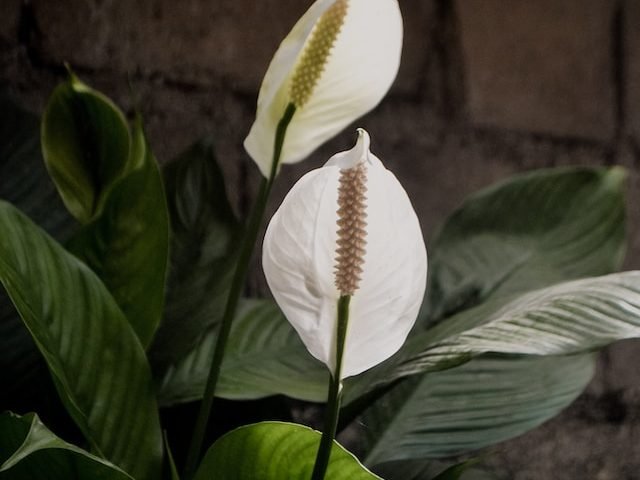
White Flowers on a Peace Lily

White Flowers on a Peace Lily

Instead of the typical green only houseplants, imagine bringing home something with beautiful white flowers. White flowering houseplants can add an elegant and rare touch to your indoor garden and they’ll stand out immediately.

Well, if you’re a bit unsure where to begin with choosing a houseplant with white flowers, we’ve got your back. We’ve curated a list of our top 11 houseplants with white flowers that you can consider for your indoor garden.

In our guide below, we will not only introduce these plants, but also delve into their care regime, blooming factors, varieties of white blooms, and the extra benefits they offer.

1. The Peace Lily

First on our list is the Peace Lily, also known as Spathiphyllum. These evergreen perennials are renowned for their luscious, dark-green foliage and strikingly elegant white flowers. And despite their premium appearance, they’re pretty low maintenance and a great plant for beginners or busy plant parents.

Caring for Your Peace Lily

Peace Lilies thrive in medium to low light conditions. They prefer evenly moist soil, but be careful! Overwatering can lead to yellow leaves. Also, remember to give them a good wipe occasionally to keep the dust off as their large leaves can be a dust magnet.

Give your Peace Lily fertilizer every couple of months. Only do this, however, during the warmer seasons of spring and summer and when the weather gets chillier, reduce the frequency or stop altogether.

Another great benefit aside from lovely white flowers is that according to NASA’s Clean Air Study, Peace Lilies remove several toxic substances from air!

White Bloom Varieties

While the classic Peace Lily features a single, cream-white bloom, you’ll also find varieties like Spathiphyllum ‘Domino’ with its distinct variegated leaves and white flowers, or Spathiphyllum ‘Picasso’ with pure white blooms adding vibrancy to your indoor collection.

2. Angel Wing Begonia

The Angel Wing Begonia, scientifically known as Begonia coccinea, is a hybrid begonia that stands out for its unique, angel wing-shaped foliage and stunning white flowers.

Originating from Brazil, these plants are prized for their flamboyant foliage and their ability to flower year-round.

The Angel Wing Begonia is not as demanding as it might seem and it can be pretty easy going. It prefers bright, indirect light, and you should use a well-draining soil alongside moderate watering to ensure it doesn’t get waterlogged.

To optimize its growth, maintain a temperature range between 60°F-80°F and they like a strong humidity level so use a spray bottle a couple of times a week to keep this up.

3. Christmas Cactus

Native to the cloud forests of Brazil, these fascinating plants are members of the Schlumbergera family and are known for their flamboyant, bloom-packed festive display of white flowers.

About the Christmas Cactus

The Christmas Cactus is unlike any traditional cactus you’ve probably pictured. It’s a type of forest cactus that prefers a humid climate rather than arid desert landscapes.

Despite its name, the plant doesn’t physically resemble a ‘typical’ cactus. Instead, it has segmented, pendulous branches with soft, round edges and no visible spines.

It gets its name from the beautiful white flowers that bloom during the winter holidays.

Caring for Your Christmas Cactus

Firstly, provide it with bright but indirect light and protect it from direct sun as it can scorch the leaves. Secondly, water it thoroughly when the top inch of soil feels dry to touch. But don’t to overdo it, as too much water can lead to root rot.

During November, the Christmas Cactus prefers cooler temperatures of about 50 to 55 degrees Fahrenheit, which encourages bloom production. Therefore, consider moving it to a cooler location during this period.

Besides bright, indirect light and sufficient watering, the Christmas Cactus likes high humidity.

Create a humid environment by placing a tray filled with pebbles and water underneath the pot. Just ensure that the pot doesn’t directly sit in water.

Additionally, fertilizing it with a high-potassium plant food once every month during spring and summer can contribute to it developing strong white flowers.

White Bloom Varieties

Christmas Cactus commonly blooms in purples, reds, and pinks. But if you’re specifically interested in white flowers, look for Schlumbergera ‘White Christmas’, a variety that boasts stunning white blooms.

4. Cyclamen

The Cyclamen is a unique houseplant known for its heart-shaped leaves and elegant, white flowers that seem to flutter like butterfly wings.

This plant prefers a cool, humid environment and bright, filtered light, so keep it near a window, but not directly in the sun’s path.

  • Light: Bright but indirect sunlight.
  • Water: Regular but not over-watering. Keep the soil slightly moist.
  • Temperature: Ideally between 50 and 65 degrees Fahrenheit in the day, slightly cooler at night.
  • Humidity: High humidity, hence placing it near a bathroom window or a humidifier can be beneficial.

5. Gardenias

Native to tropical and subtropical regions, Gardenias are known for their shiny, dark green foliage and captivating, pure white flowers.

The plant is named after Dr. Alexander Garden, a Scottish-born American naturalist. Its flower is shaped like a rosette with multiple layers of petals which is one of our favorites.

Striving in high humidity, it’s necessary to keep the soil well-drained yet consistently moist. If you’re growing gardenias indoors, ensure they get bright, yet indirect sunlight.

Mild winters or a cooler spring are the best times for their white blooms to multiply.

Encouraging White Flowers

Gardenias prefer a slightly acidic soil that contains plenty of organic matter. Many Gardenia species thrive and bloom in hardiness zone 8 to 11. So, unless you live in these zones, you might want to consider keeping them in containers for moving indoors during colder months.

6. Jasmine Plants

Originating from the warm climates of the Old World tropics, Jasmine Plants are a popular houseplant prized for their sweet fragrance and attractive appearance.

They love well-lit conditions but not direct sunlight; in fact, a north-facing window would be perfect.

As for watering, always keep the soil slightly damp and be sure it’s well-draining to discourage root rot (this will lead to soft limp leaves and flowers).

Also, keep the room temperature between 60-75°F (15.5-24°C), as anything outside of this range can harm your plant’s new growth potential and will discourage blooming.

Regular prunings ensure a bushy growth, while a balanced fertilizer every other week during growing season ensures the plant’s vitality.

White Bloom Varieties

Within the vast family of jasmines, several variants produce stunning white flowers.

These include Jasminum polyanthum, known for its robust growth and abundant blooms, Jasminum sambac, aka Arabian jasmine, beloved for its highly fragrant flowers, and Jasminum officinale, or poet’s jasmine, known for its intensely perfumed blossoms.

7. Moth Orchids

Officially named Phalaenopsis orchid but more casually known as Moth Orchids, these plants have elegant white flowers that become the focal point of any room.

About the Moth Orchids

Moth Orchids are popular indoor plants originating from Southeast Asia and Northern Australia.

They use their long, trailing roots to cling onto trees and absorb water in their natural habitats but they are also perfectly content to grow in pots in your home!

Caring for Your Moth Orchids

Caring for Moth Orchids challenges common plant-keeping instincts, but they’re definitely manageable with the right knowledge.

Unlike most houseplants that prefer soil, Moth Orchids love a well-drained, pebble-based planting mix and you should avoid watering them until the planting mix is completely dry.

Remember to keep them in a warm environment as well, as they love temperatures ranging from 60-80°F (15-27°C).

White Bloom Varieties

The classic Moth Orchid that most people envision comprises a tall stalk bearing white, fluttering flowers.

However, newer cultivars such as Phalaenopsis ‘Snow Princess’ also offer an abundance of alluring, pure-white blooms.

8. Oxalis Plant

You’ve probably seen the Oxalis plant, even unknowingly. Known as the ‘shamrock plant’, it’s synonymous with luck. However, there’s more to this plant than just superstition.

Oxalis is a genus that includes over 800 species but we’ll be focusing on the Oxalis triangularis. This variety is often noticed for its vibrant purple, clover-like leaves and small white flowers.

Keep your Oxalis in medium to bright light. A south or west-facing window is usually perfect. However, do protect your plant from harsh, direct sunlight, which can scorch the leaves.

Watering oxalis is a fine balance. Wait until the top inch of the soil is dry before watering again. Overwatering can lead to rot, but under watering can cause the plant to go dormant.

To encourage the growth of their white flowers, add a slow-release fertilizer into the mix during the growing season.

9. Amaryllis

Known scientifically as Hippeastrum, the Amaryllis plant originates from South America’s tropical regions. Not to be confused with other plants named Amaryllis, what we’re referring to here is the indoor blooming species that is popular worldwide.

It’s most recognized for its tendency to bloom in winter, making it a star feature in many holiday decors.

Caring for Your Amaryllis

You’ll be glad to know that the Amaryllis is a relatively easy-to-maintain houseplant. It requires bright light and well-draining soil but also prefers to be slightly pot-bound, so a slightly smaller pot often works best.

The Amaryllis typically flowers in winter and to ensure your plant’s consistent blooming, provide it with a ‘rest’ period of at least two months in the fall where you withhold water completely.

This mimics its natural cycle in the wild and encourages abundant blooming when watering is resumed.

White Bloom Varieties

There are actually over 600 different varieties of Amaryllis plants! Among them, some popular ones with white flowers include Amaryllis ‘Alfresco’, Amaryllis ‘Arctic Nymph’, and Amaryllis ‘Athene’.

10. Lily of the Valley Plant

About the Lily of the Valley Plant

Known scientifically as Convallaria majalis, the Lily of the Valley plant is a woodland white flowering plant that is native to cool, temperate Northern Hemisphere in Asia and Europe.

First cultivated in 1420, it is a highly poisonous plant if ingested, making it not the best choice if you have pets or young children.

Caring for Your Lily of the Valley Plant

This plant prefers a cool, shaded environment with well-draining soil. It is quite hardy and can tolerate poor soil conditions and minimal sunlight but providing a good amount of water without saturating the soil will keep this plant happy and healthy.

When it comes to the soil, it prefers slightly acidic to neutral pH soil – a simple soil testing kit from a local gardening center can help with this.

11. Crown of Thorns Plant

The Crown of Thorns plant or Euphorbia milii, is truly a spectacle to behold. Native to Madagascar, this unique houseplant with its vibrant evergreen leaves and radiant white blooms is sure to catch your eye, although it might seem a bit intimidating due to its thorny stems. Don’t be deterred though because, with the right care, this plant will add a splash of color and intrigue to any home.

About the Crown of Thorns Plant

Besides its beautiful white flowers that appear year-round, it’s a plant that carries a significant amount of symbolism in many cultures.

Some consider it a symbol of good luck, while others associate it with the crucifixion of Christ due to its crown-like shape and thorns.

Caring for Your Crown of Thorns Plant

It’s a tropical, drought-tolerant plant that flourishes under full sun and requires minimal watering. It can withstand a wide range of temperature from as low as 50°F to a high of 90°F, and it’s tolerant to arid conditions which means it won’t mind if you occasionally forget to water it.

And while it loves the sun, it can also do quite well in partial shade. Just avoid extremely dark and cold areas and it’ll be fine!

Fiddle and Thorn is a participant in the Amazon Services LLC Associates Program, an affiliate advertising program designed to provide a means for sites to earn advertising fees by advertising and linking to Amazon.com

Take our houseplant survey!

Quickly respond to our 30 second houseplant survey and get 75% off our Complete Houseplant Care eBook!

Take the Survey

No thanks…

Top 10 Houseplants with Purple Leaves

Last Updated: November 6, 2023

Purple Velvet Plant

Purple Velvet Plant

Purple leaves on various houseplants offer a sophisticated, rich appeal that stands out among a sea of green plants. Below we will share with you our top 10 list of houseplants with purple leaves.

From the distinct Purple Velvet Plant to the texture-rich Purple Waffle Plant, there is a wide array of purple-leaf houseplants you’ve likely never heard of or seen before, but ones that can be super easy to care for.

The Benefits of Having Houseplants with Purple Leaves

Having houseplants with purple foliage is not just about adding a splash of colour to your indoor spaces. There’s so much more to it.

Uniqueness and Beauty

These houseplants stand out boldly from your more traditional green-leafed varieties. Adding them to your indoor collection can make a strong design statement while giving your home a unique flair.

Ranging from plants with deep, inky maroon to light lavender hues, these houseplants feature an array of exciting purples that can complement a variety of styles.

Mood Enhancement

Houseplants with purple leaves can have a significant impact on your mood. Colours greatly influence how we feel and react.

Purple, as a combination of calm blue and fiery red, can invoke feelings of serenity and creativity so these houseplants can make you feel relaxed and inspired.

Boost Health and Clean Air

Like other houseplants, our violet-hued friends can be excellent air purifiers.

Numerous scientific studies show that indoor plants can remove toxins from the air, boost humidity, and increase oxygen levels creating a more comfortable, healthier, and fresher living space.

Increase Focus and Productivity

One more reason to consider houseplants with purple leaves: they can enhance focus and productivity.

Research demonstrates that having plants in your workspace can reduce fatigue, improve attention span, and fuel productivity. So adding a touch of purple to your office or study can be a great idea.

Top 10 Houseplants with Purple Leaves

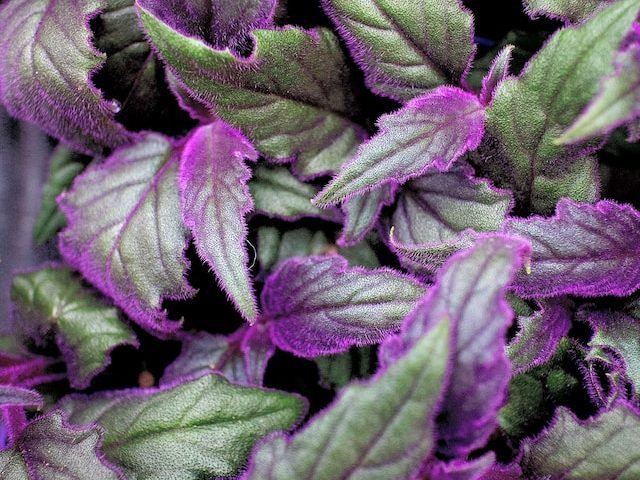
1. Purple Velvet Plant

Standing out with its strikingly textured leaves, the Purple Velvet Plant, also known as Gynura Aurantiaca, is a great choice if you’re wanting to add a pop of colour to your indoor plant collection.

Their leaves are not just purely purple, but they’re also covered in fine purple hairs, giving them a unique velvety appearance.

The Purple Velvet Plant is naturally a tropical plant, which means it loves humidity. Therefore, it would be a fantastic choice if you’re living in a high humidity area.

But don’t worry if you’re not; you can always help to mimic the environment by misting the plant regularly or using a humidity tray.

Other Care Tips:

  • Watering: Don’t let the soil get too dry. Keep it consistently moist by watering when the top inch of soil becomes dry.
  • Temperature: They like temperatures between 60 – 75°F (15 – 23°C), with no drastic fluctuations.
  • Fertilizer: Feed them with an all-purpose liquid plant food at half strength once a month during the growing season.

Important: This plant is toxic if ingested. So, it would be wise to keep them out of reach from children and pets.

2. Purple Heart Plant

Officially known as Tradescantia pallida, the Purple Heart Plant admired for its cascading, heart-shaped leaves that display rich, velvety shades of purple.

The signature royal purple leaves a shimmer with a slight silver sheen add a touch of luxury to any space. And if the leaves weren’t enough, there are small, delicate pink flowers that bloom in summer and autumn.

But there’s more to the Purple Heart Plant than just its good looks. It’s also a hardy houseplant that is tolerant of various light conditions and resistant to drought.

Now, while they’re relatively easy to care for, these plants do have some specific needs…

When it comes to positioning the Purple Heart Plant prefers plenty of natural, indirect sunlight. They can, however, tolerate partial shade, but their vibrant purple hue may not be as intense.

Fertilising your Purple Heart Plant every two weeks during its growing period (spring and summer) is beneficial for its overall health and supports lush, robust growth. Severely cut back on fertiliser during the dormancy period (autumn and winter), as the plant’s growth will slow.

3. Persian Shield

If you’re looking for a showstopper plant, then the Persian Shield, also known scientifically as Strobilanthes dyerianus, is your perfect match. This prominent houseplant presents bold, purple leaves etched with silver veins which makes the leaves give off a metallic shimmer.

A tropical plant originally from Myanmar, the Persian Shield can grow up to 4 feet in outdoor settings, but generally stays smaller as a houseplant so you don’t need to worry about it outgrowing your space.

To keep its purple colour vibrant, you should make sure it gets plenty of bright, indirect light. Keep in mind direct sunlight might scorch its leaves. Here are some other care tips:

Water: The Persian Shield prefers a well-draining soil and you should allow it to dry out slightly between watering. Be careful though, overwatering can cause the leaves to develop brown, mushy spots.

Temperature: As a tropical plant, it loves warm conditions, between 60°F-75°F (15°C-24°C) for the best growth.

Humidity: Aim for a high level of humidity around this plant. Regular misting or placing it on a tray of pebbles and water should help to avoid humidity related issues.

Fertiliser: Feed it every two weeks during the growing season with a balanced plant food diluted to half the recommended strength.

4. Purple Passion Plant

The Purple Passion Plant, or Gynura aurantiaca, has vibrant serrated leaves that look like they’ve been speckled with purple felt. While it’s sometimes a bit fussy about light and humidity requirements, its incredible purple leaves makes the extra effort worthwhile.

  • Growth: These plants are fast-growing and can reach up to 1.5 metres under ideal conditions.
  • Light: They thrive best in a well-lit location with indirect sunlight.
  • Water: Water when the top inch of soil starts to feel dry. Overwatering can lead to root rot.

Wondering how to make your Purple Passion shine even brighter? Here’s a tip: wipe its leaves with a damp cloth to keep them dust-free. This not only maximises light-absorption but also helps to maintain that stunning velvet-like sheen.

Flowers: While the Purple Passion Plant is loved for its purple leaves, it does also produce bright orange flowers. However, most indoor gardeners opt to remove these as they give off quite a strong (and not so pleasant) smell.

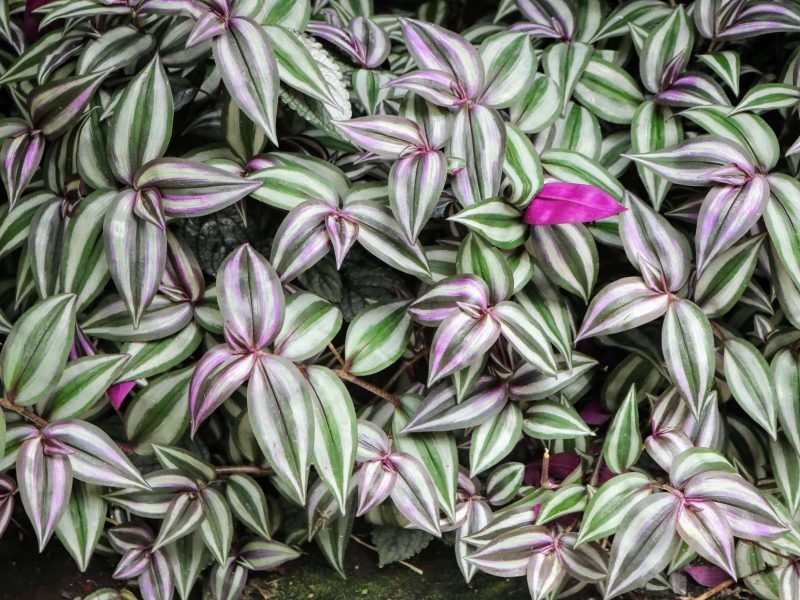
5. Tradescantia Zebrina

Also known as the Wandering Jew or inch plant, the Tradescantia Zebrina is a favourite among houseplant enthusiasts. This fabulous plant has trailing vines with purple and silver striped leaves, creating an almost metallic effect.

The backside of the leaves impressively reveal a deep royal purple!

Characterised by its fast-growing nature, the Tradescantia Zebrina is an excellent choice if you’re after a plant that can quickly create volume and colour in your space.

  • Light: The Tradescantia Zebrina thrives in bright, indirect light. It can also tolerate lower light conditions but its vibrant purple colour will fade.
  • Water: This plant prefers a good drink once the top inch of its soil has dried out. Be careful not to overwater as it can lead to root rot.

Something exciting about the Tradescantia Zebrina is its ability to quickly generate roots from cuttings. In no time, you can propagate new plants to place in various spots around your home, or gift to friends and family!

6. Calathea Medallion

The Calathea Medallion houseplant, known for its round, beautifully patterned leaves, makes a bold statement in any indoor space and is one of our all-time favorite houseplants.

The combination of dark green and purplish-red on the undersides makes the leaf colour appear almost black.

The Calathea Medallion prefers a humid environment, similar to its natural habitat, the tropical forests of South America. It is perfect for bathrooms or kitchens which are naturally a little bit more humid than the rest of your home.

  • Light: Prefers bright, indirect light.
  • Water: Keep the soil moist but avoid overwatering.
  • Soil: Well-draining soil is ideal.

7. Coleus Blumei

The Coleus Blumei, also known as Painted Nettle, originates from the tropics and boasts flamboyant leaves with a mix of purple, green, and often a hint of yellow.

What’s particularly great about the Coleus is its adaptability. It’s equally happy in low light conditions as it is in bright ones, making it a versatile option for different corners of your home.

Just bear in mind – if left in too much direct sunlight, the leaf colours can fade and lose their vibrance.

The care routine for a Coleus is fairly straightforward. Here are a few pointers:

  1. Watering: Keep the soil constantly moist but not waterlogged. Overwatering could lead to root rot.
  2. Fertiliser: Feed every couple of weeks during growing seasons with a nitrogen-rich fertiliser to promote leaf growth.
  3. Pruning: Pinch back the tips occasionally to encourage a bushier growth instead of a tall leggy one.

With certain care, it can produce small flowers. These aren’t as flamboyant as the purple leaves but will add a nice touch at points throughout the year.

8. Oxalis Triangularis

The Oxalis Triangularis, often known as the false shamrock, is a purple plant with leaves that come in sets of three, resembling a shamrock. They are beautifully vibrant with deep purple and occasional flashes of pale pink.

Although it’s a tropical plant, Oxalis adapts well to indoor conditions. However, it appreciates a good amount of indirect sunlight and regular watering.

  • Lighting: Indirect sunlight is optimal. Too much direct sunlight can fade the leaves’ vibrant purple colour.
  • Watering: Regular watering, but avoid waterlogged soil. Let the surface dry out between waterings.

Remember, Oxalis Triangularis, like a few other houseplants, goes dormant during the winter months. When this happens, don’t worry – just reduce watering and wait. Come spring, these plants bounce back with renewed vigour and new growth.

9. Purple Waffle Plant

Next up is the Purple Waffle Plant, also known as Hemigraphis alternata.

This plant is loved for its unique leaf texture and purple undertones. It’s name is directly related to its crinkly, waffle-like leaves which make is a very unique houseplant.

Characteristics:

  • The leaves, green on top and purple underneath, have a peculiar crumpled texture which gives it the name – ‘waffle’.
  • It grows as a low ground cover and can quickly spread in proper conditions.
  • It produces small white flowers which further add to the charm of this plant.

As for the care factor, the Purple Waffle Plant enjoys a well-draining soil and a spot that gets bright, but indirect light. It’s one to watch when it comes to watering as overwatering can cause root rot quite quickly, so you need to make sure the soil is almost dry before the next watering session.

10. Syngonium Podophyllum

Wrapping up the list of our favourite purple houseplants it the Syngonium Podophyllum, also commonly known as Arrowhead Plant.

Interestingly, the usual green foliage of this houseplant transforms into a vibrant purple hue under the right conditions. As the plant matures, it goes through a fascinating morphological transformation, with leaves changing from arrow-shaped to a highly segmented form.

The Arrowhead Plant is native to Latin America, thriving in the humid and warm climate. It appreciates higher humidity environments, moist soil, and indirect light conditions, as long as it’s kept away from direct sunlight which can scorch its beautiful leaves.

Tips for Caring for Houseplants with Purple Foliage

First and foremost, lighting plays a crucial role in maintaining the vibrant purple hue of these plants. A lack of adequate light exposure can cause them to lose their purple leaf colour and revert to green.

  • Light: Most purple-leaved houseplants thrive well under indirect sunlight. Therefore, it’s advisable to place them near east or west-facing windows. Some, like the Purple Passion Plant and Oxalis Triangularis, can tolerate small bits of direct sunlight, but it’s always a good idea to gradually expose them to avoid shocking the plant.
  • Water: Overwatering is a common pitfall when caring for any houseplants. As a rule of thumb, ensure the soil is dry before adding water. The frequency of watering will depend on the plant species and environmental factors so make sure to monitor things regularly and adjust as needed.
  • Temperature and Humidity: These plants prefer warm temperatures ranging from 15 – 25°C. Also, a relatively high humidity level contributes to their healthy growth. So, don’t hesitate to mist them occasionally or place them in a tray filled with pebbles and water to increase ambient humidity.
  • Soil: A well-draining soil mix is necessary for the growth of purple foliage houseplants. A balanced potting mix of peat moss, perlite, and compost provides adequate nutrients and improves soil aeration.
  • Fertiliser: These plants will appreciate a balanced liquid houseplant fertiliser during their growing periods. Always remember to follow the instructions on the fertiliser package to avoid over-fertilising.”},
  • Pot Size: A pot that’s too large for a plant can encourage overly damp soil conditions that can lead to root rot. Make sure your pot suits your plant’s size and growth rate.

How to Use Houseplants with Purple Leaves in Interior Design

Accentuating contrast: Consider placing a richly-hued purple houseplant against a light or white backdrop. The contrast will accentuate the plant’s unique colouration, grounding the space and drawing the eye to the plant.

Creating mood: The colour purple is often associated with royalty and luxury. Utilise this association to inject a sense of opulence to your setting. Whether adorning a lounge area, office desk, or any corner, purple-leaved plants can create an intriguing and plush atmosphere.

Mixing and matching: Don’t be afraid to pair your purple houseplants with green-leaved varieties. The green and purple combination can bring an added layer of visual interest to your settings.

Lastly, you can use these houseplants to create purposeful zones within a room. For instance, a large Persian Shield plant at the corner of a reading area demarcates the space, making it more cosy and inviting.

Fiddle and Thorn is a participant in the Amazon Services LLC Associates Program, an affiliate advertising program designed to provide a means for sites to earn advertising fees by advertising and linking to Amazon.com

Take our houseplant survey!

Quickly respond to our 30 second houseplant survey and get 75% off our Complete Houseplant Care eBook!

Take the Survey

No thanks…

5 Houseplants with Heart Shaped Leaves

Last Updated: December 31, 2021

These plants actually have heart-shaped leaves

If you’re after a gift for your partner, best friend or yourself, then these plants are definitely a great choice. They actually have natural heart-shaped leaves that make falling in love with them pretty easy! Below you’ll find a little bit about each plant, including their features and brief care requirements.

1

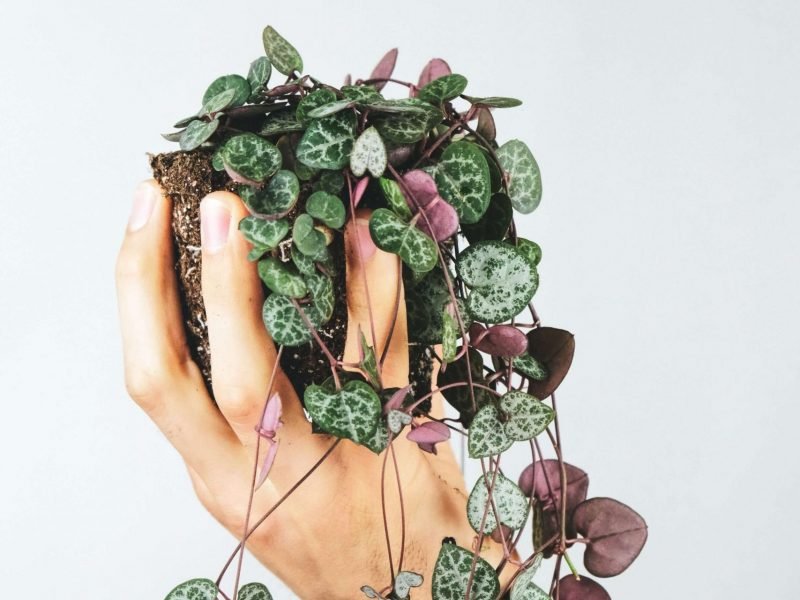
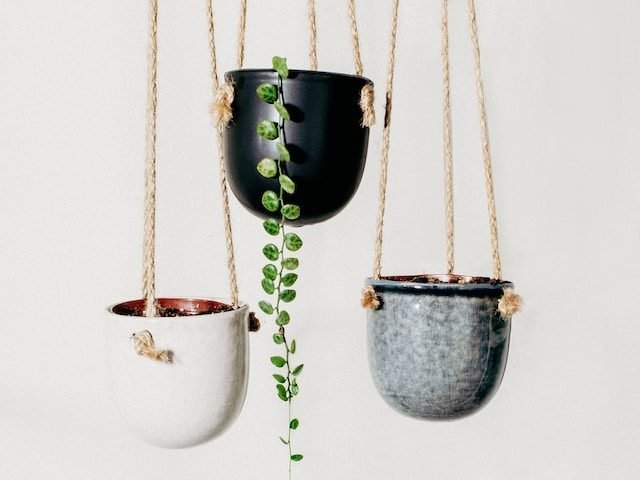
String of Hearts

Ceropegia woodii

Native to South Africa, the String of Hearts should be top on your list for trailing houseplants. You don’t get much more unique than their speckled heart-shaped leaves. The other thing we love about the String of Hearts is that it’s such a fast grower over the spring and summer months, you’ll blink and there will be two new leaves popping out somewhere.

The String of Hearts is a semi-succulent plant meaning they don’t need much water. They have short, delicate and shallow roots making them very susceptible to root rot if overwatered. Oh, and because they have such a small root system, you won’t need to repot for a quite a while.

It makes the perfect plant for hanging down shelving, and because its pet friendly, you don’t need to worry about it ever becoming too long!

Find out more in our String of Hearts care guide.

2

Devil’s Ivy

Epipremnum aureum

These are pretty unique houseplants, not just because of their beautiful heart-shaped leaves, but because they actually prefer lower-light conditions over anything else! That’s where the name comes from, as they are well acquainted with the darkness. If you have a variegated variety, it will actually start to lose its pattern if placed in too much sunlight. So you don’t need to feel guilty about putting a Devil’s Ivy in a shady spot because it will actually love you for it.

They are also pretty hardy plants in terms of their other care requirements. They don’t need complicated watering schedules or specific pruning so are perfect for any new plant parents. You can’t really go wrong with these at all!

When it comes to styling the Devil’s Ivy plant, shelving is where they thrive as it gives it room to cascade dramatically out of the pot. They can be trained to grow upwards by a wall or moss pole so the option is yours. However you choose to grow your Devil’s Ivy, it’ll be beautiful

Find out more in our Devil’s Ivy care guide.

3

Satin Pothos

Epipremnum pictum Argyraeus

Known and loved for their unique silver speckled heart-shaped leaves, the Satin Pothos is the perfect houseplant for every plant parent as they are super simple to care for. They can grow quite quickly in the right conditions and are very easy to propagate, so cuttings and young plants can make great gifts.

Bright, indirect light and a consistent watering schedule will keep them happy and thriving. Avoiding colder rooms or areas with dryer air will really help in making sure your Satin Pothos will stay healthy all year round.

Originating from southeast Asia these plants will also appreciate a little extra humidity, so spraying them with a mist bottle every now and then will keep them closer to their natural environment.

Find out more in our Satin Pothos care guide.

4

Elephant Ear

Colocasia

This one is definitely one to impress! WIth larger than life, heart-shaped leaves, Elephant Ear Plants are the new popular houseplant on the block! Whilst they are most commonly grown outdoors, they can adapt nicely to your home. With enough light, a little boost to the humidity using a spray bottle of humidifier and good moisture in the soil, your Elephant Ear Plant could soon be boasting leaves that are nearly a meter in length!

It will require a little bit of work though to keep your Elephant Ear Plant thriving, from daily misting, to regularly dusting the leaves as the sheer size of them make them a dust magnet, it’s important to tend to an Elephant Ear Plant to keep it happy and healthy.

Find out more in our Elephant Ear care guide.

5

Arrowhead Plant

Syngonium podophyllum

Native to the tropical rainforests of Central and South America, the Arrowhead to have in your collection. When fully grown, they can reach nearly 2 meters tall with large heart-shaped leaves that can have a variety of colours and variegations.

As you can imagine, the Arrowhead likes warm and humid environments so you want to bring some of that rainforest feel to your home. Letting the soil dry out between waterings and ensuring a good humidity level is a great way to mimic their natural habitats and making sure they have bright, but indirect light will stop the leaves from burning.

With them being a little pickier over humidity and placement, we wouldn’t always recommend them for a starter houseplant. They’re also mildly toxic to pets, which doesn’t make them the most friendly for households with cats or dogs.

Find out more in our Arrowhead Plant care guide.

Fiddle and Thorn is a participant in the Amazon Services LLC Associates Program, an affiliate advertising program designed to provide a means for sites to earn advertising fees by advertising and linking to Amazon.com

Take our houseplant survey!

Quickly respond to our 30 second houseplant survey and get 75% off our Complete Houseplant Care eBook!

Take the Survey

No thanks…

11 Houseplants with Green and White Variegated Leaves

Last Updated: March 17, 2023

Our Favourite White and Green Houseplants

If you’re wanting to bring a little something different into your urban jungle, then these white and green houseplants are the ones you need. We have curated a list of our favourite ones which include easy to care for plants, fussier plants and just outright gorgeous ones! There’s something for everyone and every home.

Along with each plant, you’ll also find our short bio that includes care information and tips to help them thrive!

1

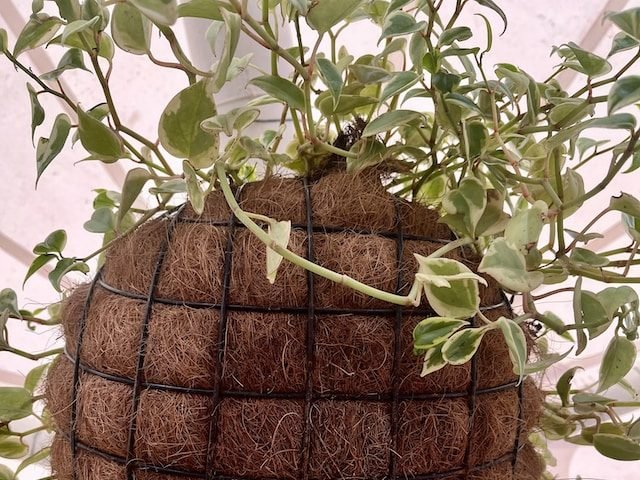
Philodendron Birkin

Philodendron Birkin

This used to be an extremely rare and unknown plant but over the past few years, it’s definitely gained a place in the houseplant walk of fame! Unlike a lot of its Philodendron relatives, the Birkin is a non-vining plant that stays pretty compact, making it great for windowsills and smaller spaces.

Loved for their green and white striped leaves, the Philodendron Birkin needs a humid environment to really thrive. This is because they are native to the rainforests of Brazil so be prepared for regularly misting (or just buy a humidifier), as otherwise, you’ll see brown leaves appear pretty quickly. With the right care and environment, the Birkin can be a pretty quick grower so it’s definitely worth a little bit of extra hassle.

Find out more in our Philodendron Birkin care guide.

2

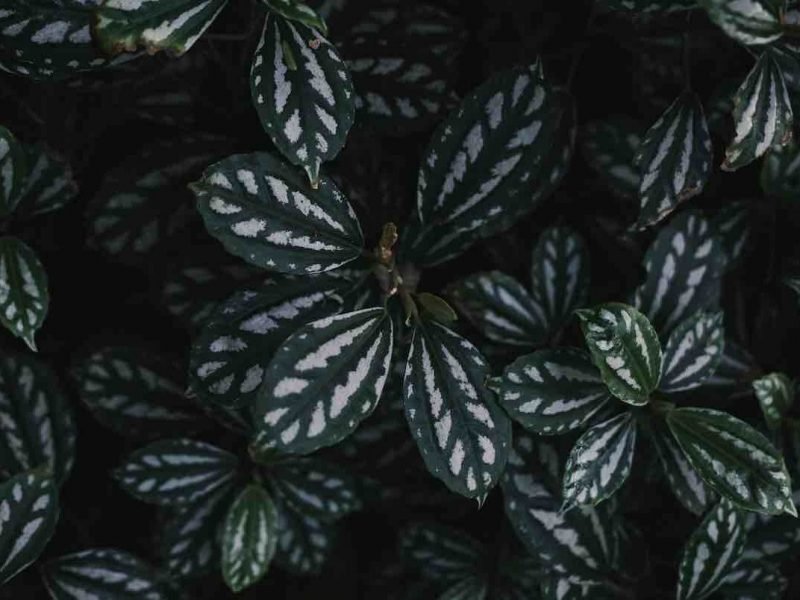
Aluminium Plant

Pilea cadierei

This low maintenance, fast-growing houseplant can sometimes be quite underrated in the houseplant world. Each leaf on an Aluminium Plant has its own unique set of white/silver streaks and splashes, so it’s easy to see how it got its name!

Native to China and Vietnam, this houseplant tends to spread out rather than grow tall. The one thing to be wary of is its root system as it can grow so extensively that it can often break through the pot so you want to make sure you’re repotting this plant yearly!

When it comes to care, bright but indirect sunlight and moderate amounts of water will keep them happy. They are quite forgiving and easy to please so keeping this one thriving doesn’t need a lot of work so we often recommend this as a great entry-level plant.

Find out more in our Aluminium Plant care guide.

3

English Ivy

Hedera helix

Although they are most commonly known as outdoor plants, you can very successfully grow an English Ivy indoors as long as you give it enough light. We are obsessed with the white variegated English Ivy but if not given enough sunshine, the new leaves will lose all of that variegation.

Included in the NASA Clean Air Study, the English Ivy is great at removing toxins from the air so we recommend having this around your home. They are also believed to sometimes be able to improve allergy symptoms so as well as looking lush, they have great benefits for us too. They are also super fast-growing plants so you want to place them on a high shelf making sure they have enough space to cascade downwards.

Find out more in our English Ivy care guide.

4

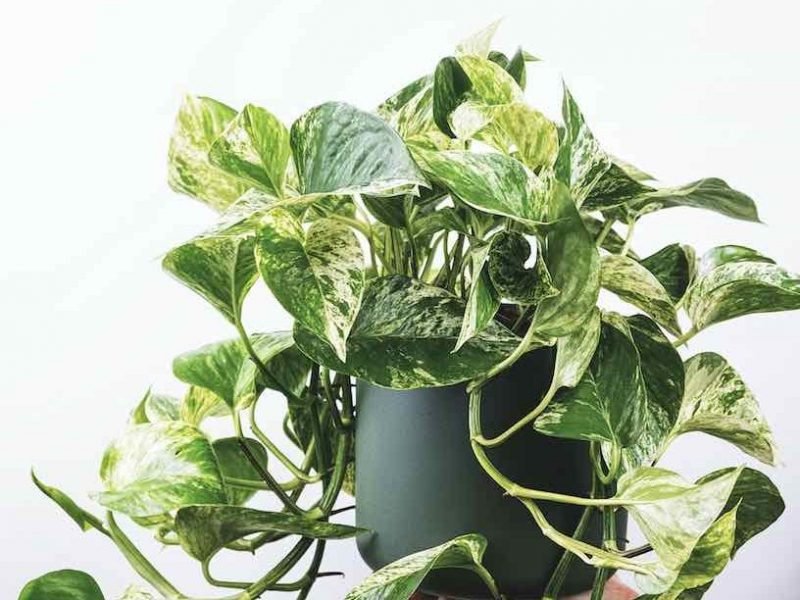
Marble Queen Pothos

Epipremnum Pinnatum

There are so many different varieties of Pothos plants, all with slightly different leaf variegation but the Marble Queen is definitely one of our favourites. Getting its name from the white marble-like variegation on its leaves, it’s an easy-going, hardy and low light loving plant that can adapt to most spots in your home.

The Marble Queen Pothos is a pretty fast-growing plant so make sure you have enough space for it to mature. You can choose to grow them as trailing plants with long cascading vines or vertically by attaching them to a moss pole. Pothos plants are unfortunately toxic so you’ll want to keep them away from pets and small children who might try and nibble on the low hanging leaves.

Find out more in our Marble Queen Pothos care guide.

5

Nerve Plant

Fittonia albivenis

With delicate leaves, Nerve Plants are low-growing spreader plants that aren’t always the easiest to care for. The most popular and common variety is white and green-veined, though you’ll also often spot varieties with white, pink or red veins and leaves too!

They have quite specific care requirements though so we don’t tend to recommend them to beginner plant parents as they are quite fussy about balancing the level of light, water, humidity and temperature. If there is one tip we can give you it would be to mist your plant at every opportunity you have to prevent them from drying out. But if you can get the care routine nailed down, then they are totally worth the extra hassle!

Find out more in our Nerve Plant care guide.

6

Satin Pothos

Epipremnum pictum Argyraeus

Known for their unique white speckled leaves, the Satin Pothos is the perfect houseplant for every plant parent as they are super simple to care for. They can grow quite quickly in the right conditions and are very easy to propagate, so cuttings and young plants can make great gifts.

Bright, indirect light and a consistent watering schedule will keep them happy and thriving. Avoiding colder rooms or areas with dryer air will really help in making sure your Satin Pothos will stay healthy all year round.

Originating from southeast Asia these plants will also appreciate a little extra humidity, so spraying them with a mist bottle every now and then will keep them closer to their natural environment.

Find out more in our Satin Pothos care guide.

7

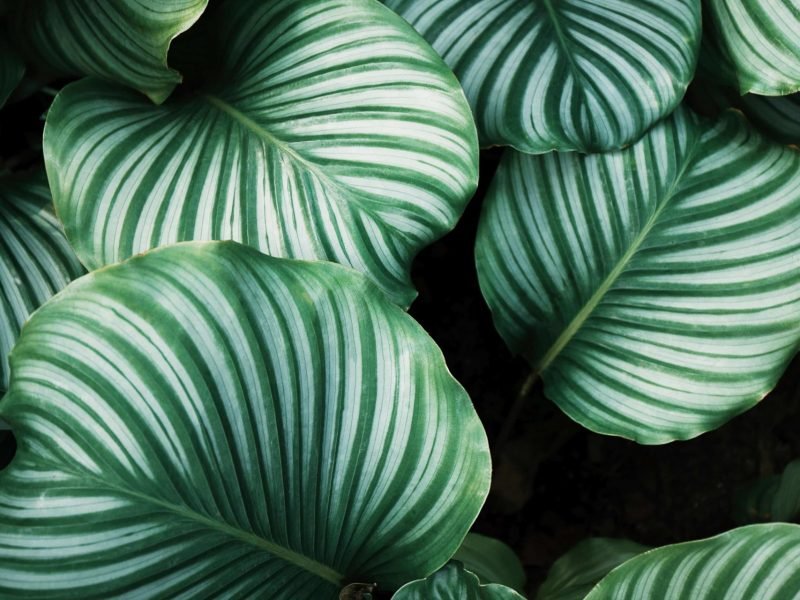
Calathea Orbifolia

Calathea Orbifolia

With their striking green and silver striped leaves, the Calathea Obifolia is the perfect plant for those looking for a little something different as they transport you straight to the tropics! There are a few things to look out for when caring for a Calathea Obifolia, firstly, avoid direct sunshine as this will burn their beautiful leaves. They also like some moisture in the soil but hate sitting in soggy soil, so finding the right balance is key.

Another thing we love about Calathea Obifolia plants is that they are safe for pets and humans, so you don’t need to worry about bringing them into your home. Although it was once slightly rare, you should now be able to get your hands on one of these pretty easily in nurseries and larger plant shops around the world.

Find out more in our Calathea Orbifolia care guide.

8

Chinese Evergreen

Aglaonema

If you find that you are often killing your houseplants and you can’t seem to figure out why, then the Chinese Evergreen is the one for you. Native to South-East Asia, they are so hardy that they’ll grow and thrive in basically any home so it’s the perfect beginner plant.

Chinese Evergreens have incredible leaves, full of splashes of white, silver or pink depending on the particular variety. They are quite slow growing though (as most hardy plants are), so don’t expect a lot of new growth every year.

Find out more in our Chinese Evergreen care guide.

9

Watermelon Peperomia

Peperomia argyreia

There aren’t really many leaves that are more beautiful and striking than those of the Watermelon Peperomia. It’s not difficult to know where they got their name from, as their silvery stripes steal the hearts of plant parents everywhere.

They are quite a delicate plant though, as their large heavy leaves are held up by relatively weak stems so be prepared to lose a few leaves here and there. Another thing to be prepared for when owning this plant is all of your friends wanting a cutting, but luckily this plant is super easy to propagate so no problems there!

Native to South Africa, the Watermelon Peperomia prefers mid-light levels, as they are used to the dappled conditions of the jungle floor. Oh, and as they are a semi-succulent, it’s important you don’t water this one too much or the stems can give up and the whole plant will droop and wilt.

Find out more in our Watermelon Peperomia care guide.

10

Zebra Cactus

Haworthiopsis attenuata

Named after their white striped leaves, Zebra Cacti are super easy to care for and pretty much thrive from being forgotten about. Native to South Africa, this small succulent needs a good amount of sunshine and warmth to thrive but humidity is something you really don’t need to worry about with these plants. As with a lot of other succulents, water your Zebra Cactus sparingly as they are quite sensitive to overwatering and leaf rot.

With the right care and environment, you should expect to see your Zebra Cactus bloom but don’t get too excited as the flowers can be quite underwhelming. But to make up for it, these plants are non-toxic so safe for children and pets that might be tempted to nibble on the leaves.

Find out more in our Zebra Cactus care guide.

11

Zebra Plant

Aphelandra squarrosa

We’re seeing this plant pop up more and more which makes us super happy! Known and adored for their dark green leaves with striking white veins, the Zebra Plant is pretty slow growing but can reach up to a couple of feet when grown indoors.

Native to Brazil, these plants need high humidity, warm temperatures and bright but indirect light. When it comes to watering, they like their potting mix to be consistently moist but not soggy which can be a bit of a challenge for more novice plant parents.

Zebra Plants are also non-toxic so you don’t need to worry about having them around your family or furry friends.

Find out more in our Zebra Plant care guide.

Fiddle and Thorn is a participant in the Amazon Services LLC Associates Program, an affiliate advertising program designed to provide a means for sites to earn advertising fees by advertising and linking to Amazon.com

Take our houseplant survey!

Quickly respond to our 30 second houseplant survey and get 75% off our Complete Houseplant Care eBook!

Take the Survey

No thanks…

10 Beautiful Houseplants with Dotted Leaf Patterns

Last Updated: October 17, 2023

Houseplants have always been a charming addition to our homes, not only because of their calming presence and benefits such as air purification but also due to their beauty. Among the wide range of houseplants available, those with dotted leaf patterns have particularly garnered attention for their extraordinary appearance. They are a great way to bring a lively and colorful touch to our living spaces.

They come in a vast array of types, each with its unique leaf pattern, color and texture. In this article, we will explore 10 of our favourite houseplants with dotted leaf patterns. Along with each one, we will also include a little bit of information about their origin and care requirements so you can find the right plant for your space.

Why do some houseplants have dotted leaves?

So, why do some houseplants have dotted leaves? The answer lies in their evolutionary journey. These plants have adapted to their environments over generations, developing unique features as survival tactics.

  • Light Absorption: Dense clusters of pigmented spots can help the plant absorb more light, aiding photosynthesis and growth.
  • Camouflage: Predators often mistake the dotted pattern for a disease or infestation, leaving the plants untouched.
  • Water Retention: In dry environments, the dots function as tiny reservoirs, holding onto water and reducing evaporation.

The Top 10 Houseplants with Dotted Leaves

1. Begonia Maculata (Polka Dot Begonia)

First on our list, is the Begonia Maculata, affectionately known as the Polka Dot Begonia. This charming houseplant is renowned for its boldly patterned leaves that are speckled with silvery-white dots, giving the plant a sparkly and vibrant look.

The Polka Dot Begonia isn’t just about aesthetics though. It’s also a wonderful companion for those without a green thumb, as it is relatively easy to care for, despite its delicate leaves. With a preference for bright, indirect light and well-draining soil, these little beauties are happy to add some sparkle to your home without demanding too much attention.

Pro tip: Keep your Begonia away from direct sunlight as it can damage the stunning leaf patterns. They have very thin leaves compared to a lot of other houseplants so are more sensitive to direct light and high temperatures. Also, remember to allow the soil to dry out a bit before watering again. Overwatering is a common mistake that could lead to root rot.

  • Light: Bright, indirect
  • Water: Allow soil to dry out between watering
  • Extra Care: Avoid placing in direct sunlight to prevent leaf damage

2. Polka Dot Plant (Hypoestes Phyllostachya)

This houseplant is definitely one of our favourites, boasting tiny leaves sprinkled with tiny, vividly-coloured spots. What sets the Polka Dot Plant apart is the sheer variety in its colour palette. It’s not just your typical green-with-white-spots scenario. The freckles on the leaves can be a playful mix of pink, red, purple, or even a blush-toned cream.

Easy to care for, these plants thrive in a well-drained potting mix and indirect light. They do love their humidity, so a quick mist every now and then will keep them looking fresh.

  • Care level: Easy – ideal for beginner plant parents.
  • Light requirement: Medium to bright indirect light. Too much sunlight can fade the colourful spots so be careful about exposing them to too much light.
  • Watering: Regular but avoid water-logging. Let the soil dry out a bit between watering sessions.

3. Leopard Plant (Ligularia Tussilaginea)

Meet the Leopard Plant, a houseplant with very distinctive round heart-shaped leaves that are adorned with bright yellow spots. The great thing about this plant is that it doesn’t just have unique leaves but it’s pretty easy to care for as they are hardy and not super sensitive.

The Leopard plant, also known as Ligularia Tussilaginea, loves a good amount of indirect sunlight and isn’t too fussy about humidity luckily. It’s a great choice if you’re seeking something low-maintenance but high-impact.

  • Light: Indirect sunlight
  • Water: Water thoroughly when the top of the soil feels dry to the touch.
  • Soil: Well-draining soil mix

4. Spotted Dracaena ‘Florida Beauty’

Loved for its ivory-cream leaves speckled with green spots, the Spotted Dracaena ‘Florida Beauty’ isn’t a very common houseplant but is slowly gaining popularity across the world. This plant not only adds a sprinkle of dots to your living space, but it’s also known for its air-purifying qualities.

Florida Beauty plants love a warm environment and medium to low light settings. It’s the perfect choice for busy or beginner plant parents, as it can tolerate periods of neglect without wilting.

When it comes to watering, this dotted darling prefers its soil to be slightly dry. So be careful not to overwater it. Its need for high humidity can be met by misting the leaves or placing the pot on a tray filled with pebbles and water.

  • Light: Medium to low
  • Water: Medium watering to ensure the soil dries out
  • Soil: Well-draining soil mix that includes perlite
  • Humidity: Boost humidity through misting

5. Silver Squill Plant (Ledebouria Socialis)

This South African native plant, also known as Ledebouria Socialis, is an absolute showstopper with its silver-green leaves adorned with intricate green dots.

The leaves of this plant aren’t just for show; they also serve as water storage units! This means they are fairly low maintenance when it comes to watering as they only need to be watered when the soil is completely dry.

But what’s even more fascinating about this plant is its growth habit. The bulbs of the Silver Squill partially emerge above the soil, giving it a unique, almost otherworldly appearance. If you’re looking for a plant that brings in the wow factor, this might be it!

  • Light: Prefers bright, indirect light but can tolerate lower light conditions.
  • Water: Water thoroughly and then allow the soil to dry out completely before watering again.
  • Soil: Well-draining soil is a must. A cactus or succulent mix works well.
  • Humidity: Low humidity environments suit it best.

6. Pink-Spotted Cane Begonia

Also known as the Begonia Benigo, this houseplant is a true showstopper, with beautiful heart-shaped leaves that are adorned with dainty pink polka dots. What sets this apart from the other dotted houseplants is its flowers. They bloom quite regularly given the right care and conditions and you’ll see clusters of cute pink flowers form across the plant.

The most important thing to remember when caring for a Pink-Spotted Cane Begonia is to avoid placing it anywhere that might get any direct sunlight in summer. They have thin delicate leaves that can easily dry out and burn if exposed to any intense light or heat. This also means you need to be wary about keeping it too close to radiators, cookers or heating vents.

  • Light: Place in a spot with bright, indirect light. Avoid direct sunlight.
  • Water: Only when the top inch of soil feels dry to the touch.
  • Humidity: They prefer a slightly more humid environment. So, consider placing her near your bathroom or kitchen for that extra dash of moisture. Otherwise, mist regularly to boost humidity.

7. Rattlesnake Plant (Calathea Lancifolia)

The Rattlesnake Plant’s leaves feature a striking pattern of intricate dots and the top of each leaf is awash in a deep, lush green, speckled with lighter green dots.

But wait, there’s more! Flip the leaf over and you’re greeted with a fantastic shade of purple-red, providing an intriguing contrast.

Let’s talk about care requirements now as they aren’t the most low-maintenance houseplant out there. This dotted beauty prefers a humid environment and indirect light. It’s a bit on the picky side when it comes to watering—too much or too little can lead to problems. So, you’ve got to strike the right balance!

  • Light: Place in a spot with bright, indirect light. Avoid direct sunlight during the peak of summer.
  • Water: Moderate watering to avoid a dry root system or root rot. This is the most challenging aspect of its care.
  • Humidity: They prefer a slightly more humid environment so mist regularly or use a humidifier.

8. Gold Dust Dracaena (Dracaena surculosa)

This variety of Dracaena is highly sought after for its glossy green leaves, speckled with brilliant gold spots. Its unique dotted pattern catches the eye and can quickly become the centrepiece of the room.

Dracaena surculosa, or the ‘Gold Dust’ as they are commonly known, isn’t only beautiful but they are easy to care for too. This resilient plant can thrive in low light conditions and doesn’t require constant attention. Just water your plant when the soil feels dry to the touch and it’ll reward you with a vibrant display of dotted leaves.

Despite its tropical origins, the Gold Dust Dracaena is surprisingly tolerant of cooler climates which makes them suitable for a wide range of homes. However, there is one thing that they do need a little bit more of and that’s humidity. A quick misting every now and then will keep your plant looking fresh and radiant. You may also choose to invest in a small humidifier which will do all of the work for you!

Whether you’re a seasoned green thumb or a beginner gardener, this dotted leaf beauty is an excellent addition to your indoor plant collection. With its striking appearance and easy-care nature, the Gold Dust Dracaena is definitely one of the best dotted-leaf houseplants around!

  • Water: Water moderately, allowing the soil to dry between waterings.
  • Light: Adaptable to a range of light conditions.
  • Humidity: Mist regularly to boost humidity and prevent the leaf tips from drying out.

9. Satin Pothos (Scindapsus pictus)

If you’re after an indoor plant with a bit of pizazz, the Satin Pothos could be the one for you. It boasts a beautiful, silky leaf surface adorned with stunning silvery splotches resembling polka dots. It’s definitely one of our favourite trailing plants and looks great cascading down shelves.

Native to Southeast Asia, this relatively easy-going plant thrives in medium to moderate light, making it perfect for those less sunny corners of your home. Its cascading vines will add a touch of jungle-inspired charm, while its dotted leaves make them stand out from all other Pothos varieties!

  • Water: Water sparingly, letting the top soil dry out briefly between waterings.
  • Light: Does well in medium to moderate light, but avoid direct sunlight as it can burn the leaves.
  • Humidity: Appreciates a humid environment. Consider placing it near a humidifier or in your bathroom.

10. Caladium ‘Polka Dot’

The Caladium ‘Polka Dot’ has large, heart-shaped leaves adorned with vibrant pink spots which contrast beautifully with the deep green leaves.

This tropical beauty is also known for its low-care needs. Preferring indirect light and a humid environment, it’s a perfect choice for first-time plant parents. Just water it moderately, give it enough sunlight and warmth and watch it thrive!

One important thing to remember is that the Caladium ‘Polka Dot’ is a seasonal plant. Don’t be alarmed if the foliage dies back during the colder months – this is a natural part of its yearly cycle. Come spring, it’ll return, ready to add its signature pop of colour to your indoor garden.

  • Light: Indirect, medium to bright
  • Water: Moderately, allowing the soil to dry briefly between waterings.
  • Humidity: Prefers high humidity

The Benefits of Dotted Leaf Houseplants for Your Home

These polka-dotted beauties not only uplift your living space visually, but they also come with a plethora of benefits.

1. Air Purifiers: It’s no secret that houseplants improve air quality but not all houseplants are as good at it as others. Luckily, there are several dotted plants that do purify toxins out of the air such as the Spotted Dracaena ‘Florida Beauty’ and the Polka Dot Plant. This can make them a really good option for offices and bedrooms.

2. Mood Enhancers: Houseplants are proven to reduce levels of stress and increase creativity and we believe that dotted plants do that a touch better than the rest.

3. Low Maintenance: Most of the dotted leaf houseplants on our list are pretty easy-going and low-maintenance. They are resilient and can thrive in varying light conditions, making them suitable for busy plant parents or beginners.

4. Versatile Decor: Dotted leaf houseplants are a perfect way to add a touch of colorful nature-inspired décor to your home. They can match any style, from rustic to modern, adding a dash of elegance and liveliness.

What are some unique ways to display houseplants with dotted leaf patterns?

  1. Use contrasting pots: One great way to display houseplants with dotted leaf patterns is by using contrasting pots. For instance, if the plant has white dots on its leaves, you can place it in a black pot, which will make the dots stand out a lot more. Similarly, if the plant has darker dots on its leaves, you can place it in a white or light-colored pot. This will create a striking contrast and draw attention to the plant’s dotted leaves.
  2. Group them together: Another great way to display houseplants with dotted leaf patterns is by grouping them together. You can create a mini indoor garden by placing several plants with dotted leaves in one area. This will not only make a statement but also create a cohesive look. You can mix and match different plants with dotted leaves to create a unique display.
  3. Use hanging baskets: Hanging baskets are a great way to display trailing houseplants with dotted leaves. You can hang them from the ceiling and let them cascade down. This will not only save space but also create an eye-catching display. You can choose a variety of plants with dotted leaves and hang them at different heights to create a dynamic display.
  4. Use shelves: Shelves are another really versatile way to display trailing houseplants with dotted leaf patterns (and all other houseplants too!). You can place them on a bookshelf or a floating shelf. This will not only add greenery to your space but also create a visually appealing display.
  5. Use terrariums: You can create a mini ecosystem by placing the plant in a glass container. This will not only showcase the plant’s dotted leaves but also create a beautiful display. Caring for plants in terrariums is a little different so make sure to adjust your care routine accordingly.

In Conclusion

The ten dotted leaf-patterned houseplants we’ve delved into here are more than just your average greenery. They’re conversation starters and a great way to add a little pop of color into your home.

These plants aren’t just for the seasoned indoor gardener either. Newbies to the plant world can easily care for so many of the plants on this list as they are hardy and adaptable to a wide range of environments. The only downside is that dotted houseplants can sometimes be a little trickier to find and can sometimes be a little bit more expensive but they are definitely worth that added investment!

Fiddle and Thorn is a participant in the Amazon Services LLC Associates Program, an affiliate advertising program designed to provide a means for sites to earn advertising fees by advertising and linking to Amazon.com

Take our houseplant survey!

Quickly respond to our 30 second houseplant survey and get 75% off our Complete Houseplant Care eBook!

Take the Survey

No thanks…

12 Houseplants with Big Leaves

Last Updated: November 5, 2023

Large Monstera Leaves

Large Monstera Leaves

Planning to bring a touch of green into your home and want to make a statement with a large plant? In our guide of the best large-leaf indoor plants, you’ll find a bout of inspiration that’ll not only serve as attractive house décor but also help freshen up the air in your home.

Why Choose Houseplants with Big Leaves?

Have you ever wondered why certain homes or spaces feel warm, inviting, and chic? Well, the magic often lies in the details, and one of those details includes large-leafed houseplants.

Improve Air Quality: First and foremost, houseplants with big leaves are often execllent air purifiers. According to NASA’s Clean Air Study, bigger leaves are more effective at filtering and improving indoor air quality since they have a more considerable surface area to intake carbon dioxide and release oxygen.

Aesthetic Appeal: In the world of interior design, the textures and shapes of big leaf houseplants can significantly impact a room’s look. Their dramatic foliage adds an architectural element, balancing the space with organic shapes and creating an inviting, restful, or enlivened mood.

  • Fiddle Leaf Fig, for instance, has dramatic, swooping leaves that can introduce an elegant aesthetic to your space.
  • Picture the deep cuts of the Swiss Cheese Plant, creating a playful visual element that brings dynamic energy to a room.

Mental Health Benefits: In addition to air quality and aesthetic benefits, large-leafed plants can have a positive impact on one’s mental health. With their soothing greenery, the presence of these plants can help reduce stress and anxiety, enhance mood, and encourage focus and productivity.

Low-Maintenance: Most big leaf houseplants are tropical in nature, which means that they can be a little more adaptable. When you have plants that have tiny leaves, these are more susceptible to humidity and watering issues.

Factors to Consider Before Choosing Houseplants with Big Leaves

Light Requirement

Firstly, most large-leafed houseplants are native to tropical regions, known for their bright, yet filtered sunlight. Will your home be able to provide these conditions?

Space

Next, it’s crucial to consider the space you have available. Big leaves tend to mean a large plant overall. Some can grow several feet in both height and width.

Do you have the necessary room to accommodate its growth? These are important considerations.

Maintenance

Last, but not least, let’s talk about maintenance. Large leaves are dust magnets so this is something you’ll need to add to your regular cleaning list. Not only do dusty leaves look a little dull, but even a thin layer of dust can hinder their ability to photosynthesize efficiently. Regular maintenance will help them continue to breathe, grow, and thrive.

The Best Houseplants with Big Leaves

1. Monstera deliciosa: The Iconic Swiss Cheese Plant

Starting our list with our favorite large leaf houseplants, the iconic Monstera deliciosa, commonly known as the Swiss Cheese Plant.

Named due to the unique development of holes or ‘fenestrations’ in its big, heart-shaped foliage, this plant becomes a stunning visual centerpiece in any indoor setting.

Originating from the tropical jungles of Central America, the Monstera grows naturally in the dappled light under the jungle canopy.

But, don’t worry, this plant isn’t as picky about light conditions as you’d think! It can thrive in moderate, indirect light to partial shade conditions in your home.

  • Light Requirements: Moderate, indirect light to partial shade
  • Watering: Allow the top inch of soil to dry out between waterings
  • Humidity: Prefers higher humidity but can tolerate typical indoor humidity

Space is a big thing to consider here as they do grow quite large, so make sure you have enough space for them to spread out.

These plants are also toxic to pets and humans if ingested, so you might want to situate them away from curious kids and paws.

2. Alocasia macrorrhizos: The Elephant Ear Plant

The Alocasia macrorrhizos, often referred to as the Elephant Ear Plant is loved for its sheer size and distinctive form which can transform any living space into a tropical haven.

The Alocasia Macrorrhizos, endemic to Southeast Asia and Eastern Australia, has big leaves which can grow over 3 feet long and 2 feet wide.

But it’s not just about the size. The leaves are clothed in a deep, elegant green, and they have a glossy finish that gracefully reflects light, adding a layer of sophistication to any room.

Light requirements: Intense, indirect sunlight brings out the best in them. However, avoid direct sunlight as it may scorch their leaves.

Watering: The soil should be kept consistently moist, but not waterlogged. Water thoroughly when the top few inches of soil have dried out.

Humidity: High humidity is their friend. Place the plant in a bathroom or kitchen, or use a humidifier to recreate the conditions of their tropical home.

Soil: This plant prefers rich, well-draining soil. A mix of peat, perlite, and compost works wonders!

3. Philodendron bipinnatifidum: The Split-Leaf Philodendron

Known scientifically as Philodendron bipinnatifidum, this luscious giant is nothing short of a show-stopper. Its big, deeply lobed, shiny green leaves come with a sense of power.

Originating from the rainforests of South America, the plant thrives in warm and humid environments. While it enjoys bright, indirect light, it’s also known to tolerate lower light conditions.

When it comes to watering, it’s vital to strike the right balance. The Split-Leaf Philodendron prefers the soil to dry out completely before the next watering. Too much water can cause root rot, a common issue with can have pretty severe effects.

The Split-Leaf Philodendron is very low-maintenance. A gentle wipe down of the big leaves from time to time and some trimming is all it takes to keep this tropical plant happy and thriving.

4. Ficus lyrata: The Fiddle Leaf Fig

Originating from the warm climates of western Africa, Ficus lyrata, or the Fiddle Leaf Fig, is well-known for its grandeur with substantially-sized, violin-shaped leaves.

This houseplant’s big, glossy leaves can grow up to 15 inches wide—no wonder it’s a classic among designers and houseplant enthusiasts!

A happy fiddle leaf fig requires a bit of effort. Let’s walk through the basics:

  1. Light Requirement: This plant loves bright, indirect light. A north or east-facing window is perfect. Avoid direct sunlight as it may cause the leaves to get sunburned.
  2. Watering: Known for its drought tolerance, the fiddle leaf fig prefers to dry out between watering. When you do water, drench thoroughly until water comes out the bottom of the pot.
  3. Humidity: It thrives in a humid environment. Regular misting can help mimic its natural habitat and keep those big leaves looking their best.
  4. Soil: A well-drained, preferably peat-based potting mix is ideal.
  5. Maintenance: Regularly wipe the leaves with a damp cloth to remove dust. It loves a good leaf shower too!

5. Musa acuminata: The Banana Leaf Plant

Stepping into the fascinating world of large-leafed houseplants, it’s impossible to overlook the Musa acuminata. Better known as the Banana Leaf Plant, this tropical plant originates from Southeast Asia and has distinctive paddle-shaped leaves.

Surprising for many, the Banana Leaf Plant is relatively easy to care for. While it requires consistent, but moderate watering, along with a well-draining soil mix, it doesn’t need an excessive care routine.

Beyond their dramatic visual impact with their big leaves, these plants are also great as they have undeniable air-purifying benefits. Due to their large leaf surface area, they’re efficient in assimilating pollutants, improving indoor air quality.

6. Alocasia amazonica: The African Mask Plant

With its uniquely patterned and deeply cut leaves, the African Mask Plant offers an exotic aesthetic that can bring a splash of tropical elegance to any indoor setting.

Its large, arrow-shaped leaves are strikingly dark green with bold silvery-white veining, closely resembling an artistic African mask – hence its popular nickname.

  • Light: Alocasia amazonica thrives in bright, indirect light. Because its native environment is tropical, the plant does well in filtered sunlight. However, too much direct sunlight can cause leaf burn which shows up as yellow patches across their big leaves, so be smart about where you place it.
  • Water: Be careful about overwatering this one – it prefers soil that is somewhat dry. Only water your African Mask Plant when the top inch of the soil is dry to the touch.
  • Humidity: Alocasia amazonica loves humidity. You could also place it in the bathroom or kitchen, where the humidity levels are typically higher. Do whatever you can to avoid dry air, which can lead to browning leaf edges.
  • Soil: A well-draining soil mix is ideal for this plant. A good tip is to add some perlite to improve drainage.

7. Caladium bicolor: The Heart-Shaped Leaf Plant

Also known as the heart-shaped leaf plant, or more popularly, Angel Wings, this stunning plant is characterized by its big, heart-shaped leaves that come in a splash of red, pink, white, and green colors.

Native to South and Central America’s rainforests, the Angel Wings plant thrives under warm and humid conditions, much like a tropical environment.

They can grow up to a height of 1-2 feet indoors, and the large leaves span around 6 to 12 inches. Additionally, the Caladium bicolor is an air-purifying plant, known to eliminate common indoor air pollutants.

The Caladium bicolor is not a high-maintenance plant, but it needs certain conditions to flourish. This is a plant that thrives in indirect light, so finding a spot where it can escape the harsh afternoon sun will be beneficial.

When it comes to temperature, anything below 60°F is not suitable for this tropical beauty, so ensure a warm, consistent climate year-round.

8. Strelitzia Reginae: The Bird of Paradise

The Strelitzia Reginae, also known as the Bird of Paradise, is one of our favorites on the list. Native to South Africa, it is globally admired for its big, paddle-shaped leaves that create a dramatic, tropical atmosphere.

This stunning houseplant is characterized by its thick, leathery leaves that extend up on long stalks. The leaves can grow up to 18 inches long and 6 inches wide.

Besides its large foliage, the Bird of Paradise plant also produces unique, bird-like flowers, typically in the cooler months. Deep orange and blue petals spring forth, looking much like an exotic bird peeking through the big leaves.

  • Light: Bright, indirect light.
  • Watering: Allow the top inch of the soil to dry out before watering again.
  • Humidity: Medium to high. The Bird of Paradise can tolerate lower humidity but would enjoy a misting occasionally.
  • Temperature: Prefers temperatures between 65°F to 85°F, but can survive in conditions slightly cooler or warmer.

Maintenance-wise, the Bird of Paradise is relatively easy. Apart from regular watering and ensuring it gets sufficient light, you just need to occasionally wipe down the leaves. This not only keeps the big leaves looking shiny and healthy but also helps the plant perform better photosynthesis.

9. Dieffenbachia: The Dumb Cane Plant

Originating from the tropical regions of the Americas, the Dumb Cane Plant boasts large, vibrant, green leaves featuring intricate patterns.

The name Dumb Cane comes from the temporary speechlessness one could encounter upon ingesting its sap, but don’t worry. Just remember to handle it with gloves, especially if you have pets or small children around, to eliminate any risk.

10. Calathea Orbifolia

With its stunningly big, round leaves, the Calathea Orbifolia is a houseplant you won’t easily ignore and we love that it’s becoming more and more popular around the world.

Originating from South America, it boasts a display of bold silver-green stripes that add a touch of tropical elegance to any space.

You’ll be very happy to know that the Calathea Orbifolia isn’t too demanding. However, like most tropical plants, it appreciates a bit of pampering.

It prefers a spot in your home that offers bright, but indirect sunlight. Too much direct light can lead to leaf burns, while inadequate light will cause the foliage to lose its vibrancy.

  • Watering: Calathea Orbifolia likes its soil to be consistently moist, but not waterlogged. Ensure adequate draining by letting the top inch of the soil dry out before the next watering.
  • Humidity: Mimic its natural tropical habitat by maintaining high humidity. You can achieve this by misting the leaves frequently, using a pebble tray with water, or simply placing it in a bathroom or kitchen where humidity is naturally higher.
  • Feeding: Feed your Calathea Orbifolia with a balanced liquid fertilizer every month during the growing season to support its growth.

11. Kentia Palm

This easygoing palm with its feather-like leaves is native to Australia’s Lord Howe Island. Its scientific name, Howea Forsteriana, nods to its home territory.

What sets the Kentia Palm apart is its generous canopy of arching green fronds. This beautiful palm is capable of reaching heights of up to 10 feet when grown indoors — making it a perfect fit if you’re seeking that big leaf aesthetic.

Your Kentia Palm isn’t a fan of bright, direct sunlight. Instead, it thrives in medium to low light levels.

When it comes to watering, the Kentia Palm prefers to dry out a bit between waterings. Overwatering could lead to root rot so always check the top inch of soil before watering

Since it’s native to a tropical climate, the Kentia Palm loves humidity. Try placing your palm in a well-lit bathroom or utilizing a humidifier to maintain adequate moisture.

Additionally, regularly dust off the palm’s leaves to help the plant breathe and absorb light even better.

12. The Yucca Plant

The last on our list but definitely not less captivating is the resilient Yucca plant. Native to the arid regions of the Americas, Yucca brings a touch of desert drama right into your living room.

Its unique silhouette, characterized by rosettes of sword-like leaves on a thick woody stem, offers a striking aesthetic that easily becomes a focal point in any setting.

It’s a super resilient plant too as it stores water in its thick, waxy leaves to thrive in drought-like situations, making it a wonderful choice if you’re notorious for forgetting to water your plants.

Common Challenges and Solutions for Houseplants with Big Leaves

Brown Leaf Tips

One of the most recurrent issues plant parents face is dealing with leaf burn or brown leaf tips. This could arise from various factors such as inadequate humidity, low temperature, or water quality issues.

But don’t fret – a simple fix could be to mist your plants regularly, maintain a steady room temperature, or even just switch to distilled or filtered water for your plants.

Leaf Yellowing

Often yellow leaves indicate that the plant is either not receiving enough light or perhaps too much water. Moving the plant to a brighter location (be mindful of direct sunlight though, as this may burn the leaves) or adjusting your watering schedule can easily counter this.

Leaves Dropping

Are you finding more leaves on your floor than are growing on your plant? This could be due to overwatering, under-watering, or drastic changes in temperature.

To amend this, ensure to follow the optimal watering routine specific to your houseplant species and avoid placing your plant near air vents or drafty windows.

Pests

Pest infestations are a common issue, especially for houseplants with big leaves. You may encounter pests like spider mites, aphids, or mealy bugs. Generally, wiping down the leaves with soapy water or using insecticides designed for houseplants can keep these pests at bay.

Decorating Ideas: Using Houseplants with Big Leaves in Your Home

When it comes to interior design, using houseplants with big leaves can truly elevate the aesthetic factor of your home. But do you know how to showcase them to their full potential? If not, don’t worry because we’ve got you covered with some inspiring decorating ideas.

Creating a Focal Point

The large, lush leaves of houseplants can act as a natural artwork in your home. Position a plant like the Monstera deliciosa or Alocasia macrorrhizos in a corner of your living room or beside a focal furniture piece.

Their eye-catching leaves can draw attention, creating a statement-making focal point.

Refreshing Your Workspace

Adding a houseplant with large leaves, such as the Ficus lyrata, can transform your desk area into a fresh space.

It’s not only about looks, these plants can also enhance your productivity by purifying the air and creating a calming ambience.

Creating Dramatic Impressions with Height and Scale

Opt for tall, big-leaved houseplants like the Kentia palm or Strelitzia Reginae for spaces with high ceilings. Their impressive height and scale can bring a dramatic, tropical touch to your decor.

Exploring Symmetry with Dual Placement

Consider placing two matching big leaf houseplants on either side of a significant feature, be that a fireplace, doorway, or piece of furniture.

This symmetrical arrangement can introduce a sense of harmony and tranquillity in your living space.

Using Plants as Room Dividers

If you’re working with an open plan, plants like the Musa acuminata or Dieffenbachia can provide an attractive, natural way to delineate space.

Arrange them in a row or cluster to create an appealing room divider. It’s a creative solution that adds interest and texture to your decor.

Fiddle and Thorn is a participant in the Amazon Services LLC Associates Program, an affiliate advertising program designed to provide a means for sites to earn advertising fees by advertising and linking to Amazon.com

Take our houseplant survey!

Quickly respond to our 30 second houseplant survey and get 75% off our Complete Houseplant Care eBook!

Take the Survey

No thanks…

10 Houseplants that can Tolerate Direct Sunlight

Last Updated: December 31, 2021

Houseplants that Thrive in Full Sun

The majority of houseplants thrive in areas with bright but indirect sunlight which can make finding the perfect plant for that windowsill or south facing room almost impossible. However, there are some plants that need direct sunlight and others that can tolerate it just fine.

It’s important to note that direct sunlight doesn’t always mean the same thing. During winter, the sun is a lot weaker than in summer, which makes direct sunlight a lot less harmful for your plants. During the summer months, however, the sun can become very intense and cause burnt or faded leaves. But don’t worry, we have curated this list of sunlight loving plants that love the sun all year around.

1

Ponytail Palm

Beaucarnea recurvata

This is a Palm that really brings its own personality! The Ponytail Palm is loved for its long curly leaves which instantly bring the tropical beach vibes…

Interestingly, the Ponytail Palm is neither a palm nor a tree, it’s actually a succulent which is why they are super low maintenance. All they need is a spot with a good amount of natural sunlight and warmth and they’ll be happy. They don’t need much water either as they are able to store it in their trunk. The only drawback of the Ponytail Palm is that it’s quite slow-growing so don’t expect it to be constantly growing new leaves.

Find out more in our Ponytail Palm care guide.

2

Bunny Ears Cactus

Opuntia microdasys

If you’re looking for a low-maintenance houseplant that still gives the wow-factor, then look no further than the Bunny Ears Cactus. Loved for their flat pad-like leaves, and lack of long sharp spikes (they have fuzzy glochids instead which are still a little painful to touch), they are great for beginner plant parents!

Native to the Mexican desert plains, the Bunny Ears Cactus will thrive if you replicate the native conditions. They don’t need much water and will thrive in bright direct sunshine. This makes them the perfect plant for those sunny windowsills that are too bright for a lot of other houseplants.

These slow-growing houseplants can reach up to around half a metre but will grow to double that if given the right conditions outside. They do take a while to grow but are definitely worth the wait.

Find out more in our Bunny Ears Cactus care guide.

3

Aloe Vera

Aloe Barbadensis Miller

Although Aloe Vera plants are commonly loved for their gel, they are much more than just their health and beauty benefits, as they make for a super minimalist and forgiving houseplant! Like most other succulents, Aloe Vera plants don’t need much tending to as they thrive in dry coarse potting mix. Giving them a spot with direct sunlight is really important as they’ll become quite straggly in areas with lower light.

As they mature a little, you’ll see lots of little Aloe pups popping up which can be very easily removed from the mother plant and propagated! Aloe plants are super affordable and you can pick them up basically anywhere that sells plants, even supermarkets will often sell them in the summer months.

Find out more in our Aloe Vera care guide.

4

Cactus

Cactaceae

There are probably more Cactus species than we could possibly count in the world, which makes them one of the most unique and popular houseplants to keep. On top of that, they are normally incredibly easy to maintain, make great gifts and can be good starter plant.

Bright lighting conditions, minimal watering and low humidity requirements make them one of the best windowsill plants you can have. Plus you only have to repot them every few years due to their slower than average growth. However, it’s important you keep these away from small children and pets as they often have sharp spines. When handling we also recommend you wear gloves to protect yourself.

Find out more in our Cactus care guide.

5

African Milk Tree

Euphorbia trigona

Although they may look like a Cactus, the African Milk Tree is actually a succulent, making it drought-tolerant and highly sensitive to overwatering. This plant gets its name from the white sap that is found in the leaves. Be careful though as this sap is highly toxic so make sure you handle this plant with gloves, and keep it away from small children and pets.

These plants thrive in bright direct sunshine and hate cold drafts so it’s important to find the right spot for them in your home. But once the environment is right, they need very little tending to and will reward you with plenty of luscious growth. During the summer months, these plants can grow quite quickly which makes them quite unique for a succulent!

Find out more in our African Milk Tree care guide.

6

Yucca

Yucca elephantipes

A staple of many homes, the Yucca is one of the most popular houseplants and you’ll often see them around offices, shops and restaurants too! They’re super easy to care for so are perfect for all plant parents. They were very popular in the ’70s so are a great way to get a little bit of vintage style in your home.

As they mature, Yucca plants can grow about 2 metres in height so make it the perfect feature plant for your space. They are very slow-growing though so if you don’t have as much space, a smaller plant won’t outgrow the room very quickly.

They are very low maintenance and can adapt to most light levels which makes them a great bright light plant. They aren’t fussy about temperature or humidity levels either but unfortunately, they are toxic to keep that in mind if you have pets or small children.

Find out more in our Yucca care guide.

7

Bird of Paradise

Strelitzia Reginae

If you’re dreaming of a tropical getaway, then a Bird of Paradise is the next best thing. Native to South Africa, they are loved for their incredible orange and blue leaves that resemble birds (which explains the name). Bright light will really encourage healthy blooms to grow but it’s really important that you keep your pets away from the flowers and leaves as they can be very toxic if ingested. This means we can’t recommend this one to pet parents, unfortunately.

It’s also important that you have a lot of space when buying a Bird of Paradise plant as they do grow up to about 2 metres in size. But if you have the space for it, then they are the perfect plant for those looking for something a little more exotic.

Find out more in our Bird of Paradise care guide.

8

Jade Plant

Crassula ovata

Believed to bring luck, Jade Plants are one of the most popular succulent varieties. They are best known for their oval-shaped leaves and strong stems which become quite woody as they mature.

When it comes to caring for your Jade Plants, the top two things to remember is to give it a spot with bright light for a few hours in the day as well as making sure the potting mix has fully dried out before watering again as they are susceptible to root rot if you’re not careful. Jade Plants are quite slow growers though, so even if the environment and care routine are perfect, they may only grow a few inches per year.

Find out more in our Jade Plant care guide.

9

Snake Plant

Sansevieria Trifasciata

The bold and striking leaves of the Snake Plant make it stand out wherever you put it! Not only are they slow-growing, but they transcend upwards so are great for small spaces or that corner you never know what to do with. They have some of the sturdiest leaves or any houseplant, and their sharp leaf tips have given the plant the nickname of mother-in-laws-tongue!

When it comes to care, Snake Plant are super easy to look after, they can adapt to a range of light levels (are great low light plants as well as direct sun plants which is quite rare), prefer dry soil and don’t need much attention in the way of misting or repotting etc. So if you’re looking for a low maintenance, sturdy houseplant, then the Snake Plant is your perfect match!

Find out more in our Snake Plant care guide.

10

String of Pearls

Senecio rowleyanus

It’s not difficult to fall instantly in love with the String of Pearls plant as their incredible small spherical leaves cascade dramatically out of every pot and hanging basket. The String of Pearls is a succulent plant meaning they love a lot of sunshine but don’t need much too water as they are quite sensitive to root rot.

It’s important that you continuously propagate your String of Pearls plant as the vines don’t survive that long. Without any propagation, your plant might only last about 5-6 years but luckily you can just take stem cuttings to regenerate growth.

The thing we love most about the String of Pearls is how quickly it grows during spring and summer. It really makes up for the lack of growth that happens during the darker colder months that’s for sure!

Find out more in our String of Pearls care guide.

Fiddle and Thorn is a participant in the Amazon Services LLC Associates Program, an affiliate advertising program designed to provide a means for sites to earn advertising fees by advertising and linking to Amazon.com

Take our houseplant survey!

Quickly respond to our 30 second houseplant survey and get 75% off our Complete Houseplant Care eBook!

Take the Survey

No thanks…

Top 12 Houseplants for Beginner Plant Parents

Last Updated: December 31, 2021

Our Favourite Beginner Houseplants

If you’re only just getting into plant care, and don’t want to instantly kill the plants that you’re spending lots of money on, then let us introduce these plants that are perfect for beginners. They don’t care about humidity levels, or exactly how much sunlight it will get each hour of the day. These plants will adapt to their environment and thrive no matter what.

*Note that they are still living plants so total mishandling such as no water or sunlight will eventually kill these plants too!


1

Dragon Tree

Dracaena draco

The Dragon Tree was actually our first ever houseplant and ignited our initial love for caring for indoor plants many years ago. Native to Madagascar, it’s a timeless plant that brings elegance and style to every room. Not only are they really easy to care for, making them perfect for beginners, but they’re also great air purifiers so are a nice option for bedrooms.

You’ll have a hard time trying to kill a Dragon Tree as they are pretty drought-tolerant and forgiving when it comes to light, temperature levels and humidity so it’ll adapt well to every spot in your home.

Although they can reach up to 6 metres in their natural outdoor habitat, they’ll only ever get to about 1.5/2 metres when grown indoors (and even this will take years and years) so you don’t need to worry about it getting too big to handle.

Find out more in our Dragon Tree care guide.

2

Snake Plant

Sansevieria Trifasciata

The bold and striking leaves of the Snake Plant make it stand out wherever you put it! Not only are they slow-growing, but they transcend upwards so are great for small spaces or that corner you never know what to do with. They have some of the sturdiest leaves or any houseplant, and their sharp leaf tips have given the plant the nickname of mother-in-laws-tongue!

When it comes to care, Snake Plant are super easy to look after, they can adapt to a range of light levels (are great low light plants but can also deal with bright direct sunshine), prefer dry soil and don’t need much attention in the way of misting or repotting etc. So if you want a low maintenance, sturdy houseplant, then the Snake Plant is your perfect match!

Find out more in our Snake Plant care guide.

3

Air Plant

Tillandsia

There are hundreds of Air Plant varieties for you to fall in love with, all with relatively similar care requirements. If you haven’t already guessed from the name, Air Plants are pretty different to most other houseplant types as they don’t grow in soil. Instead, all they need is regular misting and the occasional bath to survive!

Native to areas across Central and South America, Air Plants need warm temperatures and high humidity levels to really thrive which makes them great plants for terrariums. But don’t think this is the only way to grow Air Plants, because with a little bit of care and attention to their environment, you can grow them in most homes with no problems so are great for beginners and plant experts alike.

Find out more in our Air Plant care guide.

4

Lucky Bamboo

Dracaena sanderiana

Believed to bring good luck, the Lucky Bamboo is the ideal houseplant for those wanting to bring a little bit of greenery indoors but don’t quite know how or don’t want to care for a super fussy plant. The Lucky Bamboo thrives off being neglected and as long as they have enough sunlight and some warmth, they’ll happily live for a very long time. You can choose to grow them in either well-draining soil or a vase filled with water. The latter is great for forgetful waterers as there’s no risk of them drying out!

You can continue the gorgeous swirls on your Lucky Bamboo plants by simply rotating them every once in a while. The plant naturally grows towards the sunlight so you can use this to create the twists.

Find out more in our Lucky Bamboo care guide.

5

Cactus

Cactaceae

There are probably more Cactus species than we could possibly count in the world, which makes them one of the most unique and popular houseplants to keep. On top of that, they are normally incredibly easy to maintain, easy to get hold of, make great gifts and can be good starter plant.

Bright lighting conditions, minimal watering and low humidity requirements make them one of the best windowsill plants you can have. Plus you only have to repot them every few years due to their slower than average growth. However, as I’m sure you can imagine, they’re not the best houseplants to have around pets or children as some species can have quite nasty spines.

Find out more in our Cactus care guide.

6

Yucca

Yucca elephantipes

A staple of many homes, the Yucca is one of the most popular houseplants and you’ll often see them around offices, shops and restaurants too! They’re super easy to care for so are perfect for all plant parents. Sometimes large plants can seem quite daunting but these are a breeze to look after and rarely throw up any real issues. They were very popular in the ’70s so are a great way to get a little bit of vintage style in your home.

As they mature, Yucca plants can grow about 2 metres in height so make it the perfect feature plant for your space. They are very slow-growing though so if you don’t have as much space, a smaller plant won’t outgrow the room very quickly.

They are very low maintenance and can adapt to most light levels, temperature and humidity levels but unfortunately, they are toxic to keep that in mind if you have pets or small children.

Find out more in our Yucca care guide.

7

ZZ Plant

Zamioculcas zamiifolia

Also known as the Zanzibar Gem, the ZZ Plant is a great low-maintenance houseplant for the minimalists out there. Adored for their dark green glossy oval leaves, we recommend this one for those who maybe don’t have a great track record of keeping plants alive, but also for anyone looking for something smart and stylish to spruce up their home. They are very adaptable and will deal well with some bright but indirect light, as well as shady dark corners of your home.

The ZZ Plant is quite slow-growing so you won’t see new stems popping out all of the time. It’s important to note that they grow bulb-like roots called rhizomes so will need quite a large pot to really thrive and grow. This also means they are drought tolerant as they store water in their rhizomes.

Find out more in our ZZ Plant care guide.

8

Spider Plant

Chlorophytum comosum

Spider Plants are the perfect plant for the less experienced plant parents as they are super easy to care for, grow pretty rapidly, and produce an abundance of spider babies which can be propagated in just seconds.

The best thing about Spider Plants is that you would really have to try to kill them as they adapt to and survive in most environments and don’t mind being a little neglected. They even show you when they need more water by going quite light green. But after a little bit of water, they spring back to full health in minutes.

As your plant matures, you’ll start to see it sprouting little spiderettes which you can choose to remove from the plant to create new Spider Plants. They really are the gift that keeps on giving.

Find out more in our Spider Plant care guide.

9

Jade Plant

Crassula ovata

Believed to bring luck, Jade Plants are one of the most popular succulent varieties and we really recommend them for anyone wanting some greenery in their home without needing to give it too much attention. Jade Plants are best known for their oval-shaped leaves and strong stems which become quite woody as they mature.

When it comes to caring for your Jade Plants, the top two things to remember is to give it a spot that gets ample sunshine throughout the day as well as making sure the potting mix has fully dried out before watering again as they are susceptible to root rot if you’re not careful. Jade Plants are quite slow growers though (which is what you’re sacrificing for the easy care routine) so even if the environment and care routine are perfect, they may only grow a few inches per year.

Find out more in our Jade Plant care guide.

10

Burro’s Tail

Sedum morganianum

Also known as the Donkey’s Tail Plant, these incredible succulents are adored for their delicate leaves that dramatically cascade out of the pot. Native to Mexico and Honduras, they are forgiving to the forgetful waterer as they store water in their leaves (this also makes them quite sensitive to overwatering so be mindful about that) and just need a nice warm sunny spot to be happy so are perfect for that sunny windowsill!

Their easy care routine does come at a cost, however, as the Burro’s Tail grows pretty slowly, even in summer. Their stems can often reach around 20-25 inches but it’s really important to handle the Burros Tail plant carefully as the stems break off with just the slightest touch. Luckily they enjoy being root-bound so you shouldn’t have to repot it very often and you can really easily propagate any stems or leaves that fall off. They are also non-toxic so great for homes with small children or furry friends.

Find out more in our Burro’s Tail care guide.

11

Inch Plant

Tradescantia zebrina

Also known as the Inch Plant, we haven’t yet come across a faster-growing or easier to propagate houseplant. Native to the tropics of Mexico and South America, these plants offer something different with their purple and silvery leaves.

Growing these indoors helps keep their growth more contained whilst still having a bit of a wild side. Caring for these plants is also super easy as all they need is ample light and moderate water. They are quite forgiving though so won’t give up straight away if something’s a little off.

These plants are great for hanging planters or when placed on shelving so you can really make the most of those incredible vines. They can be mildly toxic though so you’ll want to keep them away from pets.

Find out more in our Inch Plant care guide.
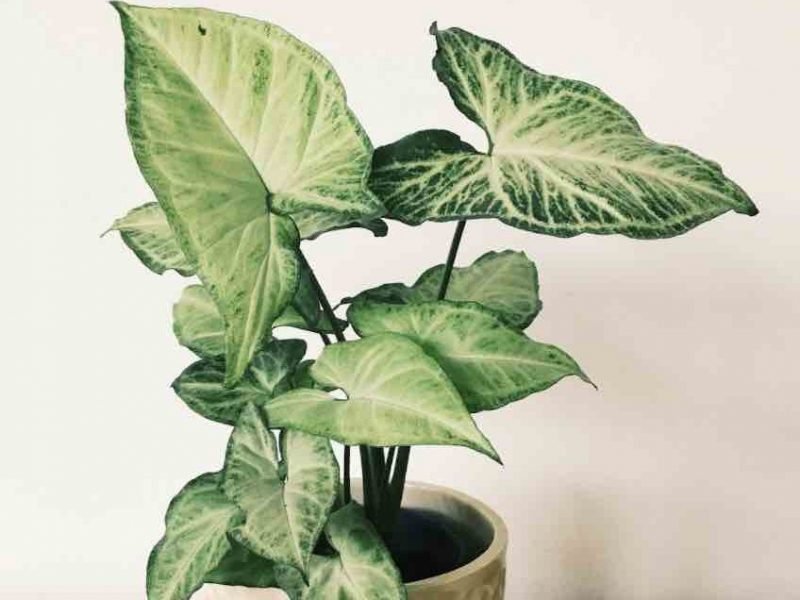
12

Chinese Evergreen

Aglaonema

If you find that you are often killing your houseplants and you can’t seem to figure out why, then the Chinese Evergreen is definitely the one for you. Native to South-East Asia, they are so hardy that they’ll grow and thrive in basically any home so it’s the perfect beginner plant.

Chinese Evergreens have incredible leaves, full of splashes of white, silver or pink depending on the particular variety. They are quite slow growing though (as most hardy plants are), so don’t expect a lot of new growth every year.

Find out more in our Chinese Evergreen care guide.
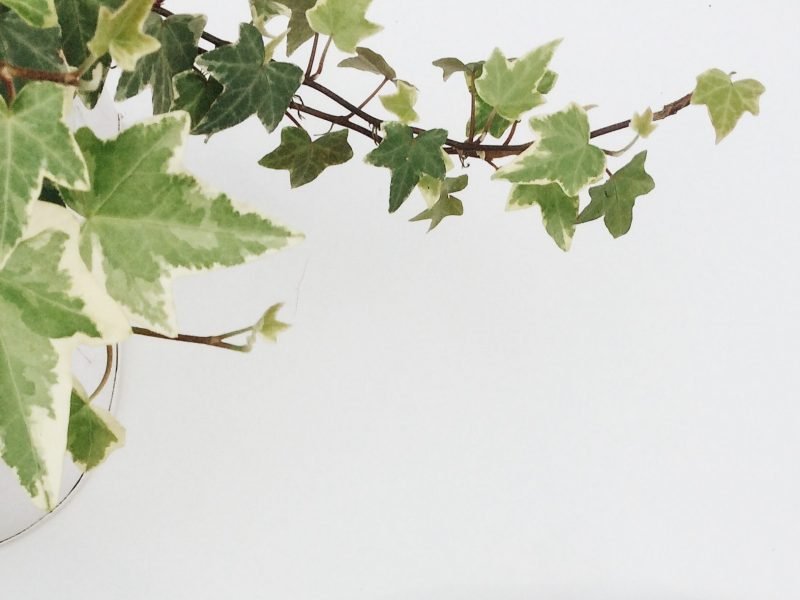
Fiddle and Thorn is a participant in the Amazon Services LLC Associates Program, an affiliate advertising program designed to provide a means for sites to earn advertising fees by advertising and linking to Amazon.com

Take our houseplant survey!

Quickly respond to our 30 second houseplant survey and get 75% off our Complete Houseplant Care eBook!

Take the Survey

No thanks…