Aloe Vera Care

Last Updated: January 17, 2022

Aloe Vera Care

Basic Aloe Vera Care

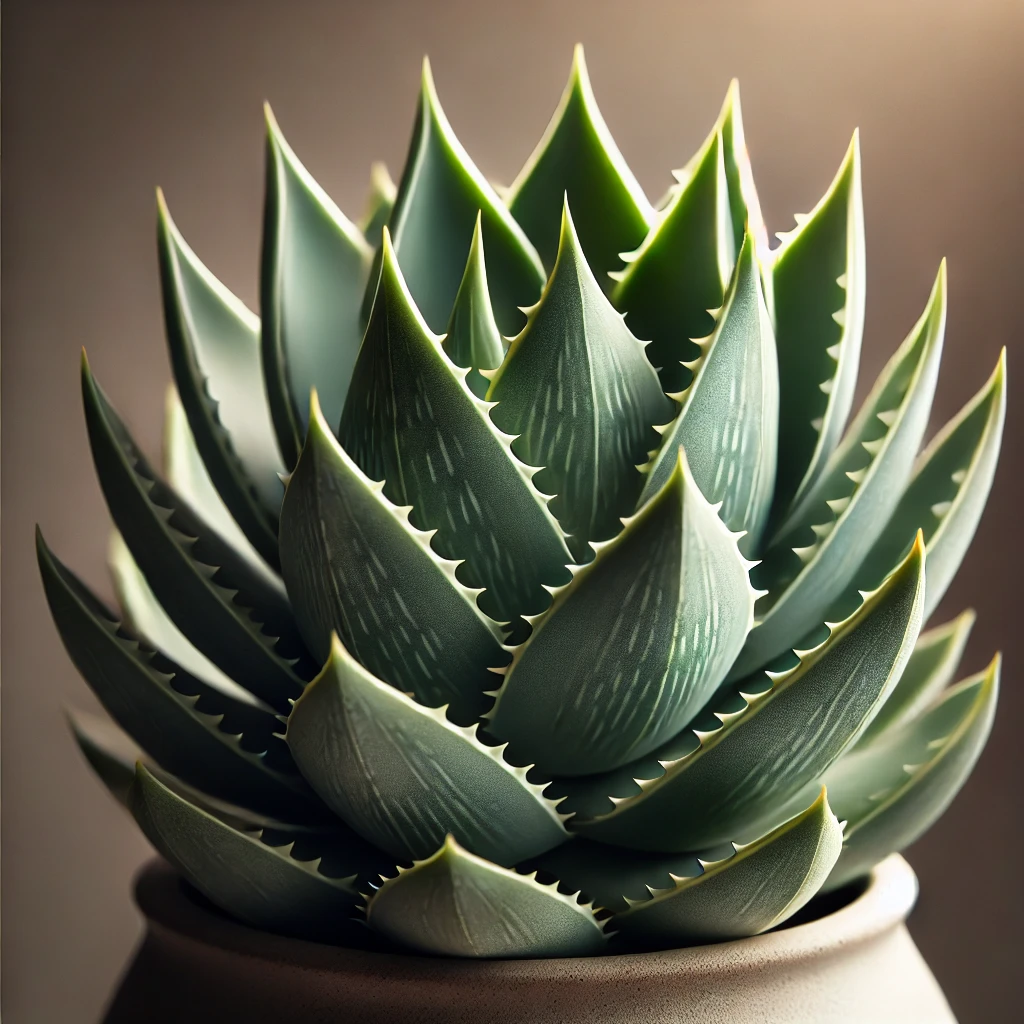
The Aloe Vera is often the first plant endeavour for many plant parents as their easy care routine and luscious green leaves make them the perfect beginner plant.

There are a few important things to note when it comes to keeping your Aloe Vera thriving. Firstly, they need a well-draining potting mix as their roots are very sensitive to root rot. A succulent or cacti mix should work well as it should include perlite which helps not only with drainage but also with aeration of the soil. The second thing to remember when it comes to Aloe Vera care is that they need bright but indirect light. If grown in low light areas they can become straggly but will scorch in intense direct sunlight during summer. It might be a case of moving your Aloe Vera around depending on the season to get the light level right.

Below is our full Aloe Vera Care Guide with all the information you need to best look after your Aloe.

Detailed Aloe Vera Care

Aloe Vera love bright, indirect sunlight

Make sure your home has enough natural light to keep these ones happy. Whilst they can sustain some direct light, after a while too much sunlight will dry our your Aloe Vera’s leaves. It is all about finding the right spot your for Aloe and it’ll thrive!

Be careful not to overwater your Aloe Vera

Aloe Veras are quite sensitive  plants when it comes to watering. The less the better really. They really dislike sitting in water so make sure they dry out fully between waterings. If you think you may have overwatered your Alow Vera, replace the soil immediately and adjust your watering schedule. 

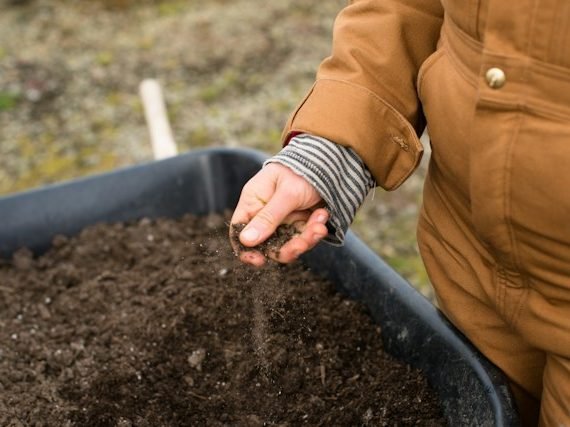
Use a well-draining potting mix

A good potting mix for your Aloe Vera should contain perlite, lava rock or coarse sand to help water drainage. This will protect the roots from rotting which is the most common issue with Aloe Veras as it can happen quite quickly if you accidentally overwater them a few times. 

Aloe Vera can be toxic if ingested

Although the gel can be used on skin to reduce pain, you should never ingest any part of an Aloe Vera as it can cause nausea and can even be toxic in large quantities.

It’s easy to propagate your Aloe Vera

Aloe Vera grow little pups from the main root system that pop up next to the mother plant. Simply cut the pup off with a couple of cm stem and repot them in succulent soil.

They don’t need to be fertilised

Fertilising your Aloe Vera won’t harm it but it isn’t really necessary. They should be fertilised no more than once a year and we recommend using a water-soluble fertiliser if you do choose that you want to.

Warmer temperatures are best for your Aloe Vera

Although they aren’t as fussy as some other  houseplants, warmer temperatures do encourage more growth in your Aloe Vera. Make sure they aren’t placed near an air vent or drafty window as the cooler temperatures will affect your Aloe Vera’s health.

You don’t need to increase the humidity

One great thing about Aloe Vera plants is that they do well in the natural humidity of your home. In fact they don’t mind if the air is a little dry which means you don’t need to worry about misting or trying to increase humidity levels.

Aloe Vera Care FAQs

Can Aloe Vera tolerate full sun?

Whilst they can sustain some direct light, if exposed to too much it will dry out and scorch the leaves of your Aloe Vera. Bright but indirect light is best.

Is Aloe Vera toxic to pets?

Yes, the Aloe Vera is toxic to pets when ingested so keep your furry friends away from it if you worry they might be tempted to chew at the leaves.
 

Is Aloe Vera easy to care for?

Aloe Vera plants are pretty low maintenance as they don’t require much water and can thrive in light levels that most other plants can’t. You also don’t need to worry about boosting the humidity so we strongly recommend these to beginner plant parents.

How often should I water my Aloe Vera?

Aloe Vera plants are very sensitive to overwatering and consequent root rot so you want to water them sparingly. Cut back watering during winter so that you are only watering once a month.
 

Common Issues for Aloe Vera

Although Aloe Vera plants are seemingly very low maintenance, they can sometimes be a little fussy about their environment and care so it’s important to look out for the warning signs. 

Why has my Aloe Vera developed brown leaves?

Brown Aloe Vera leaves are usually a symptom of incorrect watering, both underwatering and overwatering. Both issues will damage the root system and result in your plant being unable t maintain the level of healthy growth, meaning it will develop brown leaves. Have a feel of the soil to determine whether the brown leaves are caused by too much or too little moisture and adjust your watering habits accordingly. You can find out more about why your Aloe Vera is turning brown in our helpful guide.

What shall I do if my Aloe Vera’s soil is waterlogged?

It can be an easy mistake to overwater your aloe vera. In this instance it is best to replace the potting mix entirely as the water will be causing damage to your aloe’s root system. You can find out more about root rot fixes and prevention in our complete root rot guide.

Why has My Aloe Vera turned soft and mushy?

Soft or mushy leaves on your Aloe Vera is usually consequence of overwatering. Try replacing the soil with new dry potting mix and hope that it is not too late!

Why is my Aloe Vera becoming straggily and leggy?

Leggy and straggly growth on an Aloe Vera is most often caused by insufficient light levels. Try moving your Aloe Vera closer to the window and the new growth should start to look healthier.

Help, I think my Aloe Vera is dying!

Most commonly Aloe Vera  plants die because of light or watering issues. Check the moisture in the soil to determine if you have been overwatering it. We have written a detailed guide to help you figure out why your Aloe Vera might be dying.

Why is my Aloe Vera losing leaves?

There are two common causes of Aloe Vera plants losing their leaves, firstly overwatering and secondly a lack of sunlight. If the leaves that are falling off your Aloe Vera feel soft, and the potting mix is waterlogged, then too much water is causing your Aloe Vera to lose leaves. However, if the plant looks quite leggy as well as losing leaves, then it can mean that your Aloe Vera isn’t getting enough light. Move your Aloe Vera to a slightly sunnier spot and monitor any changes.

Why is my Aloe Vera drooping?

There are quite a few causes of droopy Aloe Vera leaves so it can be a bit trickier to properly diagnose. Watering issues such as too much or too little moisture can cause your Aloe Vera to droop, alongside temperature issues, lack of sunlight and more worryingly pests. In order to find out what is causing your Aloe Vera to droop, inspect the potting mix, take a close look at the leaves and monitor the sunlight and temperature levels around your Aloe Vera.

Why does my Aloe Vera have curling leaves?

The most common reason why Aloe Vera plants start to curl their leaves is in response to a lack of moisture. If your Aloe Vera isn’t given enough water it will start to use the conserves it keeps in its leaves, which then causes them to curl. Check the moisture levels in the potting mix before slowly giving your Aloe Vera some more water. This should help revive your plant and stop any more of your Aloe Vera’s leaves curling.

Fiddle and Thorn is a participant in the Amazon Services LLC Associates Program, an affiliate advertising program designed to provide a means for sites to earn advertising fees by advertising and linking to Amazon.com

Take our houseplant survey!

Quickly respond to our 30 second houseplant survey and get 75% off our Complete Houseplant Care eBook!

Take the Survey

No thanks…

Common Parlor Palm Problems | Causes and Solutions

Last Updated: August 25, 2022

Love Palms but have a small space, the Parlor Palm is your answer. These luscious plants bring that little bit of the tropics right to your home. However, as they have quite long and thin leaves, they are susceptible to quite a few issues if things aren’t right. Luckily, you’ve come to the right place as below you’ll find an outline of each of the different causes of some of the most common issues such as brown leaves, yellow leaves, a drooping palm or leaf drop. We’ll help you diagnose the issue, treat it and also prevent it from happening again to your Parlor Palm in future.

Causes of Parlor Palm brown leaves

  1. Underwatering. Whilst your Parlor Palm will forgive you for the occasional lack of water, if the problem persists, your plant will most likely develop brown leaf tips and edges. Before you start pouring a bucket of water over your Parlor Palm to make up for lost time, it’s important that you’re 100% sure it’s the cause of the brown leaves. The best way to do this is to take your plant out of its pot and feel how dry the potting mix is. If your Parlor Palm is underwatered, the potting mix will be dry and crumbly and the roots may look crispy. To solve the issue and prevent more brown leaves, water your Parlor Palm a little bit once a day for about a week and use a moisture meter to keep track of how much water your Parlor Palm needs in future. These go a long way to preventing issues such as brown leaves.
  2. Overwatering. Funnily enough, too much water can actually lead to similar issues as a lack of water, including brown leaves. Once the roots have rotted in waterlogged soil, your Palm isn’t able to get all the nutrients it needs and becomes unstable and droopy and the leaves will begin to turn brown. If you find the potting mix is waterlogged and clumpy then replace it with fresh dry mix straight away rather than letting it dry naturally. This means the plant can start to recover and prevents any further stress on the roots. Moving forward, cut back on either how much water you give your Parlor Palm or how frequently you water it.
  3. Low humidity can cause brown leaf tips. If the issue doesn’t lie in the watering, it could be a lack of humidity that is causing your Parlor Palm’s leaves to turn brown. Parlor Palms like quite humid environments and can struggle in homes with dry air. This can be especially damaging in the winter months due to central heating which really dries out the air. Get into the habit of misting your Parlor Palm or invest in a humidifier to solve the issue and prevent dry air from causing further brown leaves in future.

Causes of Parlor Palm yellow leaves

  1. Overwatering. More often than not, overwatering is the cause of your Parlor Palm’s yellow leaves. If their soil has become waterlogged this will cause the roots to rot and become mushy. Confirm the issue by removing your Parlor Palm from its pot and inspecting the root system. Replace any waterlogged soil with fresh dry mix and adjust your watering schedule so that you give enough time for the potting mix to dry out. This will really help prevent any more yellow leaves from cropping up in future.
  2. Overfertilisation. Parlor Palms don’t need to be fertilised that often, or even at all as you can still see plenty of new healthy growth each year without any feed. If you are fertilising your Parlor Palm during winter or at very regular intervals during summer, then it may be the cause of the yellow leaves. Remove any slow-release fertiliser spikes or just stop adding fertiliser to the water and you should start to see the problem stopping. If the issue of yellow leaves has progressed quite far, you might choose to replace the potting mix to remove any excess fertiliser.
  3. Direct sunlight. If the yellowing on your Parlor Palm’s leaves is quite patchy and looks scorched then it may be due to too much direct sunlight which has burnt the leaves. Parlor Palms like areas with bright light, but it needs to be indirect so try to avoid placing it right next to a window. Whilst this won’t be so much of a problem during winter, intense sunlight during summer can damage your plant and cause yellow leaves as well as cause hotspots which dry out the leaves. To solve the issue, move your Palm to a slightly shadier spot in your home.

Parlor Palms begin losing leaves for a variety of reasons

  1. Stress and shock. Whilst Parlor Palms aren’t the most sensitive of houseplant types, it can be quite normal for them to experience stress or shock which causes them to start losing a few leaves. They don’t like to be moved around too much and a sudden change of environment can be quite harmful to your Parlor Palm leaf. Different lighting and humidity levels can also be quite a shock to your Parlor Palm and it may take some adjusting before the new environment becomes its new comfort zone. As long as the new environment caters for its light and space requirements, it should adjust nicely, stop losing leaves and regain strong and healthy growth.
  2. Cold temperatures. Another one of the most common reasons why Parlor Palms start losing their leaves is due to inconsistent temperatures, particularly cold temperatures. If your plant is exposed to low temperatures (the ideal temperature for Parlor Palm is between 18°C – 24°C), it can often cause them to go into shock and some leaves will drop from the plant. Cold drafts can be caused by a range of things but doors or windows with small cracks are your Parlor Palm’s worst enemy. We really recommend buying a digital thermometer to check the temperature around your Parlor Palm and prevent it from losing any more leaves.

Why is my Parlor Palm drooping?

  1. Underwatering. Too little water can harm your Parlor Palm in more ways than one but one of the earlier signs of underwatering is drooping leaves. Stick a finger in the top few centimetres of the soil to check the moisture or use a moisture meter if you have one. If the potting mix is very dry then slowly reintroduce water over the next week rather than drowning it all at once (as this can cause shock and more drooping leaves). Investing in a moisture meter would be a great idea to prevent your Parlor Palm from drooping in future and if you really just want a set-it and forget-it solution, getting a self-watering pot could be the one for you.
  2. Overwatering. Similarly to underwatering, too much water can have the same effect and cause your Parlor Palm to start drooping. This is because once the roots have started to rot, your plant won’t be able to get the nutrients, moisture and oxygen it requires. If you think that you may have overwatered your Parlor Palm it is best to replace the soil straight away rather than just sit and wait for it to dry up over time. Make sure to use fresh, nutrient rich soil when you do this, our recommendation is this one from Miracle-Gro. Moving forward, adjust your watering schedule so that your Parlor Palm’s soil has time to dry out between waterings and this will help prevent your plant from drooping again in future.

Causes of curling leaves on a Parlor Palm

  1. Low humidity can cause curling leaves. Whilst Parlor Palms can withstand the normal humidity level in your home, they don’t do so well with dry air and this could be the cause of the curling leaves. Using a humidity monitor will help you diagnose this issue as it isn’t as obvious as lighting or moisture problems. To increase the humidity, get into the habit of misting your Parlor Palm or using a humidifier to do the work for you!
  2. Another cause of curling leaves on a Parlor Palm is underwatering. Houseplants start curling their leaves to prevent moisture loss so this is always a good place to start when diagnosing the issue (and keep it in mind for other houseplant types too). Confirm whether the curling leaves are caused by dry soil by inspecting the potting mix. To solve the issue, water your Parlor Palm lightly each day for one week before returning to a more regular schedule. This helps moisten the soil without causing stress.
  3. Water sensitivity could also be to blame. If watering and humidity issues are not causing your Parlor Palm any harm, then it might be sensitive to excess minerals in the water. They can build up around the roots and cause issues over time. The first sign of trouble is usually curling leaves or brown leaf tips. Start watering your Parlor Palm with filtered, distilled or rainwater if you live in a hard water area.
Those are the main issues that plant parents face with Parlor Palms. To learn more about how to keep your plant happy and healthy, check out our Parlor Palm care guide.
Fiddle and Thorn is a participant in the Amazon Services LLC Associates Program, an affiliate advertising program designed to provide a means for sites to earn advertising fees by advertising and linking to Amazon.com

Take our houseplant survey!

Quickly respond to our 30 second houseplant survey and get 75% off our Complete Houseplant Care eBook!

Take the Survey

No thanks…

Yellow Leaves on African Milk Tree / Euphorbia Trigona

Last Updated: May 18, 2022

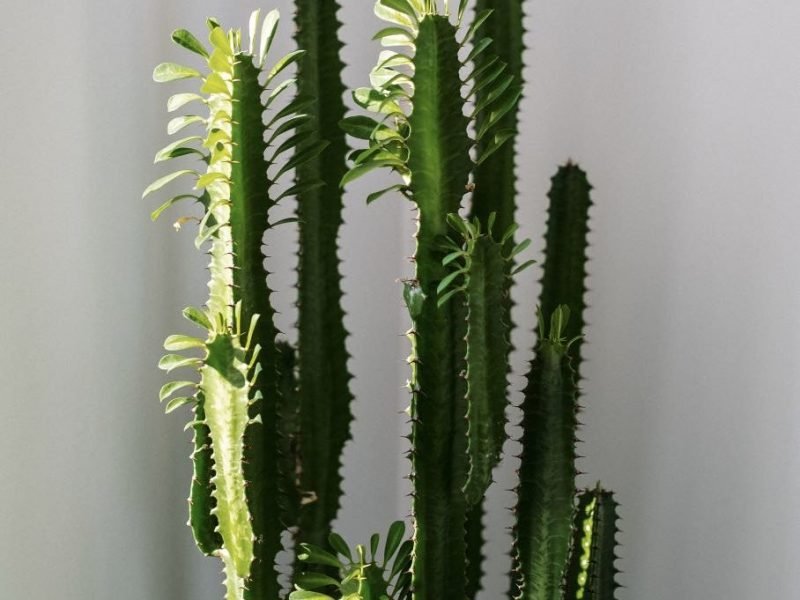
Native to Central Africa, although the African Milk Tree might look like a cactus, it’s actually a succulent which changes how you care and spot problems a little. If you have started to notice some of the leaves on your African Milk Tree have turned yellow, this can mean there is something wrong with either your plant’s environment or the care it’s receiving.

In this post, we will go through each of the different reasons why African Milk Tree leaves turn yellow so you can see which one is affecting your plant and fix the problem straight away.

Underwatering

If the leaves are turning quite dry and crispy all over as well as yellow then it may be due to a consistent lack of water. Although African Milk Trees can deal with drought, you still have to get the right balance when watering to avoid it drying out. We always recommend a little but often approach to avoid any watering issues.

If you think that your African Milk Tree has been underwatered then check the soil before you do or change anything! You want to be sure that this is the cause otherwise you may very quickly be overwatering and causing a whole wealth of other problems (African Milk Trees are more sensitive to overwatering than underwatering so err on the side of caution). Once you are sure that the soil is bone dry, then slowly reintroduce watering. Your first instinct might be to drown your African Milk Tree in water but this can actually cause more damage and more yellow leaves. This is because plants get shocked by a sudden change in environment.

Water your African Milk Tree a little bit once a day for about a week. After then you want to go back to a more normal care routine, making sure to check the moisture in the soil frequently to avoid any yellow leaves from developing again!

Overwatering

One common cause of yellow leaves on African Milk Trees is overwatering and subsequent root rot. This usually shows itself by the lowest leaves turning yellow first. If you think that your African Milk Tree is suffering from overwatering and root rot, the best thing to do is to take your plant out of its pot immediately and inspect the root system. Carefully trim away any rotten roots as this will encourage the new healthy roots to grow. If the potting mix of your African Milk Tree is still soggy and waterlogged, replace it immediately. Don’t wait for it to naturally dry out as this risks causing more harm to your African Milk Tree and it can cause more yellow leaves.

Over the next few weeks, you need to water your African Milk Tree less than you were doing before so that it can start to recover. Using a moisture meter is a great way to know when it’s time for a water. You will also want to adjust your watering schedule depending on the seasons, to ensure that you are cutting down on watering over the colder, darker months of autumn and winter.

Top tip: to avoid the roots of your plant sitting in water for days, remove any excess water that has run out of the drainage holes into your saucer or planter.

Cold Temperatures

As they are native to central Africa, African Milk Trees prefer slightly warmer temperatures so will struggle in cold homes. Over time, the cold air will impact your African Milk Tree’s health and it may be what is causing them to develop yellow leaves. Make sure your African Milk Tree is away from all air conditioning vents, drafty windows or doors as the colder air can shock your plant. You can always pick up a digital thermometer to check the temperature of the spot your African Milk Tree is sitting in to check whether it needs to be moved to a new, warmer spot in your home.

Natural Ageing

If it is the lower leaves on your African Milk Tree that are turning yellow then this may be simply natural ageing. Over time, your African Milk Tree will drop some of its oldest leaves in favour of growing bigger healthier new ones. This is completely natural and isn’t something you did wrong or anything to worry about. The rate of natural ageing should be 1 or 2 of the oldest leaves every few months. Monitor the rate of yellowing to see if it is speeding up or well above this rate as there might be another cause you need to look out for.

Those are the most common reasons why the leaves on your African Milk Tree are turning yellow. We recommend going through each of the reasons one by one to see what fits with your plant. After changing something about your plant’s environment or care, we recommend keeping a very close eye on your plant to see if the problem is getting better or if new leaves are also turning yellow. As some factors cause very similar symptoms, it can sometimes be difficult to know exactly what to change so make sure to monitor the rate of yellowing.

To discover more about how to care for your plant how to spot other common issues, check out our African Milk Tree care guide.

If you are struggling to revive your plant and the yellowing just seems to be getting worse, then you might need to propagate your African Milk Tree to save some of the healthy sections.

Fiddle and Thorn is a participant in the Amazon Services LLC Associates Program, an affiliate advertising program designed to provide a means for sites to earn advertising fees by advertising and linking to Amazon.com

Take our houseplant survey!

Quickly respond to our 30 second houseplant survey and get 75% off our Complete Houseplant Care eBook!

Take the Survey

No thanks…

Yellow Maidenhair Fern Leaves | Causes and Solutions

Last Updated: January 29, 2022

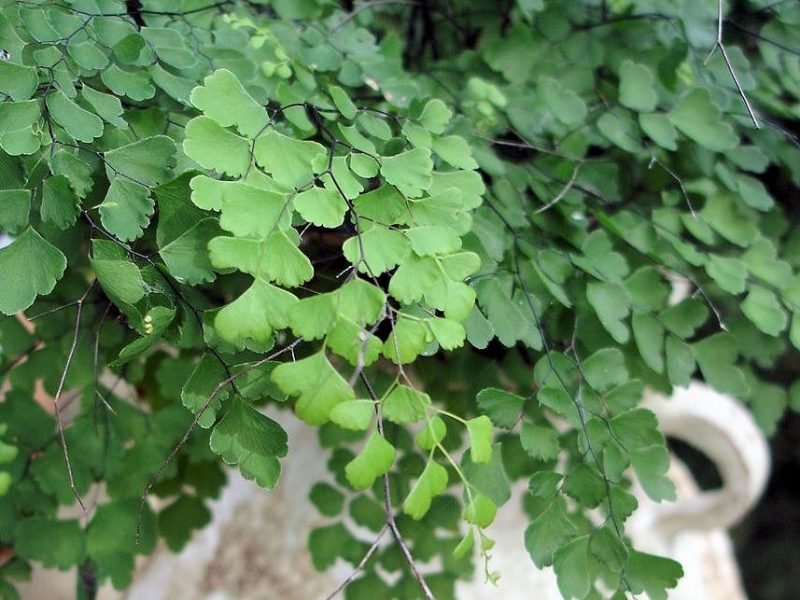
Arguably one of the most sensitive and fussy houseplants out there, the Maidenhair Fern is no stranger to common problems, commonly yellow leaves! These can pop up if your Maidenhair Fern is only the slightest bit uncomfortable with any care or environmental factors so sometimes it can be difficult to pin down exactly what is wrong.

But don’t fret, we have written this detailed guide to help you understand all the possible causes of yellow Maidenhair Fern leaves, allowing you to diagnose the issue as well as follow the right steps to stop the problem from causing any more damage to your Fern.

A lack of sunlight could cause yellow foliage in Maidenhair Ferns

Although there isn’t much worse for Maidenhair Ferns than too much sunlight, too little can also cause issues such as yellowing leaves. This can be especially common over winter where the days are shorter and the sun is weaker so just make sure to amend the position of your plant depending on the season.

Too much sunlight

As we mentioned above, Maidenhair Ferns don’t like bright direct sunlight and this can very quickly scorch the leaves. Maidenhair Ferns have very delicate leaves so the issue can become a real problem very quickly.

Sunburn will show itself in patches of yellow across the leaves on the side which is facing the window. Unfortunately, these patches are irreversible so you are best trimming them off if the leaves are quite severely damaged.

Make sure to move your plant away from the direct light to a shadier spot in your home and this should prevent any more yellow leaves from forming on your Maidenhair Fern.

Stress – They hate being moved or repotted!

This is something that isn’t really talked about much but plants get stressed and shocked, and Maidenhair Ferns can be especially sensitive to this sometimes. Maidenhair Ferns especially don’t like it if they are moved to a different spot or are repotted. When there is such a drastic change in their environment, they can develop yellowing across some of the leaves. As long as the new environment is good for them, they will adjust and the yellowing will stop.

It’s important to bring in any changes gradually to avoid this stress. When moving your plant, move it in increments, allowing it to adjust to the change in environment slowly. Of course, if you are moving house etc there isn’t any way to slowly allow your plant to adjust. In this case, just keep an eye on your plant and make extra sure that it’s getting the right care.

Using a digital thermometer, light meter and moisture meter can help you keep track of your Maidenhair Fern’s environment so you can respond to any major changes.

Natural ageing is also a factor to consider

If it’s only the oldest (and most commonly smallest) leaves on your Maidenhair Fern that are turning yellow then this may be simply natural ageing. As your Maidenhair Fern matures, it is completely normal for it to lose some leaves so that it can focus its energy reserves on new growth. These leaves will usually turn yellow before falling off the plant.

Maidenhair Ferns will regularly lose leaves, that’s just the way with Ferns so it’s more about realising what is natural shedding and what is a problem. As a general rule, if your Maidenhair Fern is growing more healthy new leaves than it is losing old ones, then this is often OK. Another thing to look out for is the rate of yellowing speeding up as this is also a sign something isn’t right.

Should I trim away the yellow leaves on my Maidenhair Fern?

You might be wondering if it is best to leave the yellow leaves on your Maidenhair Fern and wait until they naturally fall off, or trim them away. We always recommend removing the worst affected areas of the plant. If there are sections of your Fern that have turned yellow completely, then trim these away. If there is just the odd yellowing leaf dotted here and there then leaves these until they naturally fall off.

The reason for this is that removing the large yellowing areas means your Fern isn’t wasting energy on keeping those bits alive or trying to revive them.

If you were lucky and managed to catch the issue quite early and the problem hasn’t spread to the entirety of your Maidenhair Fern, then you should be able to fairly quickly solve the issue. However, if the leaves are yellowing at a rapid rate, then we recommend thinking about propagating some of the healthy parts of the plant in case the mother plant doesn’t make it.

To learn more about how to propagate your plant, as well as other general care advice, check out our Maidenhair Fern care guide.

Fiddle and Thorn is a participant in the Amazon Services LLC Associates Program, an affiliate advertising program designed to provide a means for sites to earn advertising fees by advertising and linking to Amazon.com

Take our houseplant survey!

Quickly respond to our 30 second houseplant survey and get 75% off our Complete Houseplant Care eBook!

Take the Survey

No thanks…

Yucca Care

Last Updated: September 5, 2022

Basic Yucca Care

Yucca plants are great at adapting to different environments so can deal with a range of light, moisture, temperature and humidity levels that a lot of other houseplant types aren’t able to. Whilst you might be slower growth with less than ideal conditions, you won’t find as many problems as you would with more sensitive plant types.

Below you will find all the information you need to properly care for your Yucca as well as how to diagnose and treat common problems if they do arise.

Detailed Yucca Care

Yucca can grow in all light conditions

One of the best things about caring for a Yucca plant is that it can cope in bright sunlight and dark corners. Be aware though that if growth will be slower in a darker spot.

Good drainage is key for Yucca plants

The one thing a Yucca really doesn’t like is being waterlogged. Make sure that your pot has good drainage holes and you remove any excess water that flows out. Water much less in winter, about once every 3-4 weeks.

Yucca don’t mind temperature extremes

As they are native to the desert, Yucca are used to dealing with extreme daytime heat and cool nights. So don’t worry too much about finding the ideal room temperature.

Only fertilise your Yucca in spring and summer

If you do want to feed your Yucca we highly recommend you only do this in the growth months. Use a soluble liquid fertiliser at half the recommended strength.

The natural humidity of your home is fine for a Yucca

Don’t worry about increasing the humidity for your Yucca plant as it will do just fine with the natural levels in your home. One thing that is important though is that you open the windows regularly to increase the airflow of fresh air.

Repot your Yucca every few years

Yucca are quite slow-growing plants so you don’t need to constantly worry about repotting. If you feel the pot is starting to get a bit small, upgrade it a size. You can also refresh the soil every year or so if you don’t feel it needs a new pot.

Yucca are toxic to pets

Unfortunately, it is best to keep your Yucca away from your dogs and cats as it can cause stomach irritation if digested.

Propagate your Yucca by using offshoots

The easiest way to propagate your Yucca is by replanting offshoots. You can keep the offshoots in water for a few weeks for roots to develop or directly pot them in soil. We recommend doing this in spring to give it the best chance of success.

Yucca Care FAQs

Common Problems for Yucca

Even though they are quite low maintenance, there are a few issues that your Yucca might suffer from. It’s important to know the warning signs so you can deal with the issue as soon as it arises. This will give your plant the best shot at returning to full health.

Fiddle and Thorn is a participant in the Amazon Services LLC Associates Program, an affiliate advertising program designed to provide a means for sites to earn advertising fees by advertising and linking to Amazon.com

Take our houseplant survey!

Quickly respond to our 30 second houseplant survey and get 75% off our Complete Houseplant Care eBook!

Take the Survey

No thanks…

Yellow Wandering Jew Plant Leaves | Causes and Solutions

Last Updated: April 1, 2022

A great candidate for the fastest growing houseplant, the Wandering Jew Plant is a great plant for anyone who wants a splash of colour but doesn’t want to be constantly tending to an over-sensitive plant. But although these plants are fairly easy to keep happy, you may from time to time run into a few issues such as yellow leaves. Whilst yellow leaves can sometimes be simply down to the natural leaf cycle of your Wandering Jew Plant, there are a few other causes that are more concerning and mean that something is harming your plant.

In this post, we will be going through four main reasons why Wandering Jew Plants develop yellow leaves. We recommend grabbing your plant whilst you read this post so that you can take a close look at it which should help you correctly identify what is happening. As well as going through the causes of yellow leaves, we will also help you treat the problem and prevent it from harming your Wandering Jew Plant again in future.

Overwatering can cause yellow leaves

Let’s start off with the most common cause of yellow leaves on Wandering Jew Plants; too much water. If you accidentally overwater your plant by either watering too frequently or giving it too much water each time then the roots might start to rot in the waterlogged soil. It can also happen if you are watering fine, but the drainage holes are blocked meaning every single drop of moisture is stuck in the pot.

Once there is damage caused to the root system, this prevents your Wandering Jew Plant from getting any of the needed nutrients which will cause yellowing in the leaves.

An easy way to know if the soil is waterlogged is by smelling it. If the soil smells quite damp and musty then there’s a good chance it has been waterlogged. Take your Wandering Jew Plant out of its pot to double-check and if the soil is waterlogged and clumpy then you want to replace it straight away. It’s important that you monitor the moisture levels in your plant going forward so you can adjust your watering schedule accordingly. A great thing to invest in is a moisture meter as they help you determine when your plant needs water and means you can avoid problems such as yellow leaves.

Leaf rot can cause yellow spots (getting leaves wet when watering)

If you notice that your Wandering Jew Plant has yellow spots or small yellow patches on the leaves then it may be due to leaf rot. This happens when the leaves are splashed with water when you are watering them. It’s more common in winter as wet leaves and cold temperatures don’t go well together. When the leaves rot, they will turn yellowy-brown in colour and be quite soft to touch.

This tends to happen to the leaves closest to the soil as they are more likely to be splashed. To avoid this in future, it’s best to use a narrow spouted watering can as this lets you get super close to the soil when watering and will help avoid yellow spots on the leaves.

Pests

If the yellowing is not so consistent on the leaves and also shows up as spots or small patches on the leaves then pests could be the problem. Take a quick look over the plant for any unwanted insects, the most likely cause is spider mites which are small white insects.

If you do find pests on your Wandering Jew Plant then the best technique for removing them that we’ve found is taking your plant for a shower before treating it with neem oil. Just pop your Wandering Jew Plant in the shower, rinse down the leaves and stems with water and let them dry off, after a few showers and a consistent treatment using neem oil, the spider mites should be gone for good.

It’s important to note here that if the yellow leaves are caused by pests you will want to isolate your plant from your other houseplants immediately. Pests can easily spread if the leaves and stems are hanging close.

Natural ageing

If it’s only the oldest top leaves on your Wandering Jew Plant that are turning yellow then this may be simply natural ageing. It’s totally normal for your Wandering Jew Plant to drop some of its oldest leaves as it ages. This allows it to focus energy on growing bigger healthier new leaves at the end of the vine.

Whilst this does happen throughout many houseplant types and varieties, it’s especially common in Wandering Jew Plants. Before falling off the plant, the leaves will turn yellow first.

Should I trim away the yellow leaves on my Wandering Jew Plant?

We always recommend getting rid of the yellow leaves on your Wandering Jew Plant. Unfortunately, once the leaf has turned yellow, there is no going back to their beautiful variegation. So trimming away the yellow leaves means your Wandering Jew Plant can begin to focus all the energy on growing new healthy leaves and stems. When trimming the leaves off, always cut them with a sharp pair of scissors rather than ripping them off as this risks damaging the vines.

Those are the main four reasons why Wandering Jew Plants develop yellow leaves. It’s important to make any needed changes straight away as catching the problem as early as possible is key to keeping your plant alive. Other than natural ageing, the other three issues can develop quite quickly so keep a very close eye on your plant over the next few weeks to make sure that your changes are having a positive impact and no more yellow leaves are developing on your Wandering Jew Plant.

To find out more about how to best look after your plant, check out our Wandering Jew Plant care guide.

Fiddle and Thorn is a participant in the Amazon Services LLC Associates Program, an affiliate advertising program designed to provide a means for sites to earn advertising fees by advertising and linking to Amazon.com

Take our houseplant survey!

Quickly respond to our 30 second houseplant survey and get 75% off our Complete Houseplant Care eBook!

Take the Survey

No thanks…

Yellow Maidenhair Fern Leaves | Causes and Solutions

Last Updated: January 29, 2022

Arguably one of the most sensitive and fussy houseplants out there, the Maidenhair Fern is no stranger to common problems, commonly yellow leaves! These can pop up if your Maidenhair Fern is only the slightest bit uncomfortable with any care or environmental factors so sometimes it can be difficult to pin down exactly what is wrong.

But don’t fret, we have written this detailed guide to help you understand all the possible causes of yellow Maidenhair Fern leaves, allowing you to diagnose the issue as well as follow the right steps to stop the problem from causing any more damage to your Fern.

A lack of sunlight could cause yellow foliage in Maidenhair Ferns

Although there isn’t much worse for Maidenhair Ferns than too much sunlight, too little can also cause issues such as yellowing leaves. This can be especially common over winter where the days are shorter and the sun is weaker so just make sure to amend the position of your plant depending on the season.

Too much sunlight

As we mentioned above, Maidenhair Ferns don’t like bright direct sunlight and this can very quickly scorch the leaves. Maidenhair Ferns have very delicate leaves so the issue can become a real problem very quickly.

Sunburn will show itself in patches of yellow across the leaves on the side which is facing the window. Unfortunately, these patches are irreversible so you are best trimming them off if the leaves are quite severely damaged.

Make sure to move your plant away from the direct light to a shadier spot in your home and this should prevent any more yellow leaves from forming on your Maidenhair Fern.

Stress – They hate being moved or repotted!

This is something that isn’t really talked about much but plants get stressed and shocked, and Maidenhair Ferns can be especially sensitive to this sometimes. Maidenhair Ferns especially don’t like it if they are moved to a different spot or are repotted. When there is such a drastic change in their environment, they can develop yellowing across some of the leaves. As long as the new environment is good for them, they will adjust and the yellowing will stop.

It’s important to bring in any changes gradually to avoid this stress. When moving your plant, move it in increments, allowing it to adjust to the change in environment slowly. Of course, if you are moving house etc there isn’t any way to slowly allow your plant to adjust. In this case, just keep an eye on your plant and make extra sure that it’s getting the right care.

Using a digital thermometer, light meter and moisture meter can help you keep track of your Maidenhair Fern’s environment so you can respond to any major changes.

Natural ageing is also a factor to consider

If it’s only the oldest (and most commonly smallest) leaves on your Maidenhair Fern that are turning yellow then this may be simply natural ageing. As your Maidenhair Fern matures, it is completely normal for it to lose some leaves so that it can focus its energy reserves on new growth. These leaves will usually turn yellow before falling off the plant.

Maidenhair Ferns will regularly lose leaves, that’s just the way with Ferns so it’s more about realising what is natural shedding and what is a problem. As a general rule, if your Maidenhair Fern is growing more healthy new leaves than it is losing old ones, then this is often OK. Another thing to look out for is the rate of yellowing speeding up as this is also a sign something isn’t right.

Should I trim away the yellow leaves on my Maidenhair Fern?

You might be wondering if it is best to leave the yellow leaves on your Maidenhair Fern and wait until they naturally fall off, or trim them away. We always recommend removing the worst affected areas of the plant. If there are sections of your Fern that have turned yellow completely, then trim these away. If there is just the odd yellowing leaf dotted here and there then leaves these until they naturally fall off.

The reason for this is that removing the large yellowing areas means your Fern isn’t wasting energy on keeping those bits alive or trying to revive them.

If you were lucky and managed to catch the issue quite early and the problem hasn’t spread to the entirety of your Maidenhair Fern, then you should be able to fairly quickly solve the issue. However, if the leaves are yellowing at a rapid rate, then we recommend thinking about propagating some of the healthy parts of the plant in case the mother plant doesn’t make it.

To learn more about how to propagate your plant, as well as other general care advice, check out our Maidenhair Fern care guide.

Fiddle and Thorn is a participant in the Amazon Services LLC Associates Program, an affiliate advertising program designed to provide a means for sites to earn advertising fees by advertising and linking to Amazon.com

Take our houseplant survey!

Quickly respond to our 30 second houseplant survey and get 75% off our Complete Houseplant Care eBook!

Take the Survey

No thanks…

Yellow Leaves on African Milk Tree / Euphorbia Trigona

Last Updated: May 18, 2022

Native to Central Africa, although the African Milk Tree might look like a cactus, it’s actually a succulent which changes how you care and spot problems a little. If you have started to notice some of the leaves on your African Milk Tree have turned yellow, this can mean there is something wrong with either your plant’s environment or the care it’s receiving.

In this post, we will go through each of the different reasons why African Milk Tree leaves turn yellow so you can see which one is affecting your plant and fix the problem straight away.

Underwatering

If the leaves are turning quite dry and crispy all over as well as yellow then it may be due to a consistent lack of water. Although African Milk Trees can deal with drought, you still have to get the right balance when watering to avoid it drying out. We always recommend a little but often approach to avoid any watering issues.

If you think that your African Milk Tree has been underwatered then check the soil before you do or change anything! You want to be sure that this is the cause otherwise you may very quickly be overwatering and causing a whole wealth of other problems (African Milk Trees are more sensitive to overwatering than underwatering so err on the side of caution). Once you are sure that the soil is bone dry, then slowly reintroduce watering. Your first instinct might be to drown your African Milk Tree in water but this can actually cause more damage and more yellow leaves. This is because plants get shocked by a sudden change in environment.

Water your African Milk Tree a little bit once a day for about a week. After then you want to go back to a more normal care routine, making sure to check the moisture in the soil frequently to avoid any yellow leaves from developing again!

Overwatering

One common cause of yellow leaves on African Milk Trees is overwatering and subsequent root rot. This usually shows itself by the lowest leaves turning yellow first. If you think that your African Milk Tree is suffering from overwatering and root rot, the best thing to do is to take your plant out of its pot immediately and inspect the root system. Carefully trim away any rotten roots as this will encourage the new healthy roots to grow. If the potting mix of your African Milk Tree is still soggy and waterlogged, replace it immediately. Don’t wait for it to naturally dry out as this risks causing more harm to your African Milk Tree and it can cause more yellow leaves.

Over the next few weeks, you need to water your African Milk Tree less than you were doing before so that it can start to recover. Using a moisture meter is a great way to know when it’s time for a water. You will also want to adjust your watering schedule depending on the seasons, to ensure that you are cutting down on watering over the colder, darker months of autumn and winter.

Top tip: to avoid the roots of your plant sitting in water for days, remove any excess water that has run out of the drainage holes into your saucer or planter.

Cold Temperatures

As they are native to central Africa, African Milk Trees prefer slightly warmer temperatures so will struggle in cold homes. Over time, the cold air will impact your African Milk Tree’s health and it may be what is causing them to develop yellow leaves. Make sure your African Milk Tree is away from all air conditioning vents, drafty windows or doors as the colder air can shock your plant. You can always pick up a digital thermometer to check the temperature of the spot your African Milk Tree is sitting in to check whether it needs to be moved to a new, warmer spot in your home.

Natural Ageing

If it is the lower leaves on your African Milk Tree that are turning yellow then this may be simply natural ageing. Over time, your African Milk Tree will drop some of its oldest leaves in favour of growing bigger healthier new ones. This is completely natural and isn’t something you did wrong or anything to worry about. The rate of natural ageing should be 1 or 2 of the oldest leaves every few months. Monitor the rate of yellowing to see if it is speeding up or well above this rate as there might be another cause you need to look out for.

Those are the most common reasons why the leaves on your African Milk Tree are turning yellow. We recommend going through each of the reasons one by one to see what fits with your plant. After changing something about your plant’s environment or care, we recommend keeping a very close eye on your plant to see if the problem is getting better or if new leaves are also turning yellow. As some factors cause very similar symptoms, it can sometimes be difficult to know exactly what to change so make sure to monitor the rate of yellowing.

To discover more about how to care for your plant how to spot other common issues, check out our African Milk Tree care guide.

If you are struggling to revive your plant and the yellowing just seems to be getting worse, then you might need to propagate your African Milk Tree to save some of the healthy sections.

Fiddle and Thorn is a participant in the Amazon Services LLC Associates Program, an affiliate advertising program designed to provide a means for sites to earn advertising fees by advertising and linking to Amazon.com

Take our houseplant survey!

Quickly respond to our 30 second houseplant survey and get 75% off our Complete Houseplant Care eBook!

Take the Survey

No thanks…

Yellow Leaves on a Chinese Evergreen | Causes and Solutions

Last Updated: January 17, 2022

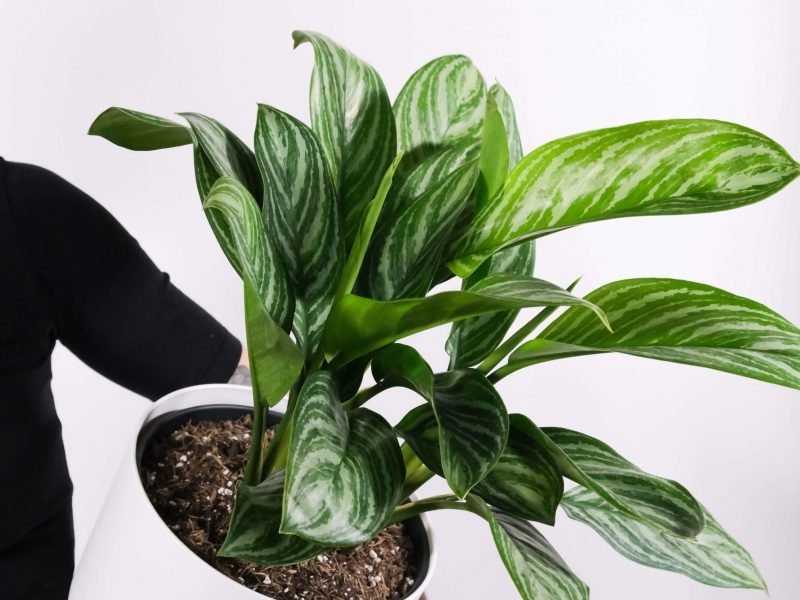
Although Chinese Evergreen plants are loved for being super low maintenance, that doesn’t mean that you won’t ever come across issues with them. They can definitely put up with a wider range of conditions than a lot of other plants, but will still develop yellow leaves and other common problems if things aren’t right. If you do notice yellow leaves on your Chinese Evergreen, it’s important that you act straight away to determine what the cause is and if you need to change anything in terms of the care you give your plant or the environment in which it’s in.

In this post, we will be going through each of the factors that cause yellow leaves on Chinese Evergreen plants so that you can determine what is happening to your plant. We will also go through how to treat each issue and prevent any more yellow leaves from developing on your Chinese Evergreen in future.

Overwatering is a common cause of yellow leaves

It makes the most sense to start this post with the most common cause of yellow leaves on Chinese Evergreens – too much water. Although your Chinese Evergreen likes some moisture in the soil, they don’t do so well if it becomes quite waterlogged as their roots will begin to rot. This means that your plant is unable to take up water and nutrients from the soil and photosynthesise properly, causing the leaves to go mushy, droopy and yellow. Chinese Evergreens can withstand soggy soil for a little bit (and longer than a lot of other plant types) but consistent overwatering will lead to yellow leaves and other issues.

Before changing anything in your watering routine you want to be sure that this is definitely the cause of the yellow leaves on your Chinese Evergreen. One reliable way to know if your plant is getting too much water is by taking your Chinese Evergreen out of its pot and inspecting the potting mix and roots.

If the potting mix is very moist to touch, and the root system feels a little soft then overwatering is definitely causing the yellow leaves. You can also check the soil using a moisture meter to determine if it’s waterlogged. They are really helpful to keep a good level of moisture in the soil and will help you avoid this problem happening again in future.

Replace the potting mix with fresh mix straight away if it is waterlogged. Leaving it to dry naturally will take several days and risks more damage to your plant, meaning more yellow leaves and potentially also other issues.

Trim away the rotten roots whilst replacing the potting mix and carefully remove the yellow leaves. This means that your Chinese Evergreen can focus all of its energy on new healthy rather than wasting valuable energy and nutrients trying to keep the dying parts alive.

Underwatering can cause the lower leaves to turn yellow

If your Chinese Evergreen’s leaves are yellow, dry and crispy it may be because you have not given it enough water for a while. Over time, consistent underwatering will mean your plant begins to dry out, turn yellow and become very limp.

It is important to get to know each of your houseplants so you get a feel when they are ready for watering. There are a few really easy ways to do this. First check the moisture at the top of the soil, if it is still damp then it won’t need watering for another few days. The second method is lifting up your Chinese Evergreen before and after watering you so you start to gauge how heavy the soil is when it is in need of water. Make sure to pick it up by the pot rather than the leaves or stems as you don’t want to damage the plant.

If you think that underwatering is the cause of your Chinese Evergreen’s yellow leaves then it is important that you reintroduce watering slowly. You may think that the best thing to do is drown your plant in water but this will actually shock your plant and cause even more harm. Instead, you want to water it little but often for a few days to make sure the soil gets a good soaking. This will also prevent the water from running straight out of the pot as this can sometimes happen with really dry soil too.

Very low light levels

Alongside watering issues, problems with how much light your Chinese Evergreen is getting can also mean your plant develops yellow leaves. If your Chinese Evergreen isn’t getting enough light then this can cause a whole range of issues, stagnant growth, small leaves and leggy stems alongside yellow leaves so look out for any of these signs too.

If you think that low light levels are is the cause, start by placing your Chinese Evergreen nearer to a window. However, if this is happening during or just before summer then you need to be more careful about where you place your Chinese Evergreen, as too much sunlight can also be harmful to your plant.

Cold drafts can also cause yellowing

If your Chinese Evergreen is being exposed to a lot of cold air then this can also be the reason why it is developing yellow leaves. Drafty windows and doors, as well as AC vents, can leave your plant exposed to a stream of cool air so double-check the temperature around your plant.

If cold air is to blame for the yellow leaves on your Chinese Evergreen, move it to a warmer spot in your home or make sure that the doors and windows are draft proofed.

Overfertilisation causes yellow leaf tips

Chinese Evergreens don’t need to be fertilised that often and you can actually have plenty of new growth with no fertiliser whatsoever! If you do want to feed your plant then it’ll only need it a few times each growth session and make sure to hold off during the colder darker months. If you are fertilising your Chinese Evergreen more often than this then it may be the cause of the yellow leaves.

To stop the issue from progressing any further, hold off giving any more fertiliser. If you have mixed fertiliser into the soil then replace it entirely to prevent more damage to the root system and more yellow leaves.

It could simply be the natural ageing process

There’s one more cause of yellow leaves on Chinese Evergreen plants that we want to mention which is natural ageing. As your plant grows, it will want to focus a lot of its energy on producing new bigger growth which means that it will often have to drop some of its oldest growth. Before the leaves fall from the plant, they will turn a solid yellow colour. This is absolutely nothing to worry about as long as the rate of yellowing is slow (a couple of leaves every year).

Those are the most common reasons why Chinese Evergreen plants develop yellow leaves. We recommend first establishing whether or not you think it is natural ageing. If this doesn’t seem to be the cause of the yellow leaves, then it’s important you follow the steps we provided to change the care or environment for your Chinese Evergreen.

You want to act quickly when it comes to yellow leaves as things like overwatering and low light levels can damage your plant quite fast and the longer the issue goes on, the harder it will be to salvage your plant. This is why we recommend that you give your plants a good once over every so often to spot any early warning signs that something is wrong. It’ll make solving these issues a lot easier compared to when they are caught late.

To find out more about how to prevent other common problems harming your plant, check out our Chinese Evergreen care guide.

Fiddle and Thorn is a participant in the Amazon Services LLC Associates Program, an affiliate advertising program designed to provide a means for sites to earn advertising fees by advertising and linking to Amazon.com

Take our houseplant survey!

Quickly respond to our 30 second houseplant survey and get 75% off our Complete Houseplant Care eBook!

Take the Survey

No thanks…

Yellow Leaves on a Bird’s Nest Fern | Causes and Solutions

Last Updated: December 31, 2021

Native to the Tropics, the Bird’s Nest Fern grows on top of other plants, hence the name, and can have leaves up to 5 feet long! They can be a little sensitive when it comes to their environment so if things aren’t quite what your Bird’s Nest Fern is after, they can develop yellow leaves. Below we will go through each of the different causes of yellow leaves on Bird’s Nest Ferns to help you figure out which is affecting your plant, how to fix it as well as how to prevent the problem from happening again in future.

Too much water can cause yellow Bird’s Nest Fern leaves

If you notice that your Bird’s Nest Fern is developing quite a few yellow patches across its leaves, the problem might be consistent overwatering. We recommend a little and often approach to watering your Bird’s Nest Fern to keep a steady level of moisture in the potting mix. Always check back 30 minutes after watering and pour away any excess water that is in the saucer or at the bottom of the planter to avoid the roots from rotting in stagnant water (doing this in winter is especially important as it will evaporate slower).

If the leaves on your Bird’s Nest Fern so start to turn yellow due to root rot the whole plant might also become droopy and unstable. If not caught quickly, it can mean your Bird’s Nest Fern will not be able to survive.

If you think you have given your Bird’s Nest Fern too much water, check over the plant and soil immediately and replace the potting mix if it is waterlogged. Trim away the worst affected leaves and roots and be careful not to overwater again. Investing in a moisture meter is a great way to keep track of this.

Top tip: when watering your Bird’s Nest Fern, make sure to water directly onto the soil and avoid splashing the leaves at all. If the leaves do become moist this can lead to leaf rot.

Not enough water can also cause yellow leaves

Yellow leaves can be a tricky one to diagnose because as well as overwatering, they are also caused by a consistent lack of water. They aren’t the most forgiving plant when it comes to forgetful waterers as they do try out and crisp up pretty quickly.

How do I know if underwatering is the cause of the yellow leaves?

Leaves are dry and crispy

Along with yellowing, if the leaves on your Bird’s Nest Fern are dry, crispy or break easily if touched, then you are probably underwatering.

The soil is dry

An easy way to see if the drooping leaves are caused by underwatering is by taking the plant out of its pot and inspecting the potting mix. If the soil feels very dry to touch, then your Bird’s Nest Fern needs more water to avoid more yellow leaves.

The soil is coming away from the sides of the pot

This is a great method to be able to tell if your Bird’s Nest Fern (or any other plant) is being underwatered just by looking at it. If you notice that the soil has compacted and is coming away from the sides of the pot, then it often means the potting mix is very dry and this might be causing the yellow leaves on your Bird’s Nest Fern.

Use a moisture meter

If you aren’t sure about how much moisture is good for your Bird’s Nest Fern, then we recommend using a moisture meter. They conclusively tell you how damp the soil is and if it’s time for water – a real life saver for every plant parent. They are super affordable too so make a great investment and have prevented several of our plants from dying due to watering problems.

How do I fix an underwatered Bird’s Nest Fern?

Now that you know your Bird’s Nest Fern is developing the yellow leaves due to a lack of water, you might be wondering how to solve the problem. Straight away you might think that drowning your plant will make up for the lack of water. However, this risks shocking your plant as its environment has suddenly and drastically changed (yes plants get stressed and shocked too!). Instead, slowly reintroduce watering by giving it a little once a day for one week. This will slowly dampen the soil and help your plant recover. In future, make sure to give yourself a better watering routine so you don’t underwater your plant and cause any more yellow leaves.

Too much sunlight

Another cause of yellow leaves on Bird’s Nest Fern plants is often direct sunlight burning the leaves. This can happen when your plant receives too much direct light. If the yellowness on the leaves is quite patchy and looks as though the leaf has been scorched then direct light could be the cause. Trim away the worst affected leaves and move your Bird’s Nest Fern to a slightly shadier spot. They like bright light but it must be indirect (especially in summer). Stay away from south-facing windows (if you live in the northern hemisphere) as this is where your plant will get the most intense sunlight and the risks of leaf burn are much higher.

Extreme Temperatures

Another cause of yellowing leaves in Bird’s Nest Ferns can be cold temperatures and drafts. Bird’s Nest Ferns really dislike cold air so it is important that you put your plant in the warmest room in the house over winter to avoid yellow leaves.

Also, you want to make sure they aren’t close to any drafty windows, doors or AC vents as a constant stream of cold air can seriously affect your plant’s health. You can always pick up a digital thermometer to check the temperatures across your home if you are unsure.

Natural ageing

If it’s only the oldest leaves on your Bird’s Nest Fern that are turning yellow then this may be simply natural ageing. Over time, your Bird’s Nest Fern will drop some of its oldest leaves in favour of growing bigger healthier new ones. This is a completely natural process for your Bird’s Nest Fern and isn’t a sign that something is wrong. You want to make sure that the rate of yellowing is around 1 or 2 of the oldest leaves every few months. Monitor how often the leaves are turning yellow and if it is more than this then it might be that one of the other issues above is what’s causing them.

In order to find out which of the causes is impacting your Bird’s Nest Fern and causing the leave to turn yellow, it’s important to give your plant, the potting mix and the environment a good once over to spot any issues. It’s difficult to spot watering issue without inspecting the soil and the roots so you might have to get your hands dirty to save your plant.

To find out more about how to best care for your plant, avoid other common issues and even propagate it, check out our Bird’s Nest Fern care guide.

Fiddle and Thorn is a participant in the Amazon Services LLC Associates Program, an affiliate advertising program designed to provide a means for sites to earn advertising fees by advertising and linking to Amazon.com

Take our houseplant survey!

Quickly respond to our 30 second houseplant survey and get 75% off our Complete Houseplant Care eBook!

Take the Survey

No thanks…