Peperomia Napoli Nights: The Ultimate Care Guide

Last Updated: October 16, 2023

Peperomia Napoli Nights

Peperomia Napoli Nights

Introduction to the Peperomia Napoli Nights: Origin and Appearance

This variety is a hybrid of the popular Peperomia genus, loved for its exotic, dark purple foliage that’s almost black. The leaves also have a natural sheen, giving the plant an almost metallic appearance, reminiscent of moonlit nights.

Each leaf is an elongated heart shape, and the plant grows in a compact and bushy manner. At maturity, the Peperomia Napoli Nights can reach up to 30-40cm in height, making it an excellent choice for small spaces or as a desktop plant. On top of the shininess, the leaves also have intricate vein patterns extending from the centre towards the leaf edges.

Peperomia Napoli Nights Care Difficulty Level

Despite its exotic, striking appearance, it presents a fairly low care difficulty level so you don’t need to be an expert to keep this one thriving.

  • Adaptable: The plant’s adaptability to a wide range of indoor conditions contributes to its easy maintenance. It tolerates various light and temperature conditions, although it prefers bright, indirect light and temperatures around 20-30°C.
  • Minimal Watering: The Peperomia Napoli Nights can survive with less frequent watering. It stores water in its thick, shiny leaves, making it more drought-tolerant than many other houseplants.
  • Feed Requirements: It requires minimal feeding, generally only once a month during the growing season.

Lighting Requirements for Peperomia Napoli Nights

The Peperomia Napoli Nights thrives in medium to bright indirect light and it can also adapt to lower light conditions if needed.

Direct sunlight, particularly the harsh afternoon sun, can cause the leaves to scorch or fade so be wary of this.

Although they can survive in lower light levels, too little light can be detrimental. If your Peperomia is not getting enough light, you may notice its growth becoming leggy and sparse. The vibrant blue-silver hue of the leaves might also lose some of its vibrancy. Over time, if your plant continues to be exposed to low light it can cause the plant to die.

Watering Needs of Peperomia Napoli Nights

The Peperomia Napoli Nights is not a thirsty plant but getting the right balance is key. While they don’t like super soggy soil, if the soil is too dry for long periods of time it can cause the root system to dry out.

General Watering Rules

  • Allow the soil to dry out: Peperomia Napoli Nights prefers to have its soil thoroughly dry out between waterings. Stick your finger about an inch into the soil; if it feels dry, it’s time to water. You may also want to use a moisture meter for a more accurate reading.
  • Temperature matters: If your home is warmer, you might need to water your plant slightly more often. Conversely, in cooler temperatures, your Napoli Nights may require less water.
  • Less is More: When it comes to watering, it’s better to be slightly underwatering rather than overwatering as root rot can escalate quickly into severe and irreversible issues.

Peperomia Napoli Nights Humidity Requirements

Given its tropical origins, this houseplant appreciates a nice humid environment to flourish. However, it’s adaptive and can tolerate average home humidity levels too without too many issues. You want to aim for between 40-65% humidity.

Here are a few tips to maintain the optimal humidity for your Peperomia Napoli Nights:

  1. Grouping: Place your Peperomia Napoli Nights near other plants. Plants naturally release water into the air, increasing the humidity around them.
  2. Humidity Tray: Fill a shallow tray with small stones and water, placing your plant on top. As the water evaporates, it increases the surrounding humidity.
  3. Misting: Misting your plant lightly with a spray bottle can also increase humidity. But, be cautious – excessive water on the leaves can lead to fungal problems.

Remember, the key is balance. Too little humidity can cause the leaves to dry out (this will happen from the edges and tips inwards), but too much can promote fungal growth. Therefore, keep a check on the humidity levels to ensure your Peperomia Napoli Nights thrives.

Temperature Requirements

The Peperomia Napoli Nights thrives in a relatively stable temperature range, ideally between 59-81°F (15-27°C).

Winter Care

During winter months, the temperature should not fall below 54°F (12°C). These plants can tolerate lower light conditions in winter, but they don’t do so well in really cold climates for very long. Make sure to keep your Peperomia away from draughty windows or doors.

Summer Care

In summer, a slightly higher temperature range of 68-81°F (20-27°C) will be great for your plant. However, avoid placing the plant in direct sunlight or near heat sources like radiators or hot air vents.

You also should watch out for air conditioning units in summer as the cold air might be a nice break for you but it can be damaging to your plant if it is too close to the vent.

Always keep a thermometer on hand to check the temperature around your plant as this will allow you to spot any fluctuations before they cause any problems for your Peperomia.

Fertilizing your Peperomia Napoli Nights plant

What kind of fertiliser should you use?

A balanced houseplant fertiliser, diluted to half strength, is recommended for the Peperomia Napoli Nights plant. Look for a fertiliser with an equal proportion of Nitrogen (N), Phosphorous (P), and Potassium (K), such as a 10-10-10 mix.

When should you fertilise?

The Peperomia Napoli Nights plant has a dormant period in winter and therefore should ideally be fertilised only during the growing seasons, typically spring through summer. Once or twice a month is the maximum amount that you should be fertilizing.

How to fertilise your plant?

  1. Water your Peperomia Napoli Nights plant a day before you plan to fertilise. This helps to prevent the plant’s roots from getting burnt.
  2. Prepare the fertiliser by diluting it with water according to the instructions on the packaging.
  3. Apply the diluted fertiliser to the soil, making sure to cover all the root areas.

Remember, over-fertilisation can be harmful to your plant. If you notice signs of fertiliser burn such as leaf tip browning, reduce the frequency or amount of fertiliser.

The Right Soil for your Peperomia

Soil selection plays a vital role in its growth and overall health. This plant tends to thrive in a well-draining soil mix that mimics its natural habitat.

Components:

It’s crucial to ensure that the soil doesn’t retain too much water as this can lead to root rot, a common issue for Peperomia Napoli Nights. A soil mix rich in organic matter, such as peat moss, will provide the necessary nutrients for the plant.

Repotting a Peperomia Napoli Nights

When to Repot

With a growth pattern that is slow and steady, Peperomia Napoli Nights usually only need repotting every 2-3 years. The most telling sign is the roots poking out of the drainage holes. If you notice this, it’s time for a new (and slightly bigger) pot!

Selecting the Right Pot

When it comes to choosing a new pot for your Peperomia Napoli Nights, ensure it is just one size larger than the current one. Drainage is vital, so opt for a pot with ample drainage holes.

If the pot is a lot larger than the previous one it can make the plant more unstable and increase the time it takes for the soil to dry out which increases the chance of root rot.

The Repotting Process

  1. Preparation: Begin by preparing the new pot. Fill it with fresh potting mix, ideally peat-based with added perlite for excellent drainage.
  2. Removal: Carefully remove the plant from its old pot. Do this gently, taking care not to damage the roots.
  3. Transfer: Place your plant in the new pot, ensuring it is centred and upright. The root ball should be covered, but the lower leaves should remain above the soil.
  4. Finishing touches: Add more soil around the plant, pressing it down lightly. Water the plant thoroughly and place it in a shaded location for a few days to recover.

Pruning Techniques for the Peperomia Napoli Nights

Pruning plays a crucial role in maintaining the aesthetics and health of your Peperomia. It encourages better growth, aids in disease prevention, and helps maintain the plant’s unique and exotic appearance.

Identify the Need for Pruning

Before diving into the how-tos, we need to establish when to prune. Generally, you should consider pruning your Peperomia Napoli Nights when it becomes overgrown or when the foliage begins to yellow or wilt.

For Peperomia Napoli Nights, a pair of sharp, clean pruning shears or scissors is typically all you need. Always ensure your tools are sterile to avoid spreading disease.

Pruning Process

Start by removing any discoloured or diseased leaves at the stem’s base. Ensure you make clean cuts to avoid any accidental damage to other parts of the plant.

Post-Pruning Care

Pruning can be a stressful process for your plant, so some extra care post-pruning is a must. Keep the plant in an environment with ideal light and watering conditions.

Propagating a Peperomia Napoli Nights

The process of propagating a Peperomia Napoli Nights may seem like a daunting task, but with the right steps and a little patience, you can create a new plant from your existing mother plant.

Step 1: Select the Cutting

Start by selecting a healthy leaf from your Peperomia Napoli Nights. Cut it at the base of the stem with a sharp, clean knife or shears. Make sure the cutting includes a bit of the stem.

Step 2: Prepare a Pot

Next, prepare a small pot with well-draining potting mix. Peperomia Napoli Nights prefer a soil mix that holds moisture but also drains well, so consider a mix of peat moss and perlite.

Step 3: Plant the Cutting

Make a hole in the soil with your finger, then place the stem of the cutting in the hole. Firm the soil around the cutting to ensure it stands upright.

Step 4: Care for the Cutting

Water the cutting and place it in a warm, bright spot out of direct sunlight. Keep the soil moist but not waterlogged. In a few weeks, you should start to see new growth.

Keep in mind, propagation isn’t always successful on the first try so don’t get discouraged if your initial attempts don’t succeed.

Flowers on a Peperomia Napoli Nights

The Peperomia Napoli Nights is not typically known for its flowers, as it is primarily grown for its stunning silvery-green foliage. However, it does produce small, inconspicuous flowers on slim, upright spikes.

Flowering Period

The flowering period for this plant usually falls between spring and autumn. But don’t be disheartened if your plant doesn’t flower, it’s not a sign that anything is wrong.

Flower Appearance

The flowers of the Peperomia Napoli Nights are tiny, greenish-white spikes or tails, often referred to as ‘rat-tails’. They are not particularly showy but add an extra layer of interest to this already fascinating houseplant.

Peperomia Napoli Nights Toxicity to Pets and Humans

Peperomia Napoli Nights is non-toxic to both pets and humans. This makes it an excellent choice for households with curious toddlers or pets that have a tendency to nibble on houseplants.

However, any plant can cause discomfort if ingested in large quantities or if it comes into contact with sensitive areas, such as the eyes. So, it’s always a good idea to keep houseplants, including the Napoli Nights, out of children’s and pets’ reach.

Furthermore, some people might exhibit allergic reactions to plants, even if they are technically non-toxic. So if any rash or skin irritation develops, it’s best to consult with a medical professional.

Cleaning your Peperomia Napoli Nights: Why, When and How

Why Clean Your Peperomia Napoli Nights?

Dirt, dust, and other particulates can collect on the leaves over time, blocking necessary sunlight and hindering photosynthesis. Additionally, these particles can also attract pests, leading to potential infestations. Regular cleaning helps prevent these problems.

When to Clean Your Plant?

It’s advisable to clean your Peperomia Napoli Nights once every two weeks. However, depending on your environment, you may need to adjust this schedule.

How to Clean Your Peperomia Napoli Nights

  1. Prepare a cleaning solution: Mix a few drops of mild dish soap in a bowl of lukewarm water. Avoid using harsh chemicals as they can damage the plant’s leaves.
  2. Dip a soft cloth or sponge: Submerge a soft cloth or sponge in the cleaning solution and wring it out so it’s damp, not soaking.
  3. Gently wipe the leaves: Use the damp cloth or sponge to gently wipe both sides of each leaf. Be careful not to pull or tear the leaves.
  4. Rinse and dry: After cleaning, rinse the leaves with a gentle spray of water. Lastly, pat the leaves dry with a clean cloth to prevent water spots or fungal growth.

Frequently Asked Questions


Peperomia Napoli Nights Common Problems

Fiddle and Thorn is a participant in the Amazon Services LLC Associates Program, an affiliate advertising program designed to provide a means for sites to earn advertising fees by advertising and linking to Amazon.com

Take our houseplant survey!

Quickly respond to our 30 second houseplant survey and get 75% off our Complete Houseplant Care eBook!

Take the Survey

No thanks…

Pencil Cactus Care Guide: Essential Tips for a Healthy Euphorbia Tirucalli

Last Updated: October 16, 2023

Pencil Cactus

Pencil Cactus

Introduction to the Pencil Cactus Houseplant

Also known by its scientific name Euphorbia tirucalli, the Pencil Cactus, despite its name, is not a true cactus. This plant is a member of the Euphorbia family, which is a large plant family made up of over 7,000 individual species.

The Pencil Cactus, native to Africa, has a distinct growth pattern that sets it apart. Strong, upright stems that resemble chunky pencils or sticks branch out from the base.

This plant is also loved for its resilience as it’s remarkably easy to care for, needs minimal attention, and is highly adaptable to a variety of indoor conditions.

Pencil Cactus Characteristics

Appearance:

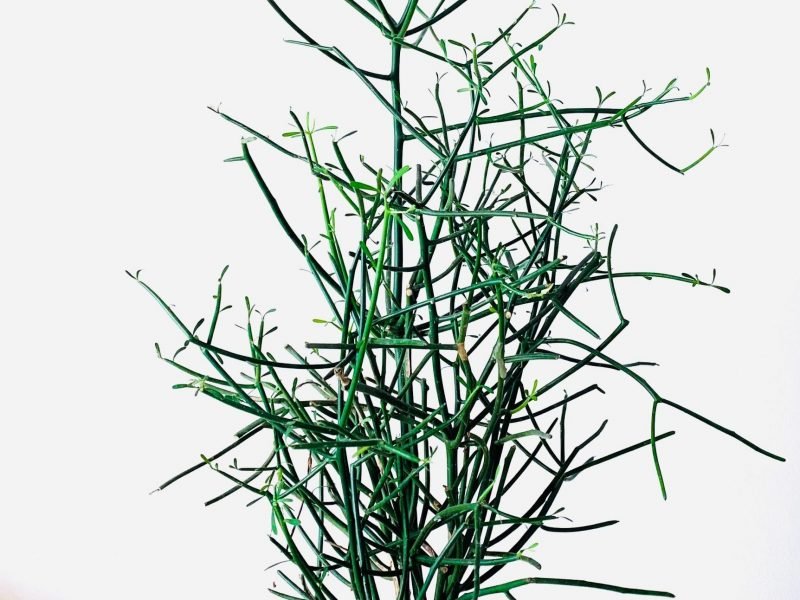
The Pencil Cactus gets its name from its distinctive, pencil-like branches. These are slender, cylindrical, and greenish in color, giving the plant an appearance somewhat akin to a bunch of elongated, upright green pencils.

Size:

While in its natural habitat, the Pencil Cactus can grow to remarkable heights of up to 30 feet. However, when kept as an indoor plant, it typically reaches a more manageable height of 4 to 6 feet.

Growth Habit:

This plant has a fast growth rate and tends to grow in a bushy, vertical manner. It’s known for its sprawling habit, which can be controlled with regular pruning.

Flowering:

Rarely, the Pencil Cactus may flower indoors, producing inconspicuous blooms. However, this is not a common occurrence and should not be expected in home environments.

Latex:

A key characteristic of the Pencil Cactus is the milky white latex it produces when cut or broken. This latex is toxic and irritating to skin and eyes, so caution is required when handling the plant.

Light Requirements for Pencil Cactus

Native to regions of Africa, this succulent member of the Euphorbia family thrives best in beight light conditions, mirroring its natural habitat. However, it also displays a surprising level of adaptability, making it an excellent choice for indoor gardening.

Optimal Light Conditions

The Pencil Cactus plant, like all succulents, loved sunlight. It flourishes best when exposed to bright but indirect light. But while it enjoys sunlight, a lot of direct and intense light can cause scorching.

Indoor Lighting for Pencil Cactus

The Pencil Cactus can survive under artificial light. Fluorescent lights, particularly those designed for plants, can be an excellent alternative.

Adapting to Lower Light

The Pencil Cactus can also adapt to lower light conditions. If necessary, it can survive in partial shade or in rooms with less sunlight. However, growth may be slower in these conditions and the vibrant green color may not be as pronounced.

Note: Pencil Cactus, like other Euphorbia species, can become “leggy” or elongated when they don’t receive enough light. If you notice this, consider moving your plant to a brighter location.

Watering Needs of Pencil Cactus

Although it can withstand periods of drought, it still requires a certain level of care when it comes to hydration. Knowing the right watering technique is crucial for the health of your Pencil Cactus.

The first rule of thumb is to always remember that less is more when watering this plant. Excessive watering can lead to a condition called root rot, which can be fatal for your Pencil Cactus pretty quickly. To avoid this issue, ensure that your plant is never left in standing water.

Tip: Always check the moisture level of the soil before watering your Pencil Cactus. If the top layer of the soil is dry, it is time to water.

Following a regular watering schedule is not recommended for the Pencil Cactus. Instead the frequency of watering should be determined by the plant’s environment and the season. This means some months you’ll be watering more than others. Here’s a general guideline to help you get started:

  • Summer: Water your Pencil Cactus once every two weeks. The warmer temperatures will cause the water to evaporate quicker.
  • Spring and Fall: Watering once a month is usually sufficient. These seasons have milder temperatures, so the soil stays moist for a longer period.
  • Winter: Limit watering to once every 6 weeks. The plant is dormant during this season and requires less water.

Remember, these are just guidelines. You should always check the soil’s moisture level before watering.

Pencil Cactus Humidity Requirements

The Pencil Cactus thrives in dry conditions and it’s not a big fan of high humidity levels.

Generally, the Pencil Cactus prefers humidity levels that range between 40% and 50%. Anything significantly higher or lower can potentially stress the plant, leading to yellowing of leaves or drooping growth.

How to Monitor Humidity Levels

The easiest way to monitor the humidity around your Pencil Cactus is by using a digital hygrometer. This device measures the relative humidity in the air.

Does Misting Help?

Unlike many houseplants, the Pencil Cactus does not benefit from misting. In fact, misting can lead to leaf rot and other fungal diseases due to the lingering moisture on the plant. The Pencil Cactus is a succulent, meaning it stores water in its stems and prefers to be dry most of the time. So, it’s best to avoid misting this one!

Temperature Considerations

This plant prefers warmer, desert-like conditions but although high temperatures are not a problem for this succulent, that doesn’t mean it’s completely indestructible.

Daytime Temperatures

During the day, the Pencil Cactus thrives best in temperatures ranging from 70 to 90 degrees Fahrenheit. This warmth mimics the plant’s natural environment, promoting optimal growth and vitality. However, make sure your plant is not exposed to direct, scorching sun rays, as it can cause sunburn to the leaves. This will show up as sickly yellow or brown patches.

Nighttime Temperatures

At night, the Pencil Cactus can handle a drop in temperature. Ideally, keep the temperature around 50-60 degrees Fahrenheit but this plant is versatile and can handle occasional dips below this range. Just ensure it doesn’t get too cold, as frost can severely damage your plant by causing the water stored in the cells to freeze.

Choosing the Best Soil Type

Your Pencil Cactus requires well-draining soil to thrive and the primary objective is to prevent water from pooling around the roots, which can lead to root rot.

Components of an Ideal Soil Mix

A well-balanced soil mix for a Pencil Cactus should include the following components:

  • Coarse sand: This helps improve soil drainage and mimics the natural gritty soil the plant grows in the wild.
  • Peat moss or coco coir: These elements help maintain a certain level of moisture without retaining excess water.
  • Perlite or pumice: They add air pockets to the soil, helping with drainage, aeration and preventing soil compaction.

You can create your own blend at home or purchase a pre-made cactus or succulent mix from a garden store.

Soil pH

Pencil Cacti prefers slightly acidic to slightly alkaline soil, with a pH range between 6.0 and 7.5. Most cactus and succulent soil mixes fall within this range, but it’s always a good idea to check the pH before planting, especially if you’re preparing your own mix. You can easily test the pH using a simple home soil test kit available at most garden centers.

Pencil Cactus Repotting Guide

Repotting a Pencil Cactus plant is a crucial aspect of its care and maintenance. Though these plants are relatively low-maintenance and can thrive in the same pot for years, there comes a time when they outgrow their current home and need a larger space to expand their root system.

Repotting not only provides the plant with more room to grow, but also revitalizes the soil and promotes healthier, more vibrant growth.

When to Repot

Typically, Pencil Cactus plants need to be repotted every two to three years. However, this timeline can vary depending on the plant’s growth rate and the size of the current pot.

Signs that your plant may need repotting include a slowdown in growth, roots growing out of the drainage holes, or the plant becoming top-heavy and tipping over. If you notice any of these signs, it’s likely time to repot.

Repotting Process

  1. Prepare the New Pot: Choose a new pot that is one to two sizes larger than the current one and ensure it has good drainage to prevent waterlogging. Fill the pot with a well-draining cactus or succulent potting mix.
  2. Remove the Plant: Carefully remove the Pencil Cactus from its current pot. It’s a good idea to wear thick gloves to protect your hands from the plant’s spines.
  3. Trim the Roots: Prune any dead or overgrown roots. This promotes healthier growth and helps the plant adapt to its new home more easily.
  4. Place the Plant: Place the plant in the new pot, making sure it is centered and upright. Add more potting mix if necessary, but avoid packing it too tightly.
  5. Water Thoroughly: Once the plant is securely in its new pot, water it thoroughly. This helps settle the plant and the potting mix.

Fertilizing your Pencil Cactus

The Pencil Cactus is a low-maintenance houseplant that requires minimal fertilization but it can be really helpful in low doses to maintain and promote healthy growth.

As a general rule, your Pencil Cactus should be fertilized once every 1-2 months during the growing season, typically from spring through the end of summer. During the winter, it’s best to cut down on fertilization completely, as it’s the plant’s dormancy period and excessive nutrients can actually cause more harm than good.

Choosing a Fertilizer

Opt for a balanced, water-soluble fertilizer. This means the N-P-K ratio — nitrogen (N), phosphorus (P), and potassium (K) — should be equal, such as 10-10-10 or 20-20-20. Nitrogen promotes leaf growth, phosphorus aids in root and flower development, and potassium contributes to overall plant health.

Fertilization How-To

  1. Dilute the fertilizer: Dissolve the recommended dose of fertilizer in water according to the product’s instructions. We often tend to dilute it even more than recommended just to be on the safe side and avoid overdoing it.
  2. Apply the fertilizer: Pour the diluted fertilizer over the soil, ensuring it’s evenly distributed. Remember to avoid getting fertilizer on the plant’s leaves or stems, as this can cause issues if done repeatedly.
  3. Rinse the soil: Every so often, deeply water your Pencil Cactus to flush out any excess salts from the fertilizer.

Propagating your Pencil Cactus

Propagation is a fantastic way to expand your collection of houseplants or share them with friends and family. The process is pretty straightforward thankfully but here’s a brief step-by-step to help you along the way.

Step 1: Choose a Healthy Stem

Identify a healthy and mature stem from your Pencil Cactus. The stem should ideally be several inches long to allow for the best possible start for your new plant.

Step 2: Make a Clean Cut

Using a clean, sharp knife or pruners, cut the selected stem from the plant. Ensure you make a clean cut to minimize damage. It’s important to note that the sap of the Pencil Cactus is toxic, so you should handle it with care and avoid contact with your skin and eyes.

Tip: Always wear gloves and protective eyewear when handling a Pencil Cactus to protect yourself from its poisonous sap.

Step 3: Let it Heal

After you cut the stem, it needs to form a callus over the cut surface before you plant it. This can take anywhere from a week to a couple of weeks, depending on the environmental conditions. Place the stem in a dry, shaded area and allow it to heal.

Step 4: Plant the Stem

Once the cut surface has fully healed, you can plant the stem in a pot filled with a well-draining cacti or succulent mix. Place the stem approximately one inch deep into the soil and firm the soil around it.

Step 5: Provide Appropriate Care

Water the newly planted stem sparingly until new growth appears, and gradually increase watering as the plant grows. Ensure it receives plenty of indirect sunlight and continue caring for it as you have been with the mother plant!

Flowers on a Pencil Cactus

Unlike many other common houseplants, the Pencil Cactus doesn’t follow a routine yearly flowering cycle. Instead, it blooms sporadically and infrequently.

During the blooming phase, the Pencil Cactus produces small, yellowish-green flowers. These delicate blossoms are a sight to behold but are not often seen in typical indoor conditions. The flowers are usually clustered towards the ends of the plant’s pencil-like branches, providing a striking contrast to its otherwise green hue.

It’s important to know that even with perfect care, some Pencil Cacti may never flower. This is simply due to the plant’s unique and unpredictable blooming nature. Do not worry if your plant doesn’t bloom – as long as there are no signs of distress, this isn’t a cause for concern.

Pencil Cactus Toxicity

The Pencil Cactus contains a milky, latex-like sap within its branches that is highly toxic.

This sap is known to contain various compounds, among them the diterpene ester phorbol, which causes irritation. Contact with this sap can lead to a range of symptoms, some of which are rather severe.

  1. Direct contact with skin: If the sap comes into direct contact with the skin, it can cause irritation, redness and swelling. In some cases, it may lead to a severe rash or burns.
  2. Eye exposure: If the sap gets into the eyes, it can cause severe pain and irritation. In extreme cases, it can lead to temporary or permanent blindness.
  3. Ingestion: If ingested, the sap from the Pencil Cactus can cause vomiting, abdominal pain, and in severe cases, it can even impair the respiratory system leading to difficulty in breathing.

As they are toxic plants, it’s crucial to handle the Pencil Cactus with care. Always wear gloves when pruning or handling the plant, and ensure it’s kept out of reach from children and pets. In case of accidental exposure to the sap, immediately wash the affected area with water and soap and seek medical attention if symptoms persist or are severe.

Pruning and Trimming Techniques

When to Prune

Generally, the best time to prune your Pencil Cactus is during or just before its growing season, which is typically in the late spring to early summer. However, if you notice any diseased or damaged branches, it’s advisable to prune them immediately, regardless of the time of year.

Pruning Techniques

Begin by inspecting your plant thoroughly. Look for branches that are overgrown, discolored, or damaged. Once you’ve identified the branches that need to go, follow these steps:

  1. Put on protective gloves: The sap of the Pencil Cactus is toxic and can cause irritation, so it’s crucial to wear gloves before you start pruning.
  2. Use a sharp, sterilized pair of scissors or pruners: A clean cut helps the plant heal faster and reduces the risk of disease.
  3. Make a clean cut at an angle: This allows the sap to drain out instead of pooling at the cut, which could lead to rot.
  4. Dispose of the cut branches carefully. Don’t compost them, as the sap can linger and potentially harm other plants or animals.

Pencil Cactus FAQs


Common Problems with your Pencil Cactus

Fiddle and Thorn is a participant in the Amazon Services LLC Associates Program, an affiliate advertising program designed to provide a means for sites to earn advertising fees by advertising and linking to Amazon.com

Take our houseplant survey!

Quickly respond to our 30 second houseplant survey and get 75% off our Complete Houseplant Care eBook!

Take the Survey

No thanks…

The Ultimate Peacock Plant Guide | Maintenance and Care

Last Updated: October 16, 2023

Peacock Plant Leaves

Peacock Plant Leaves

Introduction to the Peacock Plant: Origin and Characteristics

Native to the tropical forests of Brazil, the Peacock Plant, also known by its scientific name Calathea Makoyana, is loved for its beautiful and colorful foliage.

The Peacock Plant has large, rounded leaves that display a fascinating color palette, a main characteristic of the Marantaceae family. The tops of the leaves feature a vibrant green with darker green, feather-like markings, akin to a peacock’s tail feathers, hence the name. The undersides are a contrasting deep purple, which can add an unexpected pop of color.

Key Characteristics of the Peacock Plant

  • Size: The Calathea makoyana typically grows to a height of 2 feet, with a similar spread. Its relatively compact size makes it perfect for indoor cultivation.
  • Foliage: Large, rounded leaves with striking green and purple colorations, boasting a feather-like pattern.
  • Flowers: Though not often, this plant can produce small, insignificant white flowers which are typically hidden beneath the leaves.
  • Growth Rate: The Peacock Plant is a relatively slow grower, often taking several years to reach its mature size.

Watering Needs of Peacock Plants

Calathea Makoyana have specific watering needs to thrive. As tropical plants, they require a delicate balance of being neither too dry nor too soggy. Finding this balance can be a bit tricky for new plant parents but once you have the hang of it, it can become quite easy to manage.

First things first, you need to understand that Peacock Plants favor moist soil. They don’t like their soil to completely dry out for expended periods of time, nor do they like it being waterlogged. So, the key is consistency in maintaining a moist soil environment without drowning the roots.

How to Water Your Peacock Plant

  1. Check the soil: Before you water the plant, make sure the top inch of the soil is slightly dry to the touch. This ensures that the plant isn’t overwatered and is ready to be watered again.
  2. Water evenly: When you water your plant, do so evenly around the base. This ensures that the water isn’t concentrated in one spot. You also want to avoid splashing the leaves as this can cause them to rot.
  3. Drainage is key: Always use a pot with a drainage hole and empty the saucer right after watering. This prevents water from sitting at the bottom and causing root rot.
  4. Use lukewarm water: Peacock plants prefer lukewarm water. Cold or hot water can shock the plant and cause leaf damage.

Remember, every plant is unique, and your Peacock Plant may need more or less water depending on its maturity, size, light level and many other environmental factors. Pay attention to its appearance and adjust your watering as needed. If the leaves are yellowing, it can be a sign of overwatering, while brown, crispy edges may indicate underwatering.

Peacock Plant Light Requirements

These plants thrive best in medium to low indirect light. This is because they are native to the forest floors of Brazil, where they receive dappled light filtering through the tree canopy.

Direct sunlight must be avoided! It can scorch and damage the beautiful leaves of your Calathea makoyana. However, if your space doesn’t get much natural light, they can also do well under fluorescent lights, making them perfect for office or basement settings.

Light conditions can directly impact the vibrancy of your Peacock Plant’s foliage. Less light leads to less vibrant foliage, while too much light can cause leaf burn.

Temperature and Humidity Requirements

Temperature

Peacock Plants prefer temperatures that range from 60 to 75 degrees Fahrenheit and are sensitive to sudden temperature fluctuations. So it’s essential to maintain a stable environment for them.

It’s worth noting that these plants can suffer if the temperature drops below 60 degrees, or rises above 80 degrees. This is something you need to consider if you’re planning to grow these plants in a region with extreme weather conditions and make sure to monitor changes with a digital thermometer.

Humidity

When it comes to humidity, Peacock Plants can be quite demanding. Ideally, the humidity level should be above 60% which is quite a high humidity level.

If your living space doesn’t naturally offer such humidity, you might need to use a humidifier, or place the plant on a tray filled with water and pebbles. Regular misting can also be an excellent way to maintain the necessary humidity levels.

Fertilizing Your Peacock Plant for Healthy Growth

The Ideal Fertilizer

When it comes to feeding your Peacock Plant, choose a balanced, water-soluble fertilizer. It should ideally be high in nitrogen content, as this will promote lush foliage growth. A 20-20-20 mix works well, meaning it has equal parts of nitrogen, phosphorus, and potassium. This is often displayed as the NPK score.

Fertilizing Schedule

Once you’ve chosen the appropriate fertilizer, it’s time to establish a feeding schedule. Apply the fertilizer every 3-4 weeks during the growing season. However, avoid fertilizing in the winter months, as this is typically a rest period for the plant.

Application Process

Apply the fertilizer to the base of the plant, making sure to avoid the leaves. Remember, always water the plant thoroughly after each application to help distribute the nutrients evenly throughout the soil.

While you might be tempted to over-fertilize your plant for quicker results, it’s essential to avoid this easy mistake. Over-fertilization may lead to salt build-up in the soil, which can harm the plant’s roots and ultimately its overall health. Signs of overfertilization are yellow leaves and ironically smaller and slower growth.

Pruning a Peacock Plant: Why, When and How

A key aspect of maintaining the lushness and vibrancy of your plant involves regular pruning. Pruning is not just a cosmetic task; it also helps to promote the health and growth of your plant.

Why Prune a Peacock Plant?

Pruning serves three primary purposes:

  1. Health: Removing damaged or diseased leaves helps to prevent further infection and decay.
  2. Growth: Pruning encourages denser growth and can help maintain the plant’s bushy shape.
  3. Aesthetics: Regularly trimming your Peacock plant keeps it looking its best.

When is the Best Time to Prune?

Peacock plants are usually pruned during the spring or summer, which are its active growing seasons. However, if you see a damaged leaf or stem at any time of the year, don’t hesitate to prune it.

How to Prune a Peacock Plant

Here’s a simple guide to help you prune your Peacock plant:

  1. Ensure your pruning shears are clean and sharp to avoid causing damage or spreading disease and bacteria.
  2. Gently remove the damaged or yellowed leaf by cutting it off at the base of the stem. Be careful not to cut into the main stem of the plant.
  3. If a leaf is partially damaged, you can also cut off the damaged part of the leaf, leaving the healthy part intact.
  4. After pruning, clean your shears with soapy water or rubbing alcohol to prevent the spread of disease.

Repotting Guide

When to Repot

Peacock Plants generally don’t require frequent repotting as they are quite slow growing and prefer to be slightly root-bound. This means that you should only consider repotting when the roots start to outgrow the pot. Typically, this will be every 2-3 years.

Choosing the Right Pot

Selecting the right pot for your Peacock Plant is crucial. A pot that’s too large can lead to issues such as waterlogged soil and instability, while a pot that’s too small can restrict growth. The ideal pot should be 1-2 inches larger in diameter than the current one and have drainage holes to prevent water accumulation at the bottom.

Steps to Repot your Peacock Plant

  1. Prepare the New Pot: Ensure your new pot is clean and has ample drainage. Fill it around one-third full with fresh, high-quality potting soil.
  2. Remove the Plant: Carefully remove your mother plant from its current pot. Be gentle to avoid damaging the root system too much. Don’t worry though if you break the odd root here and there as your plant will be able to recover just fine.
  3. Inspect the Roots: Before placing your plant in its new home, inspect the roots. If you notice any rotten or dead roots, remove them with a clean, sharp tool.
  4. Place the Plant: Place your plant in the new pot. The top of the roots should be just below the pot rim.
  5. Add Soil: Fill in the space around the plant with more potting soil, pressing down gently to eliminate air pockets.
  6. Water Thoroughly: After repotting, water your Peacock Plant thoroughly to help it settle into its new home.

Repotting can be stressful for plants. Give your Calathea makoyana a bit of extra care and attention after the repotting process to help it adjust to its new environment and don’t be too alarmed if you notice it being a little sad for a day or two.

Choosing the Right Soil and Pot for a Peacock Plant

When it comes to choosing the right soil and pot for your Peacock Plant, there are a few key factors you’ll want to consider. Achieving the right balance will ensure your plant thrives!

Soil Selection

The Calathea makoyana is a tropical species that prefers well-draining, fertile soil. A high-quality, peat-based potting mix is often the best choice. This type of soil retains moisture without becoming waterlogged, an important feature since these plants love humidity but are susceptible to root rot.

  • Peat-based potting mix: Retains sufficient moisture whilst allowing excellent drainage. Coco coir is another alternative if you’re looking for something a little more sustainable.
  • Slightly acidic to neutral pH: Aim for a soil pH between 6.0 and 7.0, as the Peacock Plant prefers these conditions.

Pot Selection

Just as important as the soil, choosing the right pot for your Peacock Plant can greatly influence its health and growth. The pot needs to provide ample room for the roots, as well as sufficient drainage to prevent waterlogging.

  • Drainage: Choose a pot with multiple drainage holes at the bottom. This will help prevent water from sitting in the bottom of the pot, which could lead to root rot.
  • Material: Ceramic or clay pots are often ideal as they allow for good air circulation and excess water can evaporate out of the sides as well as the drainage holes. However, plastic pots can also be used if they have proper drainage.

Peacock Plant Toxicity

Peacock Plants, also known as Calathea makoyana, are safe for both cats and dogs. The American Society for the Prevention of Cruelty to Animals (ASPCA) lists this species as non-toxic. However, this doesn’t mean that your furry friends should feast on your plants as ingesting any part of the plant could still lead to mild digestive upset.

For humans, the Peacock Plant is also considered non-toxic. Individuals with sensitive skin may want to wear gloves when handling the plant, as sap from the stems and leaves could potentially cause skin irritation.

Here are some precautions to consider:

  • Keep the plant out of reach: Even non-toxic plants can cause discomfort if ingested. It’s best to keep your Peacock Plant in a location where pets and children can’t easily access it.
  • Wear gloves: If you have sensitive skin, wearing gloves while handling the plant can help prevent potential skin irritation.
  • Avoid consumption: Despite being non-toxic, the Calathea makoyana is not meant for consumption. Eating the leaves or stems is not recommended for humans or pets.

Common Pests and Diseases to Watch Out For

As a Peacock Plant owner, it’s essential for you to be aware of the common pests and diseases that can threaten the health of your plant. These can range from small insects to various types of fungi. Understanding these threats and early warning signs will allow you to take preventative measures and quickly address any issues that arise.

Common Pests

Peacock Plants can be susceptible to a variety of pests. Here are a few you should keep an eye out for:

  • Spider Mites: These tiny pests can cause significant damage to your Peacock Plant. Their telltale sign is the faint webbing they leave on the undersides of leaves.
  • Scale: Scale insects appear as small, bumpy brown spots on the plant’s leaves. They can cause wilting, yellowing, and stunted growth.
  • Aphids: These small, soft-bodied insects can cause distorted and yellowed leaves. They are usually found on the undersides of leaves and can be green, yellow, brown, red, or black in color.

Common Diseases

Peacock Plants can also be affected by various diseases, including:

  • Root Rot: This disease is usually caused by consistent overwatering. The main symptom is the blackening and softening of the plant’s roots which can very quickly cause visible and irreversible issues across the leaves as your plant can no longer get moisture and nutrients from the roots.
  • Powdery Mildew: This fungus appears as a white, powdery coating on the leaves of the plant. It can cause the leaves to become discolored and fall off.
  • Leaf Spot: Caused by a variety of fungi and bacteria, leaf spot diseases cause dark spots or patches on the leaves of the plant.

Remember, early detection is the key to saving your plant from any of these ailments. So, always keep a close eye on your Peacock Plant and other houseplants.

Cleaning your Peacock Plant

Keeping your Peacock Plant clean is not just a matter of keeping it looking fresh. It’s important for the overall health of your plant as dust and grime can clog the stomata (pores) of the plant leaves and hinder its photosynthesis process. Here are some best practices to keep your plant clean:

Regular Dusting

Use a soft, damp cloth to gently clean the leaves of your plant. You should do this on a regular basis, ideally once a week. Be gentle and careful not to damage the leaves while dusting – we always use the other hand to place behind the leaf to give it support when wiping down. This can help to avoid any breakages.

Deep Cleaning

Every once in a while, your Peacock Plant may need a more thorough cleaning. You can achieve this by giving it a gentle shower with lukewarm water. Be sure to let the plant drain completely before returning it to its usual spot. This should be done once or twice a year but more if your plant is in a particularly dusty spot.

Inspect for Pests

While cleaning, it’s a good opportunity to inspect your plant for pests. Look out for tiny black or brown spots, web-like substances, or unusual leaf discoloration. If you spot any of these signs, it may indicate a pest infestation.

Peacock Plant FAQs

Quick and simple answers to the most common questions we get about caring for a Peacock Plant.


Common Problems with your Peacock Plant

Here are some common issues that you might run into. It’s important to diagnose any issues early to give your plant the best chance of bouncing back.

Fiddle and Thorn is a participant in the Amazon Services LLC Associates Program, an affiliate advertising program designed to provide a means for sites to earn advertising fees by advertising and linking to Amazon.com

Take our houseplant survey!

Quickly respond to our 30 second houseplant survey and get 75% off our Complete Houseplant Care eBook!

Take the Survey

No thanks…

Peace Lily Losing Leaves | Causes and Solutions

Last Updated: June 26, 2022

Loved for their luscious foliage and delicate white flowers, if your Peace Lily is losing leaves then this could mean something serious. Luckily, there are only a few causes of leaf drop with Peace Lilies so it makes diagnosing the issue a lot simpler than with some other problems. If your Peace Lily is losing leaves quite rapidly, then watering issues are most probably to blame. However, it could also simply be a sign of natural ageing so it’s important to know the difference so you know how or if you need to change your watering routine.

Waterlogged soil can cause your Peace Lily to start losing leaves

Too much water is a common factor when it comes to Peace Lily plants losing their leaves. Whilst they might not be as fussy as many other houseplant types, they will still suffer if sat in waterlogged soil for too long. Overwatering can lead the roots to turn soft and mushy which starves your plant of nutrients. This will then lead your Peace Lily to start losing some of its leaves to conserve energy.

To determine whether overwatering is the reason your Peace Lily is losing leaves, check the moisture levels in the soil immediately using a moisture meter, or the finger/chopstick method. If the soil is waterlogged then replace it with dry high-quality potting mix. You might be tempted to just wait for the potting mix to naturally dry out but this just risks even more leaves falling off your plant.

Whilst you are replacing the potting mix, cut off the rotten roots as this focuses your plant’s energy on growing new healthy roots. To prevent overwatering from causing your plant to start losing leaves again in future, adjust your watering schedule so you aren’t watering your Peace Lily as often as you were before. Make sure the potting mix has time to dry out between waterings.

Underwatering can also be a factor

Another common cause of leaf drop in Peace Lilies is a consistent lack of water. Although we have established above that overwatering is also a killer, too little water can cause some of the same problems to occur.

You can tell if your plant is losing leaves because it’s too dry by looking at the way in which the dry parts have developed on the leaves that have fallen off your plant. If there are brown spots are at the edge of the leaf, rather than in the middle, this is a sign of a dry plant. Another thing to look out for is which leaves are turning brown. If you find there are dry spots on leaves throughout the plant, from top to bottom, this also points to dry soil.

To rectify the issue and stop your Peace Lily from losing leaves, water your plant a little once a day for a week. This will gradually moisten the soil and avoid any shock being caused by a sudden change in environment. If you water your plant too much at the beginning, it can actually lead to more leaves falling off as a response to the stress.

It could just be natural ageing

As your Peace Lily matures, it may occasionally lose a lower leaf as a natural sign of your plant maturing. This is absolutely nothing to worry about and isn’t a consequence of anything you did wrong or anything in the environment which needs to change.

Make sure to keep track of how many leaves your Peace Lily is losing as if it’s more than a couple every year then there is definitely a problem with watering. There is no harm in giving the soil and roots a once over every now and again to check for signs of root rot and keep an eye on any changes in light or temperature that may be affecting its health.

Those are the three main reasons why Peace Lilies lose their leaves. If watering issues are the cause of your Peace Lily losing leaves, then you need to act quickly to solve the problem and stop any more leaves from falling off. The earlier you catch the problem, the easier and quicker it will be to fix it. But don’t give up on your plant, Peace Lilies are hardy and can bounce back from a lot so be patient and ensure your plant is getting the right care and it should bounce back.

Check out our Peace Lily care guide for everything you need to know to keep your plant thriving.

Fiddle and Thorn is a participant in the Amazon Services LLC Associates Program, an affiliate advertising program designed to provide a means for sites to earn advertising fees by advertising and linking to Amazon.com

Take our houseplant survey!

Quickly respond to our 30 second houseplant survey and get 75% off our Complete Houseplant Care eBook!

Take the Survey

No thanks…

Peace Lily Care

Last Updated: September 6, 2022

Basic Peace Lily Care

You’ll be very pleased to know that the Peace Lily can actually adapt well to a real range of light levels so are happy in bright light as well as low light corners of your home.

And when it comes to watering, they are pretty tolerant of soggy and dry soil and won’t die on you immediately if one of the extremes occurs. One thing to note is that they will droop down quite significantly when in need of water so that’s a good way to help establish a watering routine that works for your Peace Lily.

Below you will find our complete Peace Lily care guide to help you look after your plant and spot any issues that may occur.

Detailed Peace Lily Care

Peace Lilies can handle many lighting conditions

Although they’re native to brighter areas, the Peace Lily can handle a wide variety of lighting conditions. They’ll be happy in any spot, dim or bright. It’s worth noting however that they’ll only flower in brighter areas.

Watering your Peace Lily is easy

As they’re not particular picky, you can water your Peace Lily relatively sparingly. It won’t react badly if you miss a watering every so often. You can also just pop them in the shower once a week to clean the leaves off at the same time.

Ideal placement for your Peace Lily

If you’re lucky enough to have a bathroom that gets good light throughout the day, it would be the perfect spot for your Peace Lily. The added humidity from showers and running water will surely be appreciated.

Peace Lilies love humidity

Being native to the rainforest, Peace Lily very keen on high humidity. To make it easy you can simply mist the plant a couple of times a week, or even place it on a pebble bath. We have a great post all about raising the humidity for your plants if you want to find out more.

Peace Lilies are poisonous to pets

Watch out if you have have a cat or dog around as unfortunately Peace Lilies are toxic to dogs, cats and other animals! Pets that ingest the leaves will start to salivate and paw at their mouths very quickly, so give this one a miss if you have a pet in the house.

Average room temperature is perfect for your Peace Lily

One thing that makes Peace Lilies easy to care for is that they thrive in the natural temperatures of your home. Avoid placing it near any drafty windows or doors though as the cool air from outside can cause shock for the plant.

Propagate your Peace Lily through division of the mother plant

Unfortunately, Peace Lilies cannot be propagated from a leaf or stem cutting. Instead, the best way to propagate a Peace Lily is through diving the mother plant into several smaller plants. Make sure each section has a good chunk of the root system and be careful when separating the roots as you don’t want to cause too much damage.

Peace Lily Care FAQs

Common Issues for Peace Lilies

Although Peace Lily care can be quite easy, there are several common issues that happen if your plant isn’t fully happy with its care or environment. It is important to spot the warning signs so you know how to help nurture your plant back to full health.

Fiddle and Thorn is a participant in the Amazon Services LLC Associates Program, an affiliate advertising program designed to provide a means for sites to earn advertising fees by advertising and linking to Amazon.com

Take our houseplant survey!

Quickly respond to our 30 second houseplant survey and get 75% off our Complete Houseplant Care eBook!

Take the Survey

No thanks…

Overwatering a Peace Lily (Signs, Causes and Solutions)

Last Updated: March 13, 2023

Peace Lilies are loved for their luscious green leaves and unique white flowers. But it’s not just their appearance that makes them a great houseplant as they are pretty hardy and adaptable too.

However, when it comes to watering, if you have overwatered your Peace Lily it can cause some serious and irreversible issues. In this article, we will go through what to look out for to suggest you may have overwatered your Peace Lily, different causes of an overwatered Peace Lily and how you can treat the issues to bring your plant back to full health.

Symptoms of an overwatered Peace Lily

Yellow leaves

One of the most common ways to spot that your plant is suffering from overwatering and waterlogged soil is yellow leaves. These will often look quite sickly and feel quite soft to touch. The yellowing can start off as small spots before gradually developing into larger patches.

Yellow leaves are also a common sign of natural ageing so how do you tell the difference? Well, when a plant naturally sheds a leaf the entire leaf will turn quite a pale yellow. This tends to happen to the lower leaves, one at a time. With overwatering, this can impact leaves across the plant and will often start showing up on several different leaves, rather than just one at a time.

Drooping leaves

Alongside yellow patches forming on the leaves, an overwatered Peace Lily will start to droop down quite a bit. It’s worth noting though that this on its own is what they plant does when it is thirsty, so always check the soil before changing anything about how you water your plant.

The reason why drooping leaves are a sign of both an underwatered and an overwatered Peace Lily is that once the roots start to rot, they are unable to take up any moisture, which creates a thirsty plant.

Root rot

When the soil becomes waterlogged as a result of overwatering, the roots of your Peace Lily will begin to rot. We recommend inspecting the root system if you’re not sure what is going on because rotten roots will appear very dark in colour and will be soft and mushy to touch. They will also likely smell pretty bad which is another way you can diagnose overwatering. Underwatered roots on the other hand will be crispy to touch and light in colour.

We’ve written an entire guide on how to diagnose, treat and prevent root rot if you want to learn more.

Wilting leaves

If your Peace Lily has begun to wilt, then this suggests the issue is quite advanced. Wilting is a lot more pronounced than drooping and often means the entire leaf has become limp and shrivelled up. Don’t give up on your Peace Lily too quickly though as they can be quite dramatic when it comes to drooping and wilting and can bounce back pretty quickly once given what they need.

Mold growing on the soil

You might also spot mold or fungal growth on the top of the soil which can also be a sign that you are overwatering your plant. Mold and fungal growth thrives in damp and dark conditions so keep a look out. This will often appear as white fuzzy mold on the top of the soil but you may also see some pink, white or orange fungal growth too. This isn’t often damaging to your plant’s health in the short term but something that you need to remove as soon as you spot it.

Causes of an overwatered Peace Lily

Watering too frequently

If you are watering your Peace Lily so often that there isn’t enough time for the potting mix to dry out, then this will lead to root rot and other consequences of overwatering. Whilst Peace Lilies don’t like super dry soil, they do need it to mostly dry out between waterings.

Make sure that you are monitoring and checking the moisture levels in the soil before watering. We recommend against using strict watering schedules because they don’t take into account environmental changes such as warmth and light levels that impact how quickly the soil dries out.

You want to be using either a moisture meter to monitor soil moisture or the chopstick method to know when to water your Peace Lily and avoid overwatering.

Watering too deeply

It might not be the frequency at which you are watering your Peace Lily that is the issue, but how much water you are giving it each time. The best way to avoid watering too deeply is to remove any water from the saucer around 15 minutes after watering.

This allows your Peace Lily to absorb as much water as it needs, but avoids it sitting in a puddle of water for the next few days. It also helps to prevent the water from stagnating which can often begin to smell pretty bad. So it’s also to your benefit to remove excess water!

Drainage issues can lead to an overwatered Peace Lily

You might be watering your Peace Lily the right amount at the right intervals, but poor drainage in the pot can still lead to an overwatered plant. The first thing to check here is that your pot has drainage holes as without these, excess water can’t escape out of the pot and will just sit around the roots.

Secondly, you need to check that the drainage holes aren’t blocked and that water can freely flow out of them.

To increase drainage, adding perlite to the soil is always a good idea and you may want to switch over to terracotta pots if your Peace Lily is in a plastic one. Terracotta pots are permeable which means excess water can escape out of the side and evaporate off. Plastic pots, however, are not permeable so every drop of water will stay in the soil.

Using a pot that is too big for your plant

One often forgotten cause of an overwatered Peace Lily is when your plant is in a pot that is way too big. The reason this is damaging is that the soil vs root ratio is off and the soil will absorb a lot more water than when you’re using a smaller pot. This means the soil takes a lot longer to dry out, increasing the risk of root rot. There are also other issues attached to using a large pot, including a lack of root stability.

How to treat an overwatered Peace Lily

  1. Check how much damage has been done

    The first thing we would do is remove your Peace Lily from its pot to be able to inspect the roots and check the soil moisture. This will help you assess what needs to be done and how extreme you need to be with your measures

  2. Trim off any rotten roots

    If your plant is suffering from root rot, then we recommend trimming away any rotten roots. Rotten roots appear dark brown or black in colour and will be soft to touch. These roots will not return to normal health so you’ll need to trim them away. By removing them, it allows your plant to focus on growing new healthy roots, rather than wasting its energy trying to revive its dying ones.

  3. Replace waterlogged soil

    If the soil is still waterlogged or soggy then replace it straight away. Don’t wait for it to naturally dry out as this simply risks more damage being done. You want to be very careful when removing the old potting mix from around the roots to ensure that you don’t damage it further.

How to prevent overwatering your Peace Lily

Now that you’ve trimmed off any rotten roots and replaced any waterlogged potting mix, it’s time to ensure that you’re able to treat the issue long-term and prevent it from happening again.

Adjust your watering schedule

You need to cut back either how frequently you are watering your Peace Lily or how deeply. Adjusting one of these factors will help give the soil enough time to properly dry out between waterings.

Using a moisture meter will be a real help here as you’ll be able to know exactly how much moisture is in the soil. This will help you assess when and how much to water.

There are other methods to help you monitor soil moisture (though slightly less reliable). These include the chopstick method and lifting your plant. Note that the lifting method is only really a good idea with small and medium houseplants as you don’t want to hurt your back!

Ensure good drainage

You need to keep an eye on the drainage levels over the next few weeks and months to ensure that the drainage holes aren’t getting blocked and that any excess water can flow out from the pot into a saucer. This will prevent the roots from sitting in pools of water, causing them to rot.

Downsize your Peace Lily’s pot

Whenever you repot your Peace Lily, you should only be increasing the pot size by a couple of inches. Whilst it can be tempting to upgrade to a much larger pot so that you don’t have to repot for a while, this can be damaging. Peace Lilies don’t have a large and robust root system like a lot of other houseplants so don’t need a really large pot to grow in.

We recommend taking your Peace Lily out of its pot briefly to see how the soil-to-root ratio feels. If there is an abundance of soil then you might want to think about repotting your plant to a smaller pot. This reduces the water intake and time it takes for it to dry out which significantly reduces the risk of root rot and overwatering your Peace Lily.

Frequently Asked Questions

We hope that our guide to diagnosing, reviving and treating your overwatered Peace Lily has been helpful. Overwatering is one of the biggest killers of houseplants because often it’s too late once the issues start showing up on the leaves. A lot happens beneath the soil first which is why monitoring the soil moisture is so vital to preventing an overwatered Peace Lily (or any other houseplant for that matter).

Our biggest tip when it comes to avoiding overwatering your Peace Lily is to not stick to a rigid watering schedule. There are so many varying factors that can change how quickly the soil dries out. For example, if temperatures drop for a few days, the soil will stay a lot more moist than if you get a spell of warm weather. Because these factors fluctuate so much, you need to stay quite flexible in how much and how often you water your plants.

To learn more about how to care for your plant, check out our Peace Lily care guide. 

Fiddle and Thorn is a participant in the Amazon Services LLC Associates Program, an affiliate advertising program designed to provide a means for sites to earn advertising fees by advertising and linking to Amazon.com

Take our houseplant survey!

Quickly respond to our 30 second houseplant survey and get 75% off our Complete Houseplant Care eBook!

Take the Survey

No thanks…

How to Grow and Care for a Never Never Plant (Ctenanthe)

Last Updated: October 16, 2023

Part of the Prayer Plant family, Never Never Plants (Ctenanthe) are known for the way they curl up their leaves in the evenings (it looks like they’re praying). With their intricate leaf patterns and delicate stems, it’s important to get the care routine right for these beauties or they will start to struggle pretty quickly.

The entire Marantaceae family are characterised by their colourful and partnered leaves and the Never Never Plant is particularly loved for its fishbone-like pattern. This is where it gets its other common name; the Fishbone Prayer Plant.

Never Never Plants can be grown outdoors but their rainforest origins mean they are very sensitive to frost. This is why growers tend to grow them in pots outdoors so that they can move them inside in fall and out again in spring if they wish. This prevents the plant from dying due to cold temperatures.

How to care for a Never Never Plant (Ctenanthe)

They definitely aren’t the easiest plant to care for as not only do they have quite specific requirements, but they can start to develop issues pretty quickly if something isn’t right.

There are a few basic elements that can ensure the overall health of your Never Never Plant and the first of those is sunlight. You want to make sure that your plant isn’t receiving any direct sunlight in summer. The sun rays will be too hot and intense for their thin delicate leaves and can scorch and burn them quickly.

The second thing to remember when caring for these plants is to keep a good level of moisture in the soil. We recommend a little but often approach to watering to avoid waterlogged soil but also to prevent the soil from drying out for extended periods of time.

Never Never Plant (Ctenanthe) Overview

Origin: Rainforests of Brazil

Latin Name: Ctenanthe

Common Names: Never Never Plant, Fishbone Prayer Plant

Plant Family: Marantaceae

Difficulty Level: Medium – High

Appearance: Long thin leaves with a fishbone pattern.

Height and Size: Maximum height of 7 feet (2.1 meters) and leaves can grow to a maximum of 15 inches long (38 centimeters)

Growth Rate: Slow-Medium

Flowering: Small white flowers in summer

Pruning: Optional

Cleaning: Use a damp cloth to remove dust every few weeks.

Light Requirements: Bright but indirect.

Water Requirements: Moist but not soggy soil.

Best Soil: A nutrient-rich, well-draining potting soil.

Ideal temperature: Between 50-80°F (10-27°C)

Fertilizing Routine: Apply a well-balanced fertilizer at half strength once a month during the growth period.

Ideal Humidity Level: Above 50% humidity

Propagation: Through stem cuttings or division of the mother plant.

Repotting Frequency: Every 2 years

Toxicity: Only toxic if digested in large quantities.

Risk of Pests: Rare but chance of mealybugs, spider mites, scale insects and whiteflies.

Common Problems: Dry brown leaf tips, edges or entire leaves are the most common issues.

Origin of a Never Never Plant

Native to the rainforests of Brazil, the Never Never Plant is an incredible houseplant to own as not only do they look incredible, but they can be pretty easy to keep happy too! You might be thinking that it’s impossible to keep a plant in your home that needs the environment of a rainforest to thrive but it’s totally doable.

When it comes to care, the best thing to do with houseplants is to think about mimicking their natural environment. Growing in the undergrowth of the rainforest canopy, the Never Never Plant loves high humidity, warmth and lower light levels.

Never Never Plant Family

Never Never Plants are part of the Marantaceae family (also known as the Arrowroot family). They are a family of flowering plants with over 500 species, native mostly to the tropical forests of Africa, Asia and the Americas,

Never Never Plant Appearance

Loved for their fishbone markings, Ctenanthe Plants have long leaves on very thin stems that grow from the base of the plant.

You’ll also notice the undersides of the leaves are an incredible dark red colour, which is characteristic of the Prayer Plant species and just another reason to fall in love with these incredible plants.

If you see these incredible markings on new leaves, it is an indication that the care and environment are right for your plant as when your plant struggles, the new leaves can sometimes be without silver pattern.

Never Never Plant Height and Size

Never Never Plants will grow to a maximum height of 7 feet (2.1 meters) given the right care and environment. As they age and mature, their new leaves will also grow larger up to a maximum of 15 inches long (38 centimeters).

Growth Rate of a Ctenanthe Plant

Never Never Plants definitely aren’t the fastest-growing houseplants but they will reward you with new leaves each growth season if the care and environment is right.

Flowers on a Never Never Plant

When it comes to flowering, the Ctenanthe Plant can bloom but it’s not that common nor breathtaking when it happens. If they do flower, they can produce several small white flowers in summer but they will quickly wilt and die. It’s really their leaf patterns that make them special rather than the flowering.

Pruning your Never Never Plant

Whilst they aren’t the tallest growers, they will grow sideways if given the chance so can become quite bushy. This is definitely a consideration to make when finding the best spot for your Never Never Plant and pruning might have to be something to pop into your yearly routine if you want to shape your plant.

Cleaning your Never Never Plant

To clean the leaves of your Ctenanthe Plant we recommend regularly wiping them down with a damp cloth to remove dust. Avoid using leaf shine as this can damage the variegation on the leaves.

If just a damp cloth isn’t enough to remove dust and dirt, then you can use a drop or two of dish soap but avoid any other cleaning products or chemicals.

Light Requirements for a Never Never Plant

You want to find a spot that has ample bright sunlight but no direct light. As Never Never Plants have very delicate leaves, if they are exposed to intense direct sunlight it can scorch the leaves or cause them to fade. This will show up as yellowy-brown patches across the leaves.

Direct light can also dry out the plant quite quickly which can cause a whole range of other issues.

On the other extreme, when it comes to lower light levels, your Ctenanthe can tolerate some spots with lower light levels but over time this will start to impact your plant. You’ll first notice the leaves starting to lose their variegation and growth tends to be quite leggy or stunted.

If your Ctenanthe Plant is receiving too little light, it will start to grow towards the light source. This is a good early warning sign that your plant might need to be moved to a sunnier spot in your home.

Water Requirements for a Never Never Plant

Water your Never Never Plant little but often to keep even moisture in the soil as they like to have moist soil but not soggy. It can be a bit of a balancing act to achieve this but checking up on your plant regularly and checking the moisture levels in the soil will help you to get to know your plant’s needs.

This is why we recommend watering them often but only with a little bit of water each time. This keeps the potting mix moist but prevents any risk of overwatering and root rot.

We strongly recommend picking up a moisture meter if you don’t already own one. These affordable little devices will literally tell you how soggy the soil is and can be a real lifesaver if you’re unsure of how much to water. Other techniques like the finger or chopstick method are also a must-do with these plants.

Best Soil for a Never Never Plant

Ctenanthe like to have a well-draining potting mix so make sure to choose one that includes some perlite as this helps with both drainage and aeration. You can buy perlite separately and add it into any potting mix which is always a good idea with these plants.

Ideal temperature for your Never Never Plant

To keep your Ctenanthe Plant happy they need room temperatures or above but be cautious about any kind of extreme temperature as yes, there is such thing as too hot a room for your plant.

It’s important to keep them away from drafty doors or windows as the cool air from outside can damage the plant. This is especially damaging in winter when temperatures can really drop. Never Never Plants are very sensitive to frost so it’s an important one to be aware of.

You also want to keep your plant away from air conditioning units as whilst the cool air might be refreshing for you during summer, it can wreak havoc on your plant.

But it’s not just cold temperatures that can harm your plant. If they are being exposed to hotspots then this can dry out the plant and cause it to crisp up. Be aware of placing your Ctenanthe too close to radiators or cookers and monitor areas around windows during summer as the heat can get trapped there.

Using a digital thermometer can really help you keep track of any fluctuations and make any needed changes to prevent issues from developing.

Never Never Plant Fertilizer Requirements

Apply a well-balanced, water-soluble fertilizer once a month during spring and summer. Ideally, dilute it more than the recommended amount to avoid fertilizer burn.

Cut back fertilizing your plant during autumn and winter as this is the dormant phase and your plant won’t be producing any new growth for a few months. Fertilizing during this time can be really damaging to the health of your plant and its root system.

Ideal Humidity Level for your Never Never Plant

As they are native to the rainforest of Brazil, Ctenanthe Plants thrive in humid environments so require a 50% humidity level or above to prevent the leaves from drying out.

The best way to do this is by misting the leaves several times a week. We also recommend buying a humidifier as your humidity-loving plants will thank you for it!

Another option for keeping a nice steady humidity level for your plant is to move it into the bathroom (if it will get enough natural sunlight). Bathrooms are naturally more humid than the rest of your home due to steam released when showering.

Propagating your Never Never Plant

You can propagate your Never Never Plant either through stem cuttings or division. If you have a mature and large plant, then we recommend propagating through division as this is a quicker and more successful method.

However, if you don’t want to take too much away from your mother plant, then propagating through stem cuttings is another great option. Do note though that this is a much slower process and the success rate is a lot lower than propagating through division.

Repotting your Ctenanthe Plant

As they are fairly slow growers, you should only need to repot your Never Never Plant on average every 2 years. Look out for signs that your plant is rootbound such as roots growing out of the bottom of the drainage holes or popping out of the top of the pot.

If your plant isn’t growing any new leaves throughout the entire growth period, then a cause of this may be that it needs to be repotted into a large pot. Note that there are other causes for stagnant growth, however, so be sure to check over the care, environment and root system for any other potential causes.

Never Never Plant Toxicity to Humans and Pets

Technically, Never Never Plants are considered as safe and non-toxic for pets by the ASPCA. However, when Ctenanthe plants are ingested in very large quantities it can cause some irritation but is not life-threatening.

Treating and Preventing Pests

Although a pest infestation is rare, Never Never Plants can suffer from mealybugs, spider mites, scale insects and whiteflies. The most common way of a pest infestation spreading onto your plant is if it spends any time growing outdoors.

If you do spot signs of pests, or the pests themselves on the leaves then isolate your plant from all other houseplants and check each of your plants for pests. The next step is to remove the worst affected areas of the plant as this will cut the size of the infestation and make it slightly easier to treat.

You then need to start a rigorous treatment of neem oil and insecticide to fight the infestation.

Never Never Plant Common Problems

These plants can be a little bit fussy when it comes to their environment and can start to develop issues quickly if something isn’t right. Because of this, it’s likely that you will run into a few of these issues below so it’s important to know what to look for, as well as how to treat the problem.

Fiddle and Thorn is a participant in the Amazon Services LLC Associates Program, an affiliate advertising program designed to provide a means for sites to earn advertising fees by advertising and linking to Amazon.com

Take our houseplant survey!

Quickly respond to our 30 second houseplant survey and get 75% off our Complete Houseplant Care eBook!

Take the Survey

No thanks…

Nerve Plant Losing Leaves | Causes and Solutions

Last Updated: June 18, 2022

Although their name might suggest that they are dangerous and difficult plants, Nerve Plants are actually safe, and non-toxic and their incredible foliage is worth every bit of effort. If things aren’t right in either the care your plant is getting or the environment in which your plant is in, then it might start to lose some leaves.

With Nerve Plants, they will begin losing leaves if it isn’t getting enough of something which means your plant doesn’t have the energy and nutrients to keep all of its foliage. This results in leaf drop and is definitely something that needs to be solved.

In this post, we will be going through each of the four reasons that will cause your Nerve Plant to lose leaves so you can diagnose the problem and prevent it from happening again in future.

A lack of sunlight might be why your Nerve Plant is losing leaves

Nerve Plants like bright, indirect light and if they spend too long in a shady spot, they may start losing leaves. This also shows itself as faded variegation, stunted and small growth. Make sure you place them somewhere they will receive several hours of bright light.


Just be careful when placing them too close to a window though as direct light during summer will cause other issues for your Nerve Plant (for example leaf burn which causes yellow patches throughout the plant, leggy growth or drooping stems), so it is about finding the right balance.

During winter, you can get away with a little more direct sunshine as the sun is a lot weaker and out for less of the day so shouldn’t be strong enough to mean your Nerve Plant starts losing leaves. This means you can place your Nerve Plant a little closer to the window to prevent it losing leaves due to insufficient light levels.

If you’re unsure of how much sunlight your Nerve Plant is currently getting, or if you want to scope out how much light different areas of your home receive, then picking up a light monitor is the best thing to do. They will help you figure out where to best place your Nerve Plant.

Consistent underwatering can also cause your Nerve Plant to lose leaves

One of the more common factors when it comes to Nerve Plants losing some of their leaves is a consistent lack of water. Nerve Plants can deal with some dry soil but their ideal environment is some moisture in the potting mix.

It’s important to ensure that your Nerve Plant is actually being underwatered before you change anything about your care routine. If you do give your plant more water when it doesn’t need it, this can cause a whole range of other issues beyond your plant losing leaves.

Take your Nerve Plant out of the pot to inspect how the potting mix feels. If underwatered, the potting mix will fall apart and feel very sandy to touch. You will also see that some of the roots have started to crisp up if you have been underwatering your Nerve Plant for a while.

If your Nerve Plant feels too fragile to remove from the soil, there are a few other ways you can check how soggy the soil is. Firstly, using a moisture meter is one of the most reliable ways to measure how much moisture is in the soil. These affordable little devices will really help with all of your houseplants to ensure you are watering them correctly and will go a long way to avoiding issues such as your Nerve Plant losing leaves for example.

You can also use the chopstick test to check the soil moisture but ideally, you want to remove the plant from its pot as this will also allow you to check in on the root system.

Once you have determined that your Nerve Plant is suffering from a lack of water, slowly reintroduce water to your plant rather than drowning it (they can go into shock if there is a sudden change in the environment which ironically can cause your Nerve Plant to start losing even more leaves).

A little bit of water once a day for a week should get your Nerve Plant back on track.

To prevent your Nerve Plant from losing any more leaves in future make sure that you adjust your watering schedule so that you are either watering more frequently or increasing how much water you give it each time.

Nerve Plants might be losing leaves due to low humidity

Nerve Plants need a higher than average humidity level to thrive and anything less can cause not only brown and crispy leaves, but it can even get as far as your Nerve Plant losing leaves.

Luckily, this is quite an easy one to fix as there are many ways that you can up the humidity for your plant so as long as you find one or two that are right, you can prevent your Nerve Plant from losing more leaves pretty quickly.

Firstly, misting your Nerve Plant’s leaves with a spray bottle every few days (we love these amber glass bottles from Amazon) is one of the best ways to consistently increase the humidity for your plant. Just make sure not to mist once the sun has gone down as if the leaves are still damp when the temperatures drop, then you risk the leaves rotting.

Another great way to increase the humidity and stop your Nerve Plant losing leaves is to use a pebble tray. Just ensure that the roots aren’t sitting in the water, otherwise, this can cause them to rot.

If your bathroom has great natural lighting then moving your Nerve Plant in there can also help prevent it from losing more leaves. Because of the steam released when showing, the bathroom is naturally one of the most humid rooms in the house which means that your Nerve Plant will get all the humidity it needs, without any extra input!

Our last tip will help keep a nice consistent humidity level for your Nerve Plant but will require a little more investment; buying a humidifier.

We also recommend that every plant parent owns a humidity monitor to keep track of everything as this can help you spot problems before they are actually causing any visible damage to your plant.

Lack of nutrients might also be to blame for your Nerve Plant losing leaves

Your Nerve Plant may also be losing its leaves because of nutrient issues. If none of the other issues above fit with what is happening to your plant then we recommend switching out some of the soil in the pot (that isn’t filled with roots) with a good rich potting mix or compost and using a liquid fertiliser during summer to help with growth.

Lack of nutrients is a difficult one to properly diagnose as there aren’t any visible signs you can look out for but as plants age, their potting mix can become quite nutrient deficient so there is no harm in refreshing the soil every now and again.

If you do choose to fertilise your Nerve Plant to correct the issue, make sure that you use a soluble fertiliser at much less than the recommended strength. Nerve Plants can be a little sensitive when it comes to fertiliser as they have quite delicate leaves so you want to err on the side of caution to prevent any other problems from occurring as a result.

Those are the 4 most common reasons why Nerve Plants start losing their leaves. We recommend going through each one whilst inspecting your plant and its environment as this will give you the best shot at properly diagnosing the issue. Once you know what is causing your Nerve Plant to lose leaves, it’s important that you take the appropriate steps to fix and prevent the issue as if the problem has gotten as far as causing the leaves to drop, then plant death might not be so far away.

In future, give your plant regularly checkups to try to spot any early warning signs that something might not be quite right. Catching and treating the problem early gives you the best chance at reviving your Nerve Plant and getting it back to full health.

For more information on what your plant needs to thrive, as well as propagation tips and how to solve other common problems, check out our Nerve Plant care guide.

Fiddle and Thorn is a participant in the Amazon Services LLC Associates Program, an affiliate advertising program designed to provide a means for sites to earn advertising fees by advertising and linking to Amazon.com

Take our houseplant survey!

Quickly respond to our 30 second houseplant survey and get 75% off our Complete Houseplant Care eBook!

Take the Survey

No thanks…

Nerve Plant Leaves Curling (Causes And Solutions)

Last Updated: September 20, 2022

Nerve Plants can be pretty fussy when it comes to their care and environmental requirements so it can often happen that their leaves start curling if something isn’t right. There are quite a few different factors that can all cause your Nerve Plant to develop curling leaves so it’s important to make the right diagnosis so you know what to change.

Below we will go through each of the factors that can cause curling leaves on a Nerve Plant so you’re able to treat the issue and prevent it from happening again in future.

Underwatering can cause curling leaves on your Nerve Plant

If you’re not giving your Nerve Plant enough water, it can start to become dry and the leaves may start to curl up from the edges inwards. It’s important to note that your plant won’t all of a sudden start curling if you forgot to water it for a week but consistent underwatering will start to cause some issues.

Check the soil moisture to confirm that underwatering has caused the leaves on your Nerve Plant to start curling. To resolve the issue, it’s important to water your plant enough so that the potting mix doesn’t stay dry for extended periods of time. As they have very delicate small roots, they can very quickly crisp up without enough moisture.

You will also need to adjust your watering patterns depending on the time of year. In summer, you need to increase the frequency of watering as the warm air and sunlight will dry out your plant quicker than in winter.

Curling leaves can also indicate root rot and overwatering

The main symptoms of root rot are brown patches of the leaves and curling leaves. The reason that overwatering can be so damaging to your plant is that it will start to rot the roots which leaves your plant without needed moisture, oxygen and nutrients.

Check the soil moisture and inspect the root system to confirm the issue but be very careful when removing your plant from its pot as you don’t want to cause any more damage to an already sensitive plant.

If you do spot rotten roots on your Nerve Plant, then trim them away to encourage new healthy roots to grow. Then replace all waterlogged potting mix with fresh dry mix.

To prevent the issue from happening again, there are a few things you can do. Firstly, always ensure that the potting mix has had a chance to dry out and use a moisture meter or the chopstick method to monitor this. You also want to make sure that you are using a well-draining potting mix and that your Nerve Plant’s pot has drainage holes that aren’t blocked by anything. This helps any excess water flow out of the pot.

Overfertilizing can also cause curling leaves

By overfeeding your plant, you are giving it too much of some nutrients like salt or nitrogen which can cause dehydration and can toxify the soil which then causes curling leaves.

To stop the issue from causing more damage to your Nerve Plant, remove any fertiliser spikes or replace the soil completely if you have used pellets or water-soluble fertiliser. Then moving forward, only fertilise during spring and summer and use less than the recommended amount on the bottle.

Temperature extremes can also cause curling leaves

Both extremely high and low temperatures can cause your Nerve Plant to start curling its leaves. Things like radiators, heating vents, AC units and drafty windows can be really damaging to your Nerve Plant over time so it’s important to spot any temperature fluctuations quickly.

Use a digital thermometer to check the temperature next to your Nerve Plant as this will help you figure out if it needs to be moved to a different spot in your home.

Water sensitivity might be to blame

Tap water often contains high levels of chemicals such as salt, chlorine, and fluoride and as Nerve Plants have quite delicate roots and leaves, it can start to cause some problems over time. This is because the excess chemicals can suffocate the roots, starving your plant of moisture, oxygen and nutrients. It won’t often kill your plant but it can start to cause smaller issues such as brown leaf tips and curling leaves.

The best thing to do if you live in a particularly hard water area is to use distilled water or rainwater.

Intense sunlight can cause curling leaves

When your plant receives a high level of sunlight, transpiration processes increase, causing water loss. This leaves your plant quite dehydrated leading to curling leaves.

Luckily, it can be quite an easy fix as you’ll want to find a spot that is shadier and doesn’t receive any direct sunlight. It might also be a case of moving your plant around depending on the seasons as it’s important to maximise the light in winter to prevent leggy growth but protect your plant from intense light in summer.

A pest infestation can also cause curling leaves

Whilst this is rarer than the other issues we have listed above, curling leaves can be caused by pests. This is because they exhaust the leaves by sucking on them, causing them to curl.

Check your plant over to see if you can spot pests on the leaves or signs that they have made your plant their home (you’re looking for brown/yellow spots, holes in the leaves or white powder or webbing).

If you do find pests or signs of them then isolate it from all other plants and check your other plants thoroughly. Then to treat the infestation you want to show your plant, replace the potting mix and treat it with neem oil and an insecticide.

Those are the most common reasons why Nerve Plants develop curling leaves. The key to solving issues with Nerve Plants is catching the problem early as things can progress quite quickly as they have quite small leaves. Therefore, it’s a good habit to get into to check your plant every week or two (when watering is a good opportunity) and this will allow you to spot any early warning signs.

Check out our Nerve Plant care guide to learn more about how to keep your plant thriving!

Fiddle and Thorn is a participant in the Amazon Services LLC Associates Program, an affiliate advertising program designed to provide a means for sites to earn advertising fees by advertising and linking to Amazon.com

Take our houseplant survey!

Quickly respond to our 30 second houseplant survey and get 75% off our Complete Houseplant Care eBook!

Take the Survey

No thanks…

Nerve Plant Care Guide: How to keep your Fittonia Thriving

Last Updated: October 16, 2023

Nerve Plant

Nerve Plant

Introduction to Nerve Plants

The Nerve Plant, or Fittonia as it is scientifically known, boasts impressive leaf patterns with veiny, bright lines coursing through its lush, green foliage. But don’t be fooled by its delicate appearance – the Nerve Plant is actually quite a hardy and adaptable houseplant,making it an excellent choice for both experienced and novice plant owners alike.

Native to the tropical rainforests of South America, this low-growing creeper brings a touch of the jungle into your living room. The Nerve Plant’s compact size and striking leaf designs make it a popular choice for indoor gardeners looking to add a splash of colour and texture to their plant collection.

In our guide, you’ll learn everything you need to know to care for your Nerve Plant, from watering and feeding to light requirements and propagation!

Different Types of Nerve Plants

Known for their striking foliage, Nerve Plants come in a variety of types, each offering unique features that can add a touch of elegance to your indoor garden. From subtle to bold, there’s a type of Fittonia that can fit anyone’s aesthetic taste.

Fittonia albivenis: This is perhaps the most common species of Fittonia. It’s easily recognisable by its dark green leaves adorned with contrasting white or silver veins.

Fittonia argyroneura: Argyroneura boasts a gorgeous silver veining pattern on rich green leaves. It’s a popular choice for those who prefer a more subdued look.

Fittonia verschaffeltii: Verschaffeltii features a stunning mosaic of red, pink, or white veins against a dark green backdrop. It’s a real show-stopper and can add a pop of colour to any room.

Fittonia ‘Red Anne’: As the name suggests, ‘Red Anne’ sports intense red foliage with a crinkled texture. The veins are typically silver or white, providing a beautiful contrast.

Fittonia ‘White Star’: The ‘White Star’ stands out with its brilliant white veins against deep green leaves. It’s a strikingly beautiful variety that’s sure to captivate.

Understanding the Nerve Plant: Origins and Characteristics

Known for its brilliantly patterned and deeply veined foliage, Never Plants come in striking shades of red, white, or pink, that contrast beautifully with the lush green,

Part of the Acanthaceae family, a group known for their diverse and eye-catching flora, Nerve Plants adapt well to a range of indoor environments, making them a popular choice for homes and offices.

In its native habitat, the Nerve Plant thrives in the understory layer of the rainforest, indicating its preference for indirect light and high humidity. With its low-growing, spreading habit, it is typically found carpeting the forest floor or adorning the branches of larger trees.

Purple Nerve Plant

Purple Nerve Plant

Nerve Plant Light Requirements

For your Nerve Plant to truly thrive, the right lighting conditions are paramount. Indirect, bright light is the key to maintaining healthy new growth. It’s important to ensure your plant is exposed to enough light to maintain its vibrant foliage, but direct sunlight can scorch the leaves.

Too little light can be just as detrimental as too much. Insufficient light exposure may cause your Fittonia’s gorgeous leaf patterns to fade, and can hamper growth. If your plant seems to be growing leggy or if the vibrancy of its leaves is dulling, it may be crying out for more light.

In these circumstances, consider using a grow light. These are specifically designed to mimic the natural light spectrum, providing your plant with the light it craves.

Watering your Nerve Plant: Top Tips

As a tropical plant, your Nerve Plant (Fittonia) has a deep love for moist soil. However, it doesn’t like being soaked. That’s why monitoring the soil moisture often is crucial to know when it needs more water, and when you might need to wait a couple more days.

Frequency of watering

Watering frequency for your Nerve Plant depends largely on environmental factors. However, a good rule of thumb is to water once the top inch of soil feels dry. In favourable conditions, this usually equates to once or twice a week during summer and less during winter (roughly once every 10-12 days).

Amount

When watering, aim to keep the soil evenly moist but never waterlogged. Overwatering can lead to root rot, an unwelcome guest in any plant pot. Make sure you water until moisture runs through the drainage holes as this is a good indication you have evenly watered the soil. You should then remove any excess water about 10-15 minutes after watering to ensure the roots aren’t drowning in a puddle of water.

Water Quality

Tap water is completely fine to use on your Nerve Plant unless you live in an area with extremely hard water. The build-up of minerals in the tap water can damage the roots over time. If you do live in a hard water area, try using rainwater, distilled water or leave the tap water out for 24 hours before watering your plants to let the minerals evaporate.

Seasonal Changes

In winter, when the plant is dormant, reduce watering frequency. The cooler temperatures and reduced daylight cause the plant’s growth to slow, which means it requires less water. The risk of root rot does increase during winter so be mindful of that.

How and When to Fertilize your Nerve Plant

The Right Fertiliser for Your Nerve Plant

Your Fittonia isn’t fussy when it comes to fertilizer, but it does have its preferences. A balanced, water-soluble houseplant fertiliser is the way to go. Opt for one that has a 10:10:10 ratio of nitrogen, phosphorus, and potassium for optimal growth.

When and How Often to Fertilise

Only fertilize your Nerve Plant during the growth period of spring and summer. During this time, it’s ideal to fertilise every 4-6 weeks. During the winter months, the plant enters a resting phase and does not require any fertilisation.

How to Apply Fertiliser

Dilute your chosen fertiliser according to the package instructions, then water your plant as usual with the fertiliser-water mix. Make sure to thoroughly wet the soil, but don’t let it become waterlogged. Overfertilising or fertilising dry soil can lead to root burn so it’s better to be cautious than over-fertilize.

Humidity Levels: Why they Matter and How to Manage Them

Humidity plays a critical role in the survival and growth of your Nerve Plant. Fittonia, being a tropical plant, thrive in a high humidity environment, imitating its native rainforest habitat.

Understanding Humidity Requirements

The Nerve Plant prefers humidity levels between 50% to 70%. However, it can tolerate levels as low as 30% for short periods of time. Remember that if the humidity drops below this level, the plant’s leaves might start to brown and dry out over time.

How to Increase Humidity

Keeping your Fittonia happy with the right humidity levels can be a bit of a challenge, especially in drier climates or during winter. However, you’ll be very happy to know that there are several easy, cheap (often free) ways to increase the humidity for your Fittonia.

  • Grouping plants together: This creates a microclimate with higher humidity levels, as plants release moisture into the air.
  • Using a pebble tray: Just place your plant pot on a tray filled with pebbles and water. As the water evaporates, it increases the humidity around the plant.
  • Investing in a humidifier: This is a more expensive method but is great at providing consistent humidity levels. This is particularly beneficial during dry winter months.
  • Misting: Spraying your plant with a fine mist of water can also help increase humidity. However, do this with caution as over-misting can lead to fungal problem on the leaves.

Monitoring Humidity Levels

Keeping track of humidity levels is essential. You can use a digital hygrometer for this. It’s a small investment that gives you accurate readings and helps you adjust measures as needed. Most digital thermometers actually have humidity monitors built in which is a win-win and a great investment for your plants.

Temperature Requirements for a Nerve Plant

To emulate the warm, tropical climates of their natural South American habitats, Nerve Plants prefer temperatures between 16°C – 27°C (60-80°F).

Your Fittonia will not tolerate temperatures below 10°C (50°F), so avoid drafty windows and cold spots in your home.

How will you know if your plant is too cold? The first signs are wilting leaves. If this happens, move your plant to a warmer spot and it should perk up again.

But it’s not just cold temperatures that you need to be wary of as they will dry out and crisp up if exposed to high heat. Be careful that your Nerve Plant isn’t too close to heating vents, radiators or cookers as this can dry out the plant very quickly.

Top tip: Make sure to have a digital thermometer that you can place next to your plants to monitor the temperature level. This will allow you to spot any temperature extremes before they’ve caused any issues for your plants.

Nerve Plant Leaf Close Up

Nerve Plant Leaf Close Up

Pruning a Nerve Plant: Tips and Tricks

Pruning your Nerve Plant is not only beneficial for its health but also adds to its aesthetic appeal. Properly pruned plants are more likely to grow stronger and bushier. In this section, we will go through the best practices for pruning your Fittonia to ensure it thrives.

When to Prune

The best time to prune your Fittonia is during the growing season, typically from early spring to late summer. During this period, the plant will recuperate from pruning more quickly and use the energy to develop new growth.

How to Prune

When pruning your Fittonia, make sure to use a sharp, clean pair of scissors or pruning shears. Cut back leggy stems to the desired length, making sure to cut just above a leaf node. This encourages bushier growth and a more compact appearance.

Pruning for Health

Pruning isn’t just for aesthetics. It’s also crucial for the health of your Nerve Plant. If you notice any yellow, brown, or wilted leaves, prune them off right away. This prevents the spread of disease and allows the plant to focus its energy on new, healthy growth.

Nerve Plant Propagation: How to Expand Your Collection

Methods of Propagation

There are two primary methods for propagating your Nerve Plant: stem cuttings and division.

  • Stem Cuttings: This is the most popular method and involves taking a healthy cutting from the mother plant and rooting it in water or potting mix. This is the best method for less mature and smaller plants.
  • Division: This method involves separating a larger plant into two or more smaller ones. It’s ideal for mature plants that need repotting. This is also the quicker and more successful method as it doesn’t rely on cuttings growing an entirely new root system.

Steps for Stem Cutting Propagation

  1. Select a Healthy Stem: Choose a stem that’s approximately 4 inches long with at least two sets of leaves.
  2. Prepare the Cutting: Cut just below a node (the point from where leaves grow) using a clean, sharp knife.
  3. Root the Cutting: Place the cutting in a container with fresh water or a moist potting mix. Ensure that the node is submerged or in contact with the soil.
  4. Wait for Roots to Grow: Within a few weeks, roots should start to form. Once they’re about an inch long, your new plant is ready for potting.

Steps for Division Propagation

  1. Remove the Plant: Gently take the plant out of its pot, being careful not to damage the root system.
  2. Separate the Plant: Use your hands or a sterile knife to divide the plant into smaller sections. Each section should contain roots and leaves.
  3. Repot: Place each division in a new pot with fresh potting mix, ensuring to cover the roots adequately.
  4. Water Generously: Water each new plant thoroughly and place them in a warm location with indirect light.

How and When to Repot your Nerve Plant

When to Repot a Fittonia

Inspecting your Nerve Plant will provide signs when it’s time to repot. When roots start emerging from the drainage holes or the plant’s growth seems stunted, it’s time for a new pot. Spring and summer are the best seasons for repotting, aligning with the plant’s natural growth cycle.

On average, you will probably want to repot your Nerve Plant every 1-2 years but it does very much depend on each individual plant.

Choosing the Right Pot

When choosing a new pot, size matters. Select a pot only 1-2 inches larger in diameter than the current one. A pot that’s too large may lead to overwatering and root rot, as the excess soil retains more moisture. It can also lead to increased instability so it’s important not to scale up the pot size too quickly.

How to Repot a Fittonia Plant

  1. Prepare the new pot by adding a layer of fresh potting mix at the bottom.
  2. Gently remove the plant from its current pot.
  3. Inspect the roots for signs of disease or rot, trimming away any unhealthy sections.
  4. Place the plant in the new pot and fill around it with potting mix, pressing down gently.
  5. Water thoroughly and place the pot in a shaded location for a few days to help your plant acclimate.

Top down view of Nerve Plants

Top down view of Nerve Plants

Flowers on a Nerve Plant

Flowering on a Nerve Plant or Fittonia is not a common occurrence. This is mainly because these plants are cultivated for their ornate foliage rather than their flowers so don’t rest too much hope of seeing flowers each year.

If your Fittonia does bloom, you’ll notice small, non-descript flowers. These are typically white to off-white in colour. They may not be as eye-catching as the plant’s leaves, but they’re still a fascinating aspect of this plant’s life cycle.

It’s important to note that flowering can drain energy from the plant. If you prefer the lush, intricate leaf patterns that Fittonia is famous for, you might want to remove the flowers. This helps the plant to direct its energy back to the leaves.

A tip for encouraging flowering: Provide consistent, high humidity and indirect light. However, remember that flowering is not a sign of a healthy plant — it’s just a bonus.

When and Why does a Nerve Plant Flower?

Nerve Plants bloom when they’re mature, usually several years into their lifespan. They flower when they’re comfortable and well-cared for. This means they’re getting the right balance of light, humidity, and temperature. However, it’s worth noting that flowering is not a reliable sign of plant health. Some Nerve Plants might never bloom, even in ideal conditions. On the other hand, a plant under stress might flower in a desperate bid to reproduce before it dies.

Cleaning your Nerve Plant

Keeping your Nerve Plant clean is not about aesthetics. It’s a vital part of plant care that can significantly impact the overall health and vitality of your Fittonia.

Why it’s important: Dust accumulation on the leaves can limit the plant’s photosynthesis process as it blocks light (yes even a very thin layer of dust can make a difference). In addition, it can also invite pests and diseases. Therefore, it’s necessary to keep your Nerve Plant clean and dust-free.

How to Clean your Nerve Plant

  1. Gently dust off: Start by gently dusting off the leaves with a soft brush or cloth. Always remember to be gentle, as the leaves are delicate and can get damaged easily.
  2. Misting: After dusting, mist the leaves lightly with water. This not only cleans the plant further, but also provides it with necessary humidity.
  3. Wipe off: Finally, gently wipe off the water using a clean cloth. This removes any remaining dust and prevents water spots from forming on the leaves.

This simple cleaning routine can work wonders for your Nerve Plant’s health. However, remember to clean in the morning or early afternoon, so the plant has enough time to dry before the colder night temperatures.

Timing and Frequency

How often should you clean your Nerve Plant? Well, it largely depends on the environment. If your plant is in a dusty area, you might need to clean it weekly. But in most cases, a bi-weekly or monthly cleaning should be sufficient.

Nerve Plant Toxicity

Fittonia is considered non-toxic to humans and pets. This doesn’t mean that it’s edible, but it does mean that if it’s accidentally ingested, it’s unlikely to cause serious harm. However, individual reactions can vary, and it’s always wise to keep houseplants out of reach of curious cats, dogs, or children.

While it’s not poisonous, the sap from a Fittonia can cause mild irritation if it comes into contact with the skin or eyes. If this occurs, rinse the affected area with lukewarm water, and if symptoms persist, seek medical advice.

Frequently Asked Questions: Nerve Plant Care

Common Problems with Nerve Plants

Fiddle and Thorn is a participant in the Amazon Services LLC Associates Program, an affiliate advertising program designed to provide a means for sites to earn advertising fees by advertising and linking to Amazon.com

Take our houseplant survey!

Quickly respond to our 30 second houseplant survey and get 75% off our Complete Houseplant Care eBook!

Take the Survey

No thanks…