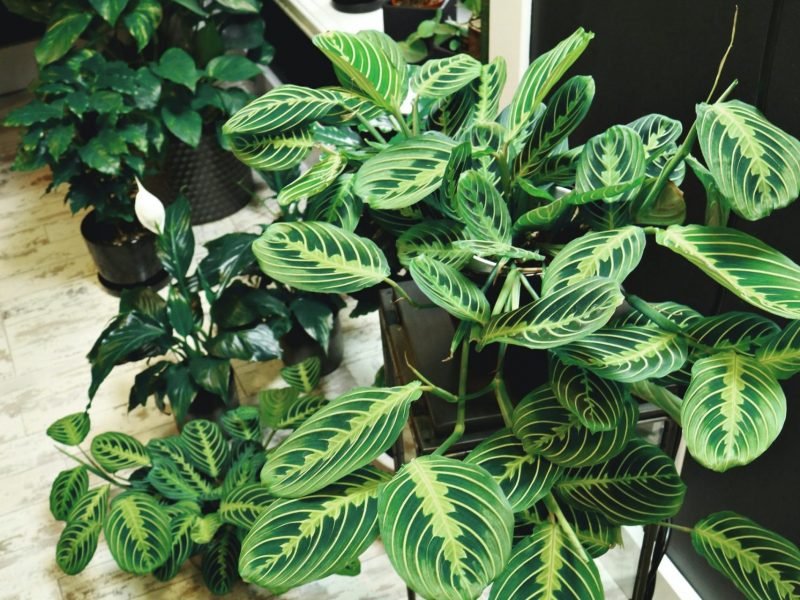
Propagating a Mother of Thousands Plant The Ultimate Guide

Last Updated: November 2, 2023

Native to Madagascar, the Mother of Thousands plant reproduces through planets, making it a super easy plant to propagate (hence the name).

However, propagating a Mother of Thousands is somewhat unique to this plant’s variety and may differ from other houseplants. But don’t worry, it’s still super simple and we will guide you through the entire process below.

Choosing the Right Propagation Method

Choosing the right propagation method isn’t as complicated as you might think. The Mother of Thousands plant is quite adaptive and forgiving, offering two main ways to propagate – via the plantlets it produces (also known as pups) and through water propagation.

First, let’s talk a bit about the plantlets or ‘pups’. These are tiny replicas of the mature plant that sprout along the margins of its leaves.

When these plantlets mature enough, they naturally drop off and start their journey on their own. For propagation, all you need to do is to collect these plantlets and plant them properly. This method has the advantage of being pretty straightforward.

Water propagation, on the other hand, involves placing the plantlets in water to allow the roots to grow before transferring them to soil.

So, how do you decide which propagation method to use?

Consider factors like your available time, the growing conditions, and your level of comfort and experience with propagation. Neither method is necessarily better or worse, but water propagation allows you to see the roots growing so you’re able to spot any issues a bit sooner.

The Essential Tools and Materials

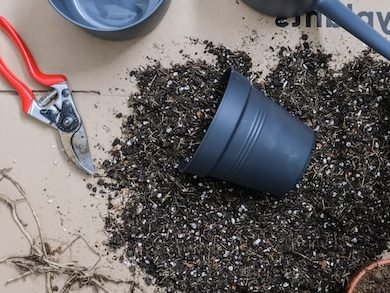
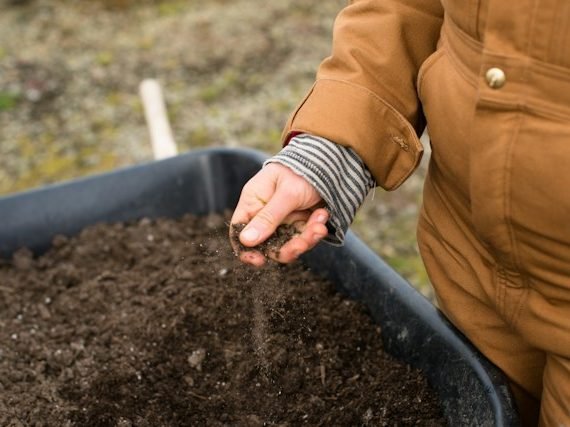
  • Potting Mix: Select a well-draining potting mix, specifically formulated for succulents, as Mother of Thousands prefers dry conditions. Avoid using heavy garden soil that retains water as it could lead to rot.
  • Propagation Vessels: You’ll need small pots or containers to begin the propagation process. These can be as simple as small plastic cups or as elaborate as mini terracotta pots.
  • Sharp Scissors: A pair of clean, sharp scissors or a knife is important for the division method of propagation. Ensure that they’re sterilised to prevent contamination.
  • Humidity Dome or Plastic Bag: A transparent plastic bag or a humidity dome can create the humid environment necessary for root development during water propagation.

Making the Right Preparations

  1. Preparing the Potting Mix: Moisten your succulent potting mix, but make sure it’s not too wet. You want it slightly damp, like a wrung-out sponge. This is to ensure the baby plants have enough moisture to begin establishing roots without the risk of rot.
  2. Sterilising Your Tools: You can sterilise your scissors or knife simply by wiping them with an alcohol wipe or dipping them in a solution of one part bleach to nine parts water. This is to prevent the transmission of any diseases or fungi.
  3. Choosing the Right Plantlets: When selecting plantlets from the mother plant, look for those that are bright and healthy, with no signs of disease or damage. The healthier the starter plant, the better your chances of success.

When to Propagate a Mother of Thousands Plant

The Mother of Thousands plant reproduces quite often, making it one of the best and one of our favourite plants to propagate.

Although the Mother of Thousands can technically be propagated any time, the best timeframe is in the spring or early summer. This is when the plant is in prime growing season and can recover rapidly from the shock of propagation.

However, if your plant is healthy and vigorous, propagating in any season can still be successful.

Here are a few signals you can look out for to know if your plant is ready:

  1. Healthy plantlets: Your Mother of Thousands plant produces a multitude of baby plants along its leaves’ margins. If these plantlets appear healthy, it’s likely a good time to propagate.
  2. Vigorous growth: Spring and early summer are periods of active growth for these unique plants. If your plant shows signs of robust growth, it might be ready to propagate.
  3. Strong leaf colour: A deep, vibrant green leaf colour indicates a healthy plant. This is a good sign that the plant is capable of supporting propagation.

Step-by-Step Water Propagation

To begin with, you’ll need to select some of those little plantlets that are forming on the edge of the mother plant’s leaves. Be choosy – the healthier they look, the better chance they have of successfully rooting.

When you’ve chosen the right plantlets – normally ones that are plumper, richer in colour, and approximately 1cm or more in size – it’s time for the next step.

  1. Gently detach the plantlet from the leaf. This should be done with care to avoid damaging the plantlet. Sharp tools aren’t necessary here. In fact, your thumb and forefinger will do the job quite nicely.
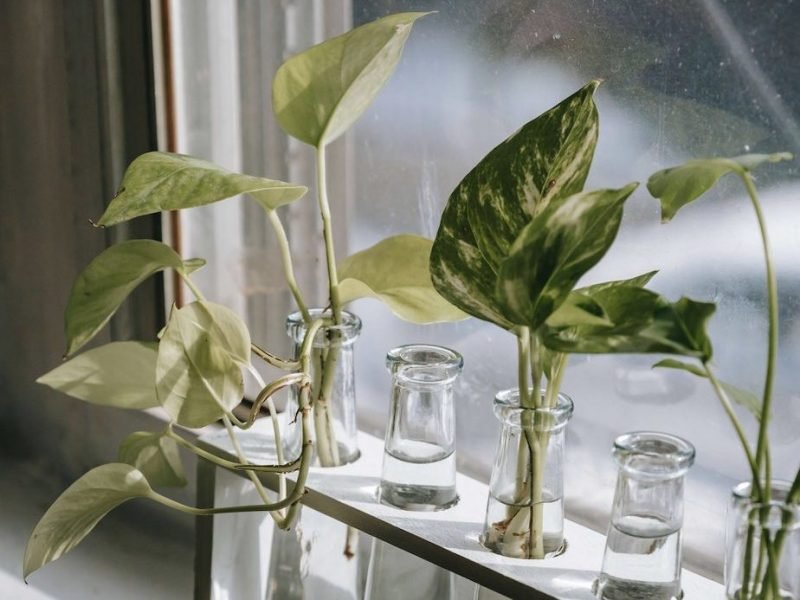
  2. The next stage involves selecting a clear jar or container. This will allow you to watch the rooting process unfold and keep a close eye on the pups as they mature. Pour fresh water into the jar, leaving a few centimetres unfilled at the top.
  3. Once your container is ready, gently place your plantlet on the surface of the water.
  4. Position your jar in a warm, well-lit location, but try to avoid direct sunlight, which may encourage algae growth. A warm, well-lit window sill would usually do. Temperature consistency is cardinal as Mother of Thousand plantlets prefer temperatures above 16 degrees Celsius.
  5. Finally, watch, wait, and change the water every 3-4 days. Give your plantlet time, and when you see roots beginning to form – usually this happens within two weeks – you can start to consider moving it over to potting mix.

We tend to recommend waiting a few extra weeks before transferring your plantlets over the soil just to give the roots additional time to grow. Transferring pups with very tiny delicate roots can be risky, so waiting a little longer will help the propagation be a success.

How to Propagate a Mother of Thousands through Division

Step 1: Select aHealthy Plantlet

Pick one that has been naturally dropped by the Mother plant. It should already have tiny roots growing out of the back. These young plantlets are best for propagation via division because they already have some roots that can help them grow.

Plantlets without any roots can be more suited to the water propagation method.

Tip: we tend to recommend propagating several plantlets at the same time, rather than putting all of your hopes on just one. The success rate for propagation with this plant and this method isn’t 100%, so it’s best to have a few growing at the same time.

Step 2: Prepare the Soil

Having chosen your plantlet, prep a small pot with well-draining succulent mix and make a small hole in the centre – just big enough for the roots – with your fingers or a pencil.

Step 3: Plant the Plantlet

Place your plantlet’s roots in the hole you made earlier and gently cover with soil. Don’t pack it too tightly. The soil should be firm enough to support the plantlet, but loose enough that those delicate roots can spread and breathe.

Step 4: Provide Optimal Care

Now comes the most crucial step: ensuring that your newly planted plantlet gets all the care it needs.

After planting, water your plantlet a bit, just enough to make the soil moist, then leave it out of direct sunlight for a couple of weeks.

Tip: Keep an eye on the soil – if it dries out completely, you can lightly water it again.

Rooting Hormone: Advantages and Disadvantages

Rooting hormones are substances that stimulate root growth, typically used in plant propagation to enhance the chances of successful plant development. It is, however, completely optional and you can still see success without it.

Advantages of Using Rooting Hormones

The use of rooting hormones brings several benefits:

  • Faster root development: Rooting hormones are designed to encourage quicker rooting, which means plantlets will establish faster.
  • Increased success rate: By promoting stronger root systems, rooting hormones can considerably increase the success rate of plant propagation.
  • Enhance plant health: A robust root system is integral to a plant’s overall health. Improved rooting contributes to stronger, healthier plants.

Disadvantages of Using Rooting Hormones

On the other side of the coin, there are some possible drawbacks to consider when making the choice to use it or not:

  • Artificial intervention: Some gardeners prefer a completely organic approach and view the use of rooting hormones as an artificial intervention.
  • Potential harm to the plant: Overuse or misuse of rooting hormones can potentially harm the young plantlets or even inhibit root growth.
  • Cost: The additional cost of purchasing rooting hormones might be a deterrent.

Troubleshooting Common Issues: Overcoming Challenges in Propagation

Issue 1: Plantlets dying after propagation

If your plantlets are dying soon after propagation, this might be a sign of overwatering. Remember, these little succulents prefer their soil to be on the drier side. Try reducing the watering frequency and replacing any waterlogged soil and see if it makes a difference.

Issue 2: No growth after planting

If your plantlet isn’t showing any signs of growth after being planted, be patient! Sometimes, it can take a couple of weeks for the plantlet to establish its own roots. In the meantime, make sure it’s getting enough light and not too much water.

The only time to get concerned that your plantlet isn’t growing is if you are seeing signs that it is dying. Look out for wilting leaves or discolouration.

Issue 3: Yellowing leaves

Yellowing leaves is typically a sign of overwatering or poor drainage. As we’ve mentioned, the Mother of Thousands is a drought-tolerant plant. A quick check of the soil or re-evaluation of your watering container could provide the answer.

Issue 4: Brown, crispy leaf edges

This can be a sign that your plant isn’t getting enough water or humidity, which isn’t a common issue but is still something to keep an eye out for. Try misting your plant lightly every couple of days or placing a tray filled with pebbles and water nearby to increase the humidity around your plant.

Issue 5: Slow growth

If your plant is growing much slower than expected, it could be a lighting issue. Although the Mother of Thousands can tolerate lower light conditions, it prefers bright indirect light for most of the day.

Frequently Asked Questions

How often should I water a newly propagated Mother of Thousands plantlet?

Watering frequencies can depend on several factors such as the category of the Mother of Thousands variant, environmental humidity, and the medium you are using.

A general rule is to keep the soil moist but not waterlogged. This means you might water approximately once a week, but it’s best to check the topsoil: if it feels dry, water slightly.

How long does it take for the Mother of Thousands plantlets to root?

Patience is key when propagating the Mother of Thousands, as rooting can take anywhere from 1 to 6 weeks. The entire process can be pretty unpredictable so don’t worry too much if roots aren’t growing, as long as the cutting still looks healthy.

What should I do if my plantlets are wilting after propagation?

If your plantlets are wilting, it could be a sign of distress caused by transplant shock, overwatering, or even a lack of required nutrients.

Fiddle and Thorn is a participant in the Amazon Services LLC Associates Program, an affiliate advertising program designed to provide a means for sites to earn advertising fees by advertising and linking to Amazon.com

Take our houseplant survey!

Quickly respond to our 30 second houseplant survey and get 75% off our Complete Houseplant Care eBook!

Take the Survey

No thanks…

Plant Problems

Helping you understand the causes and treatments of issues with your houseplants.

Plant Problems

Helping you understand the causes and treatments of issues with your houseplants.

Plant Problems

Helping you understand the causes and treatments of issues with your houseplants.

Plant Problems

Helping you understand the causes and treatments of issues with your houseplants.

Plant Problems

Helping you understand the causes and treatments of issues with your houseplants.

Plant Problems

Helping you understand the causes and treatments of issues with your houseplants.

Prayer Plant Care Guide: The Ultimate Guide to keeping your Maranta thriving!

Last Updated: October 16, 2023

Prayer Plant

Prayer Plant

Introduction

Native to the tropical Americas, this plant is famed for its strikingly patterned leaves and unique daily movements. Although they’re tropical plants, Prayer Plants can thrive in your home regardless of where you live. This guide is designed to help you navigate the nuances of Prayer Plant care to ensure that your plant stays happy and healthy.

Why is it called the Prayer Plant?

The name is derived from its unique nocturnal routine. As sunset approaches, you’ll observe the leaves of your Prayer Plant slowly rising until they’re virtually vertical. Come dawn, the leaves will settle back to a flat position, creating a rhythmic cycle reminiscent of prayer.

Overview of the Prayer Plant

Before diving into the specifics of Prayer Plant care, it’s helpful to understand the plant’s natural habitat and growth habits. Originating from the tropical rainforests of Central and South America, this plant is adapted to warm, humid environments with medium light levels. These conditions should be replicated as closely as possible in your home to ensure your Prayer Plant’s optimal growth.

Interestingly, Prayer Plants are not heavy feeders. They do, however, require consistent moisture and humidity. They are also sensitive to the quality of the water they receive, making them a somewhat challenging plant to care for.

Characteristics of the Prayer Plant

  • The Prayer Plant boasts vibrant, patterned foliage in shades of green, red, pink, and white.
  • It is a relatively small plant, typically growing to a height of about 30 centimetres.
  • Known for its ‘nyctinastic’ movements, the leaves fold together at night, resembling hands in prayer.

The Prayer Plant family consists of several wonderful varieties, each with their unique charm. Each type is characterised by its distinct, intriguing leaf patterns and colours. Here, we delve into some of the most popular Prayer Plant varieties.

Maranta Leuconeura

This is perhaps the most common variety. Maranta Leuconeura, also named Green Prayer Plant, has dark green leaves with feathered, light-coloured lines stemming from the leaf veins. When they fold up at night, they reveal their beautiful purple undersides.

Maranta Leuconeura ‘Kerchoveana’

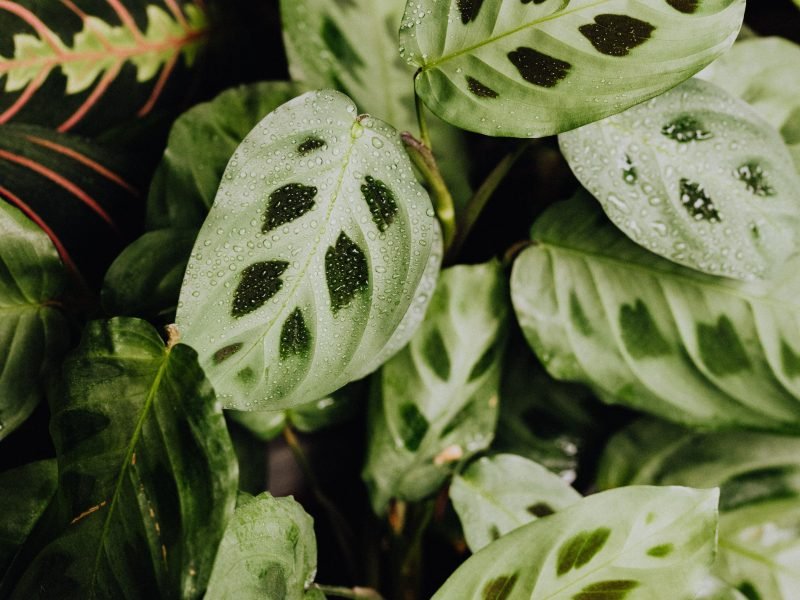
The ‘Kerchoveana’, or Rabbits Tracks, is a variety known for its light green leaves with dark blotches arranged in a herringbone pattern. The underside of the leaf is a lovely purple shade, adding to its unique aesthetic appeal.

Maranta Leuconeura ‘Erythroneura’

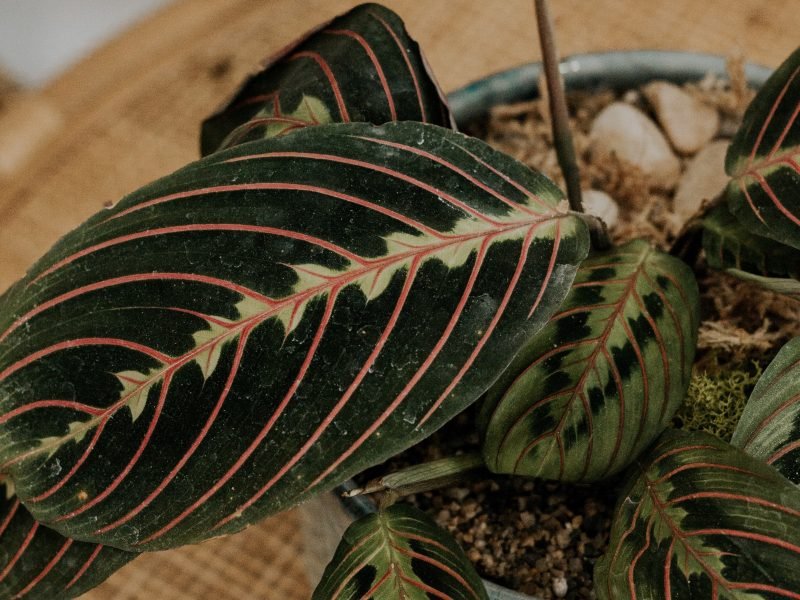
Often referred to as Red Prayer Plant, ‘Erythroneura’ features strikingly beautiful dark green leaves with bright red veins. The intricate pattern and vibrant colours make this variety a fantastic addition to any plant collection.

Maranta Leuconeura ‘Lemon Lime’

The ‘Lemon Lime’ variety showcases light, lime-green leaves with dark green veining. When the sunlight hits, the leaves emit a stunning neon glow.

Prayer Plant
Prayer Plant

Light Requirements

Your Prayer Plant’s light requirements are vital for its healthy growth and longevity. It is a tropical plant that thrives in medium to bright, indirect light. However, be wary of direct sunlight as it can cause the leaves’ beautiful patterns to fade and even damage the plant.

Positioning: Place your Prayer Plant near a north or east-facing window. This will provide it with the consistent, indirect light it needs. A well-lit office or a room with filtered light is also a good location.

Direct Sunlight: Though your Prayer Plant enjoys bright conditions, it doesn’t mean it should be exposed to direct sunlight. Too much direct sunlight will bleach and burn its foliage. If you notice the leaves start to fade or look washed out, it may be getting too much sun.

Low light: While they can adapt and survive in lower light areas, this is not optimal. You will start to see slower or stunted growth and any new leaves may be smaller and less variegated as a result of low light levels.

Artificial Light: If natural sunlight is not available, artificial fluorescent light can be a good substitute. Keep the plant at a reasonable distance from the light source to prevent overheating.

Watering your Prayer Plant: When and How Much

Watering your Prayer Plant, involves a delicate balance that is often more difficult than with the majority of other houseplants as they are sensitive to their moisture level.

When to Water your Prayer Plant:

  • Generally, the best time to water your Prayer Plant is when the top inch (about 2.5 cm) of the soil is dry. This usually happens once a week, but it can vary based on the conditions in your home.
  • Be sure to check the soil often. If it’s dry and crumbly, it’s time to water. If it’s damp and clings to your finger, hold off on watering.
  • Prayer Plants prefer high humidity. If your home is particularly dry, you may need to water more frequently or consider using a pebble tray or a humidifier to increase humidity levels (more on that below).

How Much to Water:

  • Remember, your Prayer Plant prefers its soil to be on the damp side, but never waterlogged or soggy. Too much water can cause root rot, while too little can lead to browning leaves and a dried out plant.

When watering, aim to make the soil moist, not drenched. If water starts pooling on the surface or pouring out of the pot’s drainage holes, you’ve gone a bit too far.

Top tip: always use room-temperature water for your Prayer Plant. Cold or hot water can shock/burn the plant and lead to leaf and root damage.

Humidity Requirements

Prayer Plants thrive in environments with high humidity. Native to the tropical rainforests of Brazil, this plant is accustomed to a moist and humid climate. Therefore, maintaining the right level of humidity is crucial for its survival and growth.

Optimal Humidity Level

The ideal relative humidity for a Prayer Plant is between 50% and 60%. However, it can tolerate levels as low as 40% and as high as 80%. Below 40%, the plant may start showing signs of distress such as browning leaf tips and edges.

Method to Increase Humidity

  1. Misting: Spraying a fine mist of water onto the plant leaves increases the surrounding humidity. Be sure to use lukewarm water to avoid shocking the plant and mist preferably earlier in the day so the water droplets can evaporate off the leaves before it gets cooler at night.
  2. Humidifier: A more consistent method to increase humidity is using a humidifier. This device maintains a steady level of humidity in the surroundings without you having to lift a finger!
  3. Water Tray: Place a tray filled with water and pebbles beneath the plant pot. As the water evaporates, it increases the ambient humidity.

It’s important to note that overdoing humidity can lead to issues such as root rot and fungal diseases. Always observe your plant’s health and adjust the humidity levels accordingly.

Temperature Requirements

It’s not just high humidity that Prayer Plants need to thrive, but warm temperatures too. They are particularly sensitive to sudden changes in temperature as well, which can lead to wilting or even death of the plant. Therefore, maintaining the right temperature is crucial for them to survive and thrive.

Indoor Temperature

Prayer Plants prefer a consistent indoor temperature between 18-27°C (64-80°F). They can tolerate a minimum temperature of 15°C (59°F), but anything below might start to cause issues over time.

Temperature fluctuations, especially sudden drops, can cause the leaves of your Prayer Plant to curl and brown. To prevent this, avoid placing the plant near air vents, open windows or doors that may cause cold drafts.

Outdoor Temperature

If you’re planning to keep your Prayer Plant outdoors, ensure that the temperature stays above 15°C (59°F). Cold winds and frost are not friends of the Prayer Plant and can cause irreversible damage.

Monitoring and Adjusting Temperature

To ensure your plant is in the right spot, keep a thermometer nearby to monitor the temperature around your Prayer Plant. If it’s too cold, consider moving the plant to a warmer location, or use a plant heater. Conversely, if the temperature is too high, move the plant to a cooler spot, or use a fan to help reduce the temperature.

Remember, consistency is key when it comes to temperature. Changes should be gradual and within the plant’s preferred range to avoid causing stress or shock to your Prayer Plant.

Variegated Prayer Plant
Variegated Prayer Plant

Choosing the Right Soil for your Prayer Plant

Understanding the Soil Needs of a Prayer Plant

A Prayer Plant desires a rich, yet well-draining soil. This means the soil needs to retain some moisture without becoming waterlogged. As such, a peat-based potting mix, which is light and fluffs up nicely, is an excellent choice. It provides the necessary drainage and fosters a favourable environment for the root system.

The Right Ingredients

When searching for the ideal soil mix, consider blends containing peat moss and perlite. Peat moss is capable of retaining water and nutrients, while perlite ensures good aeration and drainage. This combination helps prevent the roots from sitting in water, which could lead to root rot – a common issue in Prayer Plants (and a lot of other houseplants too).

Creating Your Own Mix

A simple recipe involves a combination of peat moss, perlite, and coarse sand in a 2:1:1 ratio. This mix will provide your Prayer Plant with the right mix of drainage, nutrient retention, and aeration.

Note: Always ensure your soil is pH balanced, as Prayer Plants prefer slightly acidic to neutral soil, ranging from 6.0 to 7.0 on the pH scale.

Remember to Refresh

Regardless of your chosen soil, remember to refresh it at least once every year or two. Over time, any soil can become compacted and less effective at draining water. Additionally, nutrients are gradually used up and need to be replenished to maintain your plant’s health.

How, Why and When to Fertilize your Prayer Plant

The Importance of Fertilizing

Fertilizing your Prayer Plant not only helps it grow but also boosts its overall health. An adequately fertilized Prayer Plant will display vibrant foliage and may even produce beautiful, subtle flowers. Without proper nutrients, your plant may experience stunted growth and lackluster leaves.

Choosing the Right Fertilizer

Your Prayer Plant will benefit from a balanced, water-soluble fertilizer. A common choice is a 20-20-20 NPK blend, which contains equal parts nitrogen, phosphorus, and potassium. These three elements are vital for the plant’s overall growth, leaf development, and disease resistance, respectively.

When and How to Fertilize

Prayer Plants typically need fertilizing every two weeks during the growing season, which is spring and summer. In autumn and winter, avoid fertilizing at all as the plant enters a dormant state. Always apply the fertilizer to damp soil to prevent root burn.

Remember: Over-fertilizing can be just as damaging as under-fertilizing. Always follow the dosage instructions on the fertilizer packaging.

Signs of Over-Fertilization

Over-fertilization can lead to salt build-up in the soil, causing leaf tips to turn yellow and curl. If you suspect over-fertilization, flush the soil thoroughly with water to remove excess nutrients and consider repotting in fresh soil if necessary.

Propagating a Prayer Plant

Method

Prayer Plants propagate really successfully through stem cuttings. This involves cutting a segment of the stem below the leaf node, where the leaf meets the stem. It’s where the plant’s growth hormones are concentrated.

Steps

  1. Choose a healthy stem – Identify a stem section with at least two leaves. Ensure it’s healthy with no signs of disease or pest infestation.
  2. Make the cut – Using a clean, sharp pair of garden shears, make a cut below the leaf node. A 2-3 inch cutting works best.
  3. Prepare for rooting – Remove the lower leaf, leaving the node exposed. This is where the new roots will sprout from.
  4. Place in water – Place the cutting in a container filled with room-temperature water. Ensure the node is submerged but the remaining leaf stays dry.
  5. Wait and watch – Patiently wait for roots to develop. This usually takes 2-4 weeks. Refresh the water every few days to prevent bacterial growth.
  6. Transplant – Once the roots are about an inch long, transplant your new Prayer Plant into a pot with well-draining soil. Care for it as you would a mature plant.

Pruning your Prayer Plant

Pruning your Prayer Plant is a vital aspect of its care. This not only helps to maintain a neat appearance, but also ensures the health and vitality of the plant. Pruning is often forgotten (accidentally and on purpose) by plant parents as it can be quite daunting. However, below you’ll find all the details on why, how and when to prune your Prayer Plant.

Why is Pruning Necessary?

Pruning prevents the plant from becoming leggy and overgrown. It encourages bushier growth, making your Prayer Plant more aesthetically pleasing. Additionally, pruning allows you to remove any dead or dying leaves, reducing the risk of disease and pest infestation.

How to Prune

When it comes to pruning, remember that less is often more. The idea is to remove only the parts of the plant that are not contributing to its overall health or aesthetic appeal. Here are some steps to follow:

  1. Use a sharp, clean pair of scissors or gardening shears. The sharpness ensures a clean cut, which is less likely to result in damage or disease.
  2. Identify the leaves that are yellow, brown or otherwise unhealthy. These are the ones you want to remove.
  3. Make your cut at the base of the leaf stem, as close to the main stem as possible.

When to Prune

The best time to prune your Prayer Plant is in the early spring, just before the growing season starts. This gives the plant a chance to recover before it begins its period of active growth. However, if you notice any unhealthy leaves at other times of the year, do not hesitate to remove them.

Flowers on a Prayer Plant

The Prayer Plant is not only known for its fascinating leaf movements but also for its distinct, petite flowers. Flowering in a Prayer Plant is not a common occurrence, especially when it’s grown indoors. However, with the right conditions and care, your plant can reward you with these delightful blooms.

Appearance of the Flowers

The flowers of the Prayer Plant are small and delicate, often appearing in clusters. They range in colour from white to soft pink or lavender.

When Do Prayer Plants Flower?

Prayer Plants typically bloom during late spring or early summer. However, it’s important to note that they might not flower every year, especially if the plant is not receiving optimal care. It can be very unpredictable so don’t expect them to bloom on a schedule.

Encouraging Flowering

To encourage your Prayer Plant to flower, certain specific conditions need to be met. These include providing ample indirect light, maintaining high humidity, and using a balanced, water-soluble fertiliser.

Tips and Tricks for Cleaning a Prayer Plant

Keeping your Prayer Plant clean is not just about maintaining its aesthetic appeal, but also about ensuring its health and vitality. Regular cleaning helps to keep pests and diseases at bay, whilst also enabling the plant to efficiently photosynthesise. Here are some tips and tricks to help you keep your Prayer Plant in pristine condition.

Regular Dusting

The leaves of your Prayer Plant can easily collect dust. Not only does this make the leaves appear less vibrant, but it also obstructs the plant’s ability to photosynthesise properly as the thin layer of dust acts as a blocker to the sun. Dusting your Prayer Plant weekly with a soft, damp cloth can help to mitigate this issue.

Avoid Harsh Chemicals

When it comes to cleaning products for your Prayer Plant, less is more. Avoid using harsh chemicals or soaps as these can damage the delicate leaves. Instead, opt for using lukewarm water to gently clean the surfaces of the leaves. To remove tough dirt and grime, just use a drop or two of dish soap but nothing more.

Watch Out for Pests

Prayer Plants can occasionally become a target for pests such as spider mites or mealybugs. Regular cleaning can help to prevent these pests, but if you spot any, gently remove them with a soft, damp cloth or a mild insecticidal soap (more on this below).

Shower your Plant

Last but not least, giving your Prayer Plant a gentle shower can be highly beneficial. This not only cleans the plant but also increases the humidity around it, mimicking its natural rainforest habitat. Remember to use lukewarm water and let the plant drain thoroughly afterwards.

Prayer Plant Toxicity to Humans and Pets

Prayer Plants are non-toxic, making them a great addition to homes with pets and children.

It’s important to note, however, that while generally safe, some people or pets may have allergic reactions. Symptoms can include skin irritation or gastrointestinal upset if ingested. Always keep an eye on your furry friends and little ones around any houseplant.

Toxicity to Humans:

  • If you or a family member are handling the plant and experience skin irritation, discontinue handling immediately. If symptoms persist, seek medical advice.
  • While not harmful if ingested, it’s best to avoid eating the leaves of the Prayer Plant as they can cause minor stomach upset.

Toxicity to Pets:

  • Despite being non-toxic, the Prayer Plant can still cause mild irritation in pets if chewed or ingested in large quantities. This can result in symptoms such as vomiting or diarrhoea.
  • If you notice your pet showing signs of discomfort after interacting with the plant, it’s wise to contact your vet immediately.

Common Pests and Diseases

Your Prayer Plant, like all houseplants, may occasionally face the threat of pests and diseases. This section will guide you on how to identify common issues and tackle them effectively.

Spider Mites

Spider mites are tiny insects that suck the sap from the leaves, causing yellowing or browning. You may notice webbing on the undersides of the leaves. It’s recommended to isolate the affected plant as soon as you spot them (or signs of them) and treat with neem oil and an insecticide.

Mealybugs

Mealybugs appear as small, white fuzzy spots on the leaves and stems. They too suck sap from the plant, leading to wilting and discolouration. Control measures include manual removal or using an insecticidal soap.

Fungal Diseases

Fungal diseases like root rot and leaf spot can impact your Prayer Plant. Overwatering is often the cause of these problems. Ensure your plant has a well-draining soil and doesn’t sit in water. Always check the soil if you start to see these issues arise and refresh with dry soil if waterlogged.

Bacterial Diseases

Bacterial diseases such as bacterial leaf spot and bacterial blight often show as dark, water-soaked spots on the leaves. If left untreated, these diseases can lead to leaf drop and plant death. Use a copper-based bactericide for treatment.

Frequently Asked Questions

Common Problems

Fiddle and Thorn is a participant in the Amazon Services LLC Associates Program, an affiliate advertising program designed to provide a means for sites to earn advertising fees by advertising and linking to Amazon.com

Take our houseplant survey!
Quickly respond to our 30 second houseplant survey and get 75% off our Complete Houseplant Care eBook!

Take the Survey

No thanks…

Polka Dot Plant Turning Brown: Causes and Solutions

Last Updated: June 26, 2022

If there is one colour you don’t want your Polka Dot Plant to be, it’s brown! This signals that something is wrong and your plant is suffering from either the wrong care or the wrong environment. There are a few different things can that lead to your Polka Dot Plant developing brown leaves, from watering issues to improper sunlight or fertiliser amounts. Below we will go through each of these individual reasons to help you figure out what is causing the brown leaves on your Polka Dot Plant.

Underwatering can cause brown patches

Whilst your Polka Dot Plant can often forgive you for the occasional time you forget to water it, consistent underwatering can lead to brown leaves developing on your plant. If you notice that your Polka Dot Plant’s leaves are turning dry and crispy (usually starting from the tips and edges of the leaves inwards) it may be due to underwatering, as it can’t continue to keep all of the leaves alive.

Check the moisture in the soil immediately and if it feels very dry, almost like dust, then you are probably underwatering. You can also tell if the problem has been going on for a while by looking at the root system. Shrivelled, dry and crispy roots are a sign of an underwatered Polka Dot Plant.

To solve the issue, your first instinct might be to give it loads of water straight away but this can actually be harmful to your Polka Dot Plant. If there is a sudden change in your plant’s environment whilst it is already struggling, it can cause your plant to go into shock and lose some of its leaves. Instead, you want to reintroduce frequent watering for a few weeks and this should solve the problem.

It could also be a lack of sunlight

Polka Dot Plants like ample indirect sunshine to thrive, and if they spend too long in a shady spot, they may start to develop brown areas on their leaves. A lack of light can also result in very leggy growth, faded leaf patterns or just a lack of growth altogether.

To solve the issue, and prevent any more brown leaves from forming on your Polka Dot Plant, move it to somewhere that gets a little bit more sunshine throughout the day. Just avoid direct light as this can burn the delicate leaves.

Chemical sensitivity can also cause brown leaves

If it is just the tips of your Polka Dot Plant that are starting to turn brown and it doesn’t really go beyond that very quickly, then it might also be a reaction to the salts and chemicals found in your tap water. These can build up around the root system over time and cause brown leaf tips to develop. Using tap water isn’t often an issue but if you live in an area will really hard water then this can have an effect over time.

There are two ways to make sure that the water you give them has reduced levels of these chemicals. Firstly you can leave a jug of tap water for around 24 hours to allow for a lot of the chemicals to evaporate. Another method is using rainwater to give to your houseplants to make sure chemical levels are lower than the treated water that comes out of your tap.

Too much fertiliser

Polka Dot Plants enjoy being fed once a month during spring and summer but not more. And they really shouldn’t be given any fertiliser during autumn and winter as this is the dormant period. Fertilising during these months, or more regularly than the recommended amount during summer, can lead to brown leaves forming on your Polka Dot Plant.

As well as reducing the frequency of fertilisation, try to use a diluted water-soluble fertiliser on your Polka Dot Plant to ensure that it does not cause any shock or damage to the plant. Remember you can also skip the fertiliser part altogether and still see plenty of healthy colourful leaves.

Those are the 4 main reasons why Polka Dot Plants develop brown leaves. The most common tends to be lighting or water-related so make sure you rule these out first. If you have caught the issue early, and your Polka Dot Plant only has a few brown leaves then this should be very easy to rectify. However, if the problem has been going on for a while then we tend to recommend taking a cutting from a healthy section of your plant to propagate in case you aren’t able to solve the problem.

To learn more about how to propagate and care for your plant, then check out our Polka Dot Plant care guide.

Fiddle and Thorn is a participant in the Amazon Services LLC Associates Program, an affiliate advertising program designed to provide a means for sites to earn advertising fees by advertising and linking to Amazon.com

Take our houseplant survey!

Quickly respond to our 30 second houseplant survey and get 75% off our Complete Houseplant Care eBook!

Take the Survey

No thanks…

How to Care for your Polka Dot Plant: A Complete Guide

Last Updated: October 16, 2023

Polka Dot Plant

Polka Dot Plant

Introduction to Polka Dot Plants

Originating from Madagascar, Polka Dot Plants (Hypoestes phyllostachya) are vibrant, eye-catching plants known for their spotted foliage, which comes in a variety of colors. The polka dots usually appear in contrasting hues, in colors including red, pink and white.

Caring for a Polka Dot Plant

While Polka Dot Plants may seem a bit demanding, the overall care process is not overly complex, it’s just quite specific. It involves providing the right environment, watering properly, and maintaining ideal temperature and humidity levels. The plant also requires regular feeding and occasional pruning to maintain strong new growth.

History and Origin of Polka Dot Plants

Although the Polka Dot Plant is now a common sight in many parts of the world, it wasn’t always this way. It was only in the mid-19th century that European explorers were drawn to its colorful foliage and brought it back to the Western world. The fascination with its dotted pattern quickly spread, leading to its current popularity.

Among the native Malagasy people, the Polka Dot Plant is more than just an attractive plant and was traditionally used for medicinal purposes. The leaves are often crushed and used to treat ailments such as fever and inflammation.

The Polka Dot Plant’s scientific name, Hypoestes phyllostachya, also offers a clue to its distinctive appearance and environmental requirements. Hypoestes translates from Greek as ‘under a house’, referencing its natural growth under the canopy of larger plants, while Phyllostachya means ‘leaf spike’, hinting at its leaf shape.

Polka Dot Plant Varieties

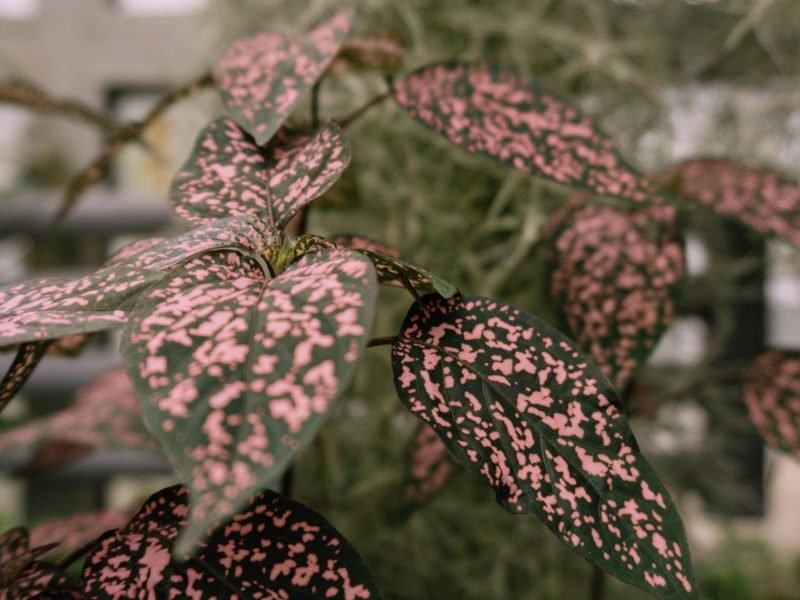
  • Pink Polka Dot Plant: Renowned for its bright pink spots against a dark green backdrop, this variety is a favorite among plant enthusiasts.
  • Red Polka Dot Plant: This variant features bolder, redder spots, creating a striking contrast with its green leaves.
  • White Polka Dot Plant: Sporting white spots on green leaves, this variety offers a more subdued but equally charming aesthetic.

Lighting Needs of a Polka Dot Plant

Indoor Lighting

When growing a Polka Dot Plant indoors, place it near a window that receives plenty of natural light. However, be sure to avoid direct sunlight, as it can scorch the leaves. If necessary, you can use sheer curtains to filter the light or place it slightly further inside the room, away from the direct rays coming through the window.

Outdoor Lighting

If you prefer to grow your plant outdoors, select a spot that gets dappled sunlight or is shaded for part of the day. Full sun exposure can lead to leaf burn, while too little light may cause the plant to lose its distinctive coloration.

If the plant isn’t getting enough light, it will “stretch” towards the source, a process known as etiolation. This can result in a tall, leggy plant with sparse foliage so make sure that your plant is getting enough sunlight year round to prevent this.

Watering your Polka Dot Plant

These plants enjoy a moist environment but do not fare well in overly saturated soil so make srue that the potting mix is able to dry out briefly between waterings.

How Often To Water:

The frequency of watering depends primarily on the climate and the time of year. Generally, watering should occur when the top layer of soil feels dry to the touch. This might mean watering every couple of days during hotter periods and reducing the frequency during cooler months.

Watering Technique:

When watering your Polka Dot Plant, aim to water it thoroughly, allowing the water to drain from the bottom of the pot. This approach ensures that the roots get enough moisture without the risk of overwatering. Avoid letting the plant sit in standing water, as this can lead to root rot.

Tips for Watering Polka Dot Plants

  1. Water in the morning: Watering your plant early in the day gives it time to dry out a little before temperatures drop at night.
  2. Use room-temperature water: Extremely cold or hot water can shock or burn the plant, leading to leaf drop. Room-temperature water is best to avoid any issues.
  3. Consider the potting mix: A well-draining potting mix is crucial in preventing waterlogged soil. If the soil remains damp for too long, consider amending it with perlite or a similar substance to improve drainage.

Humidity and Temperature Requirements

Temperature

The Polka Dot Plant can tolerate a wide range of temperatures, but it thrives best in a warmer climate. The ideal temperature for the Polka Dot Plant ranges between 70°F to 80°F (21°C to 27°C).

It’s important to know that these plants really hate the cold and temperatures below 60°F (15°C) can cause harm, leading to wilting or even plant death (if the issue persists). It’s best to keep your plant in a location where the temperature is consistently warm and respond quickly to any fluctuations.

Humidity

As they are native to a tropical environment, the Polka Dot Plant enjoys a high level of humidity. This is why it’s often found to thrive in bathrooms or kitchens, where humidity levels are naturally higher.

If your home environment is dry, you will need to increase humidity levels to avoid issues such as brown leaf tips and edges that are one of the most common problems for Polka Dot Plants. Here are a few ways to do this:

  • Mist a few times a week: Use a spray bottle to mist your Polka Dot Plant with water on a regular basis. This helps to replicate the moist air of a tropical environment.
  • Buy a humidifier: A great way to maintain the necessary humidity levels is by using a humidifier, especially during winter when indoor air tends to be drier.
  • Make a pebble tray: Place your pot on a tray filled with pebbles and water. As the water evaporates, it will create a humid microclimate around your plant. The reason you want to have pebbles in the tray is so that your plant’s roots are not sitting in a puddle of water.

White Polka Dot Plant

White Polka Dot Plant

How to Fertilize your Polka Dot Plant

Frequency

Typically, your Polka Dot Plant needs to be fertilized once a month during the growing season, from spring through early fall. In the winter months, you should stop fertilizing altogether as your plant is in a dormant phase.

Type of Fertilizer

Choose a balanced, water-soluble fertilizer to meet the nutritional needs of your Polka Dot Plant. The fertilizer should be rich in nitrogen, phosphorus, and potassium. Look for a formulation with an equal ratio of these elements, such as a 20-20-20 or 10-10-10 mix. You can also use fertilizer sticks or granules but we recommend liquid fertilizer as it is easier to control.

Application

The fertilizer should be applied following the package instructions. Dissolve the recommended amount in water and apply to the soil. We often will dilute it more than recommended for Polka Dot Plants as they can be a little sensitive to overfertilization and this is the best way to avoid this. Be careful as well not to splash it on the leaves, as it could cause them to burn.

If you are fertilizing too much each time (or too frequently) this can lead to salt build-up in the soil, which can damage the roots of your Polka Dot Plant. If you notice the tips of your plant’s leaves turning brown or small yellow patches on the leaves, you might be over-fertilizing.

Repotting your Polka Dot Plant

Repotting your Polka Dot Plant is a fundamental aspect of its care as these plants frequently become root-bound. Ideally, you should aim to repot your Polka Dot Plant every 1-2 years preferably in the springtime when the plant begins its growing phase.

Here’s a step-by-step guide to help you through the process:

  1. Choose a new pot that is one size larger than the current one. Ensure it has good drainage.
  2. Carefully remove the plant from its current pot. Try not to damage the roots but don’t worry if you do break a couple of them as this won’t cause any issues.
  3. Inspect the roots for any signs of disease or decay and trim dead or dying roots if necessary.
  4. Place a layer of fresh potting mix in the new pot.
  5. Position your Polka Dot Plant in the new pot and gently fill in with more potting mix, ensuring the plant is secure.
  6. Water the plant thoroughly after repotting to help it settle into its new home.

Pruning Polka Dot Plants

One of the essential aspects of caring for your Polka Dot Plant is proper pruning. This not only helps the plant maintain its vibrant and bushy appearance but also helps to fight disease and common problems.

Pruning Your Polka Dot Plant

Pruning is a crucial part of Polka Dot Plant care. This process encourages bushier growth and helps maintain the plant’s compact form. Polka Dot Plants have a tendency to become leggy if not pruned regularly so make sure you build this into your regular care routine.

  • When to Prune: Ideally, you should prune your Polka Dot Plant during the spring or early summer but if you are pruning brown, yellow or wilted leaves, do this at any point in the year.
  • How to Prune: Using clean, sharp scissors or pruning shears, cut back the leggy stems to the desired length. Always make your cuts just above a leaf node.

Polka Dot Plant Toxicity

The Polka Dot Plant (Hypoestes phyllostachya) is generally considered non-toxic to both humans and pets.

However, it’s always best to exercise caution. Despite its non-toxic status, ingesting any part of a Polka Dot Plant can cause mild gastrointestinal upset for some individuals or pets. Symptoms may include: nausea, vomiting, diarrhea.

If you or your pet displays any of these symptoms after ingestion, it’s advised to consult with a healthcare professional or a veterinarian.

Flowers on a Polka Dot Plant

Appearance of Flowers:

The flowers on a Polka Dot Plant are typically small with a soft pink hue. They are often overlooked due to the bright and vibrant foliage of the plant, but they are always a nice surprise if they do pop out!

Timing:

Flowering usually occurs in late spring to early summer. However, under optimal conditions, sporadic blooming can occur at different times of the year. It’s worth noting though that flowering in most houseplants is very unpredictable and oftentimes rare so don’t get your hopes up too much.

Care During Flowering:

During the flowering period, it’s essential to keep the plant well-hydrated but not overwatered. It’s also a good idea to provide the plant with a balanced fertilizer to support its growth and flowering.

Post Flowering Care:

Once the flowering period is over and the flowers have started to die, remove them from your plant so that it can focus its energy on new healthy leaves.

Cleaning your Polka Dot Plant

Your Polka Dot Plant needs to be kept clean to ensure its overall health and well-being. Dust and dirt can accumulate on the leaves, hindering the plant’s ability to photosynthesize and breathe as the pores can get quite clogged up. Aesthetically your plant will look a lot brighter and fresher with a regular clean.

Regular Cleaning

  1. Prepare a soft cloth or sponge: Choose an item that is soft enough not to damage the plant’s leaves. If you opt for a cloth, a microfiber cloth is recommended as it can effectively pick up dust without causing harm to the delicate leaves and stems.
  2. Dampen the cloth or sponge with water: The cloth or sponge should be damp, but not soaking wet. You’re looking to wipe away the dust, not drench the plant.
  3. Gently wipe each leaf: Start from the base of the leaf, working your way to the tip. Be gentle to avoid breaking or damaging the leaves.

Deeper Cleaning

Once in a while, your Polka Dot Plant might need a deeper clean, particularly if it’s been neglected for a while or if it’s been exposed to a dusty environment. Here’s how to do it:

  1. Prepare a mild soap solution: Mix a small amount of mild liquid soap with water. Be sure not to use a soap that’s too harsh or that contains harmful chemicals as that can really damage the leaves quite quickly.
  2. Use a soft cloth or sponge: Just like with regular cleaning, you’ll want to use a soft cloth or sponge to do the cleaning.
  3. Wipe each leaf with soapy water: Gently wipe each leaf, starting from the base and working your way to the tip. Be sure to also clean the undersides of the leaves and support the leaf with your other hand when cleaning so you don’t damage the plant.
  4. Rinse with water: Once you’ve wiped each leaf with soapy water, rinse the plant thoroughly with plain water to remove any soap residue.

Pink Polka Dot Plant Leaves

Pink Polka Dot Plant Leaves

Common Pests and Diseases of Polka Dot Plants

Pests

While rare, these three pests have a tendency to infest a Polka Dot Plant:

  • Spider mites: These tiny arachnids are often too small to see with the naked eye, but they can cause significant damage if you don’t spot the infestation quickly. Signs of an infestation include yellowing leaves and a fine, white webbing on the plant.
  • Mealybugs: These pests appear as tiny, white cottony spots on the plant. They feed on the plant’s juices, causing the leaves to yellow and potentially drop off.
  • Aphids: These small, green insects also feed on plant sap, causing similar damage to mealybugs. You might notice a sticky residue on the leaves or nearby surfaces.

Diseases

  1. Root rot: Typically caused by overwatering, root rot can turn the leaves yellow or brown, and the plant may appear wilted. If you notice this issue when the soil is still waterlogged, replace it immediately rather than waiting for it to dry out to prevent further issues.
  2. Leaf spot: This disease causes dark spots on the leaves. It’s often a result of high humidity or water left sitting on the leaves.
  3. Powdery mildew: This appears as a white or grey powdery substance on the leaves and stems. It’s usually caused by poor air circulation and high humidity.

Polka Dot Plant FAQs


Common Problems with your Polka Dot Plant

Fiddle and Thorn is a participant in the Amazon Services LLC Associates Program, an affiliate advertising program designed to provide a means for sites to earn advertising fees by advertising and linking to Amazon.com

Take our houseplant survey!

Quickly respond to our 30 second houseplant survey and get 75% off our Complete Houseplant Care eBook!

Take the Survey

No thanks…