10 of the Fastest Growing Houseplants

Last Updated: December 31, 2021

Our Favourite Fast Growing Houseplants

There’s something a little bit disappointing when we are left waiting months on end for just one new leaf to appear on some of our houseplants, which is why we have curated this list of the top fastest growing houseplants. During the growth period, you’ll see new leaves popping out of these ones all the time, as well as offshoots that you can propagate and sometimes even flowers.

You must bear in mind though that these houseplants won’t grow all year around and the rate of growth will drop during autumn and winter as your plant goes dormant. But with the right care, you’ll see plenty of new growth as soon as spring arrives.
1

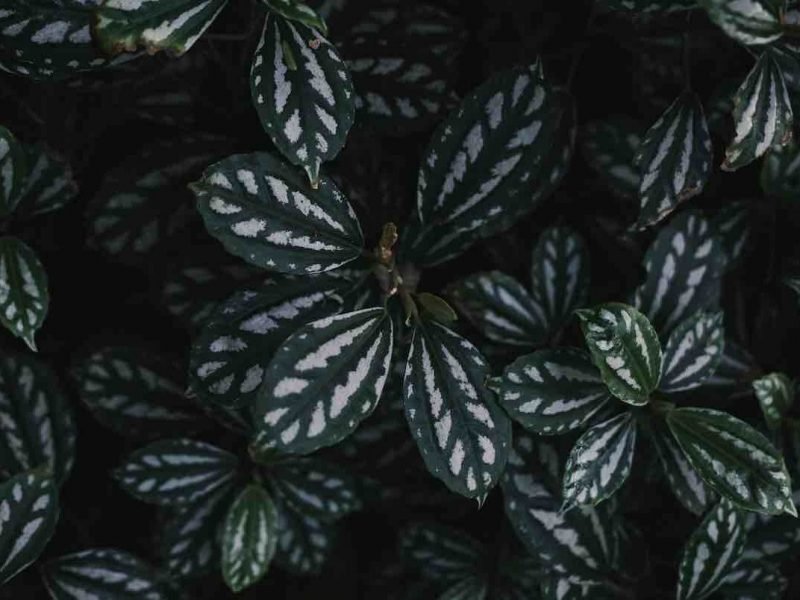
Aluminium Plant

Pilea cadierei

This low maintenance, fast-growing houseplant can sometimes be quite underrated in the houseplant world. Each leaf on an Aluminium Plant has its own unique set of silver streaks and splashes, so it’s easy to see how it got its name!

Native to China and Vietnam, this houseplant tends to spread out rather than grow tall. The one thing to be wary of is its root system as it can grow so extensively that it can often break through the pot so you want to make sure you’re repotting this plant yearly!

When it comes to care, bright but indirect sunlight and moderate amounts of water will keep them happy. They are quite forgiving and easy to please so keeping this one thriving doesn’t need a lot of work so we often recommend this as a great entry-level plant.

Find out more in our Aluminium Plant care guide.
2

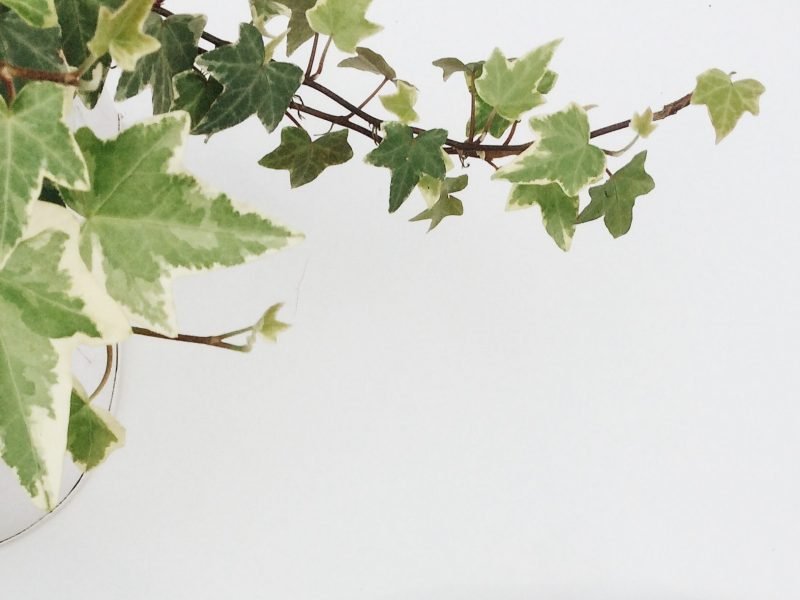
English Ivy

Hedera helix

Although they are most commonly known as outdoor plants, you can very successfully grow an English Ivy indoors as long as you give it enough light. We are obsessed with the white variegated English Ivy but if not given enough sunshine, the new leaves will lose all of that variegation.

Included in the NASA Clean Air Study, the English Ivy is great at removing toxins from the air so we recommend having this around your home. They are also believed to sometimes be able to improve allergy symptoms so as well as looking lush, they have great benefits for us too. As they are a super fast-growing plant (if the conditions are right), you’ll want to place them on a high shelf making sure they have enough space to cascade downwards.

Find out more in our English Ivy care guide.
3

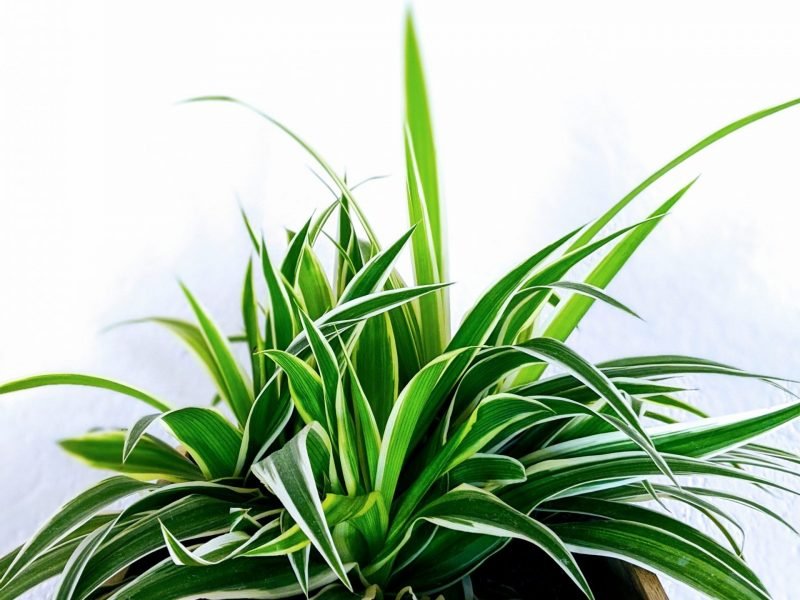
Spider Plant

Chlorophytum comosum

Spider Plants are the perfect plant for a houseplant beginner as they are super easy to care for, grow pretty quickly, and produce an abundance of spider babies which can be propagated in seconds.

The best thing about Spider Plants is that you would really have to try to kill them as they adapt to and survive in most environments and don’t mind being a little neglected. They even show you when they need more water by going quite light green. But after a little bit of water, they spring back to full health in minutes.

As your plant matures, you’ll start to see it sprouting little spiderettes which you can choose to remove from the plant to create new Spider Plants. They really are the gift that keeps on giving.

Find out more in our Spider Plant care guide.
4

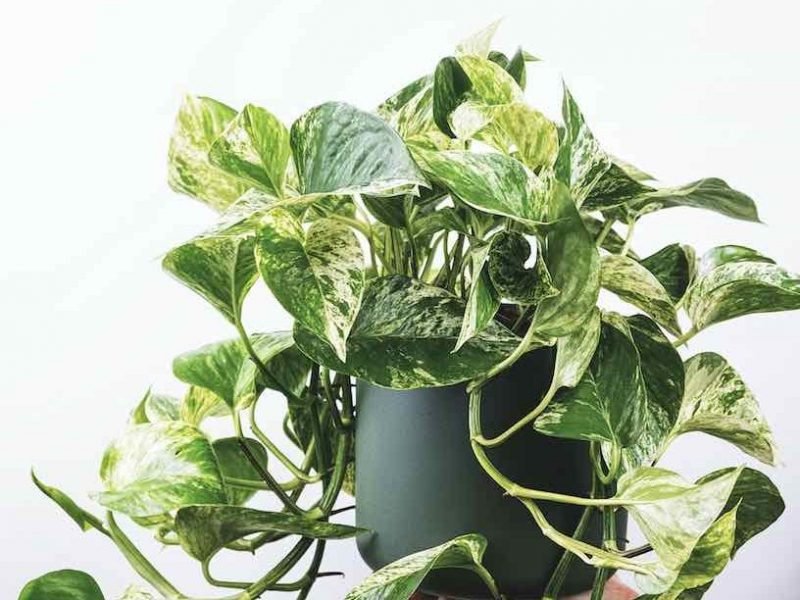
Marble Queen Pothos

Epipremnum Pinnatum


There are so many different varieties of Pothos plants, all with slightly different leaf variegation but the Marble Queen is definitely one of our favourites. Getting its name from the cream marble-like variegation on its leaves, it’s an easy-going, hardy and low light loving plant that can adapt to most spots in your home.

The Marble Queen Pothos is a pretty fast-growing plant so make sure you have enough space for it to mature. You can choose to grow them as trailing plants with long cascading vines or vertically by attaching them to a moss pole. Pothos plants are unfortunately toxic so you’ll want to keep them away from pets and small children who might try and nibble on the low hanging leaves.

Find out more in our Marble Queen Pothos care guide.
5

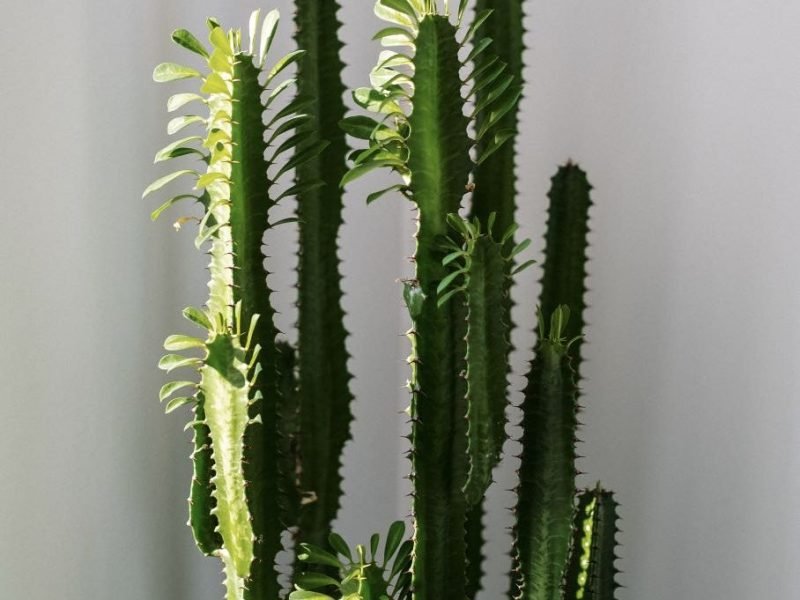
African Milk Tree

Euphorbia trigona

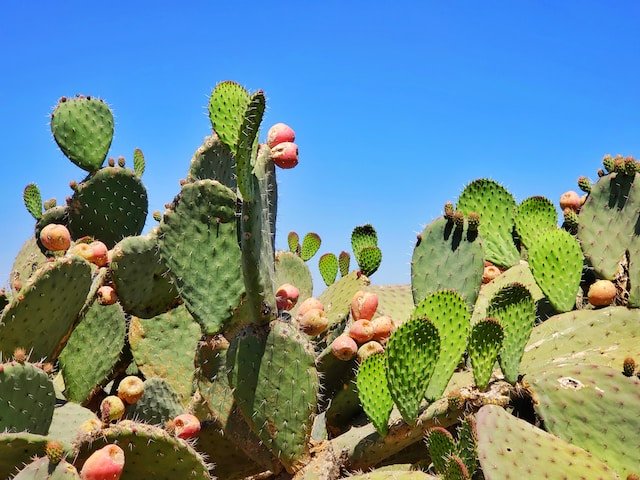
Although they may look like a Cactus, the African Milk Tree is actually a succulent, making it drought-tolerant and highly sensitive to overwatering. This plant gets its name from the white sap that is found in the leaves. Be careful though as this sap is highly toxic so make sure you handle this plant with gloves and keep it away from small children and pets.

You might not associate succulents with fast-growing characteristics, but if you nail the environment, your African Mask Plant can reward you with several inches of new growth pretty quickly. So as succulents go, we’d definitely consider this fast growing!

These plants thrive in bright direct sunshine and hate cold drafts so it’s important to find the right spot for them in your home. But once the environment is right, they need very little tending to and will reward you with plenty of luscious growth. During the summer months, these plants can grow quite quickly which makes them quite unique for a succulent!

Find out more in our African Milk Tree care guide.
6

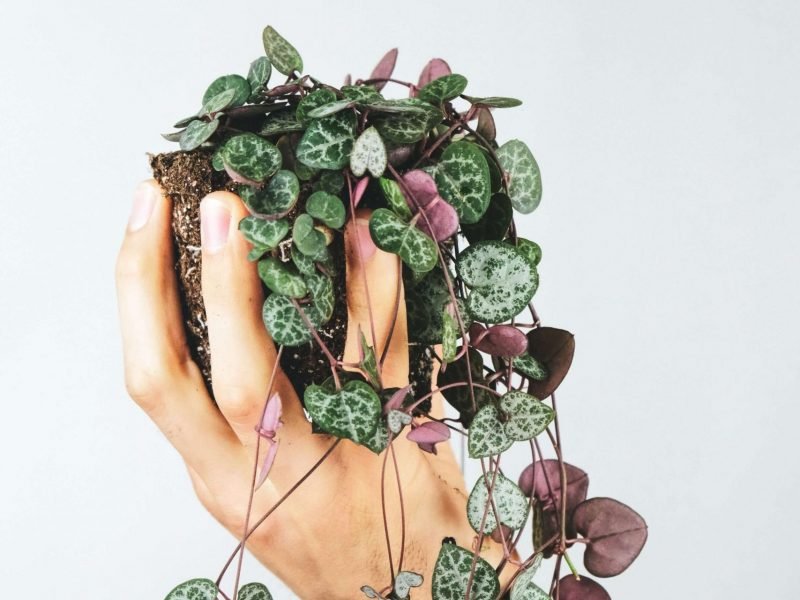
String of Hearts

Ceropegia woodii

Native to South Africa, the String of Hearts should be top on your list for trailing houseplants. You don’t get much more unique than their speckled heart-shaped leaves. The other thing we love about the String of Hearts is that it’s such a fast grower over the spring and summer months, you’ll blink and there will be two new leaves popping out somewhere.

The String of Hearts is a semi-succulent plant meaning they don’t need much water, otherwise, it’ll cause their delicate shallow leaves to rot pretty quickly. Oh, and because they have such shallow roots, you won’t need to repot for a very very long time.

It makes the perfect plant for hanging down shelving, and because its pet friendly, you don’t need to worry about it ever becoming too long!

Find out more in our String of Hearts care guide.
7

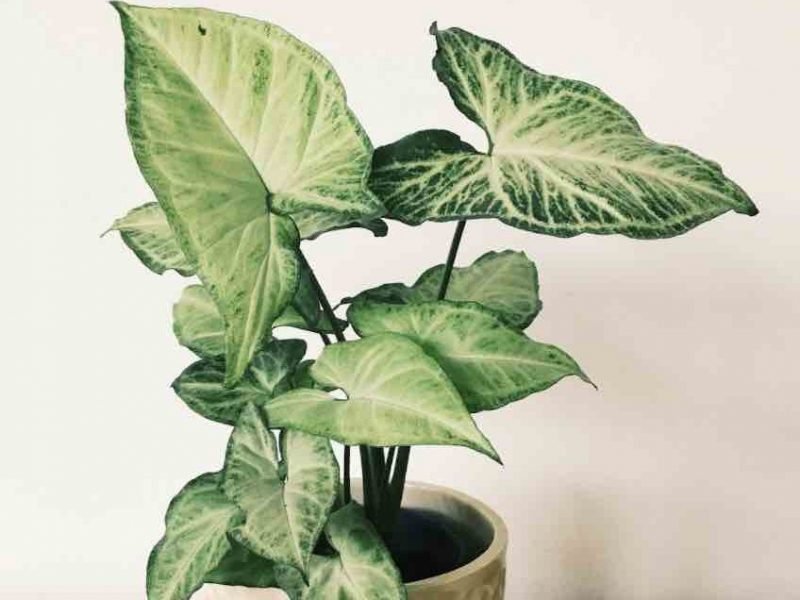
Arrowhead Plant

Syngonium podophyllum

Native to the tropical rainforests of Central and South America, the Arrowhead great plant to have in your collection. When fully grown, they can reach nearly 2 meters tall with large leaves that can have a variety of colours and variegations.

As you can imagine, the Arrowhead likes warm and humid environments. Letting the soil dry out between waterings is a great way to mimic their natural habitats and making sure they have bright, but indirect light will stop the leaves from burning.

With them being a little pickier over humidity and placement, we wouldn’t always recommend them for a starter houseplant. They’re also mildly toxic to pets, which doesn’t make them the most friendly for households with cats or dogs.

Find out more in our Arrowhead Plant care guide.

8

Peace Lily

Spathiphyllum wallisii

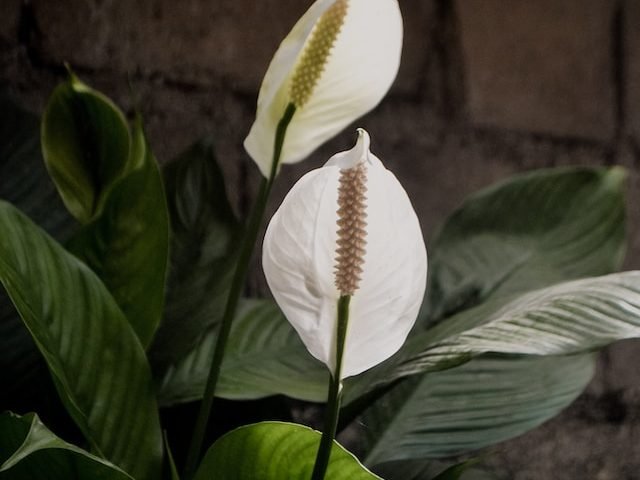
There’s a reason that Peace Lilies are so popular, and it’s not just because of their incredible white flowers. They are super low maintenance plants that can adapt and thrive in most homes. They can tolerate all light levels which is super rare for houseplants.

Our favourite thing about the Peace Lily is that it really helps us plant parents out by drooping its leaves when it really needs water. This can help you spot underwatering before it’s really a problem. Within minutes of watering, the leaves will perk up – it’s pretty cool! And if we haven’t sold you on the Peace Lily yet, then you should probably know that they are also one of the best plants at purifying the air and removing chemicals from your home!

Find out more in our Peace Lily care guide.
9

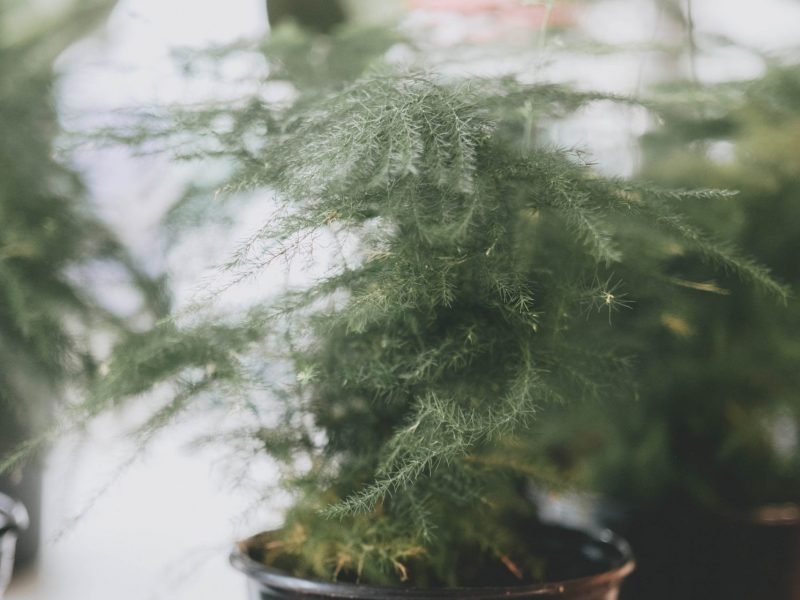
Asparagus Fern

Asparagus Setaceus

The Asparagus Fern is such an elegant little houseplant – and although they look like they’ll be hard work to keep happy, they’re actually pretty simple to care for. Given the right conditions, they can grow extremely quickly and you’ll find new stems popping up every week. In fact, they grow so quickly that new stems can sometimes mature in as little as 24 hours!

They aren’t too fussy on light conditions or watering schedules, but humidity is a must for them. Make sure to give them a spray with a mist bottle every 3-5 days or place near a humidifier to keep them happy in the long term. The leaves and stems will yellow if they aren’t happy, if that happens to you then just give your Asparagus Fern another spray down and a little extra water.

Find out more in our Asparagus Fern care guide.
10

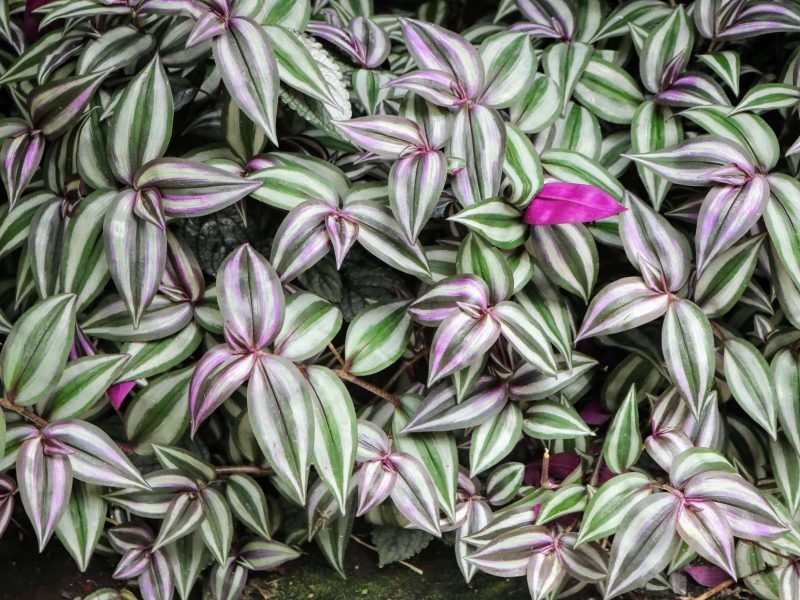
Inch Plant

Tradescantia zebrina

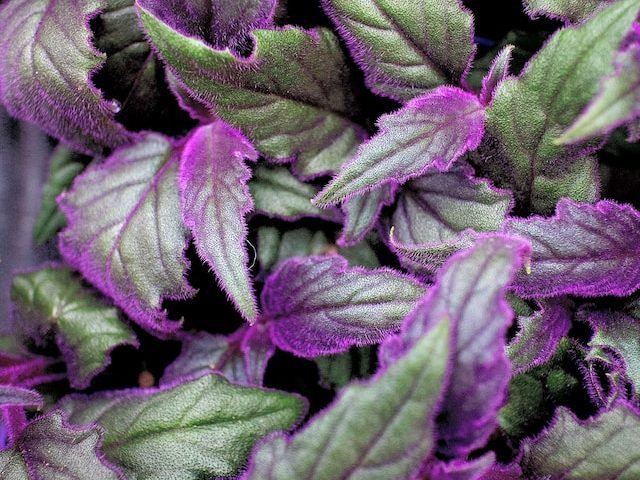
Also known as the Inch Plant, we haven’t yet come across a faster-growing or easier to propagate houseplant. Native to the tropics of Mexico and South America, these plants offer something different with their purple and silvery leaves that transcend out of the pot.

Growing these indoors helps keep their growth more contained whilst still giving that wilderness feel which we love. Caring for these plants is also super easy as all they need is ample light and moderate water. They are quite forgiving though so won’t give up straight away if something’s a little off.

These plants are great for hanging planters or when placed on shelving so you can really make the most of those incredible vines. They can be mildly toxic though so you’ll want to keep them away from pets.

Find out more in our Inch Plant care guide.
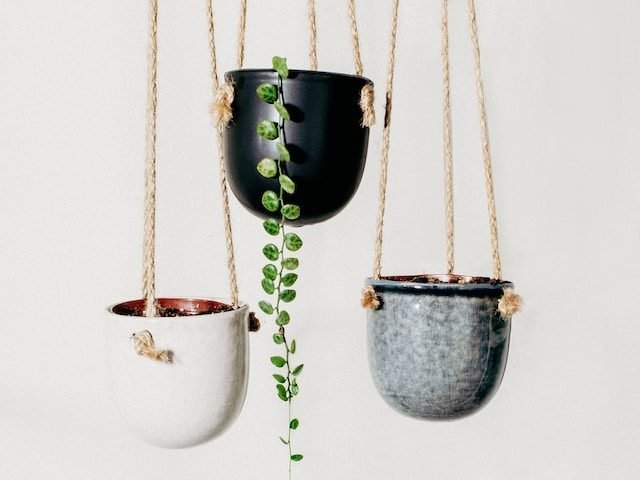
Fiddle and Thorn is a participant in the Amazon Services LLC Associates Program, an affiliate advertising program designed to provide a means for sites to earn advertising fees by advertising and linking to Amazon.com

Take our houseplant survey!

Quickly respond to our 30 second houseplant survey and get 75% off our Complete Houseplant Care eBook!

Take the Survey

No thanks…

The Complete Tree Philodendron Propagation Guide

Last Updated: October 16, 2023

Tree Philodendron

Tree Philodendron

Introduction

If you’re a fan of indoor plants, then you might already be familiar with the stunning beauty of the tree philodendron. These tropical plants, with their glossy, heart-shaped leaves, can add a touch of the exotic to any interior space.

But did you know that you can propagate your own tree philodendron? Yes, that’s right! With the right knowledge, tools, and a bit of patience, you can create new plants from your existing one.

This guide aims to provide comprehensive information on the best and most successful ways to propagate your tree philodendron.

From understanding the basics of tree philodendron propagation, to exploring the different methods and the right time for propagation, this guide will cover it all.

It will also delve into the care and maintenance of your propagated plants, as well as common problems and their solutions. By the end, you should be equipped with the information you need to propagate your tree philodendron with confidence and success.

Whether you’re a seasoned plant enthusiast looking to expand your collection, or a beginner seeking to dive into the world of plant propagation, this guide will prove to be an invaluable resource.

So, let’s get started and learn about the fascinating process of tree philodendron propagation!

Understanding Tree Philodendron Propagation

The process of creating new plants from an existing tree philodendron is known as propagation. By grasping the fundamental aspects of tree philodendron propagation, one can successfully cultivate new plants with relative ease.

There are various methods of propagation available, each with its own set of pros and cons. The goal is to produce healthy, vibrant offspring that retain the mother plant’s desirable traits.

Before diving into the propagation techniques, it is crucial to understand the plant’s biology. The tree philodendron, scientifically known as Philodendron bipinnatifidum, is a tropical plant native to South America.

It is renowned for its large, lush leaves and slow-growing, tree-like structure. Hence the name, ‘tree philodendron’. This plant thrives under indirect sunlight, in well-drained soil, and with consistent moisture.

What is propagation?

Propagation primarily involves two parts of the plant – the stem and the leaf node. The leaf node, also known as the growth node, is the part of the stem where the leaf grows out.

It contains meristematic cells, which are capable of dividing and developing into various other plant tissues. When propagating, this is the part that will develop into roots and shoots, given the right conditions.

Successful propagation of tree philodendrons requires patience, care, and a bit of knowledge. While these plants are resilient and can be relatively easy to propagate, it’s important to understand the intricacies of the process to ensure optimal results.

Methods of Propagation

There are several methods that can be employed to propagate tree philodendrons successfully. Among these, the most commonly used techniques are propagation via stem cuttings and air layering.

Each of these methods has its own unique set of requirements, and their success can often depend upon a variety of factors such as the health and maturity of the parent plant, the time of year, and the specific care they are given post-propagation.

Propagating Tree Philodendrons: Stem Cuttings vs. Air Layering

Method Pros Cons
Stem Cuttings
  • Allows for multiple new plants from a single parent plant
  • Can be done any time of the year
  • Generally a faster process
  • Risk of infection or rot if not properly cared for
  • Can cause stress to the parent plant if not done correctly
  • May need a growth hormone to improve success rate
Air Layering
  • Less traumatic to the parent plant
  • Higher success rate as roots form before separation
  • Allows for larger, more mature plants
  • Requires more time and patience
  • Typically only produces one new plant at a time
  • More complex technique, not optimal for beginners

Propagating Tree Philodendron from Stem Cuttings

One of the most effective ways to propagate tree philodendrons is through stem cuttings. This method is relatively simple, less time-consuming and can yield great results when done correctly. Here are the steps that should be followed for successful propagation from stem cuttings.

Equipment for Stem Cutting Propagation:

  • Gardening gloves: For protection against possible plant sap or soil bacteria.
  • Sharp and clean pruning shears: These are crucial for making clean cuts on the plant stems.
  • A healthy tree philodendron: Ensure that the mother plant is healthy and free from any diseases or pests.
  • Fresh potting mix: This should be well-draining to provide the optimal environment for root development.
  • Disinfectant: This will be used to clean your equipment, ensuring they are free from any potential contaminants.
  • Plant pots or containers: These will house the new plants as they grow.
  • Plastic wrap or bag: This will be used to create a mini greenhouse effect, maintaining humidity for the cuttings.
  • Watering can: For watering the new cuttings.

Method:

Step 1: Select and Cut the Stem

Browse through your tree philodendron, looking for a healthy stem with a few leaves. Using a clean, sharp knife or scissors, make a cut about 3-6 inches below a leaf node.

A leaf node is the point where a leaf attaches to the stem. It’s advisable to cut at a 45-degree angle to increase the surface area for root formation.

Step 2: Prepare the Stem Cutting

Once you’ve cut your stem, remove the lower leaves, leaving only two to three at the top. This helps to channel the plant’s energy towards root development.

Next, dip the cut end of the stem in a rooting hormone, which helps to stimulate root growth and increase the chances of successful propagation.

Step 3: Plant the Cutting

Prepare a pot with well-draining potting mix, then plant the stem cutting. This pot should be deep enough to accommodate the new developing roots.

The cut end of the stem (with the rooting hormone) should be inserted into the soil. Firmly press the soil around the stem to ensure it’s secure.

Step 4: Maintain the Right Environment

Place the potted cutting in a bright location, but out of direct sunlight. Maintain a high humidity environment by placing the pot in a clear plastic bag or using a humidity dome.

Water the cutting regularly, but take care not to overwater as this could lead to root rot. It generally takes about 2 to 6 weeks for roots to develop.

Once the cutting has started to develop roots and new leaves, it can be treated as a mature tree philodendron, with regular watering, feeding, and light requirements.

Propagating Tree Philodendron from Air Layering

Air layering is another viable method for propagating tree philodendrons, particularly for those individuals who prefer not to separate a section of the plant completely.

This method allows a new plant to form while still attached to the parent plant, thus ensuring a constant supply of nutrients and reducing stress on the parent plant.

Equipment for Air Layering Propagation:

Gather the following items before you start with the propagation process:

  • A sharp, clean knife or pair of scissors: These are essential for making a clean cut on the stem of the plant without causing unnecessary injury.
  • Clear plastic wrap: This will be used to create a greenhouse effect around the wounded section of the stem, promoting root growth.
  • A piece of string or twist tie: To secure the plastic wrap around the stem.
  • Humus-rich or peat-based soil: This type of soil provides the right balance of nutrients and moisture for the new roots to grow.
  • Rooting hormone (optional): This can help stimulate root growth, although it’s not strictly necessary.
  • A spray bottle filled with water: To keep the new roots moist and promote their growth.

Method:

Step 1: Identify the Layering Point

Identify a healthy stem on the tree philodendron that you wish to propagate. This stem should be mature but still young, with several leaves attached.

The point you select for air layering should be at least a foot away from the tip of the stem.

Step 2: Make an Upward Slanting Cut

Make an upward slanting cut about one-third of the way through the stem using a sterile knife. Be sure not to cut all the way through. The cut should be clean and precise to prevent unnecessary damage to the plant.

Step 3: Insert aToothpick and Apply Rooting Hormone

Insert a toothpick into the cut to keep it open, allowing air to enter and stimulate root development. Apply a rooting hormone to the cut area to encourage quicker root formation.

Be cautious while applying the hormone, ensuring you do not over-apply as this can have adverse effects.

Step 4: Wrap the Cut Area

Wrap the cut area with a moist sphagnum moss, then cover it with a piece of clear plastic wrap. Secure the plastic wrap with ties above and below the cut area, ensuring the moss remains moist and in contact with the cut.

This creates a mini greenhouse effect, allowing the cut to develop roots.

Step 5: Wait and Monitor

Patience is a virtue with air layering. It may take several weeks for roots to appear. During this period, monitor the moss to ensure it stays moist. Once roots have developed, you can cut below the rooted area and gently remove the new plant from the parent.

This process, while perhaps a bit more complex than stem cutting, is a rewarding and successful method of propagating tree philodendrons. It’s suitable for those who want to avoid the potential shock to the plant that can occur with the stem cutting method.

Best Time to Propagate Tree Philodendron

The right timing is crucial when it comes to successful propagation of tree philodendron. Though these plants can technically be propagated at any time of the year, they are more likely to root and grow vigorously during certain periods.

Spring and early summer are generally considered the best times to propagate tree philodendrons. During these seasons, the plant is in its active growth phase, making it more receptive to propagation. The increased sunlight, warmth, and humidity encourage faster rooting and growth of the new plants.

In contrast, propagating during the late fall or winter is often less successful. During these colder, darker months, the plant’s growth naturally slows down. This means that cuttings or layerings may take longer to root, if they root at all.

Furthermore, the lack of sunlight and dry indoor air can create less than ideal conditions for new growth.

However, if you provide the right growing conditions — warmth, light, and humidity — it is possible to propagate tree philodendrons year-round. This is particularly true for indoor gardening, where environmental conditions can be more easily controlled.

In conclusion, while tree philodendrons can be propagated at any time, your chances of success are higher if you carry out the process in the spring and early summer. But with the right care and conditions, you can achieve successful propagation throughout the year.

Care and Maintenance of Propagated Tree Philodendrons

Once your tree philodendron has been successfully propagated and is beginning to grow, it’s crucial to provide proper care and maintenance. Ensuring the right conditions will help your new plant thrive and develop into a strong and healthy specimen.

Light Requirements

Tree philodendrons prefer bright, indirect light. Place the plant near a north or east-facing window where it will receive enough light but won’t be subjected to harsh, direct sunlight. Too much direct sun can cause the leaves to burn, while too little light can stunt growth and cause the leaves to yellow.

Watering

Watering should be carried out consistently, but be careful not to overwater. Wait until the top inch of soil feels dry before watering again. Overwatering can cause root rot, a common problem for many indoor plants. Keep in mind that the plant’s water needs will decrease during winter.

Temperature and Humidity

Tree philodendrons thrive in temperatures between 65 and 80°F (18-27°C). They are not frost-tolerant and should be kept away from draughts and sudden temperature drops. They also prefer high humidity levels, so consider misting the leaves regularly or placing the plant on a pebble tray filled with water to increase humidity.

Feeding

A balanced houseplant fertilizer can be applied during the growing season to support healthy growth. It’s recommended to feed the tree philodendron once a month in spring and summer, and once every two months in fall and winter.

Pruning

Pruning is a necessary part of plant care. Regular pruning helps the plant maintain a compact shape and promotes lush foliage. Remove dead, yellowing, or damaged leaves as soon as they appear. Be sure to use sterilized pruning shears to prevent the spread of disease.

By providing the right care and maintenance, your tree philodendron can thrive and add luscious greenery to your space for years to come.

Common Problems and Solutions

Even with the most meticulous care, propagating tree philodendrons can encounter a few problems. However, these issues are generally manageable, and knowing what to look for is half the battle.

Yellowing Leaves

One of the most common issues is yellowing leaves, which is often a sign of overwatering. This plant prefers to be a bit on the dry side, so it’s paramount to allow the soil to dry out between waterings. If you notice yellow leaves, cut back on watering and ensure the plant is not sitting in water.

Brown Leaf Tips

Brown leaf tips usually signal a lack of humidity. Tree philodendrons thrive in humid environments, and dry air can cause the leaves to brown at the edges. To rectify this, you can mist the leaves regularly, place the plant on a pebble tray with water, or use a humidifier.

Pests

Like many plants, tree philodendrons can fall victim to pests such as mealybugs, aphids, and spider mites. These pests can be identified by the presence of small, discolored spots or a sticky substance on the leaves. To treat an infestation, you can use an insecticidal soap or a solution of water mixed with a few drops of mild dish soap. It’s important to isolate the infested plant to prevent the pests from spreading to other plants.

Slow Growth

If your philodendron is growing slowly or not at all, it might not be getting enough light. Although these plants can survive in low light conditions, they prefer bright, indirect light for optimal growth. If your plant isn’t thriving, try moving it to a brighter location, but keep it out of direct sunlight, which can scorch the leaves.

Tree philodendron propagation might seem daunting, but with patience and a little knowledge, you can tackle these common issues and achieve a lush, thriving plant.

Conclusion

In conclusion, successfully propagating a tree philodendron is a rewarding process that involves a good understanding of the plant, the right equipment, and a bit of patience. While stem cutting is the most common method of propagation, air layering offers an exciting alternative for those willing to try something different.

Once propagated, taking care of your new plant involves a consistent regimen of light exposure, watering, temperature and humidity control, feeding, and occasional pruning. It’s also crucial to keep an eye out for common problems such as yellowing leaves, brown leaf tips, pests, and slow growth.

Remember, propagation is an art as much as a science. With practice and patience, you can master this skill and enjoy the lush beauty of tree philodendrons in your space. Happy planting!

Fiddle and Thorn is a participant in the Amazon Services LLC Associates Program, an affiliate advertising program designed to provide a means for sites to earn advertising fees by advertising and linking to Amazon.com

Take our houseplant survey!

Quickly respond to our 30 second houseplant survey and get 75% off our Complete Houseplant Care eBook!

Take the Survey

No thanks…

The 8 Best Trailing and Hanging Houseplants

Last Updated: December 31, 2021

Top trailing houseplants for your hanging planters

There’s something really special about the way houseplants cascade out of hanging planters and baskets and simply we can’t get enough of it! Hanging vines aren’t always neat and tidy but that’s the exact reason we love them as they bring a little bit of wilderness right into your home.

Hanging plants are also great if you don’t have much space as they can be placed on shelves, tables or countertops which means they don’t take up valuable floor space. Below you’ll find our favourite hanging and trailing indoor plants, some easier to care for than others, but all equally as beautiful.

1

Devil’s Ivy

Epipremnum aureum

These are pretty unique houseplants because they actually prefer lower-light conditions over anything else! That’s where the name comes from, as they are well acquainted with the darkness. If you have a variegated variety, it will actually start to lose its pattern if placed in too much sunlight. So you don’t need to feel guilty about putting a Devil’s Ivy in a shady spot because it will actually love you for it.

They are also pretty hardy plants in terms of their other care requirements. They don’t need complicated watering schedules or specific pruning so are perfect for any new plant parents. You can’t really go wrong with these at all!

When it comes to styling the Devil’s Ivy plant, shelving is where they thrive as it gives it room to cascade dramatically out of the pot. They can be trained to grow upwards by a wall or moss pole so the option is yours.

Find out more in our Devil’s Ivy care guide.

2

English Ivy

Hedera helix

Although they are most commonly known as outdoor plants, you can very successfully grow an English Ivy indoors as long as you give it enough light. We are obsessed with the white variegated English Ivy but if not given enough sunshine, the new leaves will lose all of that variegation.

Included in the NASA Clean Air Study, the English Ivy is great at removing toxins from the air so we recommend having this around your home. They are also believed to sometimes be able to improve allergy symptoms so as well as looking lush, they have great benefits for us too. They are also super fast-growing plants so you want to place them on a high shelf making sure they have enough space to cascade downwards.

Find out more in our English Ivy care guide.

3

Fishbone Cactus

Epiphyllum anguliger

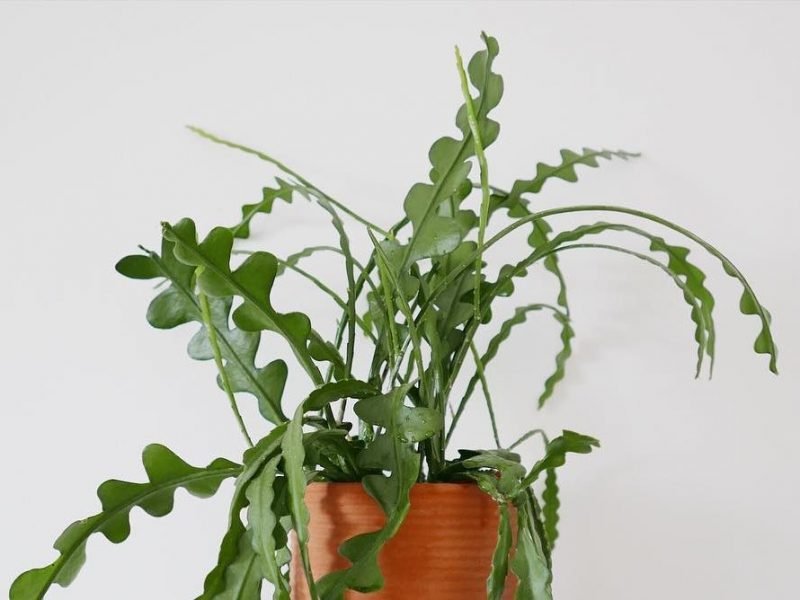
Their flat zig-zag leaves make the Fishbone Cactus something really special. And they aren’t even super difficult to care for which is a bonus. It’s important to note that the Fishbone Cactus is actually native to the jungles of Mexico rather than a desert. This means the care is slightly different to what you’d expect when you hear the word Cactus. They need a little bit more water and can only deal with some direct sunshine each day.

You’ll be pleased to hear that they are also really easy to propagate and are non-toxic too! The only downside is that they can be a little bit difficult to find but we hope as they continue to grow in popularity that they’ll soon be in every plant shop across the world.

Find out more in our Fishbone Cactus care guide.

4

Monkey Mask Monstera

Monstera Adansonii

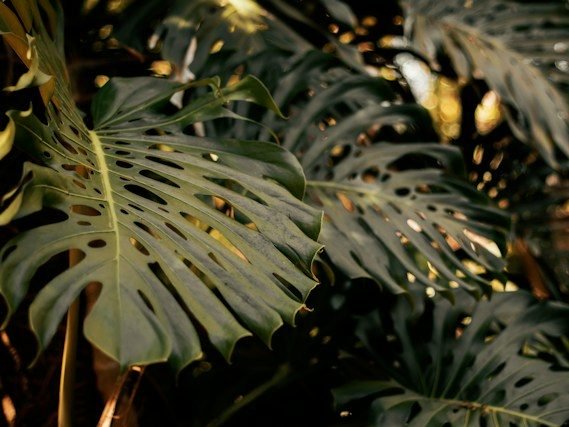
A close relative to the infamous Swiss Cheese Plant, the Monkey Mask Monstera never disappoints. With holes in the middle of the leaves, rather than running to the edges, this plant definitely stands out in a crowd. It can get a little rough and rugged looking as the vines intertwine around each other, but that gives it quite a rustic charm and brings a little bit of the jungle right to your home.

Monkey Mask Monstera plants can be grown with a moss pole if you’d prefer to prop it up, or it can be left to hang down out of the pot, making it adaptable to nearly any space in your home. When it comes to caring for your plant, avoid direct sunshine and super soggy, and make sure to mist the leaves regularly and your plant will be very happy!

Find out more in our Monkey Mask Monstera care guide.

5

Satin Pothos

Epipremnum pictum Argyraeus

Known for their unique silver speckled leaves, the Satin Pothos is the perfect houseplant for every plant parent as they are super simple to care for. They can grow quite quickly in the right conditions and are very easy to propagate, so cuttings and young plants can make great gifts.

Bright, indirect light and a consistent watering schedule will keep them happy and thriving. Avoiding colder rooms or areas with dryer air will really help in making sure your Satin Pothos will stay healthy all year round.

Originating from southeast Asia these plants will also appreciate a little extra humidity, so spraying them with a mist bottle every now and then will keep them closer to their natural environment.

Find out more in our Satin Pothos care guide.

6

String of Hearts

Ceropegia woodii

Native to South Africa, the String of Hearts should be top on your list for trailing houseplants. You don’t get much more unique than their speckled heart-shaped leaves. The other thing we love about the String of Hearts is that it’s such a fast grower over the spring and summer months, you’ll blink and there will be two new leaves popping out somewhere.

The String of Hearts is a semi-succulent plant meaning they don’t need much water, otherwise, it’ll cause their delicate shallow leaves to rot pretty quickly. Oh, and because they have such shallow roots, you won’t need to repot for a very very long time.

It makes the perfect plant for hanging down shelving, and because its pet friendly, you don’t need to worry about it ever becoming too long!

Find out more in our String of Hearts care guide.

7

Inch Plant

Tradescantia zebrina

Also known as the Inch Plant, we haven’t yet come across a faster-growing or easier to propagate houseplant. Native to the tropics of Mexico and South America, these plants offer something different with their purple and silvery leaves that transcend out of the pot.

Growing these indoors helps keep their growth more contained whilst still giving that wilderness feel which we love. Caring for these plants is also super easy as all they need is ample light and moderate water. They are quite forgiving though so won’t give up straight away if something’s a little off.

These plants are great for hanging planters or when placed on shelving so you can really make the most of those incredible vines. They can be mildly toxic though so you’ll want to keep them away from pets.

Find out more in our Inch Plant care guide.
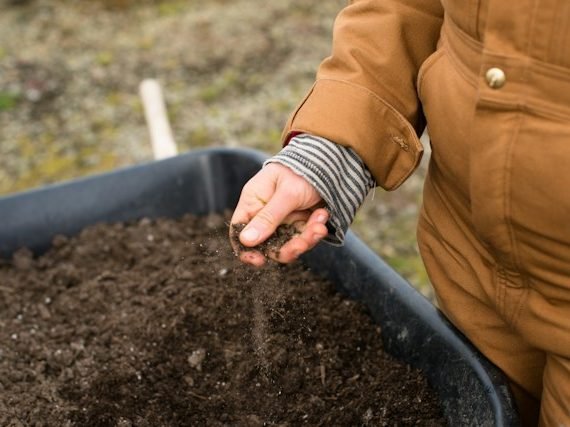
8

String of Pearls

Senecio rowleyanus

It’s not difficult to fall instantly in love with the String of Pearls plant as their incredible small spherical leaves cascade dramatically out of every pot and hanging basket. The String of Pearls is a succulent plant meaning they love a lot of sunshine but don’t need much too water as they are quite sensitive to root rot.

It’s important that you continuously propagate your String of Pearls plant as the vines don’t survive that long. Without any propagation, your plant might only last about 5-6 years but luckily you can just take stem cuttings to regenerate growth.

The thing we love most about the String of Pearls is how quickly it grows during spring and summer. It really makes up for the lack of growth during the darker colder months that’s for sure!

Find out more in our String of Pearls care guide.

9

Burro’s Tail

Sedum morganianum

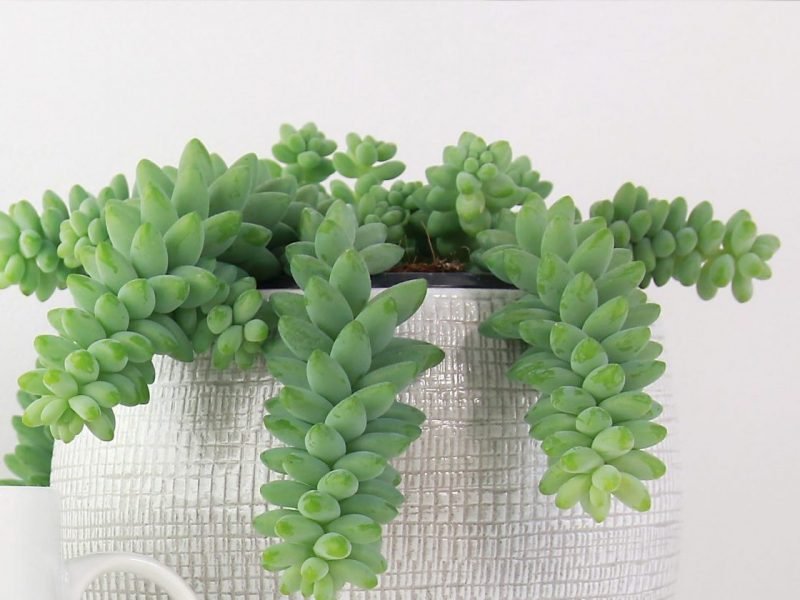
Also known as the Donkey’s Tail Plant, these striking succulents are loved for their delicate leaves that dramatically cascade out of the pot. Native to Mexico and Honduras, they are forgiving to the forgetful waterer as they store water in their leaves (this also makes them quite sensitive to overwatering so be mindful about that) and just need a nice warm sunny spot to be happy!

Their easy care routine does come at a cost, however, as the Burro’s Tail grows pretty slowly throughout the year. Their stems can often reach around 20-25 inches but it’s really important to handle the Burros Tail plant carefully as the stems break off with just the slightest touch. Luckily they enjoy being root-bound so you shouldn’t have to repot it very often and you can really easily propagate any stems or leaves that fall off. They are also non-toxic so great for homes with small children or furry friends.

Find out more in our Burro’s Tail care guide.

10

Marble Queen Pothos

Epipremnum Pinnatum


There are so many different varieties of Pothos plants, all with slightly different leaf variegation but the Marble Queen is definitely one of our favourites. Getting its name from the cream marble-like variegation on its leaves, it’s an easy-going, hardy and low light loving plant that can adapt to most spots in your home.

The Marble Queen Pothos is a pretty fast-growing plant so make sure you have enough space for it to mature. You can choose to grow them as trailing plants with long cascading vines or vertically by attaching them to a moss pole. Pothos plants are unfortunately toxic so you’ll want to keep them away from pets and small children who might try and nibble on the low hanging leaves.

Find out more in our Marble Queen Pothos care guide.

Fiddle and Thorn is a participant in the Amazon Services LLC Associates Program, an affiliate advertising program designed to provide a means for sites to earn advertising fees by advertising and linking to Amazon.com

Take our houseplant survey!

Quickly respond to our 30 second houseplant survey and get 75% off our Complete Houseplant Care eBook!

Take the Survey

No thanks…

The Best Soil for a Monstera Plant | The Ultimate Guide

Last Updated: April 8, 2023

One area that is often ignored when caring for Monstera plants is thinking about the potting soil. To a Monstera, the soil is not only their home but it’s also how they receive nutrients and plays a large part in watering issues too! So it’s no wonder that getting the right soil is crucial to the long-term health of your Monstera.

Ever wondered if your Monstera is growing in the right potting mix? Thinking of repotting but not sure what mix to buy? These are all really important questions and we will be going through everything you need to know in this article.


Understanding your Monstera’s Potting Soil Requirements

Soil is so commonly overlooked and plant parents will often just keep their plants in the same soil that it came with, or find the cheapest bag in the garden centre and hope for the best. However, the more you think about it, the more important soil becomes. It impacts the root system, water retention, aeration and nutrient levels.

Changing out the soil is also a really important thing to bring into your annual plant care routine. This keeps it fresh, bringing more nutrients to your plant.

If your Monstera is growing in the wrong soil or potting mix that is too old, you won’t see issues develop overnight but it can cause long-term problems slowly. Signs such as yellow leaves or leaves falling off your Monstera can indicate that the soil is nutrient deficient, whereas root rot and smelly soil can indicate that you need something that’s better at draining.

Factors to Consider When Choosing Soil for Your Monstera Plant

Soil pH

The pH of the potting mix plays a very important role because it can impact the bacteria balance which either benefits your Monstera or can damage it. If the pH is off, it can impact your plant’s ability to absorb certain nutrients which can leave it with a nutrient deficiency or an excess of nutrients, both of which can have a negative impact on growth.

It’s important that the potting mix has a pH somewhere between 5.5 and 7. Whilst they can sometimes adapt to a pH level slightly outside of this, you want to avoid any extremes.


Nutrient content of the soil

Choosing a potting mix that is high in the main nutrients is key. Monstera plants need over 15 different nutrients to thrive but only a few are needed in higher quantities. These are nitrogen, potassium, sulfur, calcium, magnesium, and phosphorus. Look for these in the descriptions of the potting mix options to make the best choice.

You don’t need to worry too much about getting soil that hits all of these boxes as nutrient content is something that you can boost very easily with fertilizer.


Drainage and moisture retention

You need to make sure that you are choosing a well-draining potting mix but not a succulent or cacti mix. A cacti mix will contain too much sand which means it won’t retain much water at all. Instead, a general well-draining soil designed for the majority of houseplant types will often contain perlite which improves the structure of the soil is great for drainage but also ingredients that help to retain some moisture.

It may seem counterproductive to have ingredients to help drain and retain moisture but Monstera plants need a good balance. They don’t like to have fully dry soil for extended periods of time but also hate waterlogged soil.


Organic matter

Your Monstera will thrive in a potting mix that has at least some organic matter. This is commonly peat moss but can also be different types of bark. Peat moss can easily be bought separately and added to existing potting mix so we recommend doing that if you can’t find one that includes it and ticks all of the other boxes.

The Best Soil Types and Ingredients for Monstera Plants

Pre-mixed houseplant potting soil

Most of the time your Monstera will grow nicely in a pre-mixed houseplant soil as long as you’ve made sure it contains some of the main important ingredients. You want to avoid using a cacti or succulent mix as whilst your Monstera will likely still grow in it, your plant won’t thrive.

Make sure that the mix is well-draining though as this will be crucial to avoiding root rot and the consequences of that.


Perlite

This is a must-have for your Monstera’s soil as it contributes to the potting mix being well-draining which helps to prevents waterlogged soil and root rot. Perlite is also another benefit in that it helps aerate the soil which promotes healthy root growth and fights bacterial growth.


Vermiculite

This is also another ingredient that you’ll find in many potting mixes as it acts as a water retainer and then slowly releases it. It’s also another one that helps with soil aeration which is a bonus!


Coconut coir

This is a great ingredient to bring into your Monstera’s potting mix as it acts as a water retainer but is also organic and much better at re-moisturising compared to peat moss. This means that once the soil dries out fully, coconut coir is great at taking in moisture quickly.

Tips on Potting your Monstera

Now that you’ve chosen or created the ideal potting mix for your Monstera, it’s time to actually repot your plant.


Choosing the right pot

If your Monstera is showing signs of being rootbound, then you may need to increase the pot size at the same time as swapping the potting mix. Signs that your plant needs a bigger pot include roots growing out of the drainage holes or the top of the pot, the roots being in tight coils and stagnant growth during summer.

If you are upsizing the pot, choose one only a few centimeters wider in diameter. It can be tempting to choose a pot much bigger so that you don’t have to repot for a while but this can impact the root stability of your Monstera. Another disadvantage to this is that the more soil is in the pot, the longer it will take to dry out, which increases the risk of root rot.

Other than size, you also need to consider the material of the pot. Ideally you want to choose a terracotta pot as these are permeable and let some of the excess water escape out of the sides. Plastic pots do have benefits in terms of price and weight but terracotta is better for the overall health of your plant.


Preparing the soil mixture

Make sure that the ingredients are well mixed before repotting your Monstera. Another thing you want to look out for are pests in the soil. This is very rare in new potting mix but it can happen from time to time so just make sure to check it over.


Potting your Monstera Plant

We have two main tips when it comes to removing your Monstera from its pot and replacing the soil. Firstly, make sure to untangle any roots that are growing out of the drainage holes. If you remove your plant before doing this they will snap and break off.

The second tip is to always pull from the base of the plant and the stems, rather than the leaves. Pulling from the leaves can very easily damage them.


Watering and monitoring your Monstera after potting

Once you have replaced the soil, make sure to give your Monstera a deep watering to help it recover from the shock. Then make sure to monitor your plant over the next few weeks to spot any signs of unhappiness.

Testing your Monstera’s soil

The importance of soil testing

If your plant is having problems and you can’t seem to figure out what’s causing it, it might be worth testing the pH of the soil. Aside from problems, it can also be a good idea to do this about once a year to make sure that everything is OK. An extreme pH score can impact the health of your Monstera so you want to make sure it’s falling within or around the 5.5 to 7 range.


How to test soil pH

The easiest way to test the pH of your Monstera’s soil is to use pH test strips. They are really easy to use and will give you a fast and accurate result. You can also often send off to or drop off a sample at your local garden centre and they’ll usually test it for free.


Adjusting the soil pH

To raise the soil pH, agricultural lime or wood ashes are the most commonly used methods. To bring the pH down, pine needles can be an effective way of doing this. It can be tricky to adjust the soil pH to the right amount so it might take a little bit of trial and error.

We hope that this soil guide for Monstera plants has been useful and you’re now equipped with everything you need to know about choosing the right soil for your plant. It can be a tricky decision as there are a lot of pre-mixed options as well as benefits from making it yourself.

However, the most important thing is that you choose a high-quality mix and don’t reuse potting mix from an old plant. There can be harmful bacteria and even pests living in old soil so we don’t recommend repurposing it for your Monstera (or other houseplants).

To learn more about caring and watering your plant, check out our Monstera care guide.

Fiddle and Thorn is a participant in the Amazon Services LLC Associates Program, an affiliate advertising program designed to provide a means for sites to earn advertising fees by advertising and linking to Amazon.com

Take our houseplant survey!

Quickly respond to our 30 second houseplant survey and get 75% off our Complete Houseplant Care eBook!

Take the Survey

No thanks…

The 14 Best Minimalist Houseplants for your Home

Last Updated: December 31, 2021

Minimalist Interior with Houseplants

You may not think it’s possible to have a minimalist home with loads of houseplants, but if you choose the right ones and style them right, it can be pretty satisfying. Instead of having lots of crazy untamed plants dotted around your home, choosing one large statement plant or a few smaller plants grouped on shelves will help fit in with your minimalist interior style.

We have chosen some of the sleekest houseplants to make a real statement in your home, whilst not pulling the calmness away from your minimalist home.

1

ZZ Plant

Zamioculcas zamiifolia

Also known as the Zanzibar Gem, the ZZ Plant is a great low-maintenance minimalist houseplant. Loved for their dark green glossy oval leaves, we recommend this one for those without a fantastic track record of keeping plants alive, but also for anyone looking for something smart and stylish to spruce up their home. They are very adaptable and will deal well with some bright but indirect light, as well as shady dark corners of your home.

The ZZ Plant is quite slow-growing so you won’t see new stems popping out all of the time. It’s important to note that they grow bulb-like roots called rhizomes so will need quite a large pot to really thrive and grow. This also means they are drought tolerant as they store water in their rhizomes.

Find out more in our ZZ Plant care guide.

2

Asparagus Fern

Asparagus Setaceus

The Asparagus Fern is such an elegant little houseplant – and although they look like they’ll be hard work to keep happy, they’re actually pretty simple to care for. Given the right conditions, they can grow extremely quickly and you’ll find new stems popping up every week.

They aren’t too fussy on light conditions or watering schedules, but humidity is a must for them. Make sure to give them a spray with a mist bottle every 3-5 days or place near a humidifier to keep them happy in the long term. The leaves and stems will yellow if they aren’t happy, if that happens to you then just give your Asparagus Fern another spray down and a little extra water.

Find out more in our Asparagus Fern care guide.

3

Kentia Palm

Howea forsteriana

Kentia Palms are pretty hardy plants that can stand environments that many other houseplants wouldn’t be able to, making them quite easy to care for. They can grow up to 40 feet outdoors but will rarely get over 13 feet when kept indoors.

They can be quite fussy about watering however and prefer to get little and often as this stops their soil from drying out completely or being soggy for longer periods of time. They also aren’t great with having dusty leaves, so we recommend wiping them down with a damp cloth every now and then to keep them clean.

The good news is that they are completely safe and non-toxic, so perfect for homes with pets or kids!

Find out more in our Kentia Palm care guide.

4

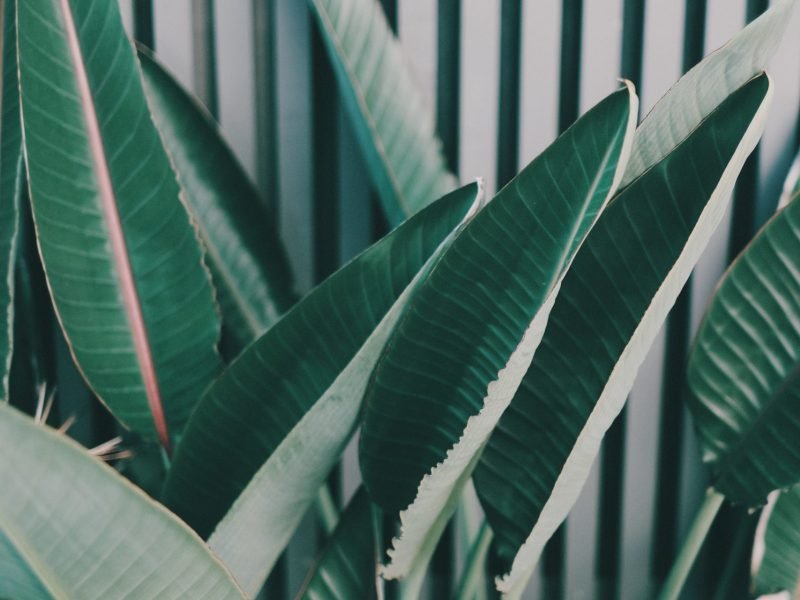
Bird of Paradise

Strelitzia Reginae

If you’re dreaming of a tropical getaway, then a Bird of Paradise is the next best thing. Native to South Africa, they are loved for their incredible orange and blue leaves that resemble birds (which explains the name). It’s really important that you keep your pets away from the flowers and leaves as they can be very toxic if ingested so we don’t really recommend this one to pet parents, unfortunately.

It’s also important that you have a lot of space when buying a Bird of Paradise plant as they do grow up to about 2 metres in size. But if you have the space for it, then they are the perfect plant for those looking for something a little more exotic.

Find out more in our Bird of Paradise care guide.

5

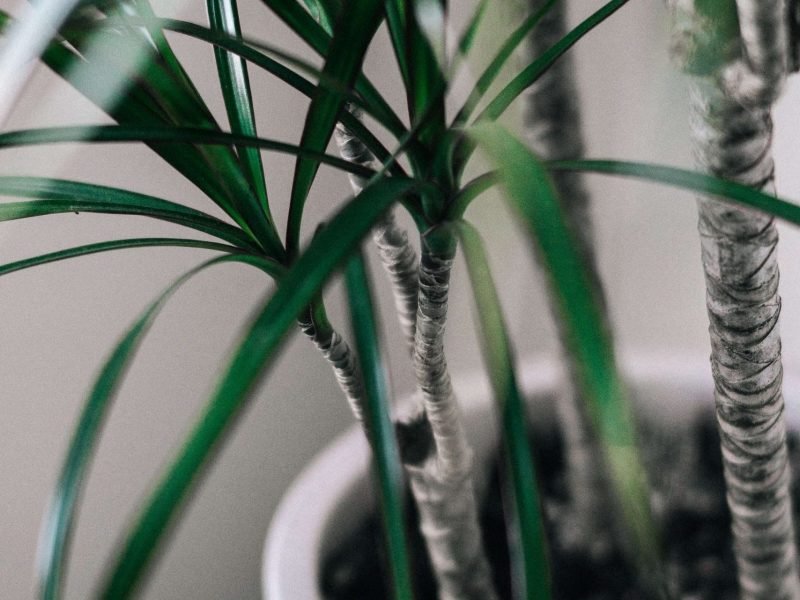
Dragon Tree

Dracaena draco

The Dragon Tree was actually our first ever houseplant and ignited our initial love for caring for indoor plants many years ago. Native to Madagascar, it’s a timeless plant that brings elegance and style to every room. They are also super easy to care for and are great at purifying the air which makes them the perfect entry-level houseplant.

You’ll have a hard time trying to kill a Dragon Tree as they are pretty drought-tolerant and forgiving when it comes to light, temperature levels and humidity so it’ll adapt well to every spot in your home.

Although they can reach up to 6 metres in their natural outdoor habitat, they’ll only ever get to about 1.5/2 metres when grown indoors (and even this will take years and years) so you don’t need to worry about it getting too big to handle.

Find out more in our Dragon Tree care guide.

6

African Mask Plant

Alocasia amazonica

If there is one plant that has risen up the popularity ranks recently, it’s the African Mask Plant! You can now buy these at basically every plant shop, market and superstore globally as they are definitely the most popular of the Alocasia family. And we totally understand why they have become so popular, their intense glossy shield-like leaves are adorned with strong white veins which really make them something special.

They aren’t a great plant for beginners, however, as they do require decent light levels, as well as warm temperatures and a consistent high humidity level. Misting this plant is really crucial or it’ll start to develop some issues.

If in the right environment, your African Mask Plant can grow well above 1 metre but this will take many years as they don’t produce that many new leaves each year. This is why it’s crucial you take good care of the leaves your plant does have by regularly dusting and inspecting for issues.

Find out more in our African Mask Plant care guide.
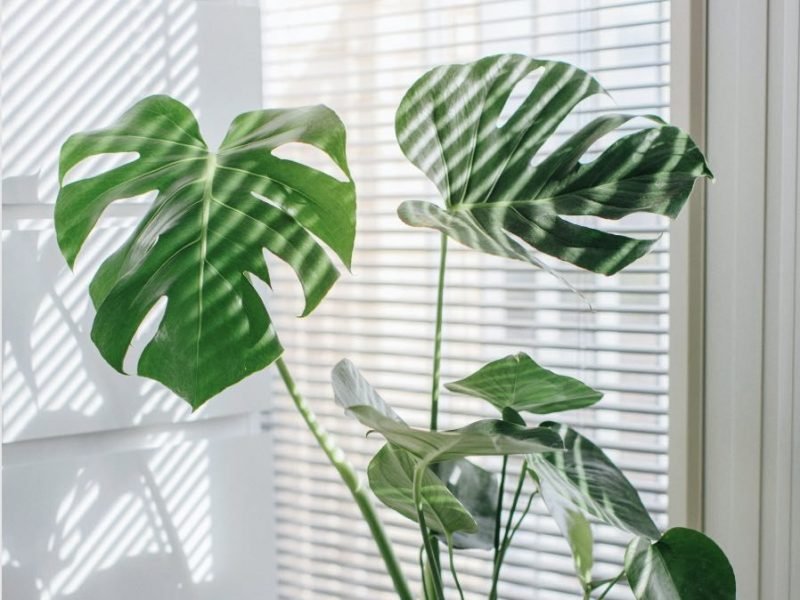
7

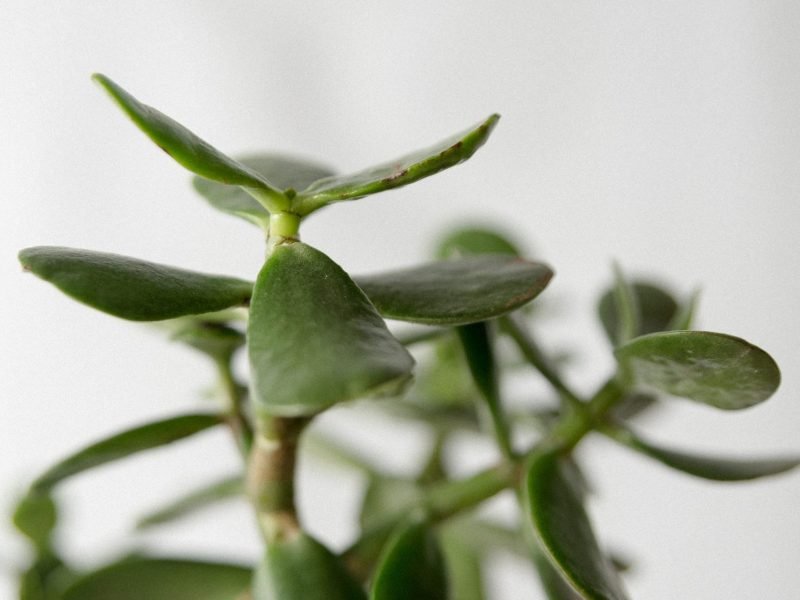
Jade Plant

Crassula ovata

Believed to bring luck, Jade Plants are one of the most popular succulent varieties. They are best known for their oval-shaped leaves and strong stems which become quite woody as they mature.

When it comes to caring for your Jade Plants, the top two things to remember is to give it a spot that gets ample sunshine throughout the day as well as making sure the potting mix has fully dried out before watering again as they are susceptible to root rot if you’re not careful. Jade Plants are quite slow growers though, so even if the environment and care routine are perfect, they may only grow a few inches per year.

Find out more in our Jade Plant care guide.
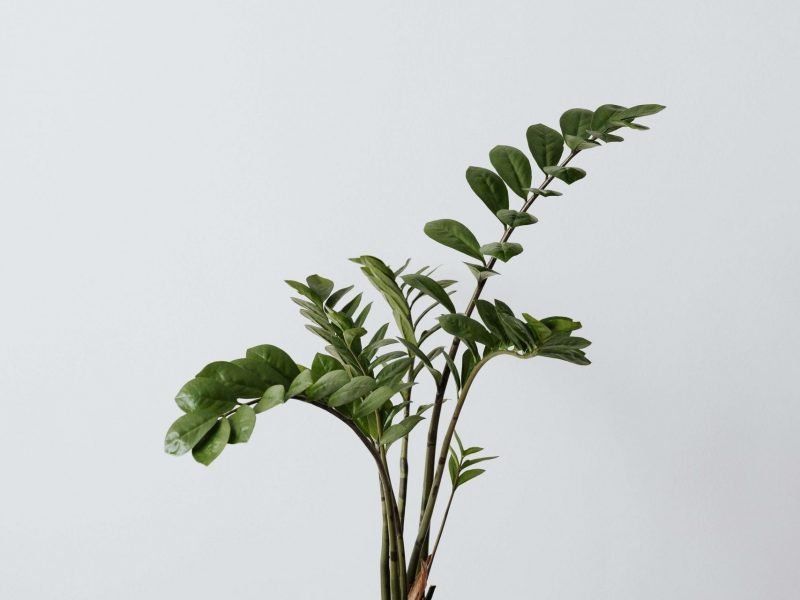
8

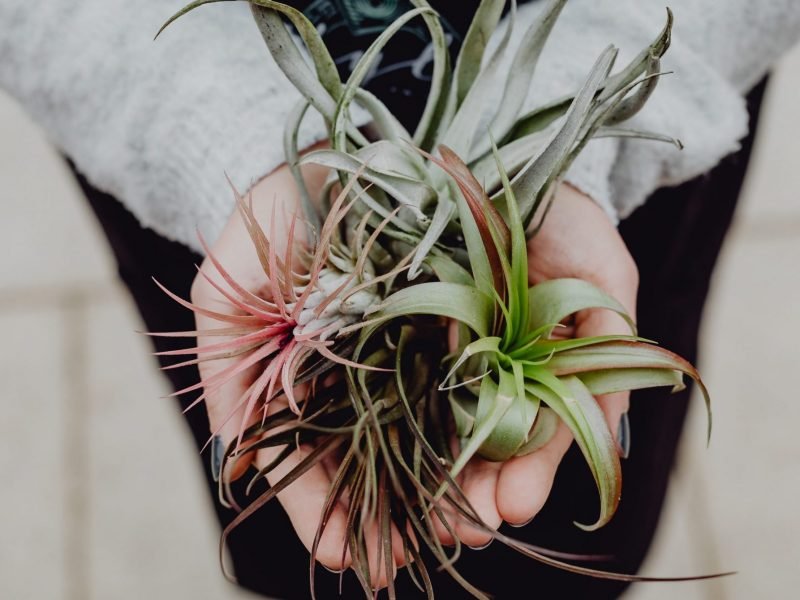
Air Plant

Tillandsia

There are hundreds of Air Plant varieties for you to fall in love with, all with relatively similar care requirements. If you haven’t already guessed from the name, Air Plants are pretty different to most other houseplant types as they don’t grow in soil. Instead, all they need is regular misting and the occasional bath to survive!

Native to areas across Central and South America, Air Plants need warm temperatures and high humidity levels to really thrive which makes them great plants for terrariums. But don’t think this is the only way to grow Air Plants, because with a little bit of care and attention to their environment, you can grow them in most homes with no problems!

Find out more in our Air Plant care guide.

9

Cast Iron Plant

Aspidistra elatior

The Cast Iron Plant is a fantastic, glossy houseplant that gives a real tropical feel to your space. On top of all of this, they’re also pretty simple to care for and can take a good variety of conditions without issues. This hardiness is where they got their name from, because they are just that tough.

Cast Iron Plants are perfect for areas that don’t have quite as much light, and will happily continue to grow in a shady spot. If you provide a little extra humidity, using something like a spray bottle or humidifier, you can expect your Cast Iron Plant to really thrive.

We definitely recommend these as a starter or beginner houseplant due to their ease of maintenance, but don’t be disheartened by the fact that they do grow quite slowly.

Find out more in our Cast Iron Plant care guide.

10

Rubber Plant

Ficus elastica

The name Rubber Plant comes from the latex in the leaves, which was once used to actually make rubber! They are a great plant to bring a little bit of that rainforest feel right into your home. And whilst they can reach about 30 metres in their native environment, when potted in your home they’ll be much smaller don’t worry!

Caring for your Rubber Plant doesn’t have to be difficult. Good light levels and not too much water are the basics to remember. As they are native to Southern Asia, they love humidity and will really struggle with dry air so regularly misting will keep your plant happy and healthy.

Find out more in our Rubber Plant care guide.
11

Snake Plant

Sansevieria Trifasciata

The bold and striking leaves of the Snake Plant make it stand out wherever you put it! Not only are they slow-growing, but they transcend upwards so are great for small spaces or that corner you never know what to do with. They have some of the sturdiest leaves or any houseplant, and their sharp leaf tips have given the plant the nickname of mother-in-laws-tongue!

When it comes to care, Snake Plant are super easy to look after, they can adapt to a range of light levels (are great low light plants), prefer dry soil and don’t need much attention in the way of misting or repotting etc. So if you want a low maintenance, sturdy houseplant, then the Snake Plant is your perfect match!

Find out more in our Snake Plant care guide.

12

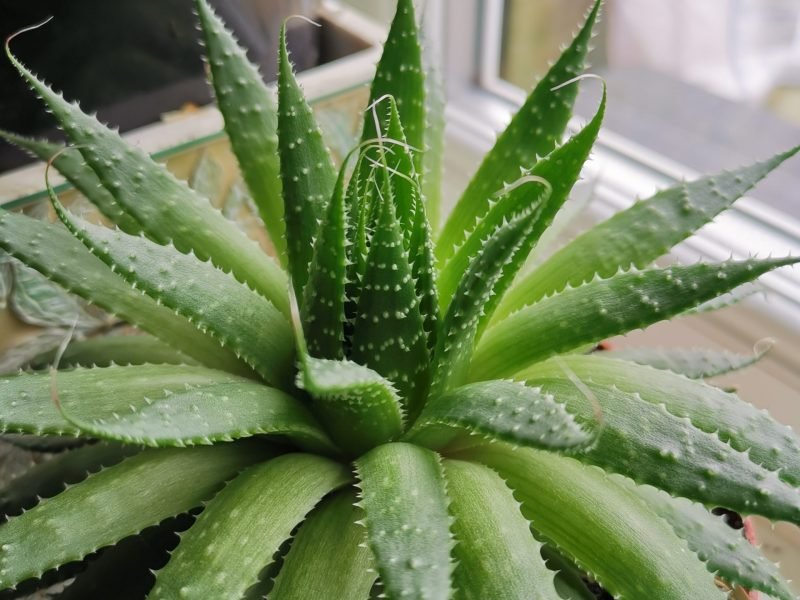
Aloe Vera

Aloe Barbadensis Miller

Although Aloe Vera plants are commonly loved for their gel, they are much more than just their health and beauty benefits, as they make for a super minimalist and forgiving houseplant! Like most other succulents, Aloe Vera plants don’t need much tending to as they thrive in dry coarse potting mix. But it is important that they get a good amount of bright light or will become quite straggly.

As they mature a little, you’ll see lots of little Aloe pups popping up which can be very easily removed from the mother plant and propagated! Aloe plants are super affordable and you can pick them up basically anywhere that sells plants, even supermarkets will often sell them in the summer months.

Find out more in our Aloe Vera care guide.
13

Swiss Cheese Plant

Monstera deliciosa

Native to the rainforests of Central America, the Monstera Deliciosa has very quickly become the most fashionable and photographed houseplant ever. And it’s not difficult to understand why… If their large dark green glossy heart-shaped leaves weren’t enough, their unique splits surely will be!

You might be surprised to learn that the Monstera isn’t actually a fussy plant and is pretty easy to take care of. Bright but indirect light, moderate amounts of water and regularly misting are really the main things to remember.

You’ll find that a lot of more mature Monstera plants are sold with a moss pole as they are climbing plants. In the rainforest, the ariel roots that pop out from the stems will attach themselves to other plants as the plant matures. So a moss pole is a good substitution to help your plant grow and mature.

Find out more in our Swiss Cheese Plant care guide.
14

Yucca

Yucca elephantipes

A staple of many homes, the Yucca is one of the most popular houseplants and you’ll often see them around offices, shops and restaurants too! They’re super easy to care for so are perfect for all plant parents. They were very popular in the ’70s so are a great way to get a little bit of vintage style in your home.

As they mature, Yucca plants can grow about 2 metres in height so make it the perfect feature plant for your space. They are very slow-growing though so if you don’t have as much space, a smaller plant won’t outgrow the room very quickly.

They are very low maintenance and can adapt to most light levels, temperature and humidity levels but unfortunately, they are toxic to keep that in mind if you have pets or small children.

Find out more in our Yucca care guide.
Fiddle and Thorn is a participant in the Amazon Services LLC Associates Program, an affiliate advertising program designed to provide a means for sites to earn advertising fees by advertising and linking to Amazon.com

Take our houseplant survey!

Quickly respond to our 30 second houseplant survey and get 75% off our Complete Houseplant Care eBook!

Take the Survey

No thanks…

The 10 Best Low Light Houseplants

Last Updated: December 31, 2021

Our Favourite Low Light Houseplants

We are often told that houseplants need a really good amount of light to thrive, but that’s not always the case. There are several houseplants that actually prefer lower light levels and others that can happily adapt to shady corners. But what does low light actually mean? Well if your room has no windows (like a lot of bathrooms, basements or laundry rooms), then unfortunately this won’t be good for any plant as they need at least some light to photosynthesise. Low light often means north-facing rooms (if you’re in the northern hemisphere), or at the other side of the room to the window in brighter rooms.

If you’re not sure what light levels you have in your home, a light meter can be a great way to make sure your houseplants are getting the preferred amount of light.

Be mindful that light levels will change throughout the day and across the year so monitor the spots your houseplants are in and adjust across the seasons if needed. For example, in winter, not only is the sun out for less of the day, but it’s much weaker so it can be a good idea to place your plants nearer the window to maximise that sunlight.

1

Devil’s Ivy

Epipremnum aureum

These are pretty unique houseplants because they actually prefer lower-light conditions over anything else! That’s where the name comes from, as they are well acquainted with the darkness. If you have a variegated variety, it will actually start to lose its pattern on new leaves if placed in too much sunlight. So you don’t need to feel guilty about putting your Devil’s Ivy in a shady spot because it will actually love you for it.

They are also pretty hardy plants in terms of their other care requirements. They don’t need complicated watering schedules or specific pruning so are perfect for any new plant parents. You can’t really go wrong with these at all!

When it comes to styling the Devil’s Ivy plant, shelving is where they thrive as it gives it room to cascade dramatically out of the pot. They can be trained to grow upwards by a wall or moss pole so the option is yours.

Find out more in our Devil’s Ivy care guide.
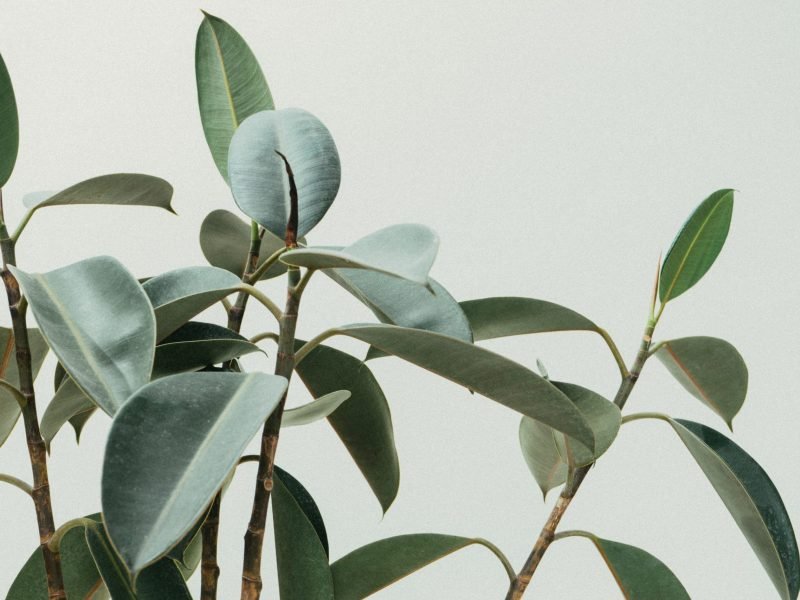
2

Chinese Evergreen

Aglaonema

If you find that you are often killing your houseplants and you can’t seem to figure out why, then the Chinese Evergreen is the one for you. Native to South-East Asia, they are so hardy that they’ll grow and thrive in basically any home so it’s the perfect low-light beginner plant.

Chinese Evergreens have incredible leaves, full of splashes of white, silver or pink depending on the particular variety. They are quite slow growing though (as most hardy plants are), so don’t expect a lot of new growth every year.

Find out more in our Chinese Evergreen care guide.
3

Spider Plant

Chlorophytum comosum

Spider Plants are the perfect plant for a houseplant beginner as they are super easy to care for, grow pretty quickly, and produce an abundance of spider babies which can be propagated in seconds.

The best thing about Spider Plants is that you would really have to try to kill them as they adapt to and survive in most environments and don’t mind being a little neglected. They even show you when they need more water by going quite light green. But after a little bit of water, they spring back to full health in minutes.

As your plant matures, you’ll start to see it sprouting little spiderettes which you can choose to remove from the plant to create new Spider Plants. In low light conditions, growth will be slightly slower and you might not see as many spiderettes growing but it doesn’t mean you won’t get any.

Find out more in our Spider Plant care guide.
4

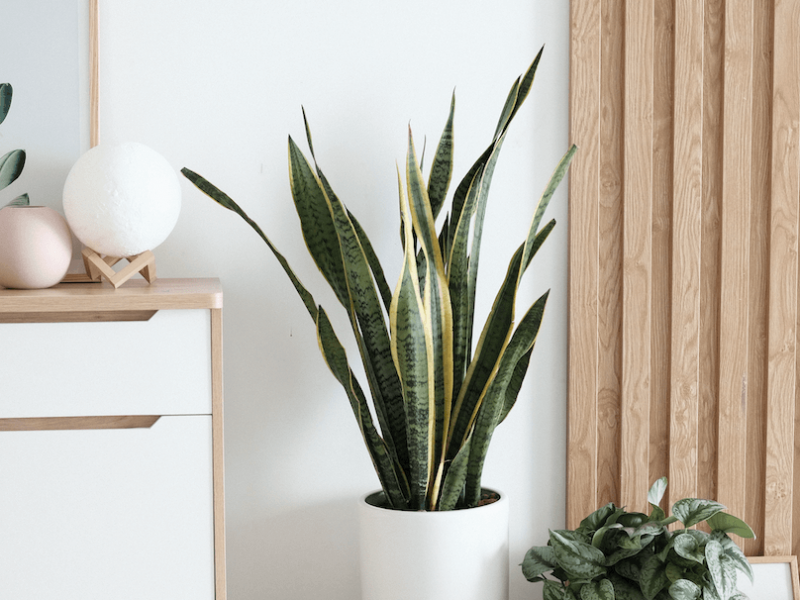
Snake Plant

Sansevieria Trifasciata

The bold and striking leaves of the Snake Plant make it stand out wherever you put it! Not only are they slow-growing, but they transcend upwards so are great for small spaces or that corner you never know what to do with. They have some of the sturdiest leaves or any houseplant, and their sharp leaf tips have given the plant the nickname of mother-in-laws-tongue!

When it comes to care, Snake Plant are super easy to look after, they can adapt to a range of light levels which make them great for low light areas, as well as bright windowsills. They prefer dry soil and don’t need much attention in the way of misting or repotting etc. So if you want a low maintenance, sturdy houseplant, then the Snake Plant is your perfect match!

Find out more in our Snake Plant care guide.

5

ZZ Plant

Zamioculcas zamiifolia

Also known as the Zanzibar Gem, the ZZ Plant is a great low-maintenance minimalist houseplant. Loved for their dark green glossy oval leaves, we recommend this one for those without a fantastic track record of keeping plants alive, but also for anyone looking for something smart and stylish to spruce up their home. They are very adaptable which is why they’ve made the cut for the top low light plants. Growth will be slow in shady spots but other than that, it’ll cope just fine.

The ZZ Plant is quite slow-growing so you won’t see new stems popping out all of the time. It’s important to note that they grow bulb-like roots called rhizomes so will need quite a large pot to really thrive and grow. This also means they are drought tolerant as they store water in their rhizomes.

Find out more in our ZZ Plant care guide.
6

Dragon Tree

Dracaena draco

The Dragon Tree was actually our first ever houseplant and ignited our initial love for caring for indoor plants many years ago. Native to Madagascar, it’s a timeless plant that brings elegance and style to every room. They are also super easy to care for and are great at purifying the air which makes them the perfect entry-level houseplant.

You’ll have a hard time trying to kill a Dragon Tree as they are pretty drought-tolerant and forgiving when it comes to light, temperature levels and humidity so it’ll adapt well to every spot in your home.

Although they can reach up to 6 metres in their natural outdoor habitat, they’ll only ever get to about 1.5/2 metres when grown indoors (and even this will take years and years) so you don’t need to worry about it getting too big to handle.

Find out more in our Dragon Tree care guide.
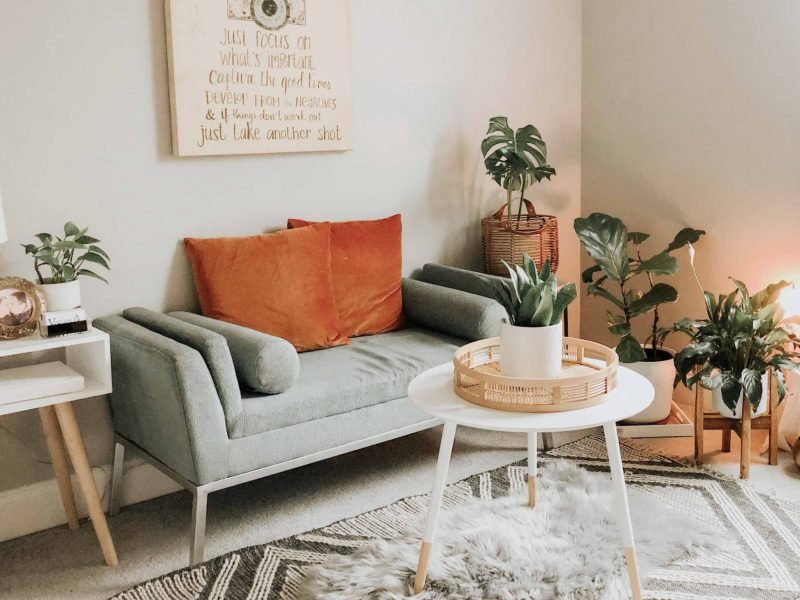
7

Peace Lily

Spathiphyllum wallisii

There’s a reason that Peace Lilies are so popular, and it’s not just because of their incredible white flowers. They are super low maintenance plants that can adapt and thrive in most homes. They can tolerate all light levels which is super rare for houseplants. When grown in lower light areas, you may see less flowering but a few should pop up every now and again.

Our favourite thing about the Peace Lily is that it really helps us plant parents out by drooping its leaves when it really needs water. This can help you spot underwatering before it’s really a problem. Within minutes of watering, the leaves will perk up – it’s pretty cool! And if we haven’t sold you on the Peace Lily yet, then you should probably know that they are also one of the best plants at purifying the air and removing chemicals from your home!

Find out more in our Peace Lily care guide.

8

Ponytail Palm

Beaucarnea recurvata

This is a Palm with a personality! The Ponytail Palm is loved for its long curly leaves which instantly bring the tropical beach vibes…

Interestingly, the Ponytail Palm is neither a palm nor a tree, it’s actually a succulent which is why they are super low maintenance. They don’t need much water as they are able to store it in their trunk and they are really adaptable to light levels which make them perfect for shady corners as well as right next to large windows. The only drawback of the Ponytail Palm is that it’s quite slow-growing so don’t expect it to be constantly growing new leaves.

Find out more in our Ponytail Palm care guide.

9

Rubber Plant

Ficus elastica

The name Rubber Plant comes from the latex in the leaves, which was once used to actually make rubber! They are a great plant to bring a little bit of that rainforest feel right into your home. And whilst they can reach about 30 metres in their native environment, when potted in your home they’ll be much smaller don’t worry!

Caring for your Rubber Plant doesn’t have to be difficult. Good light levels and not too much water are the basics to remember but they can grow well in low light too (just growth will be slower and sometimes slightly leggy). As they are native to Southern Asia, they love humidity and will really struggle with dry air so regularly misting will keep your plant happy and healthy.

Find out more in our Rubber Plant care guide.

10

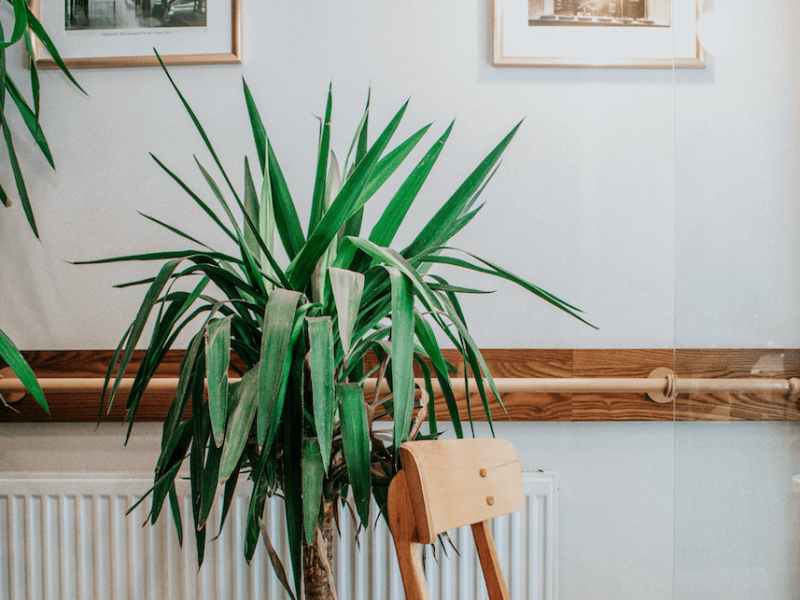
Yucca

Yucca elephantipes

A staple of many homes, the Yucca is one of the most popular houseplants and you’ll often see them around offices, shops and restaurants too! This is because they are super easy to care for so are perfect for all plant parents (even the forgetful waterers). They were very popular in the ’70s so are a great way to get a little bit of vintage style in your home.

As they mature, Yucca plants can grow about 2 metres in height so make it the perfect feature plant for your space. They are very slow-growing though so if you don’t have as much space, a smaller plant won’t outgrow the room very quickly.

They are very low maintenance and can adapt to most light levels, temperature and humidity levels but unfortunately, they are toxic to keep that in mind if you have pets or small children.

Find out more in our Yucca care guide.

Fiddle and Thorn is a participant in the Amazon Services LLC Associates Program, an affiliate advertising program designed to provide a means for sites to earn advertising fees by advertising and linking to Amazon.com

Take our houseplant survey!

Quickly respond to our 30 second houseplant survey and get 75% off our Complete Houseplant Care eBook!

Take the Survey

No thanks…

The 10 Best Houseplants for your Small Apartment

Last Updated: December 31, 2021

Top houseplant types for your small apartment

It can be frustrating sometimes when we can’t fit everything we’ve dreamed of into the 500 square feet apartment. But you shouldn’t need to compromise on having houseplants just because you don’t have loads of space. We have compiled a list of the best plants for small spaces and apartments which include hanging plants, small plants and slow-growing ones too.

By hanging them on shelves, it removes the need for a lot of floor space. And plants that don’t grow super quick (and therefore don’t need to be repotted often) mean you won’t suddenly wake up one day and your plant is taking over the entire room!

1

Devil’s Ivy

Epipremnum aureum

These are pretty unique houseplants because they actually prefer lower-light conditions over anything else so are perfect for that little shady corner that needs sprucing up! That’s where the name comes from, as they are well acquainted with the darkness. If you have a variegated variety, it will actually start to lose its pattern if placed in too much sunlight. So you don’t need to feel guilty about putting a Devil’s Ivy in a shady spot because it will actually love you for it.

They are also pretty hardy plants in terms of their other care requirements. They don’t need complicated watering schedules or specific pruning so are perfect for any new plant parents. You can’t really go wrong with these at all!

When it comes to styling the Devil’s Ivy plant, shelving is where they thrive as it gives it room to cascade dramatically out of the pot. They can be trained to grow upwards by a wall or moss pole so the option is yours and depends on what space you want it to grow into.

Find out more in our Devil’s Ivy care guide.

2

Chinese Money Plant

Pilea Peperomioides

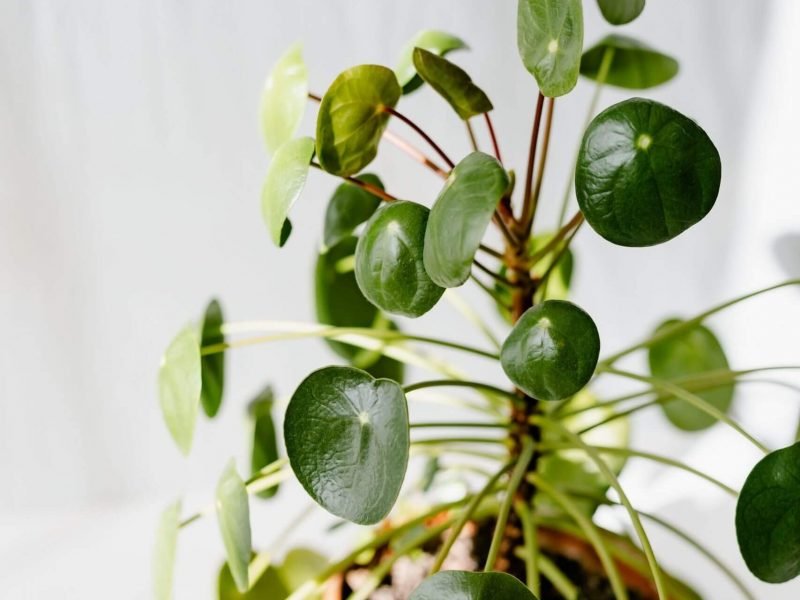
Otherwise known as the Chinese Money Plant (they are believed to bring good luck and fortune to its owner), Pilea plants are a must-have! They initially became popular because they are so easy to propagate which meant Pilea pups got passed around a lot between friends and family, earning itself the nickname ‘pass it on plant’

When it comes to care, Pilea’s are somewhere in-between fussy and low maintenance. They aren’t great in low light areas, and also hate soggy or super dry soil so finding the right balance is key for Pilea care. They can start off super small and don’t grow very quickly at all, making them perfect for that windowsill or bedside table.

Find out more in our Chinese Money Plant care guide.

3

Snake Plant

Sansevieria Trifasciata

The bold and striking leaves of the Snake Plant make it stand out wherever you put it! Not only are they slow-growing, but they transcend upwards so are great for small spaces or that corner you never know what to do with. They have some of the sturdiest leaves or any houseplant, and their sharp leaf tips have given the plant the nickname of mother-in-laws-tongue!

When it comes to care, Snake Plant are super easy to look after, they can adapt to a range of light levels (are great low light plants), prefer dry soil and don’t need much attention in the way of misting or repotting etc. So if you want a low maintenance, sturdy houseplant, then the Snake Plant is your perfect match!

Find out more in our Snake Plant care guide.

4

Raindrop Peperomia

Peperomia Polybotrya

Don’t mistake this one for the more common Pilea Peperomioides as it’s definitely got its own personality and is so much easier to care for!! With teardrop-shaped leaves, the Raindrop Peperomia only grows to about 30m high so is perfect for a windowsill or small space.

When it comes to caring for them, they really aren’t fussy. Just a good amount of sunlight, moderate water levels and preferably away from cold drafts. One top tip we have to keep the leaves clean is misting them or wiping them down regularly as the large flat leaves just invite dust to settle. Oh, and they are safe for pets too so what’s not to love!

Find out more in our Raindrop Peperomia care guide.

5

Aloe Vera

Aloe Barbadensis Miller

Although Aloe Vera plants are commonly loved for their gel, they are much more than just their health and beauty benefits, as they make for a super minimalist and forgiving houseplant! Like most other succulents, Aloe Vera plants don’t need much tending to as they thrive in dry coarse potting mix. But it is important that they get a good amount of bright light or will become quite straggly.

As they mature a little, you’ll see lots of little Aloe pups popping up which can be very easily removed from the mother plant and propagated! Aloe plants are super affordable and you can pick them up basically anywhere that sells plants, even supermarkets will often sell them in the summer months.

Find out more in our Aloe Vera care guide.

6

String of Hearts

Ceropegia woodii

Native to South Africa, the String of Hearts should be top on your list for trailing houseplants. You don’t get much more unique than their speckled heart-shaped leaves. The other thing we love about the String of Hearts is that it’s such a fast grower over the spring and summer months, you’ll blink and there will be two new leaves popping out somewhere.

The String of Hearts is a semi-succulent plant meaning they don’t need much water, otherwise, it’ll cause their delicate shallow leaves to rot pretty quickly. Oh, and because they have such shallow roots, you won’t need to repot for a very very long time.

It makes the perfect plant for hanging down shelving, and because its pet friendly, you don’t need to worry about it ever becoming too long!

Find out more in our String of Hearts care guide.

7

Jade Plant

Crassula ovata

Believed to bring luck, Jade Plants are one of the most popular succulent varieties. They are best known for their oval-shaped leaves and strong stems which become quite woody as they mature.

When it comes to caring for your Jade Plants, the top two things to remember is to give it a spot that gets ample sunshine throughout the day as well as making sure the potting mix has fully dried out before watering again as they are susceptible to root rot if you’re not careful. Jade Plants are quite slow growers though, so even if the environment and care routine are perfect, they may only grow a few inches per year which is why they are perfect for small spaces that still need a little bit of luscious greenery!

Find out more in our Jade Plant care guide.

8

Peace Lily

Spathiphyllum wallisii

There’s a reason that Peace Lilies are so popular, and it’s not just because of their incredible white flowers. They are super low maintenance plants that can adapt and thrive in most homes. They can tolerate all light levels which is super rare for houseplants.

Our favourite thing about the Peace Lily is that it really helps us plant parents out by drooping its leaves when it really needs water. This can help you spot underwatering before it’s really a problem. Within minutes of watering, the leaves will perk up – it’s pretty cool! And if we haven’t sold you on the Peace Lily yet, then you should probably know that they are also one of the best plants at purifying the air and removing chemicals from your home!

Find out more in our Peace Lily care guide.

9

Ponytail Palm

Beaucarnea recurvata

This is a Palm with a personality! The Ponytail Palm is loved for its long curly leaves which instantly bring the tropical beach vibes…

Interestingly, the Ponytail Palm is neither a palm nor a tree, it’s actually a succulent which is why they are super low maintenance. All they need is a spot with ample light and warmth and they’ll be happy. They don’t need much water either as they are able to store it in their trunk. Ponytail Palms are quite slow-growing so you won’t need to upsize the pot anytime soon.

Find out more in our Ponytail Palm care guide.

10

Peacock Plant

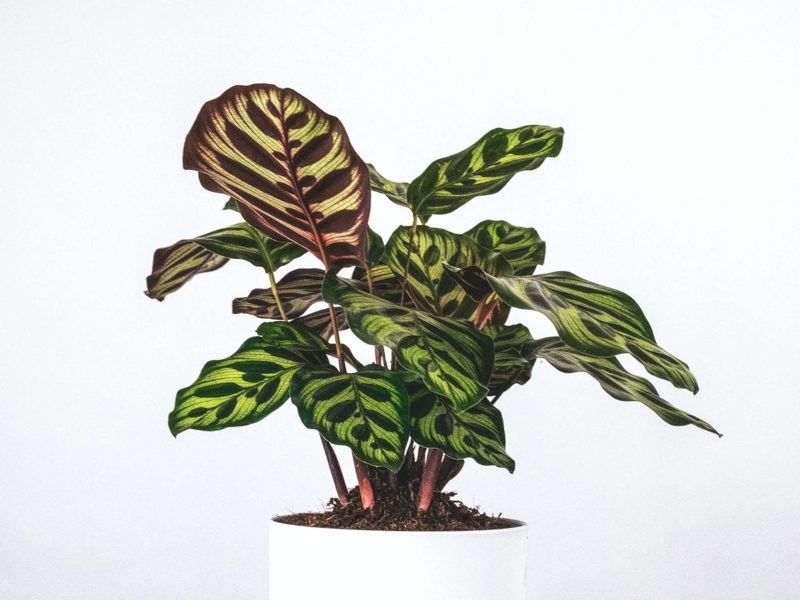
Calathea makoyana

The Calathea makoyana is known and loved for the bold and unique markings on the leaves, as well as their red undersides, a classic trademark of many Calathea plants. Peacock plants don’t grow very tall so are perfect for smaller homes and spaces as you won’t need to put this one on the floor.

When it comes to care, it’s important to note that the Peacock Plant can be a little temperamental sometimes, so we don’t always recommend this one to plant beginners. You must keep them away from direct light, mist them to boost the humidity and never let them fully dry out for long periods of time. They also need quite warm temperatures to really thrive, so drafts and AC vents are a no-go for Peacock Plants.

Peacock Plants can grow very small white flowers sometimes, but don’t think you aren’t caring for your plant properly if it doesn’t bloom. Flowers are quite rare and unpredictable, but a nice surprise when it does happen!

Find out more in our Peacock Plant care guide.

Fiddle and Thorn is a participant in the Amazon Services LLC Associates Program, an affiliate advertising program designed to provide a means for sites to earn advertising fees by advertising and linking to Amazon.com

Take our houseplant survey!

Quickly respond to our 30 second houseplant survey and get 75% off our Complete Houseplant Care eBook!

Take the Survey

No thanks…

The 10 Best Houseplants for your Living Room

Last Updated: December 31, 2021

Top Plants for your Living Room

Our living room is arguably one of the most important rooms in the house as it’s used to entertain guests and relax after a long day! By adding in the right houseplants, you can transform your living room into a cosy, calming and relaxing space for you and the family, whilst still making a statement and impressing guests you invite over.

We have curated the best houseplants for your living room space below. Some need a lot of space, whilst others can cascade beautifully down your living room shelves. Oh and some even have air-purifying qualities too!

1

African Mask Plant

Alocasia amazonica

If there is one plant that has risen up the popularity ranks recently, it’s the African Mask Plant! You can now buy these at basically every plant shop, market and superstore globally as they are definitely the most popular of the Alocasia family. And we totally understand why they have become so popular, their intense glossy shield-like leaves are adorned with strong white veins which really make them something special for your living room.

They aren’t a great plant for beginners, however, as they do require decent light levels, as well as warm temperatures and a consistently high humidity level. Misting this plant is really crucial or it’ll start to develop some issues.

If in the right environment, your African Mask Plant can grow well above 1 metre but this will take many years as they don’t produce that many new leaves each year. This is why it’s crucial you take good care of the leaves your plant does have by regularly dusting and inspecting for issues.

Find out more in our African Mask Plant care guide.

2

Fiddle Leaf Fig

Ficus lyrata

Native to the rainforests of central Africa, Fiddle Leaf Fig Trees are really stealing all of the attention right now. Their giant dark green glossy veined leaves give you that instant tropical feeling, right in your own home. They actually get their name from their violin-shaped leaves, similar to a Fiddle. Fiddle Leaf Fig Trees like a nice warm, humid environment with plenty of sunshine and a good amount of water to support a strong root system.

If you’re looking for a large plant to become the focal point of your living room, then look no further as they can grow up to 3 metres tall in the right environment. It’s important to note though that Fiddle Leaf Figs are toxic to pets and humans so not the best chance if there is a risk of leaves being ingested…

You should be able to find a Fiddle Leaf at most independent plant shops globally, but they can have quite a big price tag if you’re looking for a more mature one.

Find out more in our Fiddle Leaf Fig care guide.

3

Bird of Paradise

Strelitzia Reginae

If you’re dreaming of a tropical getaway, then a Bird of Paradise is the next best thing. Native to South Africa, they are loved for their incredible orange and blue leaves that resemble birds (which explains the name). It’s really important that you keep your pets away from the flowers and leaves as they can be very toxic if ingested so we don’t really recommend this one to pet parents, unfortunately.

It’s also important that you have a lot of space when buying a Bird of Paradise plant as they do grow up to about 2 metres in size. But if you have the space for it in your living room, then they are the perfect plant for those looking for something a little more exotic.

Find out more in our Bird of Paradise care guide.

4

Kentia Palm

Howea forsteriana

Kentia Palms are pretty hardy plants that can stand environments that many other houseplants wouldn’t be able to, making them quite easy to care for. They can grow up to 40 feet outdoors but will rarely get over 13 feet when kept indoors.

They can be quite fussy about watering however and prefer to get little and often as this stops their soil from drying out completely or being soggy for longer periods of time. They also aren’t great with having dusty leaves, so we recommend wiping them down with a damp cloth every now and then to keep them clean.

The good news is that they are completely safe and non-toxic, so perfect for homes with pets or kids!

Find out more in our Kentia Palm care guide.

5

Swiss Cheese Plant

Monstera deliciosa

Native to the rainforests of Central America, the Monstera Deliciosa has very quickly become the most fashionable and photographed houseplant ever. And it’s not difficult to understand why… If their large dark green glossy heart-shaped leaves weren’t enough, their unique splits surely will be!

You might be surprised to learn that the Monstera isn’t actually a fussy plant and is pretty easy to take care of. Bright but indirect light, moderate amounts of water and regularly misting are really the main things to remember.

You’ll find that a lot of more mature Monstera plants are sold with a moss pole as they are climbing plants. In the rainforest, the ariel roots that pop out from the stems will attach themselves to other plants as the plant matures. So a moss pole is a good substitution to help your plant grow and mature.

Find out more in our Swiss Cheese Plant care guide.

6

Rubber Plant

Ficus elastica

The name Rubber Plant comes from the latex in the leaves, which was once used to actually make rubber! They are a great plant to bring a little bit of that rainforest feel right into your living room. And whilst they can reach about 30 metres in their native environment, when potted in your home they’ll be much smaller don’t worry!

Caring for your Rubber Plant doesn’t have to be difficult. Good light levels and not too much water are the basics to remember. As they are native to Southern Asia, they love humidity and will really struggle with dry air so regularly misting will keep your plant happy and healthy.

Find out more in our Rubber Plant care guide.

7

Marble Queen Pothos

Epipremnum Pinnatum

There are so many different varieties of Pothos plants, all with slightly different leaf variegation but the Marble Queen is definitely one of our favourites. Getting its name from the cream marble-like variegation on its leaves, it’s an easy-going, hardy and low light loving plant that can adapt to most spots in your home.

The Marble Queen Pothos is a pretty fast-growing plant so make sure you have enough space for it to mature. You can choose to grow them as trailing plants with long cascading vines (this is a great choice if you have large shelves in your living room) or vertically by attaching them to a moss pole. Pothos plants are unfortunately toxic so you’ll want to keep them away from pets and small children who might try and nibble on the low hanging leaves.

Find out more in our Marble Queen Pothos care guide.

8

Peace Lily

Spathiphyllum wallisii

There’s a reason that Peace Lilies are so popular, and it’s not just because of their incredible white flowers. They are super low maintenance plants that can adapt and thrive in most homes. They can tolerate all light levels which is super rare for houseplants. It’s the perfect plant to bring a little bit of calm to an often hectic and busy living space.

Our favourite thing about the Peace Lily is that it really helps us plant parents out by drooping its leaves when it really needs water. This can help you spot underwatering before it’s really a problem. Within minutes of watering, the leaves will perk up – it’s pretty cool! And if we haven’t sold you on the Peace Lily yet, then you should probably know that they are also one of the best plants at purifying the air and removing chemicals from your home!

Find out more in our Peace Lily care guide.

9

Schefflera

Schefflera arboricola

Also known as the Umbrella Plant because of their dome-shaped leaves, the Schefflera is not only easy to care for but it’s pretty unique too! A mature Schefflera can sometimes have up to 16 little leaves off one stalk, whilst smaller plants may only have 4 or 5.

When it comes to caring for your Schefflera, they are quite hardy and adapt well to different environments. You don’t need to worry about humidity levels etc so it’s pretty simple. One thing to note is that it’s a good idea to rotate your plant every few weeks. Schefflera plants have a tendency to lean towards the light so can become quite unbalance if not turned regularly.

Unfortunately, Scheffleras are toxic to pets and humans so you need to keep this one away from small children or any furry friends that might be tempted to take a bite.

Find out more in our Schefflera care guide.

10

Philodendron Birkin

Philodendron Birkin

This used to be an extremely rare and unknown plant but over the past few years, it’s definitely gained a place in the houseplant walk of fame! Unlike a lot of its Philodendron relatives, the Birkin is a non-vining plant that stays pretty compact, making it great for windowsills or if you don’t have a lot of empty space in your living room.

Loved for their green and cream striped leaves, the Philodendron Birkin needs a humid environment to really thrive. This is because they are native to the rainforests of Brazil so be prepared for regularly misting (or just buy a humidifier), as otherwise, you’ll see brown leaves appear pretty quickly. With the right care and environment, the Birkin can be a pretty quick grower so it’s definitely worth a little bit of extra hassle.

Find out more in our Philodendron Birkin care guide.

Fiddle and Thorn is a participant in the Amazon Services LLC Associates Program, an affiliate advertising program designed to provide a means for sites to earn advertising fees by advertising and linking to Amazon.com

Take our houseplant survey!

Quickly respond to our 30 second houseplant survey and get 75% off our Complete Houseplant Care eBook!

Take the Survey

No thanks…

The Best Houseplants for your Kitchen

Last Updated: December 31, 2021

The Top Houseplants for every Kitchen

Kitchens can sometimes become quite a sterile and soulless place of the home if not done right. It’s important to bring a little bit of life and greenery into your kitchen to make it a social family space or somewhere to spend evenings with friends. We have curated the best plants for your kitchen choosing those that will love the humidity from cooking, are fairly low maintenance and can even sometimes help you with the occasional burn.

1

English Ivy

Hedera helix

Although they are most commonly known as outdoor plants, you can very successfully grow an English Ivy indoors as long as you give it enough light. We are obsessed with the white variegated English Ivy but if not given enough sunshine, the new leaves will lose all of that variegation.

Included in the NASA Clean Air Study, the English Ivy is great at removing toxins from the air so we recommend having this around your home. They are also believed to sometimes be able to improve allergy symptoms so as well as looking lush, they have great benefits for us too. They are also super fast-growing plants so you want to place them on a high shelf in your kitchen so that they have enough space to cascade downwards.

Find out more in our English Ivy care guide.

2

Aloe Vera

Aloe Barbadensis Miller

Although Aloe Vera plants are commonly loved for their gel, they are much more than just their health and beauty benefits, as they make for a super minimalist and forgiving houseplant! Like most other succulents, Aloe Vera plants don’t need much tending to as they thrive in dry coarse potting mix. But it is important that they get a good amount of bright light or will become quite straggly.

As they mature a little, you’ll see lots of little Aloe pups popping up which can be very easily removed from the mother plant and propagated! Aloe plants are super affordable and you can pick them up basically anywhere that sells plants, even supermarkets will often sell them in the summer months.

Aloe Vera is the perfect plant for the kitchen as their gel can be used to treat cuts and burns. Just rip off a leaf and rub the gel over the affected area!

Find out more in our Aloe Vera care guide.

3

Aluminium Plant

Pilea cadierei

This low maintenance, fast-growing houseplant can sometimes be quite underrated in the houseplant world. Each leaf on an Aluminium Plant has its own unique set of silver streaks and splashes, so it’s easy to see how it got its name!

Native to China and Vietnam, this houseplant tends to spread out rather than grow tall so are perfect plants for anyone needing to fill a large kitchen. The one thing to be wary of is its root system as it can grow so extensively that it can often break through the pot so you want to make sure you’re repotting this plant yearly!

When it comes to care, bright but indirect sunlight and moderate amounts of water will keep them happy. They are quite forgiving and easy to please so keeping this one thriving doesn’t need a lot of work so we often recommend this as a great entry-level plant.

Find out more in our Aluminium Plant care guide.

4

Snake Plant

Sansevieria Trifasciata

The bold and striking leaves of the Snake Plant make it stand out wherever you put it! Not only are they slow-growing, but they transcend upwards so are great for small spaces or that corner of the kitchen you never know what to do with. If you buy a large plant you can grow it on the floor so you don’t have to use valuable counter space! They have some of the sturdiest leaves or any houseplant, and their sharp leaf tips have given the plant the nickname of mother-in-laws-tongue…

When it comes to care, Snake Plant are super easy to look after, they can adapt to a range of light levels (are great low light plants), prefer dry soil and don’t need much attention in the way of misting or repotting etc. So if you want a low maintenance, sturdy houseplant, then the Snake Plant is your perfect match!

Find out more in our Snake Plant care guide.

5

Devil’s Ivy

Epipremnum aureum

These are pretty unique houseplants because they actually prefer lower-light conditions over anything else! That’s where the name comes from, as they are well acquainted with the darkness. If you have a variegated variety, it will actually start to lose its pattern if placed in too much sunlight. So you don’t need to feel guilty about putting a Devil’s Ivy in a shady spot because it will actually love you for it.

They are also pretty hardy plants in terms of their other care requirements so will thrive in any kitchen. They don’t need complicated watering schedules or specific pruning so are perfect for any new plant parents. You can’t really go wrong with these at all!

When it comes to styling the Devil’s Ivy plant, shelving is where they thrive as it gives it room to cascade dramatically out of the pot. They can be trained to grow upwards by a wall or moss pole so the option is yours and depends on what kitchen space you have to fill.

Find out more in our Devil’s Ivy care guide.

6

Peace Lily

Spathiphyllum wallisii

There’s a reason that Peace Lilies are so popular, and it’s not just because of their incredible white flowers. They are super low maintenance plants that can adapt and thrive in most kitchens and homes. They can tolerate all light levels which is super rare for houseplants.

Our favourite thing about the Peace Lily is that it really helps us plant parents out by drooping its leaves when it really needs water. This can help you spot underwatering before it’s really a problem. Within minutes of watering, the leaves will perk up – it’s pretty cool! And if we haven’t sold you on the Peace Lily yet, then you should probably know that they are also one of the best plants at purifying the air and removing chemicals from your home!

Find out more in our Peace Lily care guide.

7

Chinese Evergreen

Aglaonema

If you find that you are often killing your houseplants and you can’t seem to figure out why, then the Chinese Evergreen is the one for you and your kitchen. Native to South-East Asia, they are so hardy that they’ll grow and thrive in basically any home so it’s the perfect beginner plant.

Chinese Evergreens have incredible leaves, full of splashes of white, silver or pink depending on the particular variety. They are quite slow growing though (as most hardy plants are), so don’t expect a lot of new growth every year.

Find out more in our Chinese Evergreen care guide.

8

Air Plant

Tillandsia

There are hundreds of Air Plant varieties for you to fall in love with, all with relatively similar care requirements. If you haven’t already guessed from the name, Air Plants are pretty different to most other houseplant types as they don’t grow in soil. Instead, all they need is regular misting and the occasional bath to survive! Growing them in a kitchen is ideal as the humidity from cooking will mean you won’t have to mist them as much.

Native to areas across Central and South America, Air Plants need warm temperatures and high humidity levels to really thrive which makes them great plants for terrariums. But don’t think this is the only way to grow Air Plants, because with a little bit of care and attention to their environment, you can grow them in most homes with no problems!

Find out more in our Air Plant care guide.

Fiddle and Thorn is a participant in the Amazon Services LLC Associates Program, an affiliate advertising program designed to provide a means for sites to earn advertising fees by advertising and linking to Amazon.com

Take our houseplant survey!

Quickly respond to our 30 second houseplant survey and get 75% off our Complete Houseplant Care eBook!

Take the Survey

No thanks…

The Best Houseplants for your Home Office

Last Updated: December 31, 2021

Houseplants are great for the home office

There’s been a lot of research which shows that houseplants are great at boosting productivity, making them perfect for your desk at work or home office. It brings a little bit of life and greenery to help you focus, relax and get the most out of the day. So aside from adding some style to your desk, there are actually great benefits for your work too!

We have selected some of the best air purifying and plants known to help relax you so that your workspace works for you too.


1

ZZ Plant

Zamioculcas zamiifolia

Also known as the Zanzibar Gem, the ZZ Plant is a great low-maintenance minimalist houseplant. Loved for their dark green glossy oval leaves, we recommend this one for those without a fantastic track record of keeping plants alive, but also for anyone looking for something smart and stylish to spruce up their home. They are very adaptable and will deal well with some bright but indirect light, as well as shady dark corners of your home.

The ZZ Plant is quite slow-growing so you won’t see new stems popping out all of the time. It’s important to note that they grow bulb-like roots called rhizomes so will need quite a large pot to really thrive and grow. This also means they are drought tolerant as they store water in their rhizomes.

Find out more in our ZZ Plant care guide.

2

Calathea Dottie

Calathea Roseopicta Dottie

With large glossy dark green (almost black) leaves, the Calathea Dottie is a plant for those who want to make a statement. Each leaf has a bright pink outline which you won’t see on any other plant! Native to South America, it’s important that Calathea Dottie plants are placed somewhere warm with a good level of humidity and bright but not direct sunlight. Without this environment, your plant will really struggle.

If you aren’t already sold on this plant just by looking at the incredible leaves, then we have a couple more reasons. Firstly, they purify the air in the room which is great for productivity. They are also non-toxic so we don’t need to worry about putting them out of reach of pets or children which is great!

Calathea Dottie plants aren’t as common globally so you might need to take a look in more specialised plant shops and nurseries to find them.

Find out more in our Calathea Dottie care guide.

3

Parlour Palm

Chamaedorea elegans

If you want to grow a palm tree indoors then the Parlour Palm is the one you need! They are easy to care for and adapt well to lower light conditions. When kept indoors the Parlour Palm will stay quite small growing to a maximum of around 8 feet, this makes them manageable and easy to place anywhere in the home.

Provided with good light and some additional humidity in the dryer months your Parlour Palm will be perfectly happy – don’t be discouraged by slow growth as they can take several years to grow an extra 2 feet in height.

Find out more in our Parlour Palm care guide.

4

Yucca

Yucca elephantipes

A staple of many homes, the Yucca is one of the most popular houseplants and you’ll often see them around offices, shops and restaurants too! They’re super easy to care for so are perfect for all plant parents. They were very popular in the ’70s so are a great way to get a little bit of vintage style in your home.

As they mature, Yucca plants can grow about 2 metres in height so make it the perfect feature plant for your space. They are very slow-growing though so if you don’t have as much space, a smaller plant won’t outgrow the room very quickly.

They are very low maintenance and can adapt to most light levels, temperature and humidity levels but unfortunately, they are toxic to keep that in mind if you have pets or small children.

Find out more in our Yucca care guide.

5

Kentia Palm

Howea forsteriana

Kentia Palms are pretty hardy plants that can stand environments that many other houseplants wouldn’t be able to, making them quite easy to care for. They can grow up to 40 feet outdoors but will rarely get over 13 feet when kept indoors.

They can be quite fussy about watering however and prefer to get little and often as this stops their soil from drying out completely or being soggy for longer periods of time. They also aren’t great with having dusty leaves, so we recommend wiping them down with a damp cloth every now and then to keep them clean.

The good news is that they are completely safe and non-toxic, so perfect for homes with pets or kids!

Find out more in our Kentia Palm care guide.

6

Arrowhead Plant

Syngonium podophyllum

Native to the tropical rainforests of Central and South America, the Arrowhead great plant to have in your collection. When fully grown, they can reach nearly 2 meters tall with large leaves that can have a variety of colours and variegations.

As you can imagine, the Arrowhead likes warm and humid environments. Letting the soil dry out between waterings is a great way to mimic their natural habitats and making sure they have bright, but indirect light will stop the leaves from burning.

With them being a little pickier over humidity and placement, we wouldn’t always recommend them for a starter houseplant. They’re also mildly toxic to pets, which doesn’t make them the most friendly for households with cats or dogs.

Find out more in our Arrowhead Plant care guide.

7

Chinese Money Plant

Pilea Peperomioides

Otherwise known as the Chinese Money Plant (they are believed to bring good luck and fortune to its owner), Pilea plants are a must-have! They initially became popular because they are so easy to propagate which meant Pilea pups got passed around a lot between friends and family, earning itself the nickname ‘pass it on plant’

When it comes to care, Pilea’s are somewhere in-between fussy and low maintenance. They aren’t great in low light areas, and also hate soggy or super dry soil so finding the right balance is key for Pilea care.

As your Pilea matures, the leaves can reach up to about 10cm in diameter which is incredible and makes all of the effort worth it!

Find out more in our Chinese Money Plant care guide.

8

Lucky Bamboo

Dracaena sanderiana

Believed to bring good luck, the Lucky Bamboo is the ideal houseplant for those wanting to bring a little bit of greenery indoors, but who just don’t have the time or skill to give it much attention. The Lucky Bamboo thrives off being neglected and as long as they have enough sunlight and some warmth, they’ll happily live for a very long time. You can choose to grow them in either well-draining soil or a vase filled with water. The latter is great for forgetful waterers as there’s no risk of them drying out!

You can continue the gorgeous swirls on your Lucky Bamboo plants by simply rotating them every once in a while. The plant naturally grows towards the sunlight so you can use this to create the twists.

Find out more in our Lucky Bamboo care guide.

9

Peace Lily

Spathiphyllum wallisii

There’s a reason that Peace Lilies are so popular, and it’s not just because of their incredible white flowers. They are super low maintenance plants that can adapt and thrive in most homes. They can tolerate all light levels which is super rare for houseplants.

Our favourite thing about the Peace Lily is that it really helps us plant parents out by drooping its leaves when it really needs water. This can help you spot underwatering before it’s really a problem. Within minutes of watering, the leaves will perk up – it’s pretty cool! And if we haven’t sold you on the Peace Lily yet, then you should probably know that they are also one of the best plants at purifying the air and removing chemicals from your home!

Find out more in our Peace Lily care guide.

10

Snake Plant

Sansevieria Trifasciata

The bold and striking leaves of the Snake Plant make it stand out wherever you put it! Not only are they slow-growing, but they transcend upwards so are great for small desks or that corner of the office you don’t know what to do with. They have some of the sturdiest leaves or any houseplant, and their sharp leaf tips have given the plant the nickname of mother-in-laws-tongue!

When it comes to care, Snake Plant are super easy to look after, they can adapt to a range of light levels, prefer dry soil and don’t need much attention in the way of misting or repotting etc. So if you want a low maintenance, sturdy houseplant for your office then the Snake Plant is your perfect match!

Find out more in our Snake Plant care guide.

11

Marble Queen Pothos

Epipremnum Pinnatum

There are so many different varieties of Pothos plants, all with slightly different leaf variegation but the Marble Queen is definitely one of our favourites. Getting its name from the cream marble-like variegation on its leaves, it’s an easy-going, hardy and low light loving plant that can adapt to most spots in your home.

The Marble Queen Pothos is a pretty fast-growing plant so make sure you have enough space for it to mature. You can choose to grow them as trailing plants with long cascading vines (great for those office shelves) or vertically by attaching them to a moss pole. Pothos plants are unfortunately toxic so you’ll want to keep them away from pets and small children who might try and nibble on the low hanging leaves.

Find out more in our Marble Queen Pothos care guide.

Fiddle and Thorn is a participant in the Amazon Services LLC Associates Program, an affiliate advertising program designed to provide a means for sites to earn advertising fees by advertising and linking to Amazon.com

Take our houseplant survey!

Quickly respond to our 30 second houseplant survey and get 75% off our Complete Houseplant Care eBook!

Take the Survey

No thanks…