Why is My Christmas Tree Turning Yellow: Causes and Solutions

Last Updated: October 21, 2023

When the joyous holiday season rolls around, nothing quite lights up your home like a beautifully decorated and lit Christmas tree.

However, the sight of a once vibrant tree turning yellow can be quite frustrating! The yellowing of a Christmas tree, whether it’s a cut tree or a living one, is often a sign of certain issues that require your immediate attention.

Understanding the Yellowing of Your Christmas Tree

If you’ve ever asked yourself, “Why is my Christmas tree turning yellow?”, you’re not alone. This is a common concern among Christmas tree owners, and the reasons can be diverse. It could be due to natural processes, improper care, or pests and diseases. We will dive into the potential causes as well as treatments and preventative measures you can take.

Causes of a Yellowing Christmas Tree

A yellowing tree is usually a sign of stress or disease, which can occur due to a variety of factors. Understanding these causes can help to identify the issue and address it effectively. Here are the most common reasons:

Insufficient Water

The first and most common cause of a yellowing Christmas tree is insufficient water. Christmas trees, like all plants, need water to survive. If your tree isn’t getting enough water, it may start to yellow as a sign of dehydration. This is often a problem for cut Christmas trees, which are no longer able to draw water from the soil and rely solely on the water provided in their stands.

Make sure to give your Tree a lot of water when you first put it in its stand and then regularly monitor the soil moisture, topping it up when required.

Lack of Sunlight

Secondly, lack of sunlight could also be the culprit if your plant is still potted and rooted in soil. Christmas trees are coniferous and need a certain amount of light to maintain their green color. If they aren’t getting enough light, they may start to turn yellow.

Too much Sunlight

This isn’t so much of a concern for those of us that have Christmas land in winter time but for those who have Christmas in the peak of summer, too much direct sunlight can cause issues. If your Tree is being exposed to a lot of direct hot sun rays in the middle of the day and in the afternoon, it can cause parts of your Tree to dry out and turn yellow.

Exposure to Heat

Another common cause of yellowing in Christmas trees is exposure to heat. Trees that are placed near fireplaces, radiators, or other heat sources may begin to yellow. The heat dries out the tree, causing it to lose its vibrant green color.

Underfloor heating can also cause havoc for your Christmas Tree as the heat rising around the tree will dry it out fairly quickly.

Disease or Pest Infestation

Lastly, the yellowing may be a sign of disease or pest infestation. Certain diseases and pests can lead to discoloration in Christmas trees. These may require professional help to diagnose and treat but often there won’t be any way that you can quickly and easily stop the issue from spreading, unfortunately.

How to Fix a Yellowing Christmas Tree

1. Watering

The most common cause of a yellowing Christmas tree is inadequate water supply. The lack of water causes the tree to dry out, resulting in yellow needles. Therefore, the first remedy you should turn to is ensuring the tree is getting enough water.

  • Watering schedule: Your Christmas tree needs a lot of water, especially in the first 24 hours after it’s been cut.
  • Water temperature: Use slightly lukewarm water, as it is absorbed more easily than cold water but avoid hot water as this can burn the stem.
  • Tree stand: Use a tree stand with a large water reservoir to maintain a constant water supply for the tree.

2. Placement

Where you place your Christmas tree also affects its health. Direct sunlight and heat sources can cause the tree to lose moisture quickly, leading to yellowing.

  • Location: Keep your tree away from direct sunlight, radiators, fireplaces, and other heat sources.
  • Humidity: Consider using a room humidifier to increase the humidity around your tree, especially if you live in a dry climate.

3. Fertilization

A lack of essential nutrients can also cause your tree to turn yellow. Using a suitable Christmas tree fertilizer can help resolve this issue.

Note: Over-fertilizing can also harm your tree. It’s recommended to only fertilize if your tree is in a pot and you plan to keep it for a long period of time.

4. Pruning

Pruning can help improve your tree’s health and appearance. Remove all yellow and brown needles to help the tree use its resources more efficiently.

  1. Use sharp, clean pruners to avoid causing unnecessary damage.
  2. Prune the tree when it’s cool, usually in early morning or late evening.
  3. Remove only the yellow and brown needles, leaving the healthy, green ones intact.

Remember, the goal is to have a healthy, green Christmas tree that you can enjoy throughout the holiday season. By following these steps, you can help combat yellowing and ensure your tree stays vibrant and fresh.

Preventing your Christmas Tree from turning yellow

While seeing your Christmas tree turn yellow can be a concerning sight, there are several preventive measures you can adopt to ensure the lush green color stays intact.

Proper Watering

The significance of watering your Christmas tree cannot be overstated. It’s essential to keep the tree hydrated, especially when it is first cut. Fill the tree stand with water immediately after setting it up, and make sure to refill it every couple of days (more in warmer, drier environments).

Temperature Regulation

Your Tree prefers cooler temperatures. Avoid placing the tree near heat sources, such as radiators, fireplaces, or hot air vents as these can speed up the drying process, leading to a yellowing tree and needles falling off.

Choosing the Right Tree

Choosing a healthy tree to start with can dramatically reduce the risk of it turning yellow. Look for a tree with deep green needles that don’t fall off when touched. Also, it’s best to buy from a reputable seller who has properly cared for their trees and has a faster turnover so that the trees are freshly cut, instead of standing around for weeks on end before they are sold.

Check for Disease and Pests

Several diseases and pests can cause a Christmas tree to yellow. Before you buy your Tree, check it for signs of infestations or diseases.

Use of Preservatives

Applying tree preservatives can help retain the tree’s freshness for a longer period. These can be purchased from a local garden center or online. Always follow the usage instructions provided on the package for best results.

When to throw away a yellowing Christmas tree

There are several indicators to look for to know when you should throw away a yellowing Christmas tree:

  • Excessive Needle Drop: All trees will naturally lose a few needles here or there. However, if your tree begins shedding needles in large quantities, especially when touched or moved, it’s an indication that the tree is excessively dry and potentially a fire hazard.
  • Brittle Branches: The branches of a healthy Christmas tree should be flexible. If they snap or break easily, it suggests that your tree is too dry. This dryness could lead to a fire if the tree is near a heat source or has lights on it.
  • Yellowing Needles: While a few yellow needles are not a cause for concern, if the majority of your tree’s needles are turning yellow, it is likely dying. A tree in this condition will not only look unattractive but can also pose a fire risk.
  • Unpleasant Odor: A fresh Christmas tree should have a pleasant, piney scent. If your tree has a foul or musty odor, it’s a sign that it’s not healthy. This smell could be due to mold growth, which can cause allergic reactions in some people.

Once your tree starts showing these signs, it’s time to consider removing it from your home. Not only can a dying or dead tree pose a fire hazard, but it can also negatively affect the health of those in your home.

Proper Disposal of Your Christmas Tree

Once you’ve determined that it’s time get rid of your Christmas tree, ensure you dispose of it properly. Many areas offer tree recycling programs after the holidays, turning old trees into mulch or wood chips.

Alternatively, some areas have designated drop-off locations where trees can be composted. Check with your local waste management facility, council or local government to find out the best way to dispose of your tree responsibly.

How to spot early signs of yellowing in your Christmas tree

Spotting the early signs of yellowing in your Christmas tree is crucial to addressing the issue while it’s still manageable. By keeping a keen eye on your tree, you can intervene before the yellowing becomes widespread.

Changes in needle color

Firstly, the most obvious sign is a change in the color of the needles. A healthy Christmas tree should boast vibrant green needles. If the needles start to turn yellow in small patches, particularly from the inner part of the tree and moving outward, this is a telling sign that your tree may be in distress.

Needle drop

Another sign to look out for is excessive needle drop. While it’s normal for some needles to fall off, especially when you first bring the tree home and set it up, a constant rain of needles from your tree is a warning that something is not right.

Brittle branches

Lastly, brittle branches can also signify a problem. If the branches of your tree are easily snapping or feel extremely dry to the touch, this could be a sign of dehydration, often a precursor to yellowing needles.

Temperature changes

It’s important to monitor any changes in temperature to see if it’s getting too warm for your Christmas Tree. This will help you spot any hotspots before it starts to dry out your tree! Place a digital thermometer next to your tree to keep an eye out.
Fiddle and Thorn is a participant in the Amazon Services LLC Associates Program, an affiliate advertising program designed to provide a means for sites to earn advertising fees by advertising and linking to Amazon.com

Take our houseplant survey!

Quickly respond to our 30 second houseplant survey and get 75% off our Complete Houseplant Care eBook!

Take the Survey

No thanks…

Why is my Christmas Tree turning brown?

Last Updated: October 21, 2023

As the holiday season approaches, there’s nothing quite as heartwarming as a lush, green Christmas tree adorned with twinkling lights and colorful ornaments. But what if your Christmas tree starts to lose its vibrant hue and takes on a dull, brown tone?

Finding your Christmas tree turning brown can be a significant cause of concern, particularly during the festive season. This issue may stem from a variety of reasons, from care problems, environmental factors, to disease and pest attacks.

Identifying the exact cause behind your Christmas tree’s browning can be challenging. However, understanding the common causes can help you figure out what the issue is.

It’s worth noting before we get into it, that prevention is always better than cure. So, make sure to take care of your Christmas tree right from the start to avoid browning.

Types Of Christmas Trees That Are Prone To Turning Brown

Different types of Christmas trees have varying susceptibilities to turning brown. Several factors can contribute to this, including the type of tree, the care it receives, and the environment in which it is kept.

Below are some of the most common types of Christmas trees that are prone to browning if not properly cared for.

  • Norway Spruce: Known for its beautiful shape and strong scent, the Norway Spruce is a popular choice for Christmas trees. However, they are also known for dropping their needles quickly, especially if they are not kept well-watered, leading to a brown appearance.
  • Scotch Pine: While generally resilient and long-lasting, Scotch Pine trees can turn brown and lose needles if exposed to excessive heat or dryness. Besides, a lack of water can also lead to similar results.
  • Blue Spruce: These trees are loved for their unique color, but they can turn brown if not given the right care. Inadequate hydration and exposure to high temperatures can lead to a change in color.
  • Fraser Fir: Although Fraser Firs are known for their ability to retain their needles and stay green longer, they are still susceptible to going brown if they do not get enough water or are exposed to heat sources like a fireplace or heating vent.

What Causes Christmas Trees To Turn Brown

There are several reasons why a Christmas tree might turn brown. Understanding these causes can help you prevent your holiday centerpiece from losing its vibrant green color. Let’s delve into some common culprits:

Poor Watering Habits

One of the primary reasons Christmas trees turn brown is due to poor watering habits. A tree, just like any other plant, requires an adequate amount of water to maintain its health and vitality. When a tree doesn’t receive enough water, it can quickly become dehydrated and start to brown.

This is both the case for Christmas Trees that are potted in soil, and those that aren’t. A lot of newer Christmas tree stands have space around them for you to add water in. Although watering your tree won’t keep it alive forever if it’s been chopped down, it can help it stay vibrant for longer.

Heat and Dry Air

The indoor environment during the Christmas season can also contribute to a browning tree. Central heating systems can create a hot and dry atmosphere that is not conducive to the well-being of a Christmas tree. This can cause the tree’s needles to dry out and turn brown.

You also want to make sure your Christmas Tree isn’t near any radiators or in a room with underfloor heating as that can cause it to turn brown quite fast.

Exposure to Direct Sunlight

Exposure to direct sunlight for prolonged periods can also cause your Christmas tree to turn brown. The sun’s harsh rays can scorch the tree’s needles, causing them to turn a dull brown color. This usually isn’t an issue for those of us in the northern hemisphere as the sun is a lot weaker in winter, but if Christmas falls in your summer, the hot sun rays can dry out your tree.

Old Age

Finally, it’s important to remember that Christmas trees that have been chopped down will eventually die and turn brown.

Understanding these causes is the first step in maintaining the health and longevity of your Christmas tree. Proper care and a bit of attention can ensure your tree remains green and vibrant throughout the holiday season.

Other Environmental Factors That Affect Christmas Trees

Humidity

The level of humidity in your home can also affect the health of your Christmas tree. Low humidity levels can cause your tree to dry out faster, leading to browning. Consider using a humidifier in the room where you keep your tree to maintain a healthy moisture level.

Pests and Disease

Pests and disease can also lead to browning in Christmas trees. Check your tree regularly for signs of infestation or disease, such as discolored needles or sap leakage. If you notice any of these symptoms, you may need to take action to treat your tree.

The Importance Of Proper Hydration For Christmas Trees

Ensuring that your Christmas tree receives proper hydration is crucial for maintaining its health and vibrancy throughout the festive season. Lack of adequate hydration can cause the needles to turn brown quite quickly, a common issue experienced by many Christmas tree owners.

Why Hydration Matters

When you first bring your Christmas tree home, it’s still very much alive and going through its natural life processes, even if it’s been chopped. It’s thirstier than you might think, and water plays a major role in maintaining its freshness. A well-hydrated tree not only looks lush and green, but also emits that wonderful, fresh pine scent we all associate with the holiday season.

Watering Your Christmas Tree: The Basics

Here are some basic guidelines to keep in mind when watering your Christmas tree:

  • Initial Watering: Give your tree plenty of water right after you set it up.
  • Regular Hydration: Check the water level daily and top it up depending on how quickly it dries out.
  • Water Temperature: Use room temperature water. Cold water can shock the tree and impede water absorption, while warm water can promote the growth of mold and bacteria.

Signs of Dehydration

It’s important to recognize the signs of a dehydrated Christmas tree. These can include:

  • Brown, dry, and brittle needles
  • Needles falling off the tree in large quantities
  • A lack of that fresh pine scent

Steps To Take To Prevent Your Christmas Tree From Turning Brown

Understanding why this happens and taking the appropriate steps can prevent this from getting worse. First and foremost, ensuring that your Christmas tree is well-hydrated is paramount, as a lack of sufficient water can cause the needles to dry out and turn brown.

Placement and Exposure

Next, consider where your tree is situated. Trees placed near heat sources, such as radiators or fireplaces, may dry out more quickly. Additionally, exposure to direct sunlight can also cause browning. To prevent this, keep your tree away from such spots.

Proper Tree Care

Proper tree care is another critical aspect that extends beyond just watering. Here are a few things to consider:

  1. Regular Watering: Exactly how much will depend on other environmental factors so keep monitoring it throughout the holiday period.
  2. Use of Preservatives: Some people use tree preservatives in the water. However, experts suggest that clean water is all that’s required for keeping your tree fresh.
  3. Limiting Light Exposure: While Christmas tree lights add a festive touch, they can also generate heat which can contribute to drying out the tree. Limiting the hours your tree lights are on can help prevent this problem or switch to LED lights that don’t give off heat.

Choosing the Right Tree

Finally, the type of tree you choose can impact its longevity. Some species of Christmas trees are more resistant to drying out than others. For example, Fraser firs and Noble firs are known for their excellent needle retention, which can help prevent browning.

How To Revive A Brown Christmas Tree

It’s a disheartening sight to see your once vibrant and green Christmas tree turning brown. But, don’t lose hope just yet. There are still ways prevent the issue from getting worse and this can help to maintain your Christmas Tree until at least the end of the holidays.

1. Water It Regularly

One of the most common reasons why Christmas trees turn brown is due to lack of water. Christmas trees, especially those that are cut, require a lot of water to stay fresh and green. Make sure to check the water level of your tree stand every day and replenish it as needed.

  1. Keep It Away From Heat

Heat sources such as vents, fireplaces, and direct sunlight can dry out your Christmas tree, causing it to turn brown. Position your tree away from such heat sources to help it retain moisture and stay green longer.

3. Use a Humidifier

Indoor heating can dry out the air in your home, which can have a negative impact on your Christmas tree. Consider using a humidifier near your tree to increase the moisture level in the air.

4. Spray It With a Tree Preservative

There are tree preservatives available in the market that can help your Christmas tree retain its moisture and stay green longer. These usually come in a spray form and should be applied according to the instructions on the label.

5. Remove Dead Branches

If despite your best efforts, some branches have turned brown and died, consider removing them. This can help prevent the spread of any potential disease and can also improve the overall appearance of your tree.

Proper Disposal Of A Brown Christmas Tree

There comes a time when every Christmas tree, no matter how well cared for, begins to lose its vitality and turn brown. At this stage, the tree is no longer safe to keep in your home as it becomes a potential fire hazard and the large number of needles that would drop from it can become dangerous if you have pets and children in the house.

Therefore, the proper disposal of a brown Christmas tree is a crucial step to ensure the safety of your home and the environment.

The first thing to remember is to never throw your Christmas tree in your regular trash bin, as this adds to landfill waste. Instead, there are various eco-friendly disposal options you can consider:

  1. Recycling Centers: Most cities have recycling centers that accept Christmas trees. They often chip and shred the trees to make mulch for public parks and gardens.
  2. Curbside Pickup: Many residential waste services offer curbside pickup for Christmas trees shortly after the holiday season. The trees collected are usually recycled into compost or mulch.
  3. Tree Drop-Off Locations: Some communities set up temporary tree drop-off locations at the end of the holiday season. These sites allow residents to conveniently dispose of their trees in an environmentally friendly manner.

Before you dispose of your tree, ensure to remove all decorations, lights, tinsel, and garland. It’s important that only the organic tree material is recycled or composted.

Conclusion

In conclusion, the health of your Christmas tree is dependent on a variety of factors, from the way you maintain it to the environmental conditions in your home. By paying close attention to these elements, it’s possible to prevent or rectify the issue of a Christmas tree turning brown.

  • Choose a fresh tree: Always start with a tree that’s fresh and green. Look for a tree that has a healthy green color and a lush, full appearance. Remember, a tree that’s already showing signs of browning before it’s even been cut is likely to deteriorate more rapidly once it’s in your home.
  • Water regularly: Your Christmas tree needs plenty of water to stay hydrated and maintain its green hue. Fill the tree stand with water as soon as you get the tree home, and check the water level daily to ensure it remains sufficient.
  • Keep away from heat sources: Heat can rapidly dry out your Christmas tree, causing it to turn brown. Keep your tree away from fireplaces, radiators, and direct sunlight to help it retain moisture.

Check for pests: Pests can cause damage to your Christmas tree and lead to browning. Regularly check your tree for signs of insects or disease, and take action if you notice anything unusual.

Fiddle and Thorn is a participant in the Amazon Services LLC Associates Program, an affiliate advertising program designed to provide a means for sites to earn advertising fees by advertising and linking to Amazon.com

Take our houseplant survey!

Quickly respond to our 30 second houseplant survey and get 75% off our Complete Houseplant Care eBook!

Take the Survey

No thanks…

Why is my Chinese Evergreen losing leaves? Causes and Solutions

Last Updated: June 21, 2022

The Chinese Evergreen has quite a reputation for being a super low maintenance and adaptable houseplant. However, just because it’s less sensitive than a lot of other plant types, it doesn’t mean that it won’t start losing some leaves from time to time. If your Chinese Evergreen is losing a couple of leaves every few months, then this is probably just natural ageing. But if you notice that your Chinese Evergreen is losing more leaves than it is growing, then it most definitely means that there is an underlying issue going on.

Below we will be going through each of the different reasons why Chinese Evergreen plants start losing leaves, so you can diagnose and treat the problem as soon as possible. It’s vital that you make the right steps to fixing your plant as if the problem gets any worse, it may cause your plant to die.

Environmental stress can cause your Chinese Evergreen to start losing leaves

Chinese Evergreen plants can deal with quite a range of environments, much more than a lot of other houseplants but if there is a sudden change in the environment, it can cause your plant to lose leaves. This can be a variety of things such as sudden changes in the soil moisture, being moved to a different spot where the light level is different or even getting knocked about whilst moving house.

Any of these factors can cause your plant to go into shock and it may start losing a few leaves as a result. Don’t be alarmed though as often this is just a reaction to the sudden change and it shouldn’t cause too many leaves to fall off in the long term. As long as the new environment caters for its light and space requirements, it should adjust nicely and regain strong and healthy growth. You should only be concerned if your plant continues to be losing leaves over the upcoming weeks as this signals that there is something else wrong.

Your Chinese Evergreen might also be losing leaves due to cold temperatures

Chinese Evergreens will survive well in rooms with average and warm temperatures but can be quite sensitive to cold temperatures which can cause them to begin losing leaves.

There are a few things that might mean your plant is exposed to cold air, but the most common are drafty windows and external doors. Although you might not notice it, even a small stream of cold air coming through right where your plant is can cause real issues.

Whilst it won’t cause your Chinese Evergreen to start losing leaves in one day, a constant stream of cold air can be quite damaging to your plant. Not only can it cause leaves to fall off but it can also result in stunted growth, small leaves and sometimes brown edges across your plant.

Make sure to draft proof any doors and windows that are near to your Chinese Evergreen to avoid cold drafts coming in from outside.

But it’s not just during winter that you need to be worried about cold air causing your Chinese Evergreen to start losing leaves. You also want to watch out for air conditioning vents during summer as if your plant is too close (less than 1 meter away) it can cause real problems. The cool air might be a nice break from the heat for you, but it’s not great for your plant.

To make sure that your Chinese Evergreen is in the right spot, it’s a good idea to pick up a digital thermometer. These will help you spot any fluctuations in temperature (hotspots can cause real issues like brown and yellow leaves so you’ll want to avoid those too) and will help prevent your Chinese Evergreen from losing more leaves in future.

Overwatering is a common reason why your Chinese Evergreen is losing leaves

As with a lot of things in the houseplant world, proper watering can be one of the biggest issues and overwatering is definitely a concern when it comes to Chinese Evergreen plants. They can deal with the occasional waterlogged soil but if consistently overwatered, the roots will become soft and mushy. Once the root system is damaged, your plant will struggle to get the nutrients it needs and it will start losing leaves to conserve energy.

We always tend to go for a little and often view towards watering so that the potting mix is evenly moist. If you think your Chinese Evergreen might be suffering from root rot (and this is why it’s losing leaves), it’s important to check right away and change out the soil for fresh potting mix if needed. Never wait for the potting mix to dry out naturally as this risks more damage to the root system. Instead, replace all waterlogged soil with fresh dry mix to help your plant begin the recovery process.

Another thing to look out for when diagnosing overwatering is how the roots look and feel. When your Chinese Evergreen begins losing leaves, it means that the problem has been going on for a while so you should expect to see brown and black mushy roots as a result. It’s important to trim away any rotten roots as these will not be able to aid your plant anymore and removing them will help the root system recover.

To prevent your Chinese Evergreen from losing any more leaves in future due to overwatering, you need to adjust your watering schedule. You either want to cut back on how often you water your plant or how much water you give it each time. It’s important that the potting mix has time to partially dry out and is not consistently soggy.

We recommend you use a moisture meter to make sure you are only watering your Chinese Evergreen when you need to be. They are a great help to avoid over or underwatering your plants so are a great investment for every plant parent.

Other ways to avoid overwatering and prevent your Chinese Evergreen from losing more leaves is to use a self-watering pot or self-watering globes. They release water to your Chinese Evergreen only when it needs it and will help to avoid waterlogged soil and root rot.

Those are the 3 most common reasons why Chinese Evergreen plants begin losing their leaves. If nothing has suddenly changed with your plant’s care or environment, then environmental stress probably isn’t the cause but take a good look through your Chinese Evergreen’s soil and the temperature/humidity and light levels that your plant is in. Once you have diagnosed the issue, it’s important that you make changes as soon as possible to avoid your Chinese Evergreen from losing any more leaves.

In future, we recommend giving all of your plants regular checkups to help you spot any warning signs early. This will give you the best chance of spotting any problems early and treating them before they completely take over your plant.

To learn more about how to best care for your plant and solve other common problems, check out our detailed Chinese Evergreen care guide. You might also want to check out our Chinese Evergreen propagation guide as if the problem isn’t getting better, you might want to propagate the healthy part of the plant.

Fiddle and Thorn is a participant in the Amazon Services LLC Associates Program, an affiliate advertising program designed to provide a means for sites to earn advertising fees by advertising and linking to Amazon.com

Take our houseplant survey!

Quickly respond to our 30 second houseplant survey and get 75% off our Complete Houseplant Care eBook!

Take the Survey

No thanks…

Why is my Chinese Evergreen dying?

Last Updated: October 4, 2022

Often known as one of the hardier houseplant types, the Chinese Evergreen is by no means immune to the same issues that we commonly face as plant parents. There are several different causes that can each cause your Chinese Evergreen to start dying, some more worrying than others.

Whilst some changes in care or environment can have a very fast negative impact on your plant’s health, others build up over time and could have been going on for a while before you can spot any issues on your plant.

This is why it’s crucial that you make a fast but proper diagnosis as to why your Chinese Evergreen is dying. Below we will go through each of the most common reasons as well as detailing how to treat the problem effectively and prevent it from happening again in future.

A dying Chinese Evergreen can suggest overwatering

Overwatering a real concern when it comes to any plant as it is one of the quickest killers and might be why your plant is dying. There are several factors that can lead to there being too much water in the soil, for example too frequent or deep watering, a lack of drainage or a pot that’s too big for your plant.

Any of these factors can lead to waterlogged soil which means the roots will start to rot and your plant will begin dying. It can lead to yellow or brown leaves, soft leaves and stems, a drooping plant or leaves falling off your plant.

If you think you may have overwatered your plant then you must inspect the soil first before making any changes to your watering routine. You want to make sure that this is definitely the problem as the same symptoms can occur for various reasons.

Carefully take your plant out of the pot and inspect the roots and soil. If the potting mix is soggy and clumpy then it is most likely overwatering that is causing your Chinese Evergreen to die. Rotten roots will also be soft to touch and can be black/dark brown in appearance.

To solve the issue and revive your dying Chinese Evergreen remove and replace all of the potting mix and trim away any rotten roots. This will allow your plant to begin the recovery process.

Underwatering can also kill your Chinese Evergreen

Like overwatering, too little water can also be harmful to your Chinese Evergreen. Although the issue is slower to cause serious issues, consistent overwatering over a few weeks or months can really impact your plant’s health.

If you notice that you Chinese Evergreen is losing some of its lower leaves, it may be due to underwatering, as it prioritises new healthy growth over its older leaves. Other symptoms include light brown crispy leaves/ leaf tips and your plant losing leaves. You can also spot underwatering by looking at the soil as it will appear quite light in colour and may be coming away from the sides.

If you find that your Chinese Evergreen feels very dry, water it a little once a day for a week. This ensures that the soil becomes moist but avoids any stress caused by a sudden shift from dry to soggy soil.

To prevent underwatering from causing any more problems with your plant in future, adjust your watering schedule so that you are either watering your plant more frequently or you are giving it more water each time you do.

A dying Chinese Evergreen can also indicate low temperatures

Another reason that your Chinese Evergreen might be dying is cold temperatures and drafts. Native to tropical regions, these plants thrive in warm and humid environments. If there is a slight cold draft coming through the door or window then this can impact your plant’s health over time. It won’t cause sudden changes and issues from one day to the next but over time can cause brown leaves to develop and might cause your plant to drop a few leaves every now and again.

Luckily this is quite an easy problem to diagnose as all you need is a digital thermometer to check for extreme temperatures and fluctuations that might be harming your plant.

To solve the issue, draft-proof any doors or windows that are close to your plant or move them into a slightly warmer room in your home. It may take a little time for your plant to adjust so don’t expect it to instantly recover but given the right environment, your plant should bounce back and reward you with plenty of new healthy growth come spring.

A lack of sunlight could be to blame

If your Chinese Evergreen is getting too little sunshine, it will become leggy and there will be large gaps between any new leaves growing on the stems. You might also see that leaves become smaller and less variegated so inspect your plant closely to see if you can spot these clues as to why it is dying.

If you’re struggling to find a spot with better lighting, it could be worth looking into and investing in a quality LED grow light. They are great to help your plants get through the darker months and will also help with propagation so a great investment for every plant parent.

Those are the most common factors that can cause a Chinese Evergreen to start dying. It’s crucial that once you’ve made any changes to either the care your plant is receiving or the environment in which it is living, that you keep a very close eye on your plant throughout the next few weeks.

This way you can know for sure that the changes you have made are having a positive impact on your plant’s health. It will also allow you to spot any further issues as they arise and treat them before they have really taken a hold of your plant.

To learn more about how to keep your plant happy and healthy, check out our Chinese Evergreen care guide.

Fiddle and Thorn is a participant in the Amazon Services LLC Associates Program, an affiliate advertising program designed to provide a means for sites to earn advertising fees by advertising and linking to Amazon.com

Take our houseplant survey!

Quickly respond to our 30 second houseplant survey and get 75% off our Complete Houseplant Care eBook!

Take the Survey

No thanks…

Why is my Cast Iron Plant dying?

Last Updated: February 8, 2023

Although Cast Iron Plants can be pretty hardy and adjust well to a range of environments, this doesn’t mean you won’t stumble into issues if things aren’t right.

If you have started to notice that your Cast Iron Plant is dying, then it’s important to correctly diagnose the issue as soon as possible. Catching problems early is the key to reviving your plant.

In this article, we will go through each of the main causes of a dying Cast Iron Plant as well as methods to diagnose, solve and prevent the problem from causing damage in future too!

Overwatering is the most common cause of a dying plant

Cast Iron Plants are pretty hardy plants and won’t die suddenly if you overwater them once in a while. However, consistent overwatering will mean they start to lose their leaves and their roots will start to rot.

Cast Iron Plants don’t need lots of water to thrive and it’s important you cut back on how frequently you are watering in winter. This is not only because the potting mix dries out quicker in cooler temperatures, but also because your plant will go dormant in winter.

Consistent overwatering over several weeks and months will lead to root rot which can very quickly cause it to start dying. Once the root system is damaged, your plant isn’t able to maintain the same level of foliage and health because the roots can’t transport oxygen, moisture and nutrients to your plant.

How to know if your Cast Iron Plant is overwatered

To confirm whether your dying Cast Iron Plant is suffering from overwatering, check the potting mix immediately. You are checking for two things here. Firstly if the soil is waterlogged and secondly if the roots have started to become soft and mushy. Be careful when removing the soil from the roots as you don’t want to cause any further damage to an already sensitive plant.

How to fix an overwatered Cast Iron Plant

Replace any waterlogged soil so that your roots can recover and trim off any rotten roots. Once a root has started to rot, there is no reversing that and getting it back to full function.

Now that you have set your dying plant on the road to recovery, it’s vital that you adjust your watering habits in future to prevent the issue reoccurring.

The best thing to do is either cut back on how deeply you are watering your plant (ie. how much water you give it each time) or reduce the frequency of which you water your plant.

A lack of drainage could be to blame

If you are spotting some of the symptoms caused by overwatering but you really aren’t giving your Cast Iron Plant much moisture, then it could be a lack of drainage that’s the issue.

This means that all of the water you are giving your plant stays in the pot and any excess has no way of escaping.

A lack of drainage can make even the accidental odd overwatering a real issue.

You can very easily increase the amount of drainage in your aloe soil by mixing in a small amount of perlite, this will make it far easier for water to flow through and out of the drainage holes of your pots (you should also check to make sure your pots have drainage holes).

Another method is switching to terracotta pots if your plant is growing in a plastic pot. These let some of the excess water evaporate out of the sides which is great at combating root rot.

A dying Cast Iron Plant can also mean underwatering

If your Cast Iron Plant’s soil is very dry and powdery then it may be underwatering which is causing it to die. Again you want to be 100% sure this is causing your plant to die before you increase how much you water your Cast Iron Plant.

How to know if your Cast Iron Plant is underwatered

Take the plant out of the pot and see if the potting mix is bone dry. It will start to feel very powdery if there is no moisture. Other things to look out for are crispy roots (this suggests the problem has been going on for a while), if the potting mix has compacted and has come away from the sides of the pot or if the potting mix is very light in colour.

How to fix an underwatered Cast Iron plant

To solve the issue and to start to revive your dying plant you need to be very careful about how you begin to introduce moisture again. The thing about plants that you might not expect is that they are sort of like humans in the way in which they can get quite stressed.

If their environment changes both suddenly and dramatically, then they can go into shock. Usually this is temporary as they adjust to their new environment but it can lead to droopy stems and your plant losing a few leaves here and there.

With this in mind, the best way to solve underwatering is to give your plant little bits of water once or twice a day to get some moisture into the soil.

This also prevents the soil from just running over the top of the pot and out through the drainage holes and allows it to soak into the pot itself.

Cold temperatures could be killing your Cast Iron Plant

Cast Iron Plants can adapt to some drop in temperature but don’t do so well when exposed to consistent cold drafts and might start dying as a result.

Not only does the cold weather cause them to stop growing, but it can also mean the leaves, stems and roots freeze if the issue isn’t solved quickly.

During the winter months, your plant will also become more susceptible to root and leaf rot which is why you want to avoid placing your plant in really cold rooms.

This can happen if there is moisture on the plant when the temperatures drop (often at night when we don’t have the heating on).

To avoid this, make sure your plants are in the warmest rooms in your home throughout winter and always water in the morning so there is enough time for the water to be soaked up or evaporate before it gets dark.

You might also need to move your plant around depending on the seasons to ensure that it’s getting enough warmth to survive the winter.

If you aren’t able to find a warmer spot for your Cast Iron Plant then you might want to invest in a heat pad. You place them underneath your pot to add some warmth around your plant. They are also great when propagating plants so a worthwhile investment all around.

Those are the most common factors that might explain why your Cast Iron Plant is dying.

It’s important to catch any problems as early as possible before they have had time to really take over your plant. This not only means less of your plant is visibly struggling, but the issue will be a lot simpler to tackle.

Then after making some changes, check in with your Cast Iron Plant once a day to ensure that things are moving in the right direction and the problem isn’t deteriorating even further.

To learn more about your plant’s care requirements, check out our detailed Cast Iron Plant care guide.

Fiddle and Thorn is a participant in the Amazon Services LLC Associates Program, an affiliate advertising program designed to provide a means for sites to earn advertising fees by advertising and linking to Amazon.com

Take our houseplant survey!

Quickly respond to our 30 second houseplant survey and get 75% off our Complete Houseplant Care eBook!

Take the Survey

No thanks…

Why is my Calathea drooping? 4 Causes and How to Fix it!

Last Updated: May 31, 2022

Loved for their incredible foliage, Calathea plants bring that little splash of colour into your home and have over the past few years become one of the most popular plant varieties around. Their striking leaves often mean they are a great focal point of the room which is why it can be quite worrying when their leaves start to droop. Drooping Calathea leaves might be a sign that your plant is unhappy so it’s important you look over the plant and its environment to check.

In this post, we will be going through the 4 main reasons why your Calathea has drooping leaves.

Natural praying can be confused for drooping leaves

Calathea plants naturally fold their leaves at night and uncurl them in the morning which is how the Calathea name came about. If you were to take a timelapse of your Calathea plant over 24 hours you would be shocked at how much they move! Part of this dancing means their leaves can often look a little droopy but this may just be a natural part of your Calathea’s movement.

If your plant’s leaves look a little droopy then we always recommend monitoring their position a little for a few days before making any changes to their care or environment. You don’t want to disrupt anything without knowing for sure there is a problem.

Taking photos throughout the day from the same position is a great way to monitor their movement. If you notice your Calathea’s leaves are moving around a lot over the days you are monitoring them then that is completely normal and the drooping was simply part of that natural praying and moving. However, if the leaves do not move much and are continuing to droop down and look quite limp then this is probably a sign your plant is unhappy. We cover the various issues that might be causing the drooping leaves below…

Underwatering can cause Calathea leaves to droop

The most common reason Calathea’s leaves droop down (other than natural praying) is consistent underwatering and subsequent dry potting mix. Whilst your plant can tolerate the occasional missed watering, over time if it doesn’t receive enough water then your Calathea will droop down, turn brown/yellow and eventually lose its leaves. Drooping leaves are the first sign of trouble so if you have caught the problem at this stage it’s good news as reviving your plant will be a lot easier.

There are a few quick ways to see whether your Calathea plant’s soil is dry and your plant needs watering.

  1. Finger or Chopstick Method

Firstly one method we often use is the finger trick where you stick a finger into the soil to see if there is any moisture in the soil. If yes, you’ll notice soil sticking to your finger when you take it out. If the soil of your Calathea is bone dry then it will just be like dust that will fall off your finger. If you don’t want to get your hands dirty then you can also use a chopstick where the same rule applies. If the chopstick comes out clean then it’s time for water (similarly to when you’re baking!).

A lot of plant parents ask us if this method won’t cause too much damage to the root system but as long as you are careful and don’t prod around too much, it should be absolutely fine. If you notice a large root in your way, try and pick a different spot rather than forcing the chopstick through as this will break the root which you’ll want to avoid.

2. Lifting your Calathea

Another way you can check the moisture levels in the soil of your Calathea is by regularly picking up your plant. This is a great method to get to know your plants and soon you’ll have a really clear gauge as to when they need more water and you can stop your plant’s leaves from drooping down.


3. Use a moisture meter

If you want to take the guesswork out of knowing when to water your Calathea (and prevent more any more drooping leaves) you can use a moisture metre. We recommend that every plant parent should own one of these as it has saved a lot of our houseplants over the years. They are super affordable little gadgets that you pop into the soil and it will literally tell you how moist the soil is. It’s that easy!!

If your Calathea’s leaves are drooping due to a lack of water, then you need to make sure to reintroduce watering in the right way. Your first instinct might be to give your drooping Calathea lots of water straight away to solve the issue but this can actually be harmful to your plant if the potting mix goes from one extreme to the other. Instead, you want to water your plant once a day for a week.

Overwatering can also cause drooping leaves

Another potential cause of drooping Calathea leaves is consistent overwatering. It’s super easy to do accidentally if you aren’t keeping an eye on the moisture levels in the soil and it can cause quite severe problems for your Calathea fairly quickly. If drooping leaves are the only thing that seems to be wrong with your plant, then this again is good news – it means that the problem is in the early stages and is often easier to fix. Other signs of overwatering include soft leaves, brown or yellow leaves and potting mix that smells damp.

The reason that overwatering is so harmful to your plant is that it causes waterlogged soil which cuts off air circulation in the potting mix. This means that the root system will begin to rot which starves your Calathea of oxygen and nutrients. It also means that the roots can’t physically support the stems anymore. The combination of these two issues is why overwatering will often cause your Calathea to droop its leaves and stems.

Before you change anything about your care routine, you need to be 100% sure that overwatering is the cause of the drooping Calathea leaves. The first thing to do is to take your plantout of its pot and inspect the potting mix and root system. If the soil feels soggy and clumpy, then this means your plant has been overwatered. If the roots are soft and mushy it suggests that this issue has been going on for a while.

How to fix an overwatered drooping Calathea

1.Replace the potting mix immediately. Don’t wait for the soil to dry out on its own as this will only make the problem worse over the next few days and you risk causing even more damage to an already rotting root system.

2. Trim off soft and mushy roots/ leaves. If your Calathea is trying to keep rotting leaves and roots alive, it will be wasting valuable energy that it could be using to recover and produce new growth.

3. Adjust your watering schedule going forward. It’s important to take a look at how often you were watering your Calathea, and how much water you were giving it each time. Cut back on one of these factors to ensure there are no more drooping leaves in future.

How to prevent overwatering (and more drooping leaves)

Now that you’ve fixed the issue for the time being and your Calathea should be on the road to recovery, let’s flip the attention to ensuring you won’t overwater your plant again and cause any more drooping leaves.

1. Only water when the potting mix is dry. There are plenty of ways to determine when it is time to water your Calathea. The most accurate of which is using a moisture meter. They are affordable little devices that you pop into the soil and it will literally tell you how damp it is. It takes all the guesswork away from watering your plants and will significantly reduce the risk of overwatering. A must-have for every plant lover!

2. Ensure good drainage. This will help solve the occasional accidental overwatering as it allows some of the water to escape. Having good drainage holes in your pot, using a well-draining potting mix that includes perlite and switching to terracotta pots are all ways you can increase the drainage for your Calathea and avoid drooping leaves.

3. Downsize your pot if necessary. One major factor when it comes to overwatering is the pot size. If your Calathea is in a pot that’s much too large for the root system, it will take much too long for the potting mix to dry out. This then increases the risk of root rot.

3. Adjust your watering schedule depending on external factors. Although watering calendars can help us remember to water our plants, they aren’t actually the best thing for our green friends and we never tend to stick to one rigidly. It’s important to adjust how much and how often you water your Calathea depending on the time of year, temperature fluctuations, sunlight levels and maturity of your plant. There’s no one fits all timeline which is why moisture metres are such a great thing for us plant parents.

Extreme temperatures can cause your Calathea to droop

If you have inspected the potting mix, and analysed your watering schedule and just can’t be sure that watering issues is the cause of the drooping leaves on your Calathea, then it may be extreme temperature fluctuations that are the problem.

Calatheas are native to the tropics of Asia and Australasia so thrive in warm temperatures meaning they’ll struggle in homes with cold air and cool drafts. You may not notice the cold air coming through cracks in doors and windows but if your plant is right next to any cold air streams then this can over time be a real issue. This is also the case with AC vents so summer can be quite problematic too.

Make sure that you draft proof any windows or doors that are close to your Calathea (and other tropical houseplants) as well as moving them away from any Ac vents. To monitor the temperature, use a digital thermometer as this will bring any cold drafts or hotspots to your attention.

Those are the 4 most common reasons why your Calathea may be drooping its leaves. It’s important to only make changes once you are sure that the drooping leaves are not simply your Calathea doing its natural dance/praying. Then start off with the potting mix as watering issues are the most common. Acting quickly will increase your chances at those leaves bouncing back so don’t hold off looking for a solution.

To find out more about how to care for your plant as well as other common issues and top tips, check out our Calathea care guides in our Plant Index.

Check out our Calathea propagation guide for a detailed step by step of how to create new plants!

Fiddle and Thorn is a participant in the Amazon Services LLC Associates Program, an affiliate advertising program designed to provide a means for sites to earn advertising fees by advertising and linking to Amazon.com

Take our houseplant survey!

Quickly respond to our 30 second houseplant survey and get 75% off our Complete Houseplant Care eBook!

Take the Survey

No thanks…

Why is my Burro’s Tail turning yellow?

Last Updated: June 8, 2022

Adored for their cute little plump leaves, the Burro’s Tail is popping up more and more in plant stores and nurseries across the world – and we couldn’t be happier about it.

They aren’t super needy plants and if in the right environment, won’t require much maintenance at all to keep them looking fresh. However, if you do start to notice that your Burro’s Tail’s leaves are turning yellow, then this is definitely a sign that something isn’t quite right.

Before you give up on your plant, there are several ways you can fix the issue and bring it back to full health. In fact, yellow leaves on a Burro’s Tail plant is super easy to diagnose as there are only two issues that really cause yellow leaves. For some other plants, there can be a list of 10 factors that cause yellow leaves so count yourself lucky. Below you’ll find the two factors that can cause yellow Burro’s Tail leaves, as well as how to fix the issue and prevent it from happening to your plant again.

Too much intense and direct sunlight

Intense, direct sunlight can be quite a common reason why Burro’s Tail plants start to have yellow leaves. Although a lack of light can also cause several issues for them, they don’t do well in harsh direct sunlight and during the hottest and sunniest summer months, intense light can cause yellow leaves.

Direct sunlight will very quickly scorch and burn the leaves of your Burro’s Tail if it hits your plant for several hours each day. Your Burro’s Tail can deal with a little bit of direct light here and there but too much will turn the leaves yellow which is, unfortunately, irreversible. You’ll be able to spot sunburn if it affects patches throughout the plant that are facing the sun, rather than just impacting the oldest leaves (see overwatering below).

If direct sunlight is the cause of the yellow leaves on your Burro’s Tail, remove the worst affected leaves and move your plant to a slightly shadier spot. If you are unsure how much light your Burro’s Tail is getting throughout the day/year, it can be useful to buy a light meter to keep track.

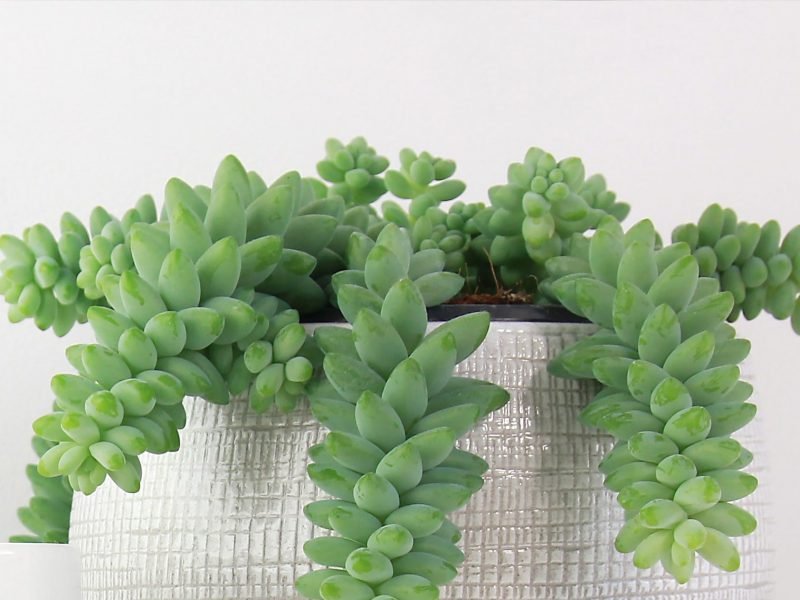
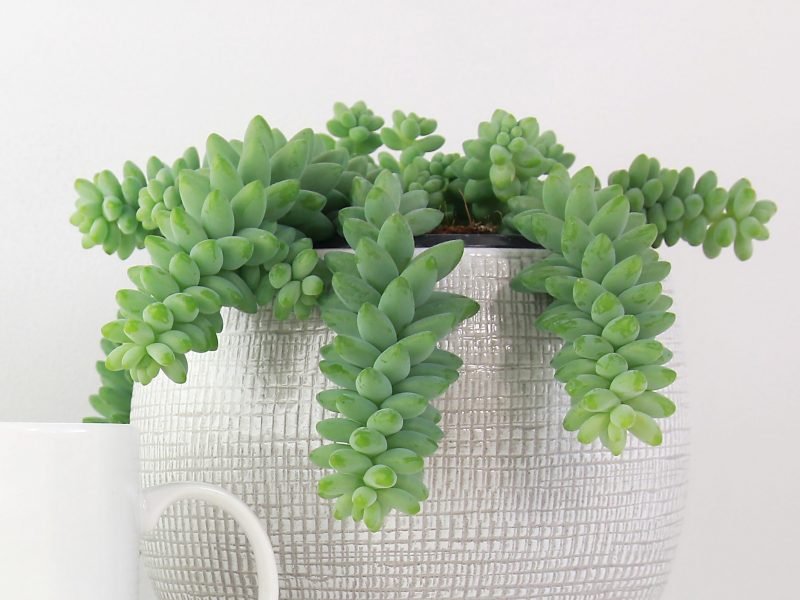
Healthy Burro’s Tail

Healthy Burro's Tail

Overwatering causes yellow and transparent leaves

If the leaves on your Burro’s Tail have turned yellow and somewhat transparent in colour, this means you are overwatering and the leaves are becoming very full with water. Burro’s Tail plants can go for several weeks without water as they are succulent plants so overwatering can be very damaging to them. Alongside yellow leaves, overwatering can cause your Burro’s Tail to turn soft and droopy.

If you suspect that your Burro’s Tail is turning yellow due to overwatering, the best thing to do is to take your plant out of its pot immediately so you can see how much moisture is in the potting mix. This will also allow you to take a look at the roots to see if they are rotting due to the overwatering. Remove any black or soft roots.

If the potting mix is still quite soggy and waterlogged, it’s important that you replace it immediately. Waiting for it to naturally dry out risks more damage to the plant, and will most probably cause more yellow leaves to develop on your Burro’s Tail.

Now that you have done all you can to fix the issue, you want to turn your attention to preventing more yellow leaves in future. Adjust your watering schedule moving forward so you are only keeping a little bit of moisture in the soil, rather than it being soggy. Remove any excess water that has run out of the drainage holes about 15-20 minutes after watering to stop the roots from rotting in stagnant water.

We also recommend investing in a moisture meter as this is the best way to keep track of the moisture levels in the soil and prevent yellow leaves. They are super affordable and will literally tell you how moist the potting mix is. Goodbye, over or underwatering!

Those are the two most common reasons why Burro’s Tail plants develop yellow leaves. This should be quite an easy one to diagnose as you just need to inspect the root system and keep an eye on the level of sunlight your Burro’s Tail gets each day. Using the light and moisture meters we mentioned above can really help to be sure of what’s going on. When making a change to either the care or environment of your Burro’s Tail, keep a very close eye on it for the weeks that follow so you can make sure it’s not causing any other problems (or any more yellow leaves!!).

To learn more about how to care for your plant, as well as propagation tips and other common problems, check out our Burro’s Tail care guide.

Fiddle and Thorn is a participant in the Amazon Services LLC Associates Program, an affiliate advertising program designed to provide a means for sites to earn advertising fees by advertising and linking to Amazon.com

Take our houseplant survey!

Quickly respond to our 30 second houseplant survey and get 75% off our Complete Houseplant Care eBook!

Take the Survey

No thanks…

Why is my Burro’s Tail losing leaves? Causes and Solutions

Last Updated: June 21, 2022

Also known as the Donkey’s Tail, the Burro’s Tail is best known for its plump little leaves that form long thick stems that dramatically cascade out of the pot. But if your plant has started losing leaves, you might be starting to worry that something is wrong. There are several reasons why Burro’s Tail plants start losing their leaves and we will go through each of them below. These plants are quite fragile though which makes inspecting them difficult so handle your plant with care to prevent even more leaves from falling off.

A consistent lack of water can cause your Burro’s Tail to start losing leaves

One of the more common factors when it comes to Burro’s Tail plants losing their leaves is consistent underwatering. Although Burro’s Tail plants are succulents which means they can happily go a few weeks without water, if their potting mix gets too dry for too long, they will start to shed their leaves.

It’s important to ensure that your Burro’s Tail is actually being underwatered before you change anything about your care routine. The worst thing you can do is give your Burro’s Tail more water if it doesn’t need it as this will very quickly cause even more serious issues for your plant beyond the leaves it has been losing. To determine if too little water is the issue, we recommend using a moisture meter or the chopstick method. Burro’s Tail plants are super sensitive to being handled so taking the plant out of the pot should be avoided wherever possible or your plant losing even more leaves.

If you do decide to remove your Burro’s Tail from its pot, then take a close look at the root system. If it has already started to crisp up, then this suggests the issue has been going on for a while.

Once you have determined that your Burro’s Tail is suffering from a lack of water and this is why it is losing leaves, slowly reintroduce water to your plant rather than drowning it (they can go into shock if there is a sudden change in the environment which will only cause more leaves to fall off your plant). A little bit of water once a day for a week should get your Burro’s Tail back on track and prevent it from losing any more leaves.

In future, to avoid underwatering causing more trouble for your Burro’s Tail, we recommend adjusting your watering schedule. You want to either be watering your Burro’s Tail more frequently or giving your plant more water each time. You also want to ensure you are cutting back on watering during the colder darker months of the year as growth will be more dormant. Using a moisture meter can really help to make sure that the potting mix has had enough time to dry out properly.

Overwatering might be why your Burro’s Tail is losing leaves

As with a lot of things in the houseplant world, proper watering can be one of the biggest issues and it’s not just underwatering that can cause your Burro’s Tail to lose leaves. Too much water is a major issue for succulents and is one of the most common reasons why Burro’s Tail plants start losing their leaves.

You can tell if your Burro’s Tail is being overwatered if their leaves turn very soft and plump as this is literally the leaves filling up with water. If you think your Burro’s Tail might be suffering from root rot, it’s important to check right away and change out the soil if needed. This is the only time where handling your Burro’s Tail is a good idea.

If the soil is waterlogged, it’s best to replace it straight away rather than wait for it to dry out naturally. Each day that your Burro’s Tail’s roots are sitting in soggy soil, it risks irreversible damage to your plant’s root system. Instead, remove as much of the potting mix as you can from the root system and replace it with fresh dry mix.

Other than checking the moisture levels in your plant regularly using a moisture meter, another thing you can do to avoid overwatering is to use a self-watering pot or even self-watering globes. They release water to your Burro’s Tail only when it needs it and will help to avoid waterlogged soil and root rot.

You also want to adjust your watering schedule so that you cut back on how much or how frequently you are watering to prevent your Burro’s Tail from losing any more leaves. And make sure to cut back over winter as the soil takes a lot longer to dry out in colder temperatures.

Fragility is a common cause of leaf drop

Although watering issues are a large concern when it comes to Burro’s Tail plants losing leaves, probably the most common reason is simply that the plant is so fragile. Even the smallest bump or knock to the plant can cause several leaves or sometimes even a whole stem to fall off your plant. The best thing to do is put your Burro’s Tail up high or out of high traffic areas in your home to avoid it being knocked about by pets, children or guests.

As these are super healthy leaves that are falling off when being knocked, we recommend propagating the leaves that fall off to create new plants. There would be nothing worse than throwing away perfectly healthy stems and leaves. Check out our propagation guide for all the info you need to successfully grow new plants from the leaves.

Make sure to take a close look at the leaves that your Burro’s Tail is losing as they might give an indication of whether or not there is another issue such as over or underwatering that is causing your plant to lose leaves. Yellow or brown patches across the leaves, as well as overly plump and moist leaves, will suggest watering extremes are to blame.

Your Burro’s Tail might just be losing leaves due to natural ageing

As your Burro’s Tail matures, it may occasionally start losing a few of its oldest leaves but this isn’t anything to be concerned about. It’s simply part of your plant’s natural ageing process and is not because of anything you have done wrong or anything about its environment that isn’t right.

It will usually be the oldest and smallest leaves that your Burro’s Tail loses and it won’t often lose newer leaves naturally unless your plant is being knocked or bumped.

Another thing you need to be doing as a result of this is to keep an eye on just how many leaves your Burro’s Tail is losing. If this starts to accelerate or become faster than the rate of new growth, then it might be an indicator that something isn’t right. If this is the case, check on the environment and care again to see if one of the above issues is causing the leaves to drop.

Those are the most common reasons why your Burro’s Tail is losing leaves. If they are simply falling off due to being bumped and knocked, then you don’t need to worry at all (just be a little bit more careful around it). However, if watering issues are behind your Burro’s Tail losing leaves, then you really need to fix the issue quickly before your plant loses too many leaves. Make sure to keep a close eye on your plant for several weeks after making any changes to make sure that the issue is improving. You also want to continuously check in on your plant to spot any early warning signs. The sooner you start treating the issue, the better chance you have at getting your plant back on track.

To learn more about how to care for your plant, as well as the different propagation methods, other common issues and our best general care tips, check out our Burro’s Tail care guide.

Fiddle and Thorn is a participant in the Amazon Services LLC Associates Program, an affiliate advertising program designed to provide a means for sites to earn advertising fees by advertising and linking to Amazon.com

Take our houseplant survey!

Quickly respond to our 30 second houseplant survey and get 75% off our Complete Houseplant Care eBook!

Take the Survey

No thanks…

Why is my Burro’s Tail dying? Causes and Solutions

Last Updated: August 26, 2022

One of the most unique succulents out there, the Burro’s Tail is an incredible houseplant but they aren’t always the easiest to care for. This is why there are several factors that can cause your Burro’s Tail to start dying so it’s important to make the right diagnosis.

Below we will be going through each of the main causes of a dying Burro’s Tail as well as how to spot the issue, treat it and prevent it from causing any more harm to your plant in future.

A dying Burro’s Tail can indicate low light levels

If the new growth on your Burro’s Tail is starting to look a little leggy and leaves are starting to fall off, then a lack of sunlight might be why your plant is dying. This can happen both in winter when the sun is weaker and out for less of the day but also in summer if your plant isn’t close enough to a window. This also can show up as slow or stunted growth.

If you suspect that a lack of natural sunlight is the cause, start by placing your plant nearer to a window to help revive it. If this happens during winter, you can get away with placing it right by the window as the direct sun rays won’t be as intense as in summer. However, if this is happening during the height of summer, you’ll want to be a little more cautious as to how much extra sunlight you give your plant as too much light can also bring a range of issues such as burnt and scorched leaves and dried out plants.

Overwatering can also cause your Burro’s Tail to start dying

Too much moisture will kill your plant quicker than underwatering so it’s important this issue is diagnosed quickly. Burro’s Tail plants hate sitting in water as they have very delicate roots. Once the soil becomes even slight waterlogged, it can very suddenly lead to root rot, meaning the plant becomes unstable and also cannot get needed nutrients from its root system.

To figure out if your Burro’s Tail is dying due to overwatering, there are a few things to look out for. Firstly, if the oldest leaves of your Burro’s Tail are turning yellow or brown as well as soft mushy leaves and soil that smells dampy and musty.

To confirm if overwatering is killing your plant, check the soil moisture using a moisture meter or by removing it from its pot. If you find that the soil is even a bit waterlogged, replace it straight away (rather than waiting for it to naturally dry out) so that the roots can begin to recover.

To prevent the issue from happening again, make sure that the potting mix has time to fully dry out between waterings (moisture meters can really help with this). You also want to make sure that you are adjusting how much and frequently you are watering your Burro’s Tail depending on the change in seasons.

A dying Burro’s Tail can also suggest cold drafts

Another thing that Burro’s Tail plants hate is cold air. If the leaves on your plant are starting to fall off then it might be because the room is too cold or they are in a drafty spot. Avoid placing them near any windows or doors that have cracks or are regularly open in winter as the cold air will shock your plant and it will start to lose leaves.

The best thing to do to revive your dying Burro’s Tail is to move your plant to a warmer area of your home. We also recommend using a digital thermometer so that you can monitor any changes in temperature that might start impacting your plant. They are a real saviour when it comes to plant care as it’ll also allow you to spot any hotspots that occur near windows/heating vents as these can quickly dry out your Burro’s Tail and cause real issues.

Chemical sensitivity might also be to blame

If you live in a hard water area then tap water is not always the best thing to use on Burro’s Tails. The water contains chemicals such as fluoride that over time will impact your plant’s health and might be why it’s dying. Whilst this issue won’t kill your Burro’s Tail from one day to the next, if your plant has been slowly developing issues and none of the above reasons fit in with what is happening with your plant, then this could be the culprit.

There are two methods to avoid this problem that are free and don’t involve getting a whole purification system installed in your home. Firstly, you can leave a watering can full of tap water standing for over 24 hours. Over that time most of the chemicals will evaporate or sink to the bottom of the watering can. Then the only thing left to do is remember not to pour away the last few inches of water. The second method is to collect rainwater as it is a lot better to use then the treated water out of your tap.

Those are the most common reasons why Burro’s Tail plants begin dying. Whenever you are solving an issue, catching it early is the number one thing that helps you successfully revive your plant. This is why we strongly recommend all plant parents to regularly check up on their houseplants to spot any early warning signs. Checking over the leaves each time you water is a good place to start and at regular intervals checking over the soil and root system as well (yearly repotting is a good way to do this too).

Once you have made a diagnosis and have started to change things about either your care or environment, it’s important to keep a close eye on your Burro’s Tail so that you’re able to check that the issue isn’t getting any worse.

To learn more about how to keep your plant happy and thriving, check out our Burro’s Tail care guide.

Fiddle and Thorn is a participant in the Amazon Services LLC Associates Program, an affiliate advertising program designed to provide a means for sites to earn advertising fees by advertising and linking to Amazon.com

Take our houseplant survey!

Quickly respond to our 30 second houseplant survey and get 75% off our Complete Houseplant Care eBook!

Take the Survey

No thanks…

Why is my Bunny Ears Cactus turning brown?

Last Updated: April 1, 2022

Named after the way their pads look, the Bunny Ears Cactus is great for plant parents who don’t want super huge spikey cacti in their home. They are easy to care for and look pretty cute too! However, just because they are relatively adaptable and aren’t as sensitive as a lot of other plant types, it doesn’t mean that you won’t run into issues with your Bunny Ears Cactus from time to time. In fact, brown pads/leaves can be quite common if your plant isn’t getting the right care, or something in their environment is amiss.

But don’t fret, if you have spotted some browning on your plant but it hasn’t taken over your entire Bunny Ears Cactus, then you should be able to nurture it back to full health. In this post, we will guide you through the most common reasons for brown Bunny Ears Cacti so you can figure out what is harming your plant and get right to fixing the problem.

Overwatering is the most common cause of browning

Overwatering is probably the most damaging of houseplant issues and is quite a common reason why Bunny Ears Cacti develop brown leaves. As with all types of cacti (and most succulents too), the Bunny Ears Cactus hates having really moist soil. They have very delicate and shallow roots so they are very susceptible to root rot. This will cause your Bunny Ears Cactus to turn soft, droop down and turn brown.

To figure out if overwatering is the reason your Bunny Ears Cactus is turning brown, check the moisture levels in the soil immediately. Don’t wait for the problem to resolve itself as that could be the difference between saving your plant and saying goodbye to your plant.

If the potting mix is waterlogged and feels clumpy then replace it with fresh dry potting mix which will allow the plant to start to recover. Trim away the rotten roots and adjust your watering schedule moving forward. With cacti, they like a good soak and need enough time for the potting mix to fully dry out. The most common reason why plant parents overwater the Bunny Ears Cactus is that they water them too often. It’s better to water them less frequently but give them a good soak each time.

Temperature shock can also cause brown patches

Your Bunny Ears Cactus could also be suffering from temperature shock which is causing brown patches across the plant. This often occurs if your Bunny Ears Cactus is too close to a heating/AC vent, radiator or is pretty close to a drafty window or door. As Bunny Ears Cacti are native to Mexico, they like warm temperatures but can dry out if extremely high so it’s about finding the right balance.

We recommend buying a digital thermometer to check the spot your Bunny Ears Cactus is sitting so you can be sure they aren’t having to endure extreme or fluctuating temperatures.

Pests are a rarer but more worrying cause of brown leaves- brown scabs are scale insects

A slightly less common reason why your Bunny Ears Cactus may have brown leaves is a pest infestation. This won’t happen as often if your Cactus is only ever inside, but it can still occur from time to time. Brown scabs across the pads on your Bunny Ears Cactus is a sign that scale insects are taking hold of your plant.

If you find pests on your Bunny Ears Cactus, isolate it from all of your other houseplants to stop the spread of the pests (they can move around leaves that are close). Wash down your plant and remove the insects with pincers. You should also treat your Bunny Ears Cactus with an organic insecticide to fight the infestation.

Pests are a more difficult problem to solve, but it is possible if you persevere. We recommend also removing the worst affected brown areas to curb the initial growth of the infestation.

Those are the top 3 reasons why Bunny Ears Cacti develop brown pads or brown patches. All 3 can be quite worrying causes and can ultimately lead to your plant dying if not solved. This is why it’s super important to act quickly once you have established the cause of the brown leaves on your Bunny Ears Cactus. Giving your plants a good once over before watering them gets you into a routine to spot early warning signs and can really help to catch issues early, giving your plants the best shot at surviving.

To find out more about how to best take care of your Cactus, as well as propagation tips and other common problems, check out our Bunny Ears Cactus care guide.

Fiddle and Thorn is a participant in the Amazon Services LLC Associates Program, an affiliate advertising program designed to provide a means for sites to earn advertising fees by advertising and linking to Amazon.com

Take our houseplant survey!

Quickly respond to our 30 second houseplant survey and get 75% off our Complete Houseplant Care eBook!

Take the Survey

No thanks…